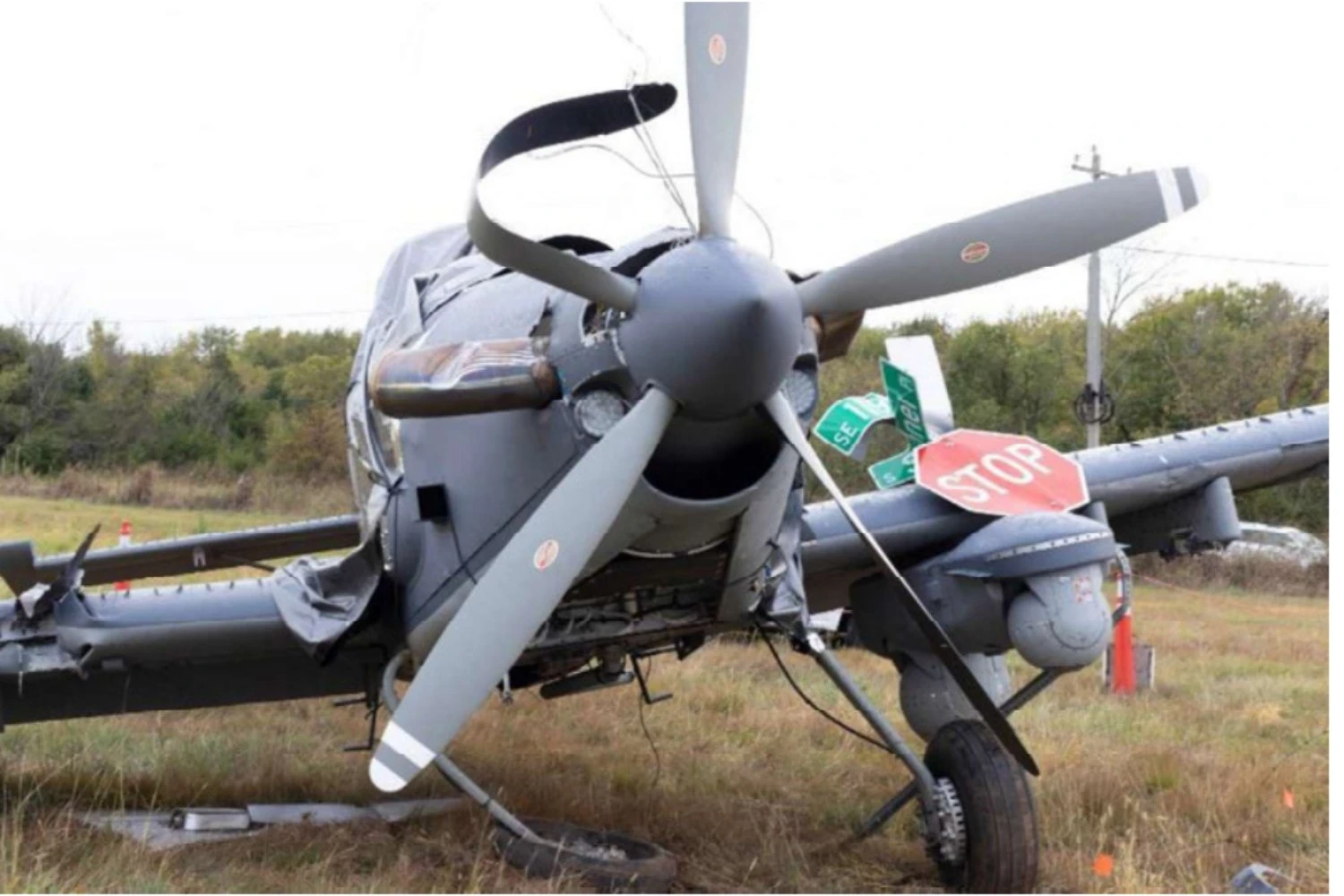
The US Air Force has concluded that pilot error caused the first crash involving the OA-1K Skyraider II after a trainee inadvertently shut off the aircraft's fuel supply during a training mission in Oklahoma last year.
According to the official Aircraft Accident Investigation Board report, the October 23, 2025 mishap occurred when the pilot mistakenly operated the emergency fuel shutoff valve instead of the fuselage fuel tank valve during a routine in-flight systems check. The mistake starved the Pratt & Whitney turboprop engine of fuel, leading to a complete loss of power.
Related news
September 21, 2026
September 16, 2026
The two-seat aircraft, valued at about $17.9 million, crashed into an open field after striking road signs, utility poles and fencing. Both the student pilot and the instructor pilot escaped without injuries, although the aircraft was destroyed. Civilian property also sustained damage.
The mishap aircraft was flying an Initial Qualification Training sortie from Will Rogers Air National Guard Base in Oklahoma. The student pilot, an experienced former U-28 evaluator pilot with more than 2,300 flight hours, had accumulated just over 37 hours in the OA-1K and only about three hours in the fully missionized Block 1 configuration.
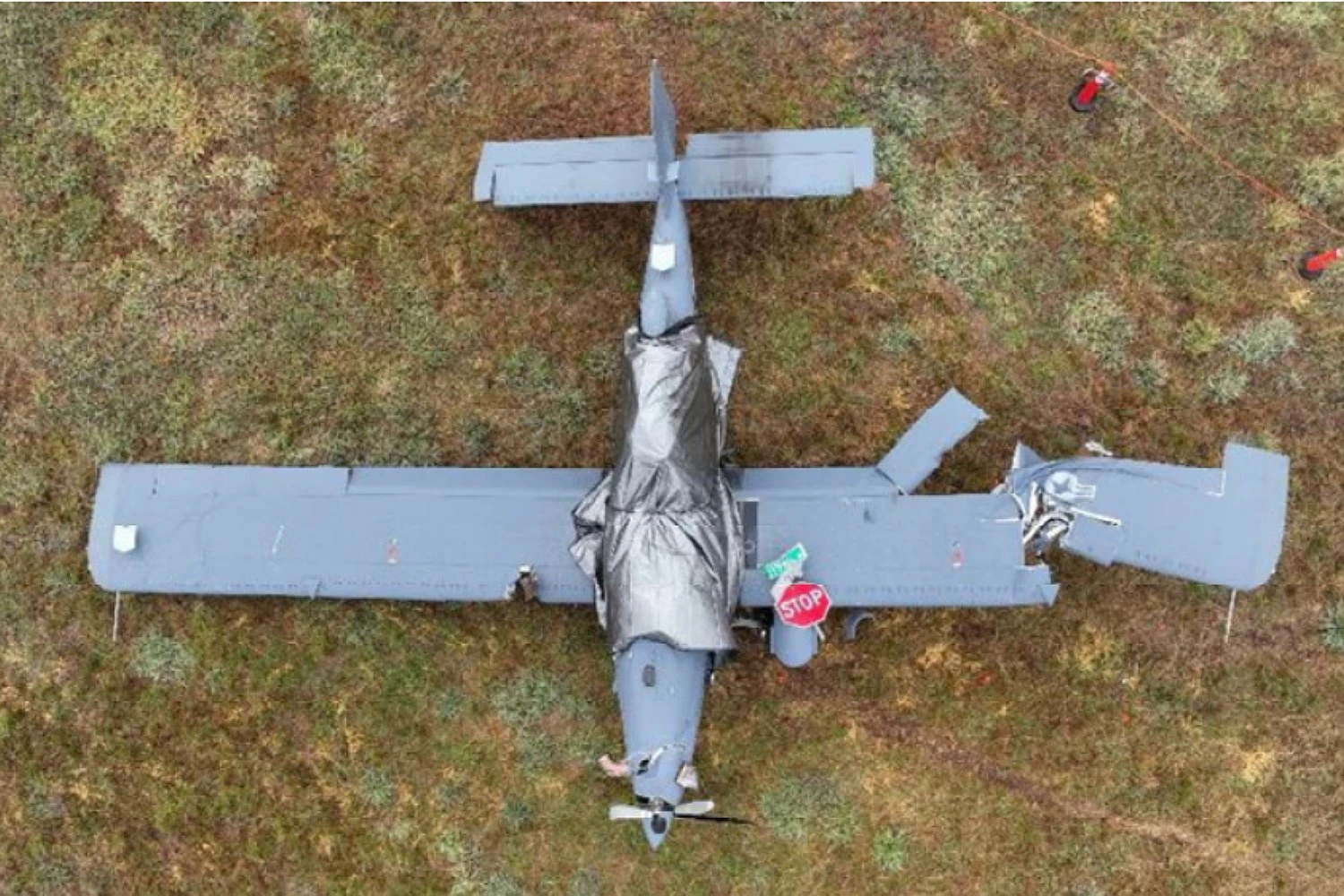
Investigators said the pilot was distracted by communications problems shortly after takeoff. While attempting to adjust his helmet and intercom settings, he was instructed to verify operation of the fuselage fuel tank valve. Instead, he rotated the nearby red emergency fuel shutoff handle, cutting fuel flow to the engine.
Although the pilot realized the mistake roughly 20 seconds later and reopened the valve, he did not tell the instructor what had happened. The crew instead focused on troubleshooting what they believed was an engine malfunction before declaring an emergency and attempting a forced landing. The report concluded that the crew had enough altitude to perform the prescribed engine restart procedures but instead concentrated on reaching a landing area.
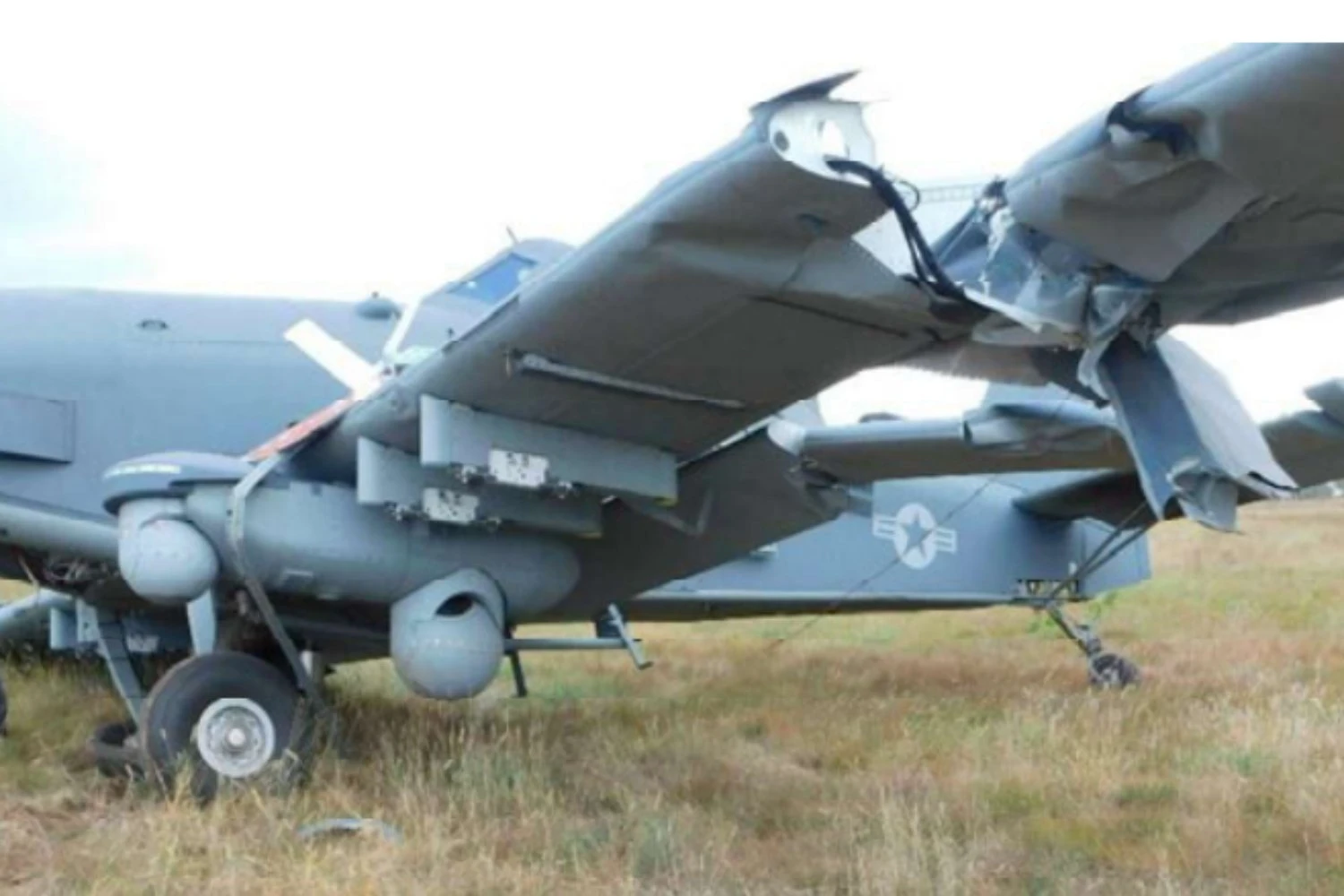
The investigation identified three additional factors that contributed to the accident: task saturation, communications difficulties that degraded crew coordination, and ineffective task prioritization during the emergency. Maintenance records, fuel quality, weather and the aircraft's mechanical systems were all ruled out as contributing causes.
Recent news
September 21, 2026
September 21, 2026
September 21, 2026
The report also describes differences between the Block 0 and Block 1 versions of the aircraft. In the Block 1 cockpit, a larger power lever partially obstructs the pilot's view of the fuel controls, while the emergency fuel shutoff handle sits only five inches above the silver fuel tank valve lever. Investigators noted those design characteristics but stopped short of identifying them as contributing factors in the accident.
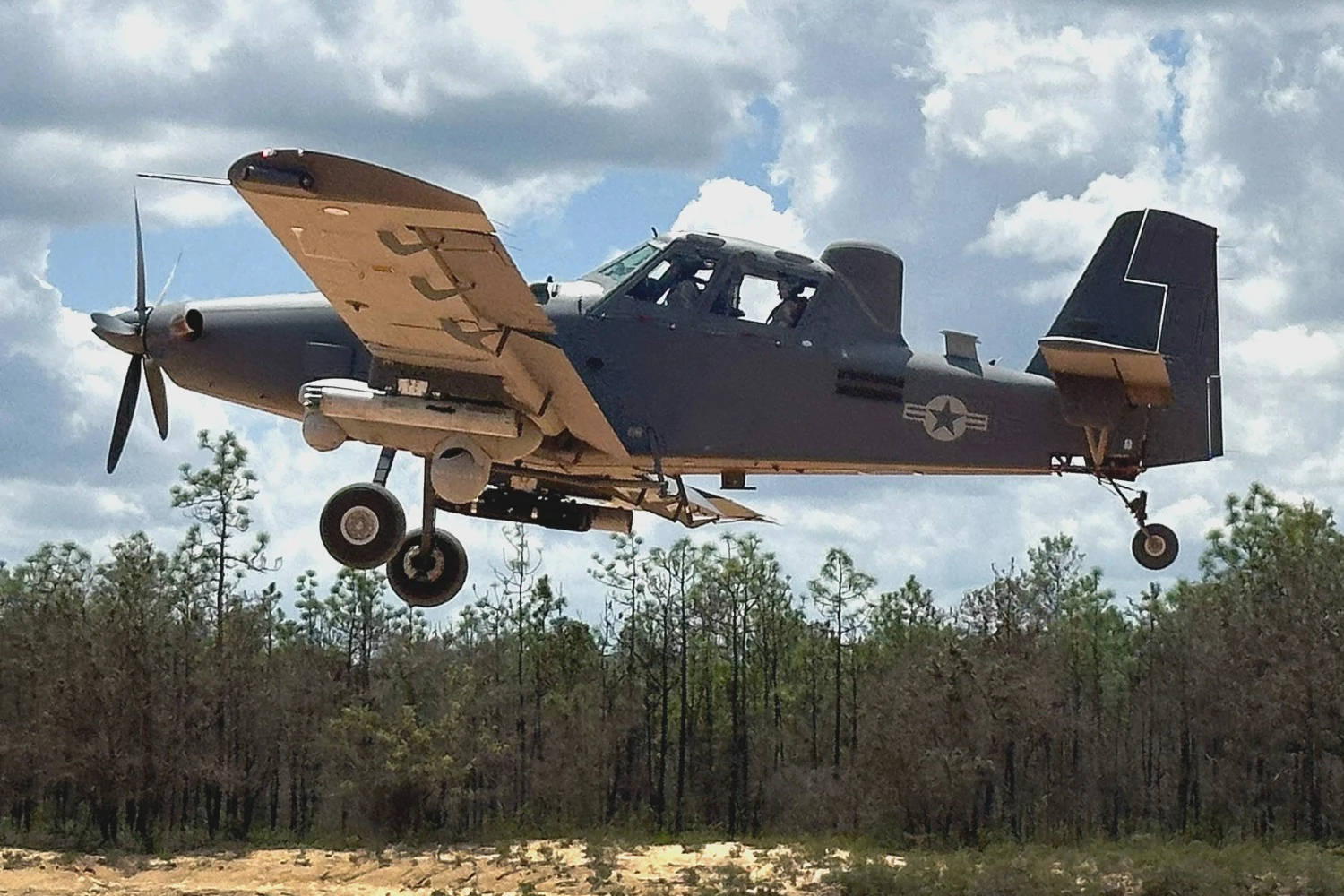
Derived from the Air Tractor AT-802 agricultural aircraft, the OA-1K Skyraider II is being acquired by U.S. Special Operations Command as a low-cost platform for armed reconnaissance, close air support and precision strike missions in permissive environments.
The aircraft's future procurement pace, however, has recently been scaled back. The Pentagon's proposed fiscal year 2027 budget delays planned production in order to shift resources toward unmanned systems, reflecting a growing emphasis on drones for special operations missions.