
Finnair has selected SES to provide in-flight internet connectivity for the 18 Embraer E195-E2s it has ordered, revealing another detail of the configuration planned for its new regional jet fleet.
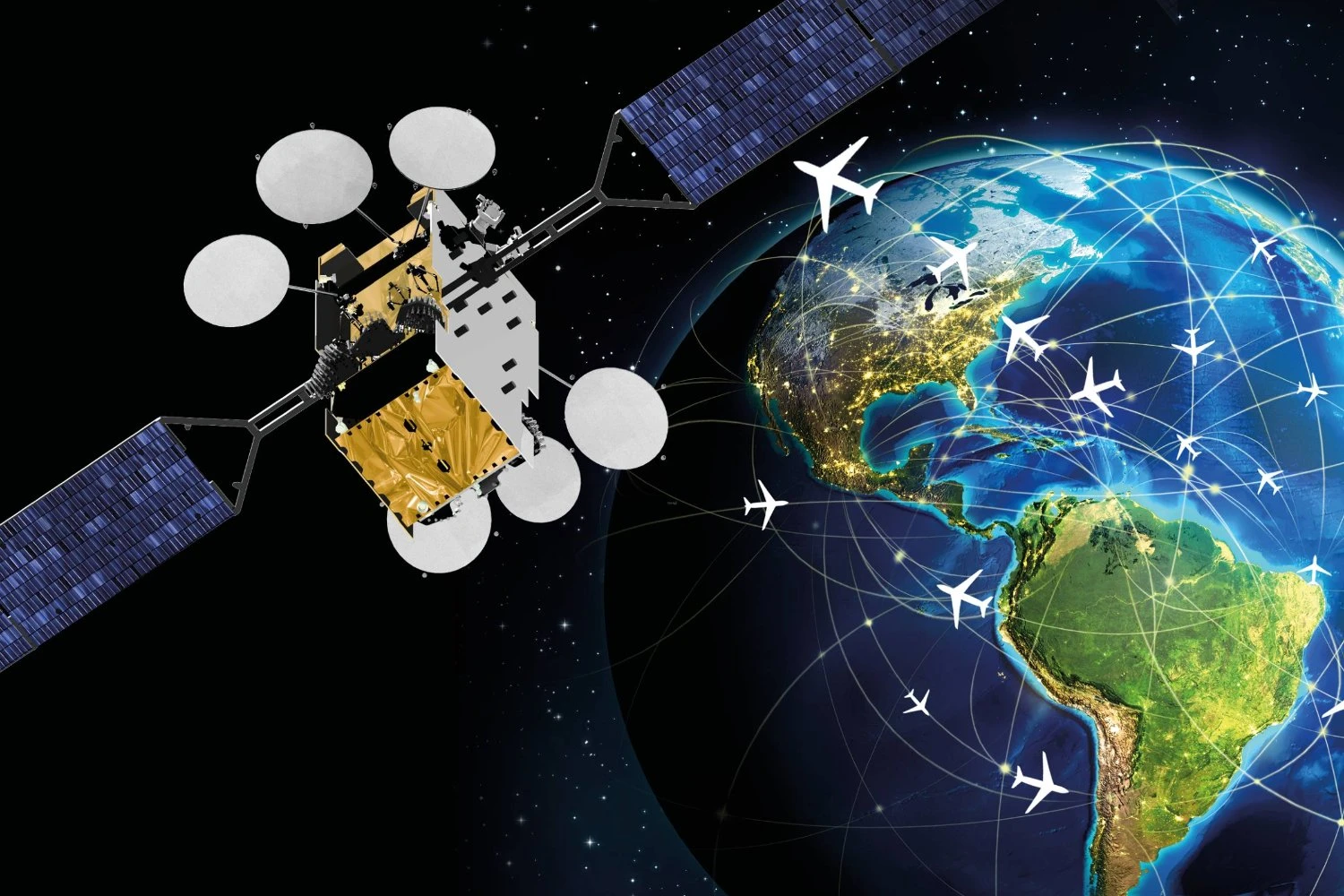
The system will combine OneWeb low Earth orbit (LEO) satellites with SES geostationary (GEO) capacity. The aircraft will be equipped during production at Embraer with an electronically steered antenna capable of connecting to the multi-orbit network.
Follow Air Data News: WhatsApp | Instagram | LinkedIn | Twitter | Facebook
“Customer needs are at the heart of everything we do at Finnair, and connectivity is an increasingly important part of the overall travel experience,” said Simon Large, Finnair's Chief Customer Officer. “We are excited to partner with SES to bring a home-like broadband experience to our customers.”
Finnair placed a firm order for 18 E195-E2s in March, with 16 options and purchase rights for another 12 aircraft, potentially taking the deal to 46 jets. Finnair CEO Turkka Kuusisto described the order as one of the largest investments in the airline's 102-year history.
The 134-seat E195-E2s are scheduled to begin arriving in the third quarter of 2027, with three deliveries that year, followed by six in 2028, six in 2029 and the final three in 2030. They will be operated by Finnair's regional partner Norra on European services and will gradually replace the current E190 fleet.
Related news

November 04, 2026


November 03, 2026
SES has also won another significant E195-E2 customer. LATAM selected its multi-orbit service for more than 60 incoming Airbus A320neo, A321XLR and Embraer E195-E2 aircraft, an investment the airline later valued at more than US$25 million.
The two airlines are taking a different path from a growing number of carriers adopting SpaceX's Starlink for high-speed in-flight connectivity. Starlink added 11 airline customers in the first half of 2026 alone, after signing 22 in 2025, and has secured operators including United Airlines, Qatar Airways, Emirates and airBaltic.
Like Starlink, the SES system gives passengers access to low-latency LEO satellites, but through a different architecture. Instead of relying exclusively on a single LEO constellation, SES combines Eutelsat's OneWeb network with geostationary capacity, allowing aircraft to switch between orbital networks according to coverage and demand.