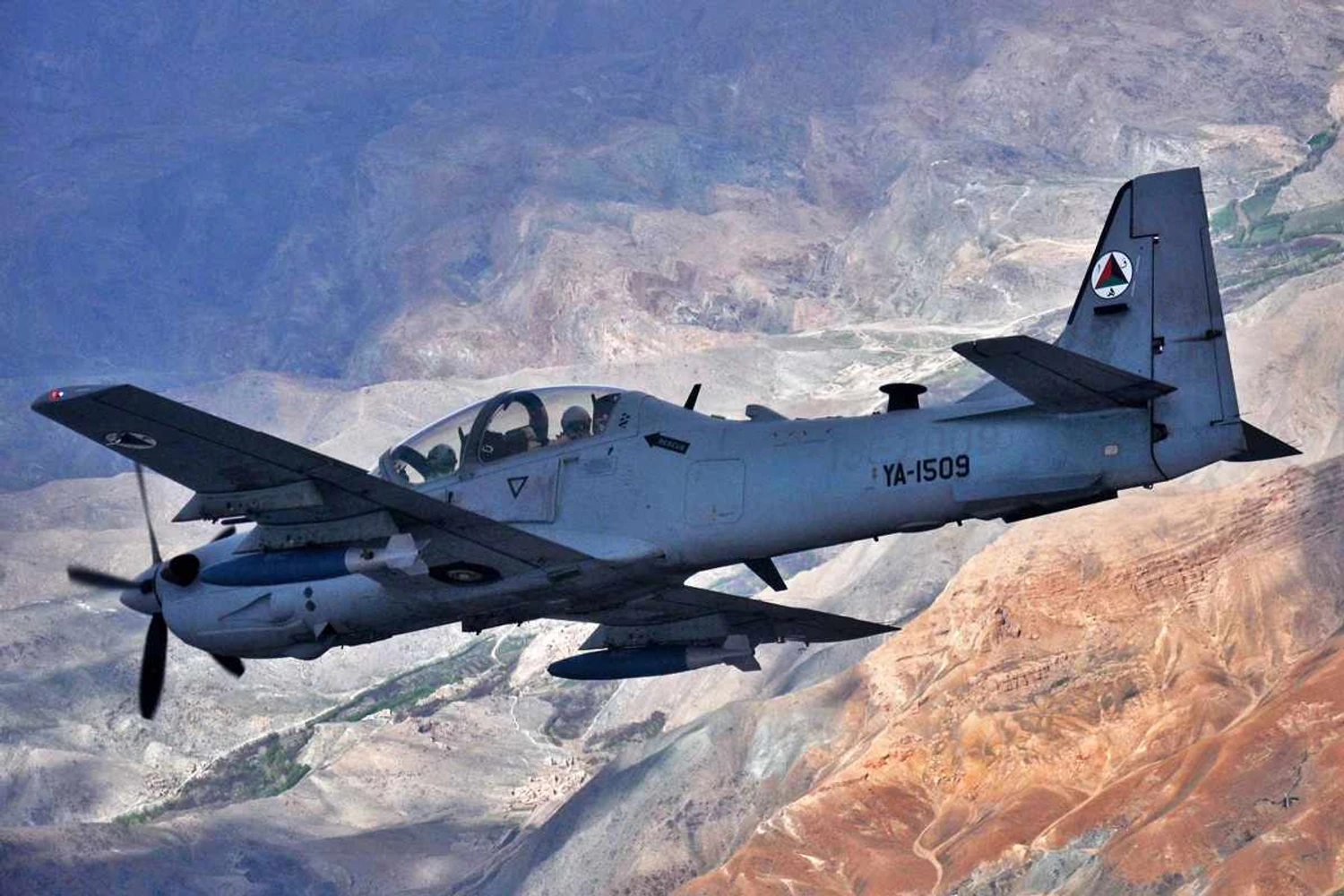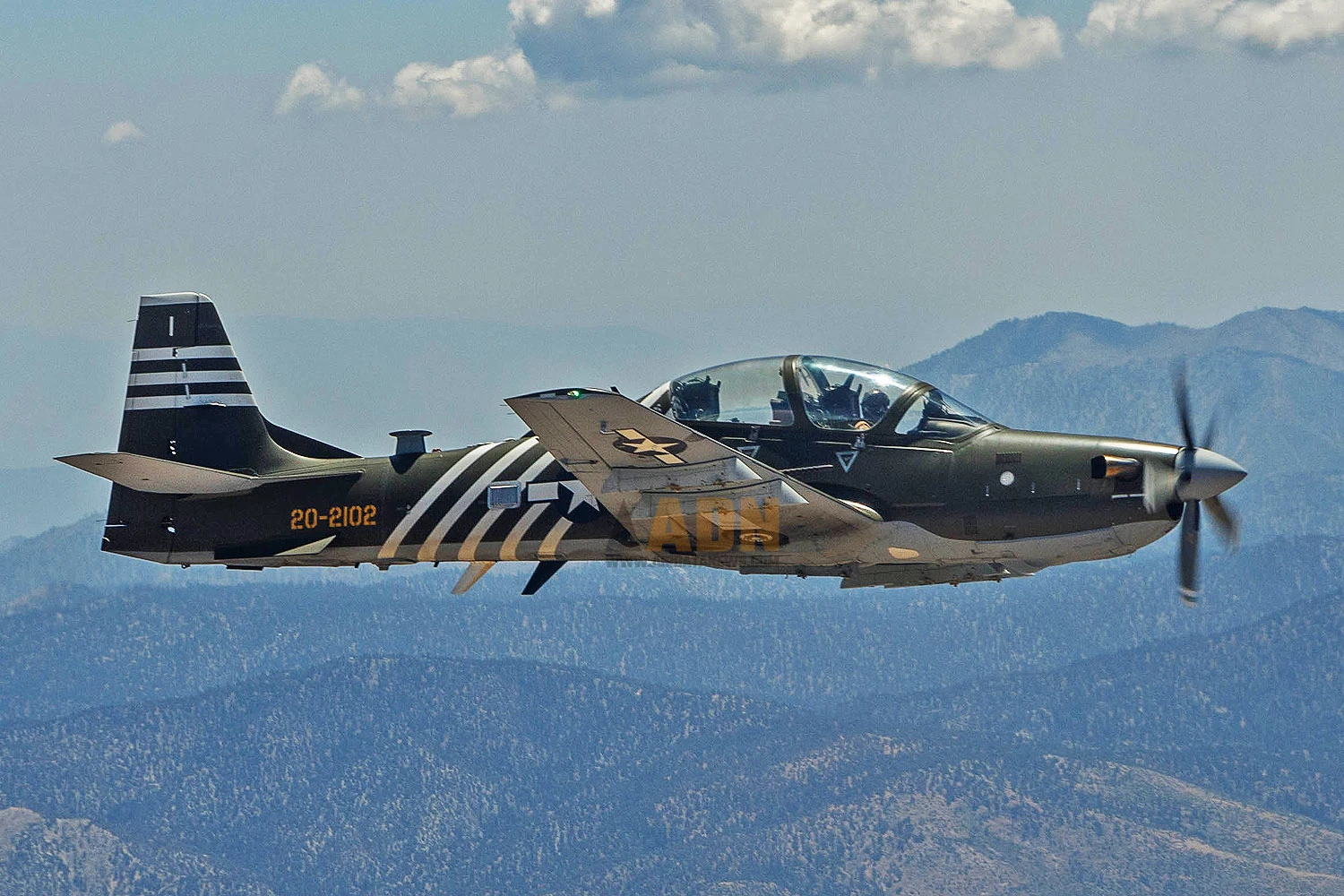
The US Air Force has withdrawn its three Embraer A-29 Super Tucanos from service after the aircraft were evaluated for a new role with the US Air Force Test Pilot School at Edwards Air Force Base in California.
The three aircraft have been prepared for long-term storage and are not expected to return to flight with the Air Force, according to a contracting notice issued by the Air Force Test Center on October 29.
Follow Air Data News: WhatsApp | Instagram | LinkedIn | Twitter | Facebook
The notice seeks support from Sierra Nevada Corporation (SNC), Embraer's partner in the US A-29 program and the company that supplied the aircraft to the Air Force, to maintain the three Super Tucanos while they remain in storage.
Edwards confirmed that the Test Pilot School evaluated the A-29s and determined that they were not suitable for the school's intended use. The Air Force is now considering other aircraft for spin training and mission systems instruction.

Short-lived second role
The decision comes only two years after the three Super Tucanos were transferred to Edwards in July 2024. At the time, the Air Force presented the move as a way to reuse an existing $63 million investment and expand the Test Pilot School's training capabilities.
The A-29 was the first new aircraft type assigned to the school in nearly three decades.
Plans called for the Super Tucano to support instruction in avionics, sensors, weapons and external stores evaluation. Its flight characteristics were also expected to provide students with experience in unusual and extreme flight conditions, including spin entry and recovery.
Related news
November 03, 2026
Michael Banzet, then director of plans and programs at the Air Force Test Center, described the transfer in 2024 as an opportunity to put aircraft already owned by the service to a new use.
The three A-29s had themselves become available after the Air Force moved away from their original mission. Delivered in 2021, they were acquired for experimentation with light-attack concepts and training associated with preparing partner forces.

Air Force Special Operations Command subsequently dropped plans to operate the small fleet, leaving the aircraft available for reassignment to the Test Pilot School, which formally integrated the A-29 into its flight curriculum in 2025.
Different history outside USAF fleet
The decision at Edwards concerns the specific role considered by the Test Pilot School rather than the A-29's use as a trainer or light-attack aircraft in general.
The Super Tucano has accumulated extensive operational experience with other air forces in training, light attack, surveillance and counterinsurgency missions. NATO members are also adopting the aircraft, including Portugal, which selected the A-29N configuration developed for alliance requirements.
The United States previously purchased a much larger number of A-29s through the Sierra Nevada-Embraer partnership for the Afghan Air Force. Afghan crews used the aircraft in combat during the war in Afghanistan.
The US government has also supplied Super Tucanos to other countries through the Foreign Military Sales program, including Lebanon and Nigeria.