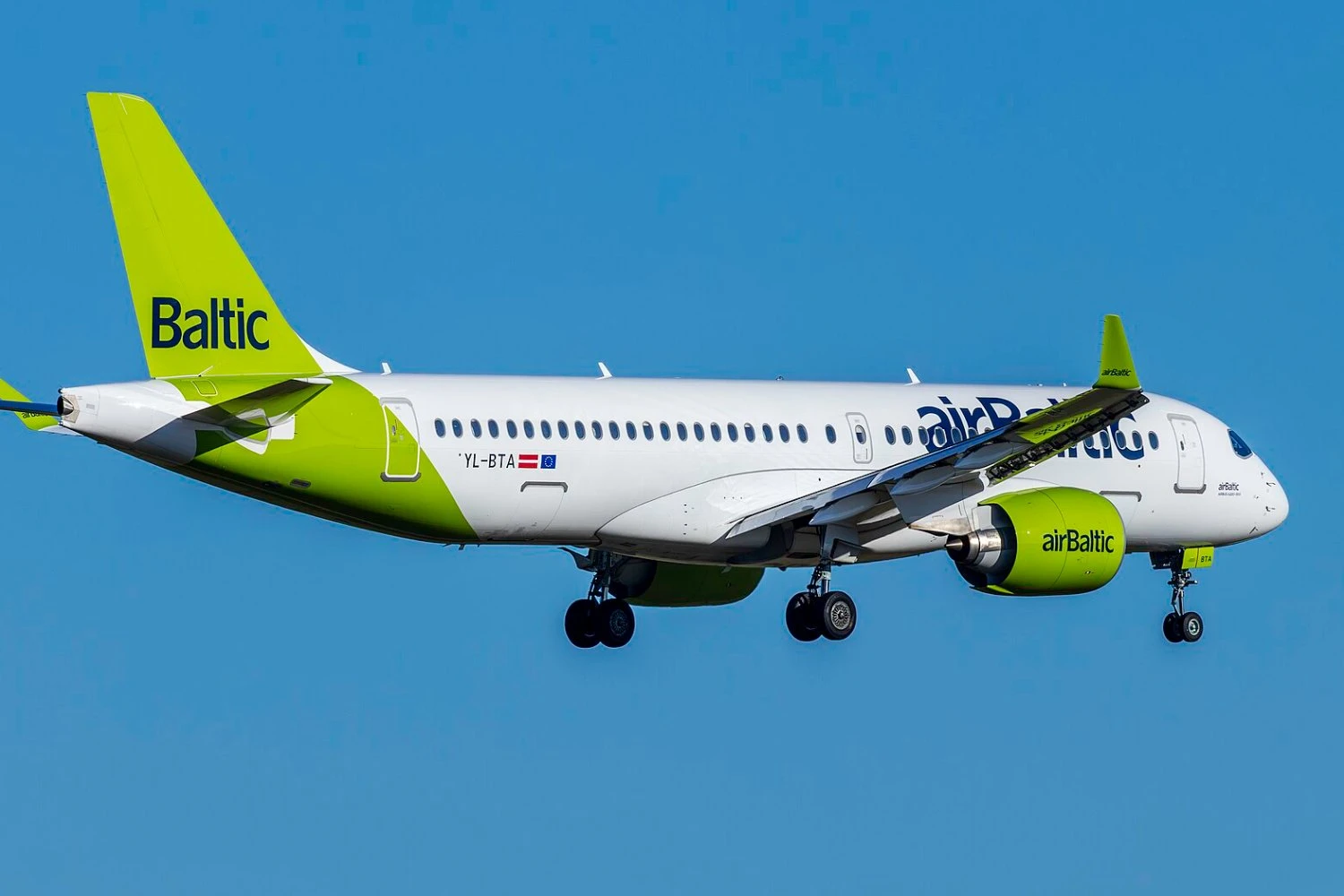
airBaltic became one of the most prominent showcases for the Airbus A220 after introducing the aircraft nearly a decade ago. Now, under Chapter 11 protection in the United States, the Latvian carrier could cancel or indefinitely defer all 40 A220-300s it still has on order.
The potential cancellation is part of a restructuring that would dismantle much of an expansion plan that once envisioned a fleet of around 100 aircraft. airBaltic currently operates 54 A220-300s but plans to reduce that number to approximately 36 by the end of 2026.
The reduction itself predates the Chapter 11 filing. airBaltic disclosed the 36-aircraft target in August, when it abandoned its previous growth strategy. The bankruptcy process, however, provides a clearer picture of how the company intends to unwind commitments accumulated during that expansion.
According to the restructuring plan, airBaltic could cancel or indefinitely defer the 40 A220s that have yet to be delivered. Airbus data through August show 90 firm orders from the airline and 50 deliveries, so the proposal covers its entire remaining order backlog.
Follow Air Data News: WhatsApp | Instagram | LinkedIn | Twitter | Facebook
The plan also calls for the return of approximately 20 surplus aircraft and negotiations over existing lease agreements. The two figures concern different parts of the restructuring: the 40 aircraft are future Airbus deliveries, while the approximately 20 returns involve aircraft and leasing commitments associated with the current operation.
From launch operator to all-A220 airline
airBaltic became the launch operator of the A220-300, then known as the Bombardier CS300, in December 2016. The airline subsequently made an unusually concentrated bet on the type.
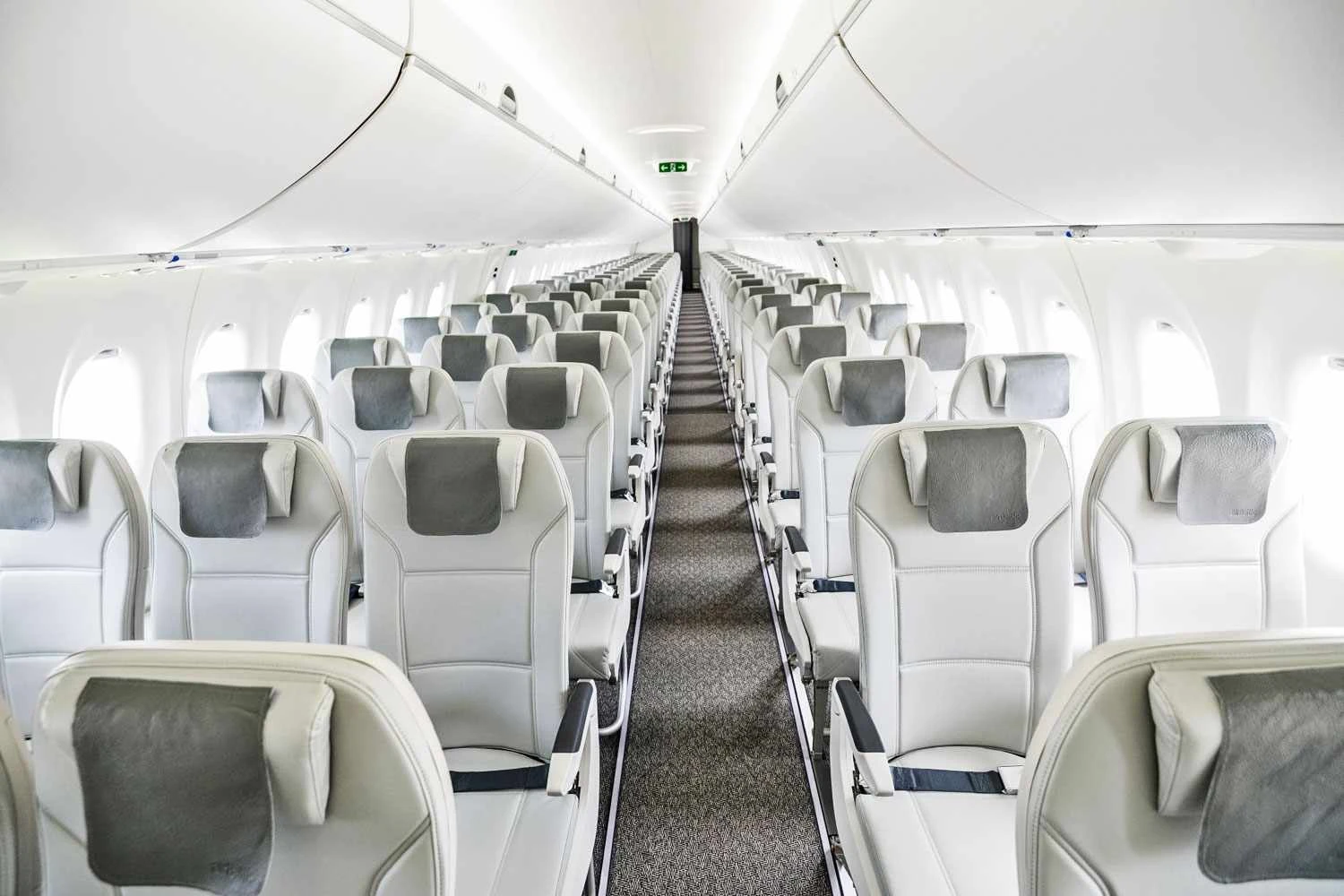
It progressively replaced its Boeing 737s and Bombardier Q400 turboprops and, in 2020, became an all-A220 operator. The strategy gave airBaltic a single aircraft type suitable for relatively thin routes as well as higher-frequency European services, with greater range and efficiency than the aircraft it replaced.
The carrier continued expanding its commitment. Another 30 A220-300s were ordered in 2023, followed by ten more in 2024, bringing the firm total to 90. At the time, airBaltic planned to operate close to 100 A220s by the end of the decade.
The rapid expansion made airBaltic one of the type’s largest operators. It has since been overtaken in Europe by Air France, which operates 58 A220-300s, according to Airbus data through August.
Single fleet also concentrated operational risk
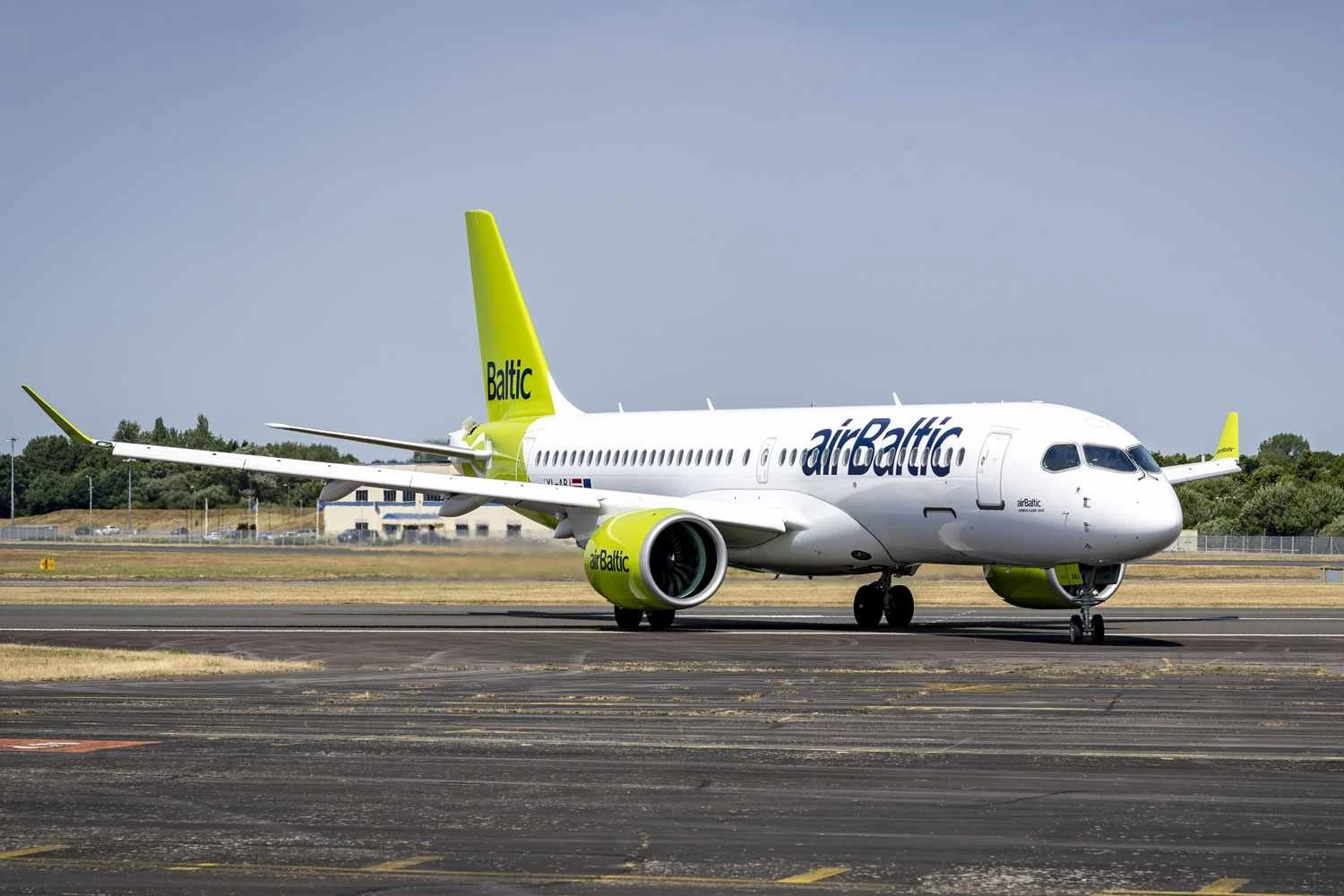
The decision to standardize on the A220 brought the usual advantages of a single-type operation, including common training, maintenance and crew requirements. It also concentrated airBaltic’s exposure to problems affecting the aircraft and its propulsion system.
Shortages involving the Pratt & Whitney PW1500G engines became particularly disruptive. A number of airBaltic A220s were grounded at different periods because engines were unavailable, which forced the airline to adjust capacity and, at times, rely on aircraft operated by other carriers.
The difficulties coincided with an expansion strategy that increasingly depended on finding work for aircraft beyond airBaltic’s own network. The company developed a substantial wet-lease business, placing A220s and crews with other European airlines.
The revised business plan now moves in the opposite direction. In addition to reducing the number of aircraft, airBaltic is reviewing its ACMI and wet-lease activities as part of the restructuring, while Riga will again receive greater emphasis in its network.
Leases add another layer to fleet reduction
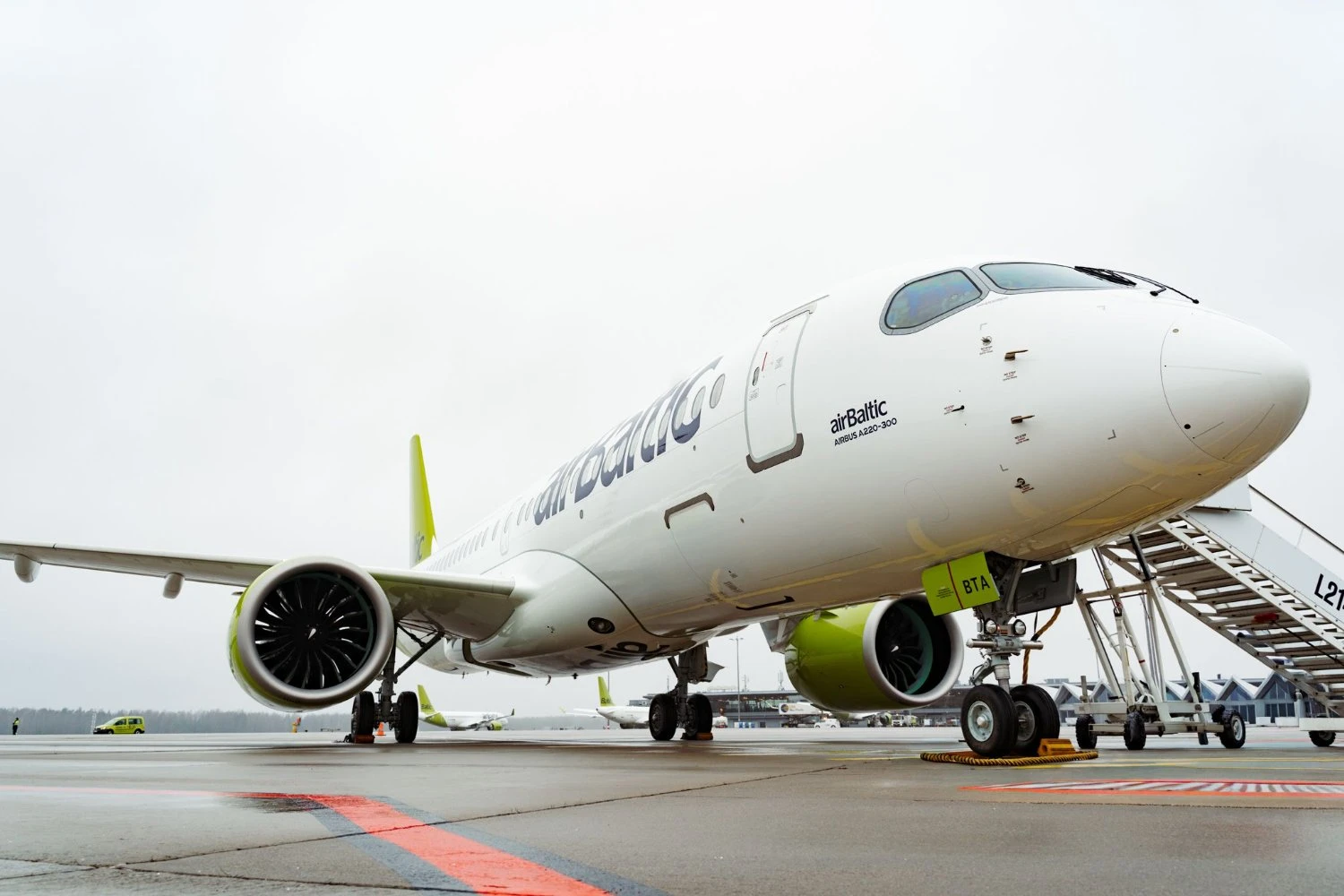
Reducing the operation to 36 aircraft involves more than cutting future deliveries. Existing leases are another major part of the process, with airBaltic seeking to return surplus aircraft and renegotiate commitments with lessors.
Avation, which owns four A220s leased to airBaltic under contracts extending into 2030 and 2031, has said it expects rent and maintenance reserves to continue to be paid. The lessor is nevertheless participating in an ad hoc group representing aircraft owners in negotiations with the airline.
Commitments involving undelivered Pratt & Whitney engines are also subject to negotiations. The combination of aircraft returns, lease revisions and changes to future deliveries effectively unwinds a structure assembled for a much larger airline.
Russian traffic loss changed growth assumptions
airBaltic developed Riga as a connecting hub between European markets, while Latvia’s geographic position historically provided access to traffic involving Russia and other markets to the east.
Russia’s invasion of Ukraine in 2022 fundamentally altered that environment. Russian routes and traffic disappeared, while the airline subsequently faced the PW1500G disruption, financing pressures and, more recently, higher fuel costs.
The scale of the original expansion has consequently become one of the central issues in the restructuring. After planning for around 100 A220s, airBaltic expects to operate approximately 36 aircraft at the end of 2026, with only limited growth thereafter.
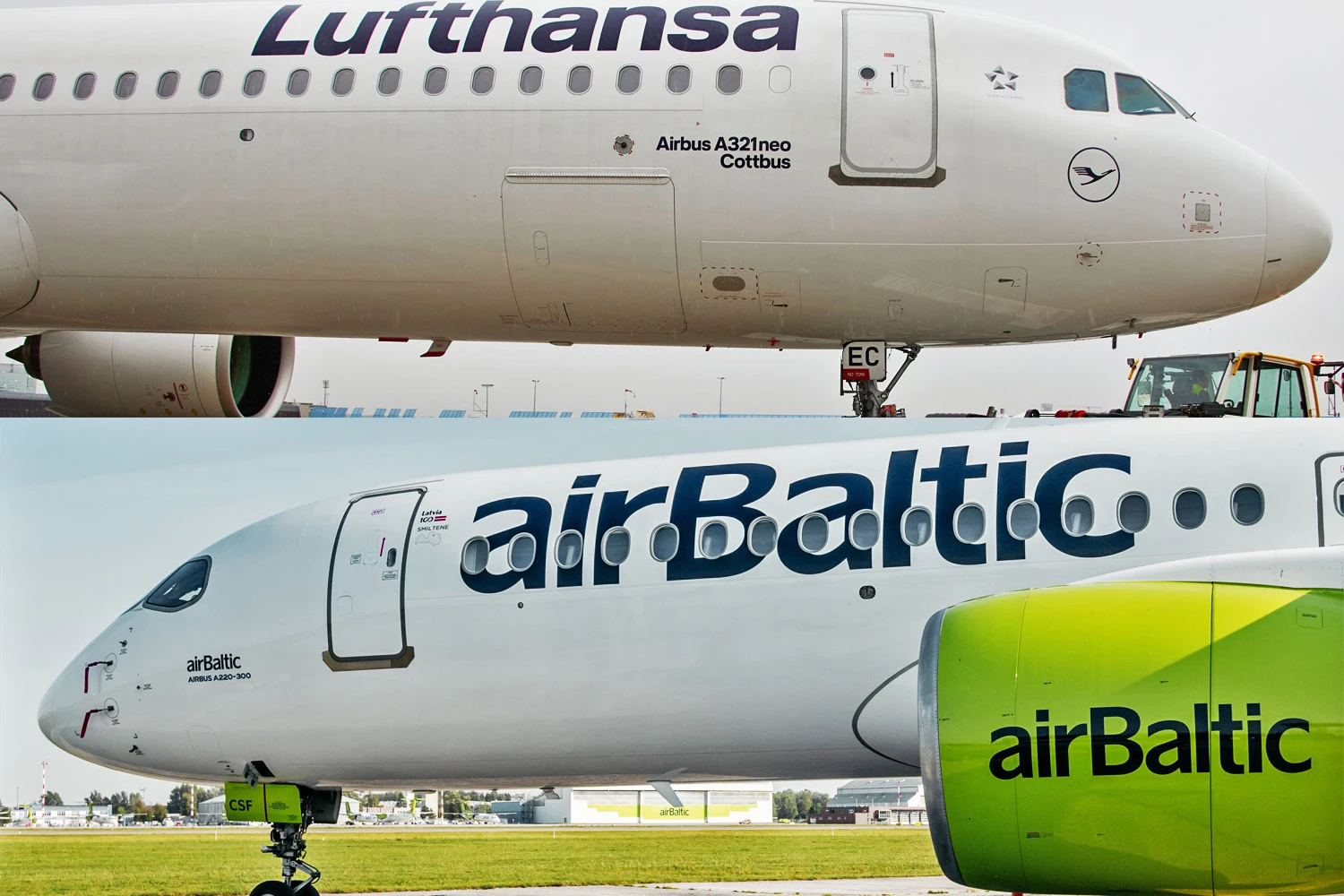
Potential investors have so far shown little appetite to alter that trajectory. Lufthansa, which owns 10% of airBaltic, has not indicated plans to increase its stake, while Wizz Air CEO József Váradi told Reuters this week that his company had very limited interest in opportunities arising from the restructuring. Váradi argued that airBaltic had become too large for Latvia’s small market after the loss of Russian traffic.