Indian regional carrier Star Air has scaled back its flying and slowed its expansion plans as persistently high jet fuel prices put pressure on its operations.
The carrier has reduced its schedule by 15% to 20% for the winter season, bringing the number of flights down to 52 from 68 during the summer schedule. A Star Air executive attributed the reduction mainly to higher jet fuel prices.
The airline currently operates eight Embraer E175s, although one aircraft, VT-GSI, has not flown since October 21. It is not clear whether its current inactivity is related to the reduction in flying or maintenance.
Star Air has been pursuing substantial growth in recent years. The carrier previously outlined plans to reach 25 aircraft before eventually targeting a fleet of between 40 and 50 jets by 2030.
https://www.instagram.com/p/DXPTZd0jbtu/
Two E190s awaiting delivery
Two used Embraer E190s previously earmarked for Star Air have meanwhile remained in the United Kingdom despite reaching an advanced stage of preparation for the Indian carrier.
The aircraft, formerly operated by KLM Cityhopper and later associated with Eastern Airways, received Star Air colors but have yet to be delivered. Both remain at Exeter Airport.
Follow Air Data News: WhatsApp | Instagram | LinkedIn | Twitter | Facebook
The two E190s were already being prepared for Star Air in May. The aircraft were identified as former KLM Cityhopper jets PH-EXC and PH-EXD, later registered G-CMWI and G-CMZI in the UK.
There has been no confirmation that the delayed arrival of the E190s is connected with Star Air's current response to fuel prices. Their status nevertheless illustrates how the carrier's fleet growth has yet to translate into additional aircraft entering service.
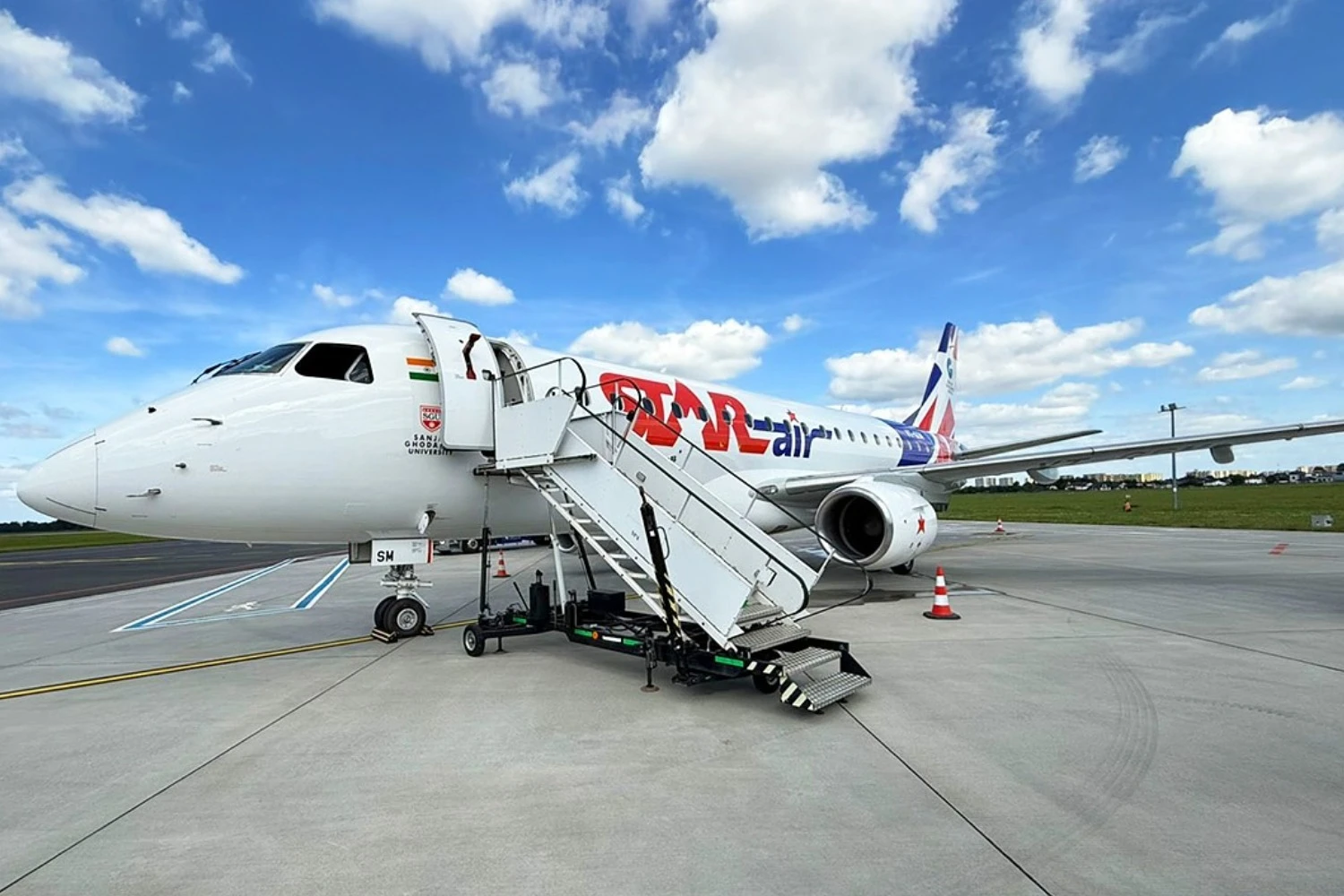
Fuel costs hit regional flying
Domestic jet fuel prices have risen by about 30% since April, including a 13% increase in October alone. The latest increase followed consecutive rises in August and September, adding pressure on airlines operating price-sensitive domestic routes.
Industry estimates indicate that recent fuel increases could add around 8% to 10% to Indian airlines' operating costs before the effect of fuel surcharges and other mitigating measures.
Related news
November 05, 2026
November 05, 2026
November 04, 2026
Regional operators argue that they are particularly exposed because they have less ability to pass higher costs on to passengers while maintaining services to smaller cities. Star Air is among the carriers calling for the Indian government to revive its Price Stabilisation Fund under different conditions.
The Indian government introduced a fuel price stabilization mechanism earlier this year, but the program expired after failing to attract airline participation under its original conditions.
Star Air began commercial operations in 2019 and has built its network around regional destinations using Embraer aircraft. Its current fleet is composed entirely of E175s following the withdrawal of its earlier E145s.