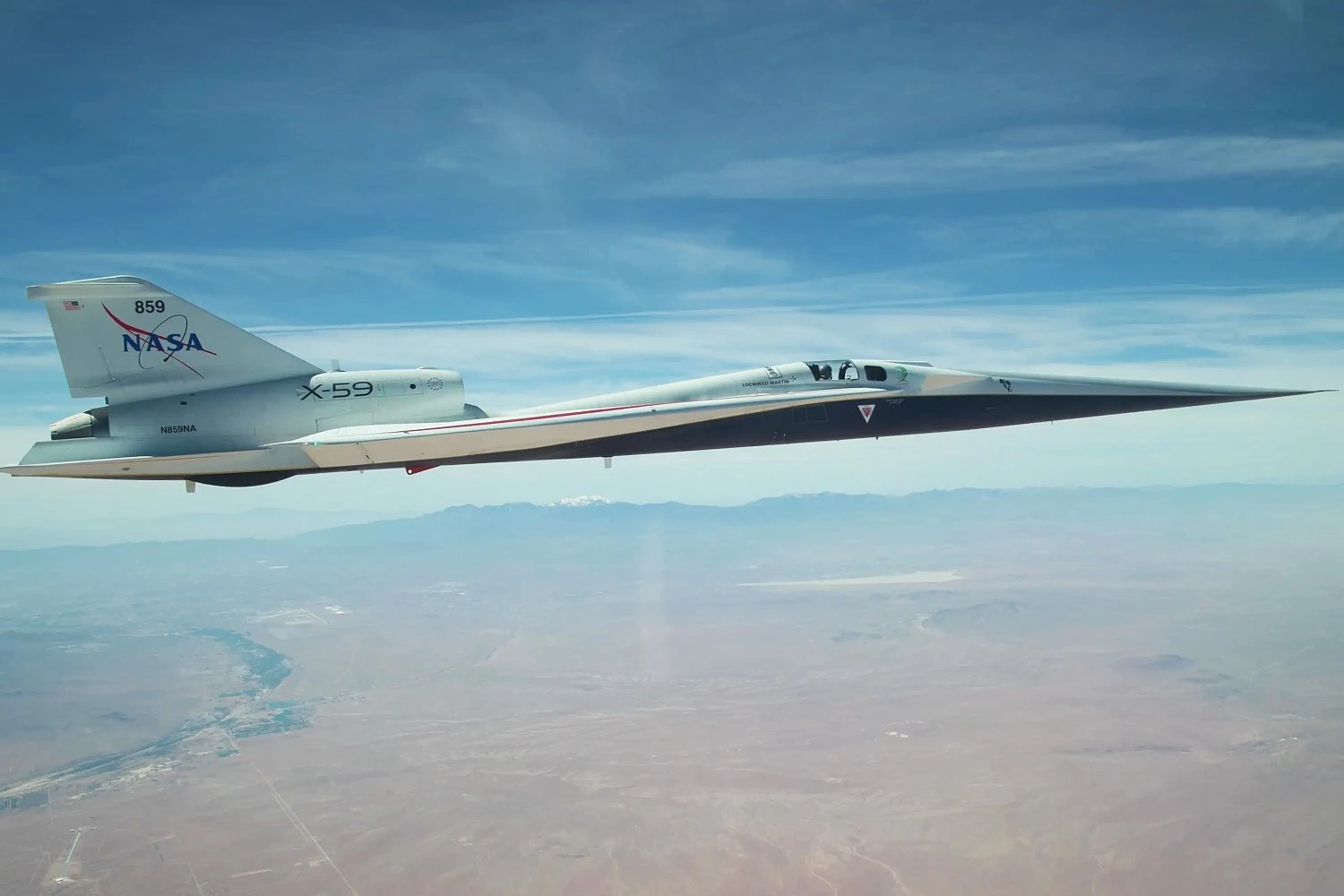
NASA’s X-59 experimental supersonic jet has completed its first flight with the landing gear retracted, a step that allows engineers to assess the aircraft’s full aerodynamic profile during testing.
The milestone flight took place on April 3 from NASA Armstrong Flight Research Center, with test pilot Jim “Clue” Less at the controls. The aircraft remained airborne for about 90 minutes, reaching 20,000 ft and a top speed of roughly 460 mph.
Early flights of experimental aircraft are typically conducted with the landing gear extended before moving to a clean configuration. With the gear retracted, the X-59 can now be evaluated in conditions closer to its intended supersonic cruise profile.
Developed by Lockheed Martin for NASA’s Quesst program, the X-59 is designed to cruise at Mach 1.42 at around 55,000 ft. Its elongated nose and carefully shaped fuselage are intended to manage shockwaves and reduce the intensity of the sonic boom to a softer “thump,” measured at about 75 perceived decibels.
The aircraft first flew on October 28, 2025, departing from Air Force Plant 42 in California and landing at Edwards after a subsonic sortie. The program has faced multiple delays since its initial design phase began in 2016, when Lockheed Martin was awarded the preliminary development contract.
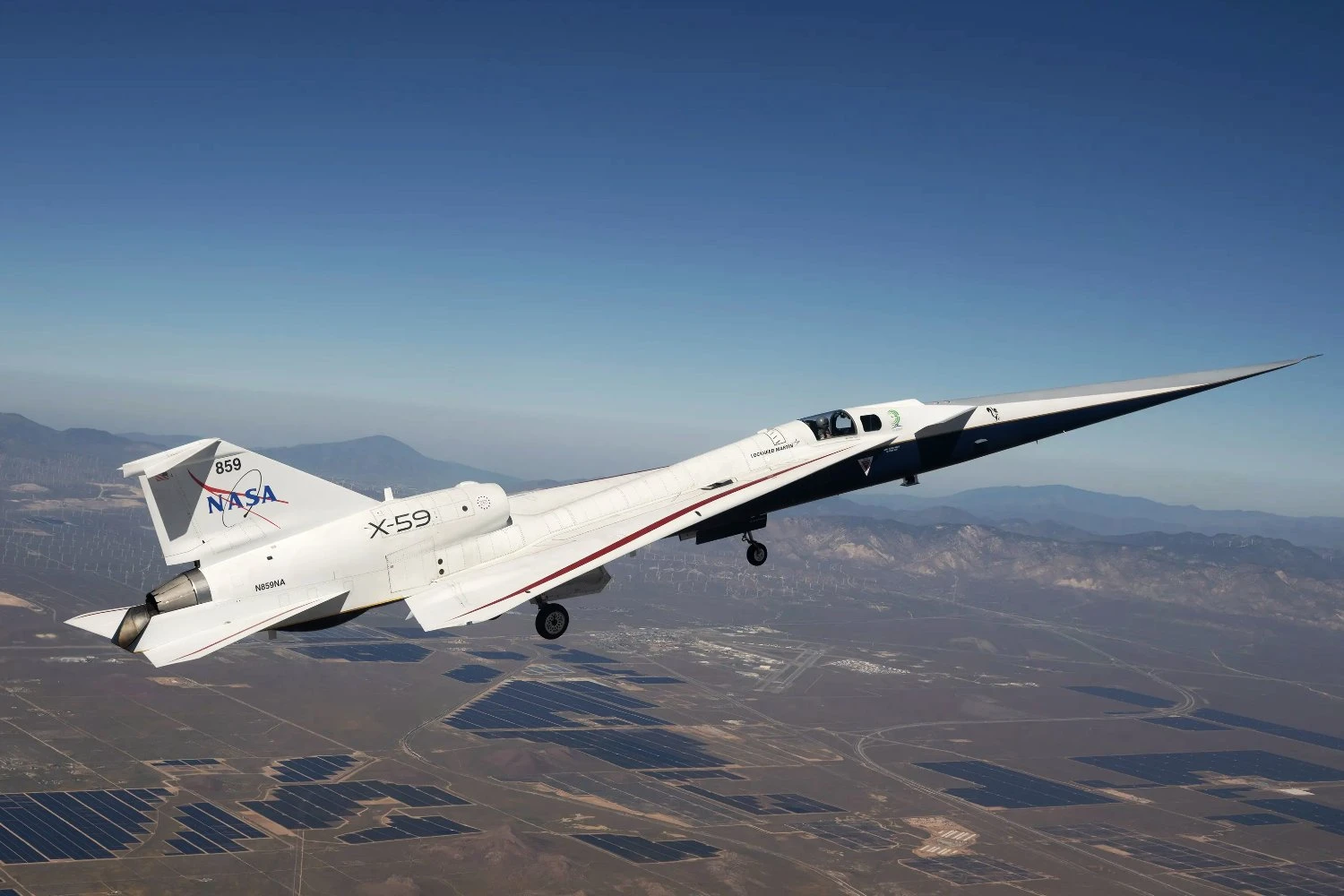
As of April 10, the X-59 had completed eight flights as part of its envelope expansion campaign. Data collected from these tests will support NASA’s effort to demonstrate low-boom supersonic flight and provide regulators with information that could lead to changes in rules governing supersonic operations over land.