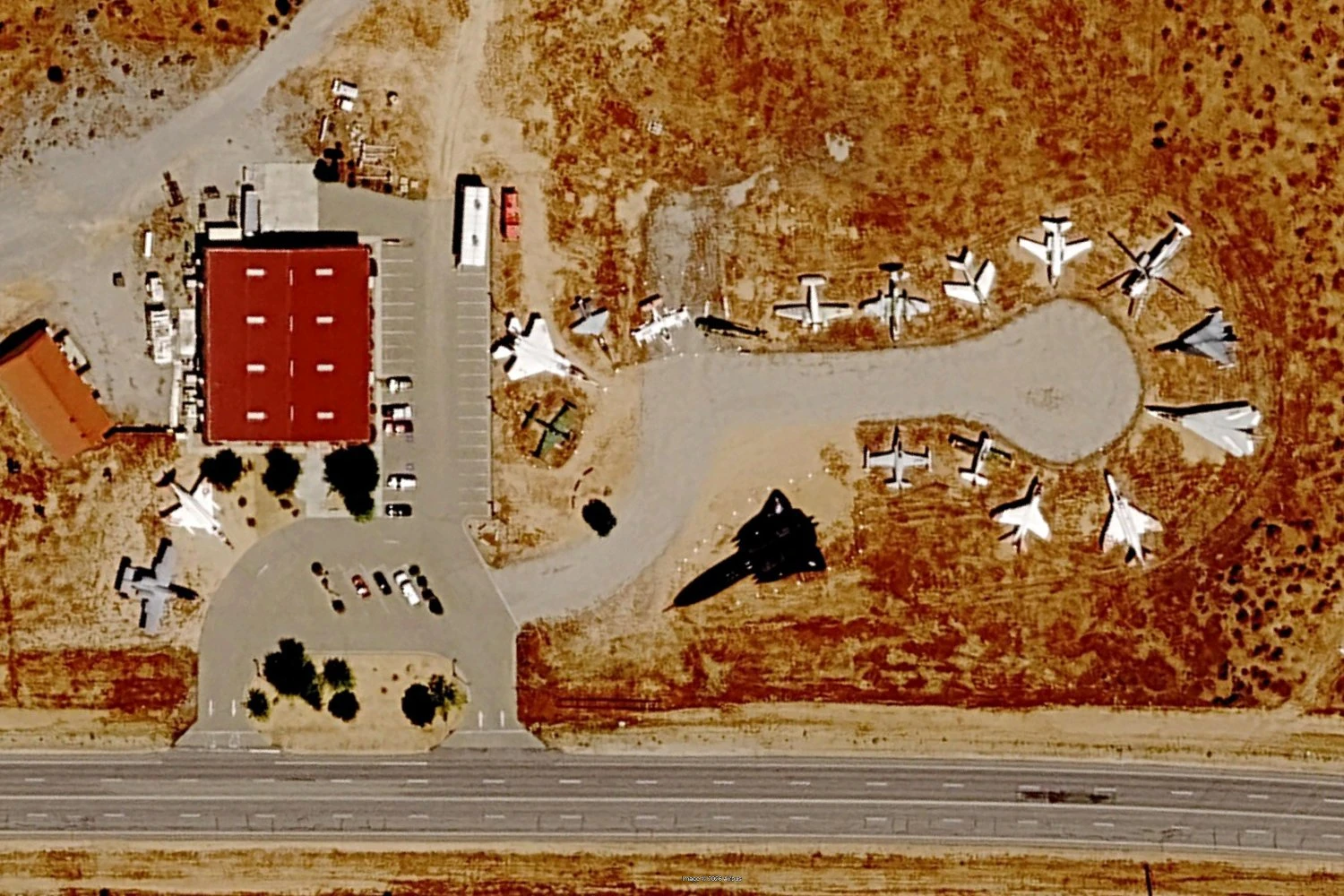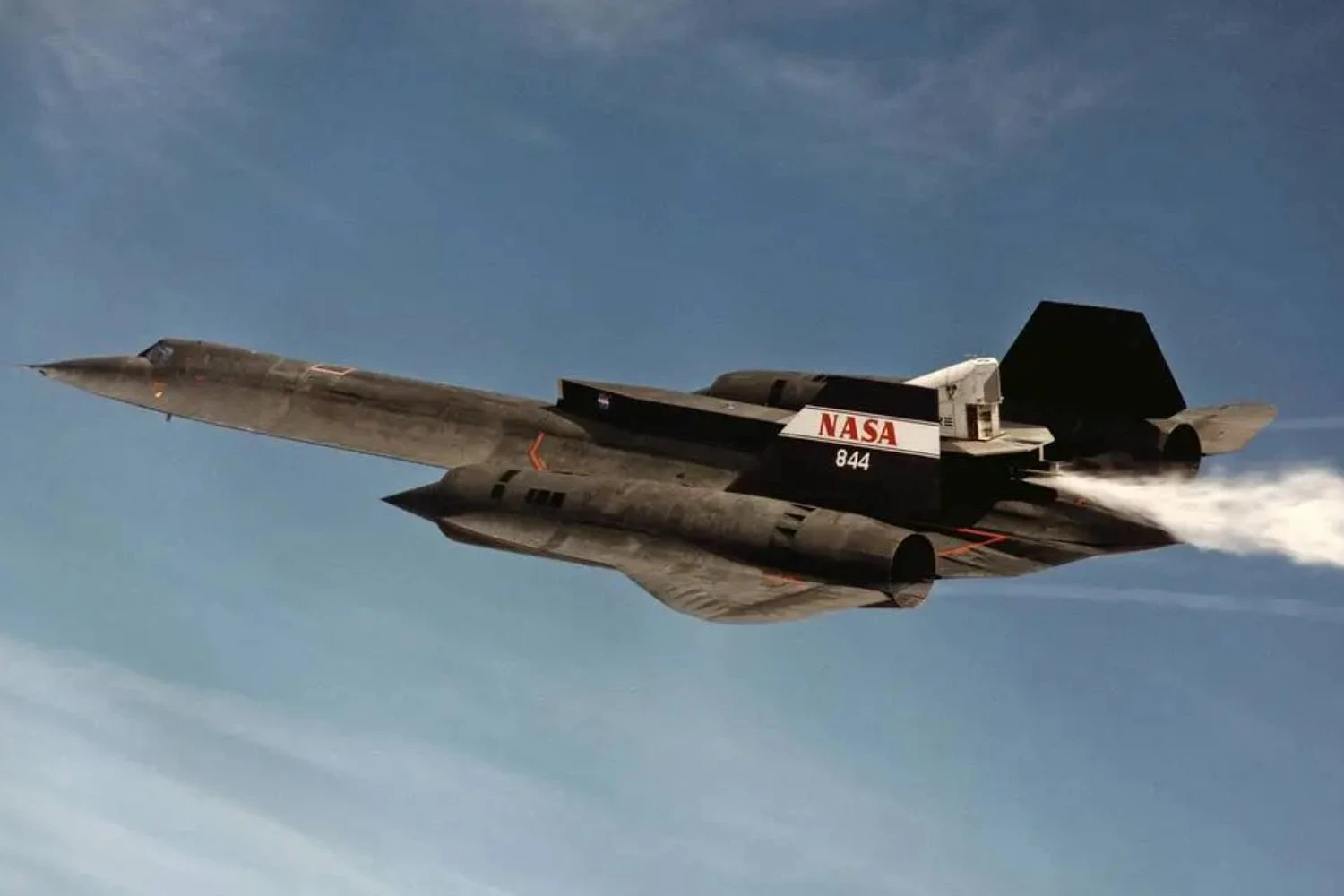
An SR-71 Blackbird that has not flown for nearly 27 years has quietly disappeared from its outdoor display at NASA's Armstrong Flight Research Center, while former members of the program have reportedly been contacted about the possibility of returning the aircraft to flight.
The aircraft is SR-71A 61-7980, also known by its NASA designation 844. It made the final flight by any SR-71 on October 9, 1999, before becoming a static display at Edwards Air Force Base in California.
NASA has not announced plans to restore the aircraft to flying condition. Its removal and the contacts with former SR-71 personnel were uncovered by Aviation Week, which first reported that satellite imagery showed the Blackbird was no longer at its usual outdoor location by May 17.
The publication subsequently reported that several former members of NASA's SR-71 program had been approached about a possible return to flight. At least some of those contacts reportedly began months before the aircraft's disappearance became public.
Follow Air Data News: WhatsApp | Instagram | LinkedIn | Twitter | Facebook
NASA has offered few details about the aircraft. In a response provided after questions about the missing Blackbird, the agency spoke of plans to fly "higher, farther, and faster than we have in decades," but did not explain what had happened to NASA 844 or confirm a restoration program.
Restart would be complex
Putting NASA 844 back into the air would require much more than making a 1960s aircraft airworthy again. The Blackbird operated as part of a highly specialized system built around sustained flight above Mach 3.
The SR-71's two Pratt & Whitney J58 engines were designed for an operating regime unlike that of conventional turbojets. The aircraft also used JP-7, a low-volatility fuel developed for the extreme temperatures encountered during high-speed flight, rather than the standard aviation fuels used by most military aircraft.
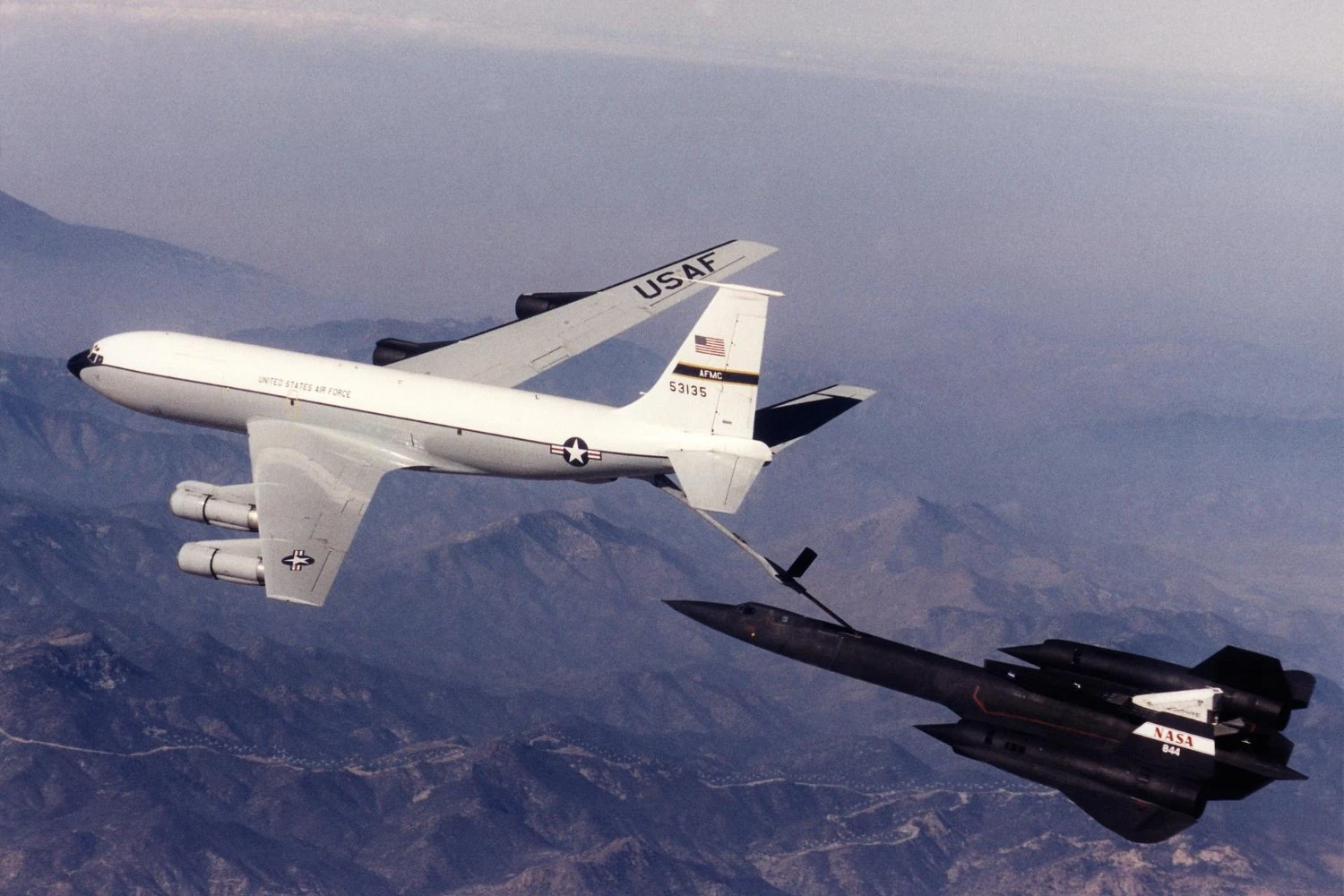
Air refueling was another part of that system. The U.S. Air Force developed the KC-135Q specifically to support Blackbird operations, with separate fuel systems that allowed it to carry JP-7 for the SR-71 while retaining conventional fuel for its own engines. The Q-model fleet later disappeared as a distinct Blackbird support force after the reconnaissance aircraft was retired.
NASA nevertheless has experience with the logistical challenge. Its Blackbirds remained active after the type's first Air Force retirement, and NASA 844 was still conducting research flights in the late 1990s. NASA records show an SR-71 refueling from a KC-135 during the Linear Aerospike SR-71 Experiment program in 1997.
Isaacman teases new X-plane
The sudden interest surrounding NASA 844 comes as NASA Administrator Jared Isaacman publicly pushes for a return to experimental aircraft development.
During the All-In Summit in September, Isaacman discussed rebuilding NASA's X-plane portfolio and said the agency was working to get back into the business of flying "high and fast." Behind him was an illustration of an unidentified black aircraft whose long nose, chines and overall planform evoked the Blackbird family.
The image did not depict a conventional SR-71, and Isaacman did not identify the aircraft when questioned about it. NASA has also disclosed no program matching the design.
That leaves two unusual developments occurring at roughly the same time: the agency is publicly talking about a new generation of high-speed experimental aircraft, while the last SR-71 ever flown has been removed from the place where it had spent years on display.
There is no public evidence that the two are connected. NASA itself has said it wants to fly "higher, farther, and faster than we have in decades," but has provided no explanation for the removal of NASA 844.
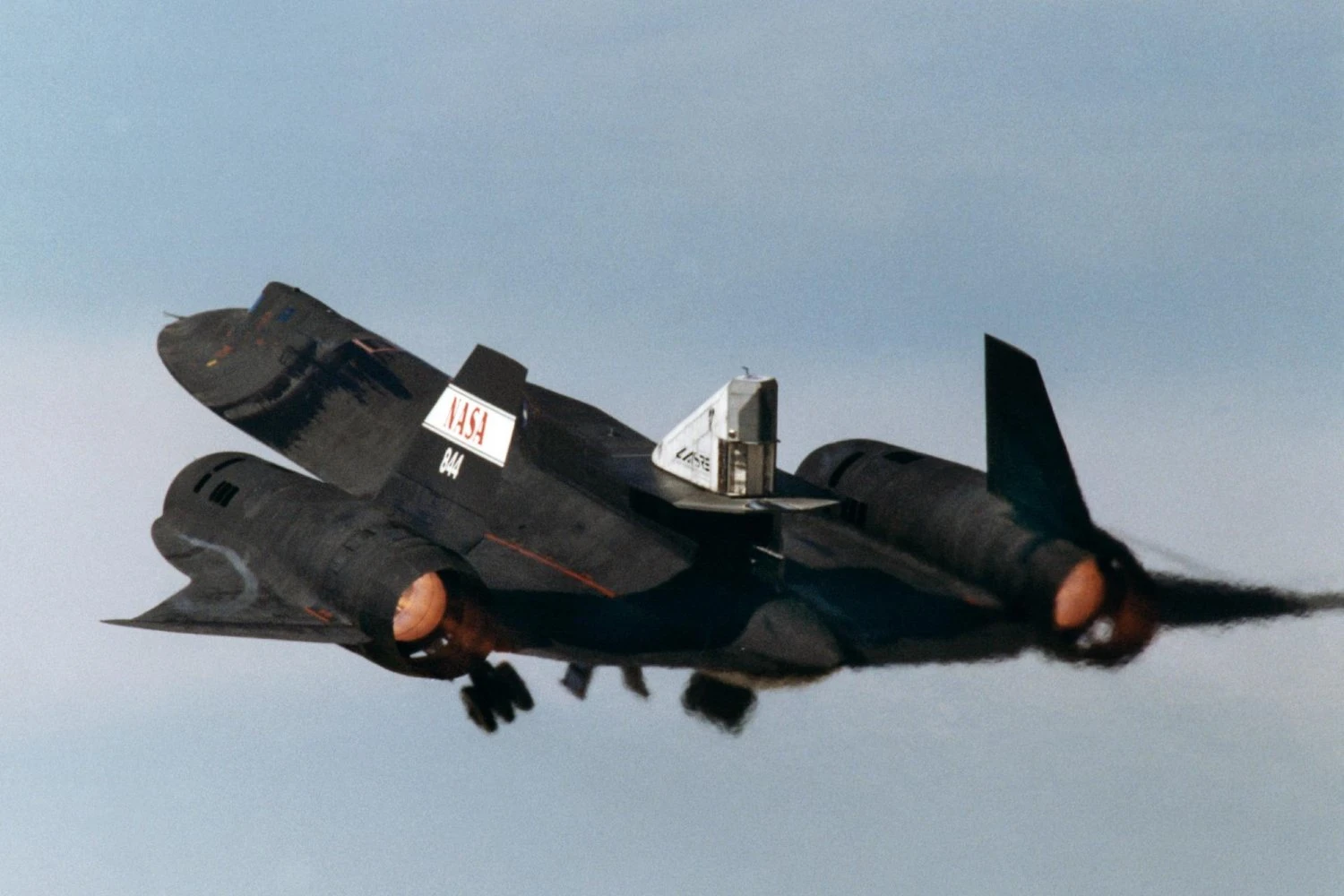
NASA's Blackbird testbed
If NASA 844 were made airworthy again, its usefulness would not depend on reviving the reconnaissance missions for which the SR-71 was originally built.
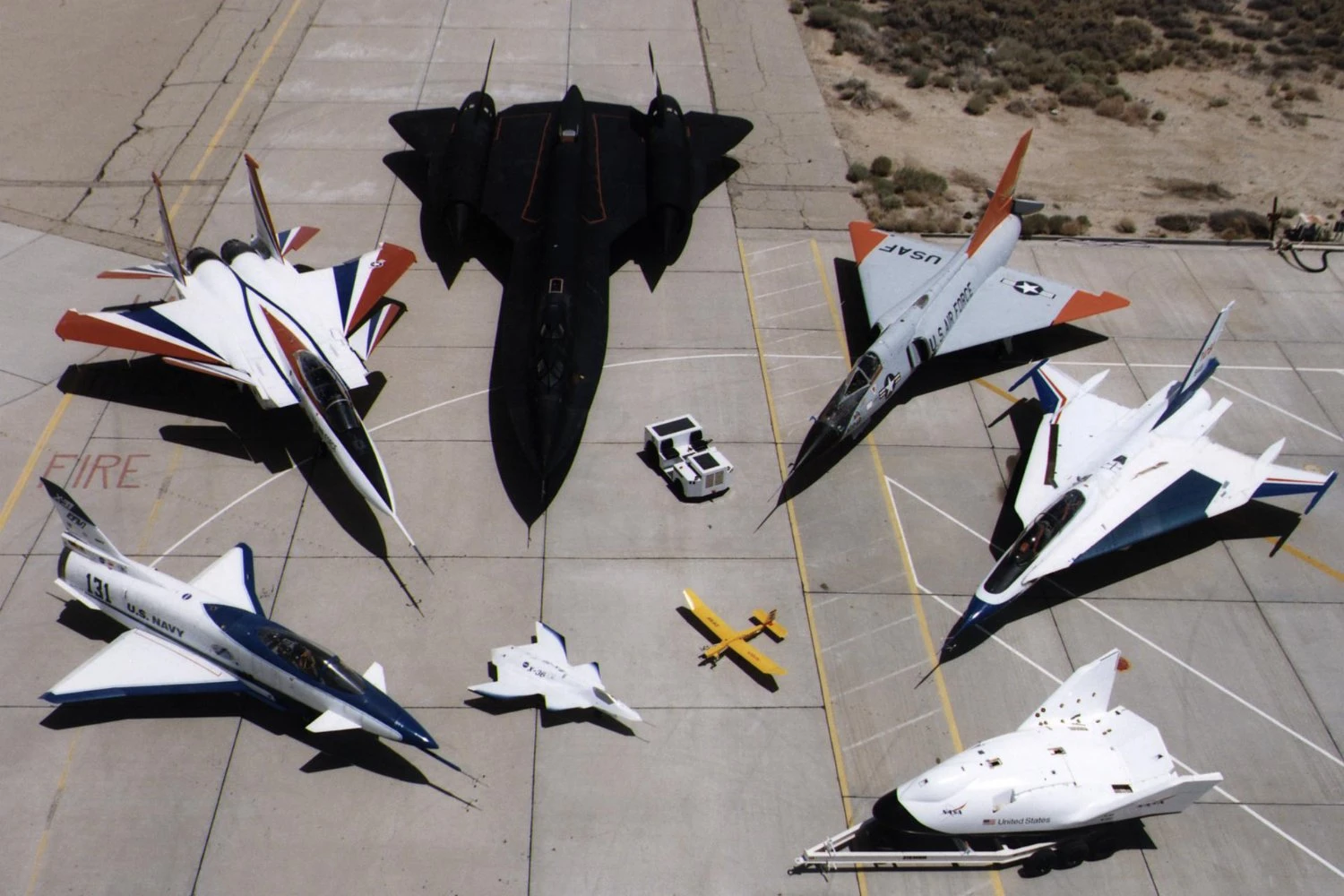
NASA operated Blackbirds during the 1990s specifically as high-speed research platforms. The aircraft supported work involving aerodynamics, propulsion, structures, thermal-protection materials, high-temperature instrumentation, atmospheric research and sonic-boom studies.
The SR-71 could also carry large experiments into an environment that remains difficult to reproduce with a crewed research aircraft. NASA documentation for its Blackbird testbed describes payloads of up to 14,500 lb mounted above the fuselage and test conditions reaching Mach 3.2 and 80,000 feet.
Recent news

September 30, 2026
September 30, 2026
One of the most visible examples was LASRE. NASA mounted a large test fixture containing a linear aerospike rocket experiment above an SR-71 to study technologies associated with reusable launch vehicles. The installation demonstrated how the Blackbird could serve as a carrier for experimental hardware rather than merely as an object of research itself.
NASA 844 has particular significance. The aircraft flew at Mach 3.21 and reached 80,100 feet during the Edwards Air Force Base air show on October 9, 1999, in what NASA records as the final flight of any Blackbird. A fuel leak prevented a planned second flight the following day.
NASA subsequently kept its remaining SR-71s in flyable storage until 2002 before sending them to displays and museums. Twenty-seven years after 844 last flew, the same aircraft has now been removed from its longtime display location at Edwards. Whether it will ever leave the ground again remains unanswered.