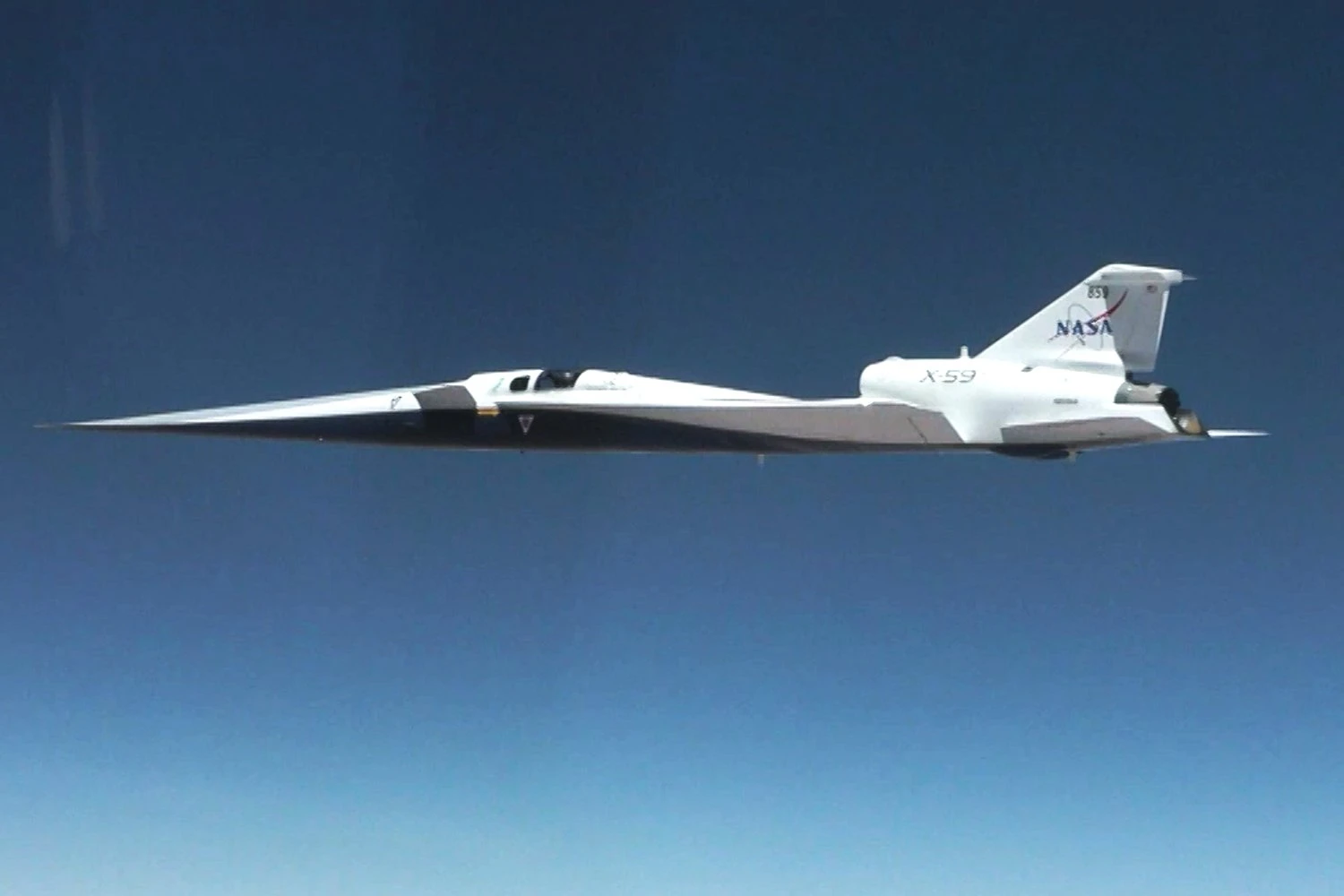
NASA wants to rebuild its X-plane portfolio with experimental aircraft designed to explore higher speeds, altitudes and new propulsion technologies, according to agency Administrator Jared Isaacman.
Isaacman outlined the plans during a presentation that attracted attention for another reason: a slide titled “Rebuilding our X-plane portfolio” showed a dark, unidentified aircraft with a configuration reminiscent of the SR-71 Blackbird.
NASA has not identified the aircraft or confirmed that the image represents an actual program under development. The agency instead says it intends to expand experimental aviation beyond the X-59, its current piloted X-plane.
Isaacman added to the speculation when questioned about the image. After it was described as a Blackbird, he challenged that identification and declined to say what the aircraft depicted. He instead pointed to NASA’s intention to pursue aircraft capable of flying higher and faster than its recent experimental designs.
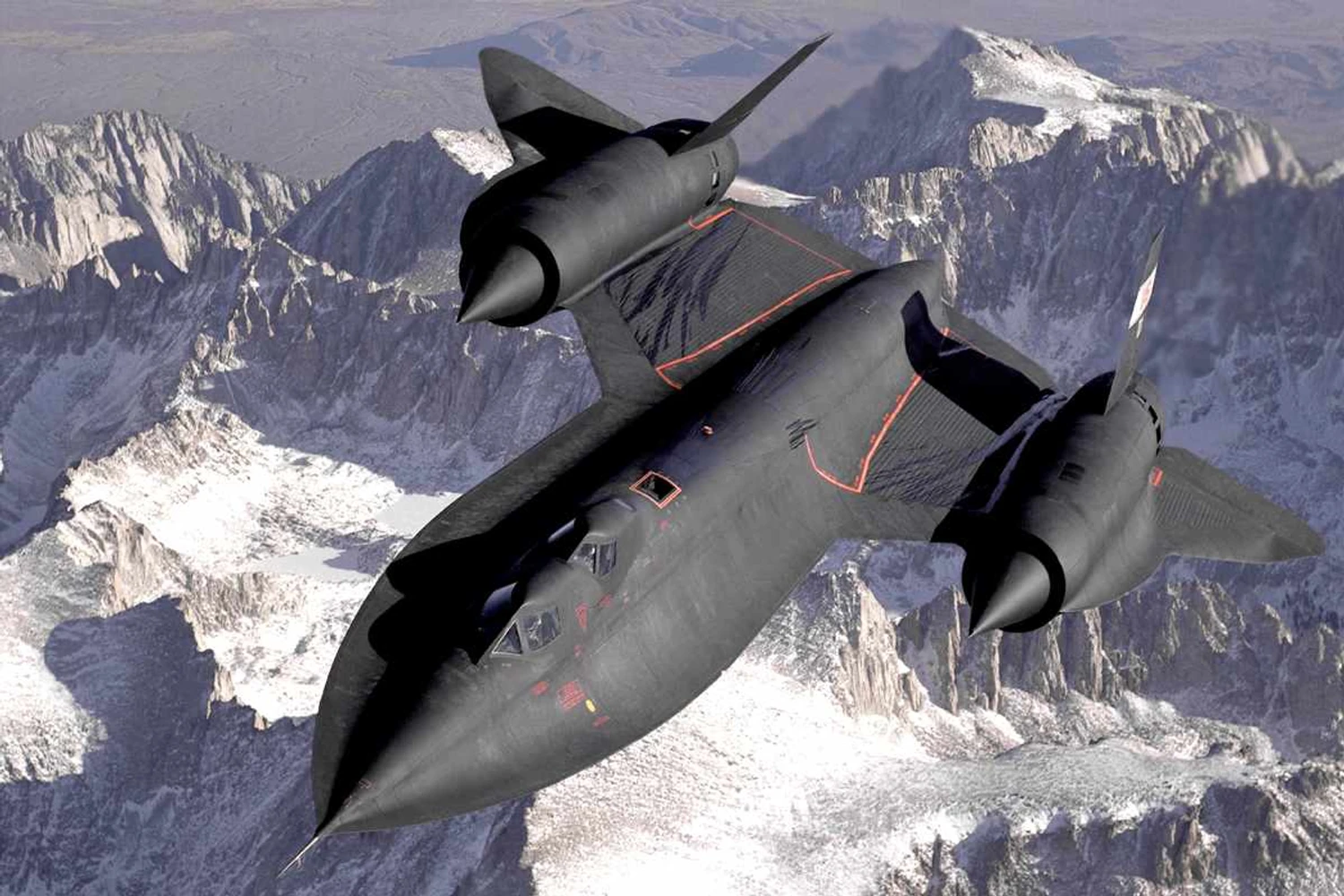
NASA has previously flown Blackbirds for research
Although the SR-71 was developed for high-altitude reconnaissance missions with the US Air Force, NASA later used Blackbirds extensively as experimental aircraft. During the 1990s, two SR-71s operated from the agency’s Dryden Flight Research Center as testbeds for high-speed and high-altitude research.
The aircraft supported studies of aerodynamics, propulsion, thermal protection, atmospheric conditions and sonic booms. One SR-71 also carried the Linear Aerospike SR-71 Experiment (LASRE), a test article developed to study technology for a reusable launch vehicle. NASA had earlier flown two YF-12A interceptors and an SR-71 operating as the YF-12C between 1969 and 1979 to investigate sustained flight above Mach 3.
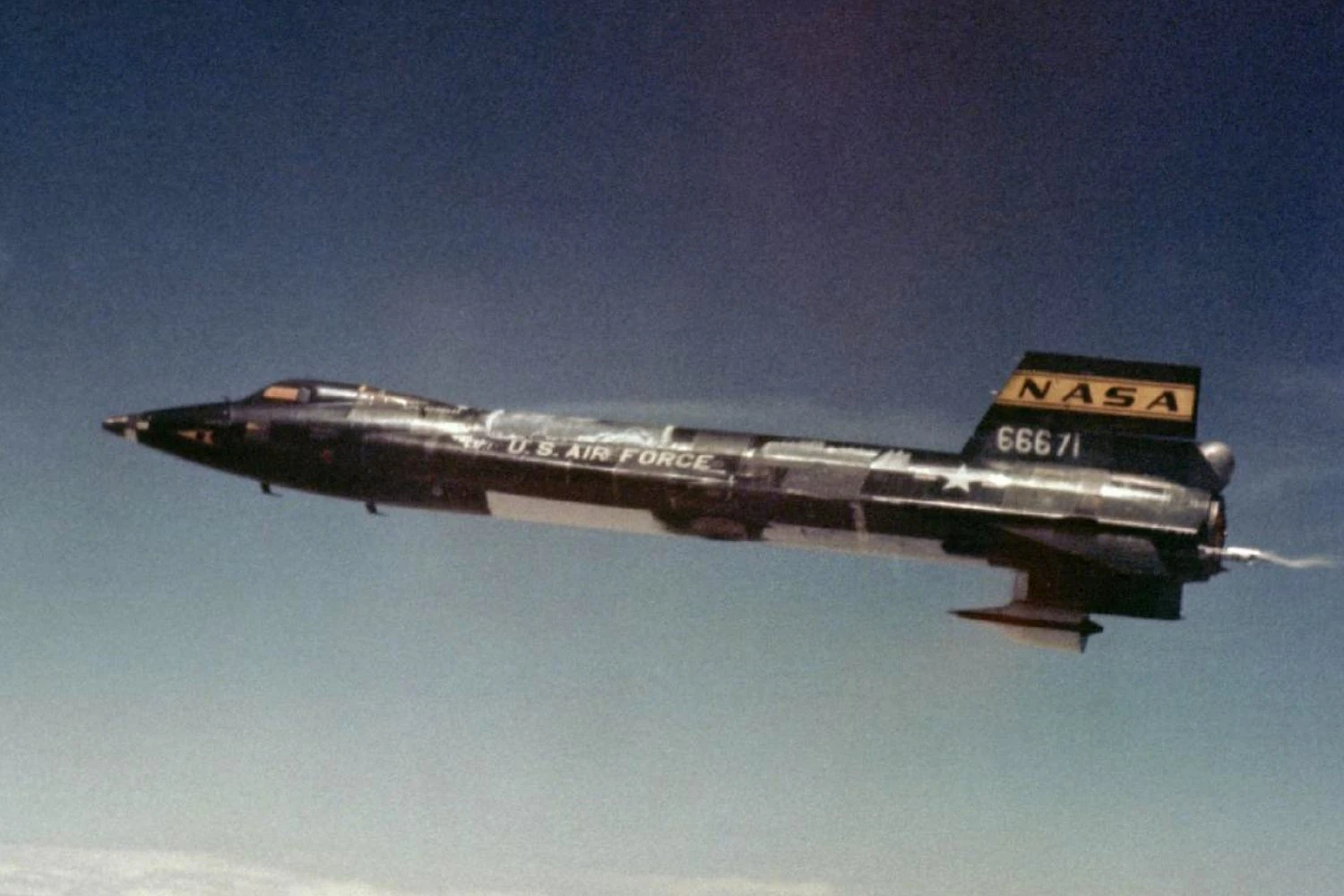
High-speed experimental flight, however, has an even longer history at the agency and its predecessor, the National Advisory Committee for Aeronautics (NACA). The Bell X-1 became the first piloted aircraft to exceed the speed of sound in level flight in 1947, more than a decade before NASA was established.
The X-15 later took that research far beyond Mach 1. Operated in a joint NASA, US Air Force and US Navy program, the rocket-powered aircraft reached Mach 6.7 in 1967 and an altitude of 354,200 feet in 1963. NASA returned to hypersonic X-plane research with the unmanned X-43A, which reached approximately Mach 9.6 in 2004 while demonstrating air-breathing scramjet propulsion.
X-59 is only the beginning
NASA’s current flagship experimental aircraft is the Lockheed Martin X-59, developed under the Quesst program to investigate whether a shaped airframe can reduce the sonic boom generated during supersonic flight.
The X-59 achieved its first supersonic flight in June 2026 and subsequently reached its design condition of Mach 1.4 at approximately 55,000 feet. Its purpose is not to set speed records, but to collect data that could eventually support changes to restrictions on civil supersonic flight over land.
Isaacman has described the X-59 as the beginning of a renewed emphasis on experimental aviation. Earlier this year, he included building more X-planes among his priorities for NASA, reviving a role that produced some of the agency’s most influential aeronautical research programs.