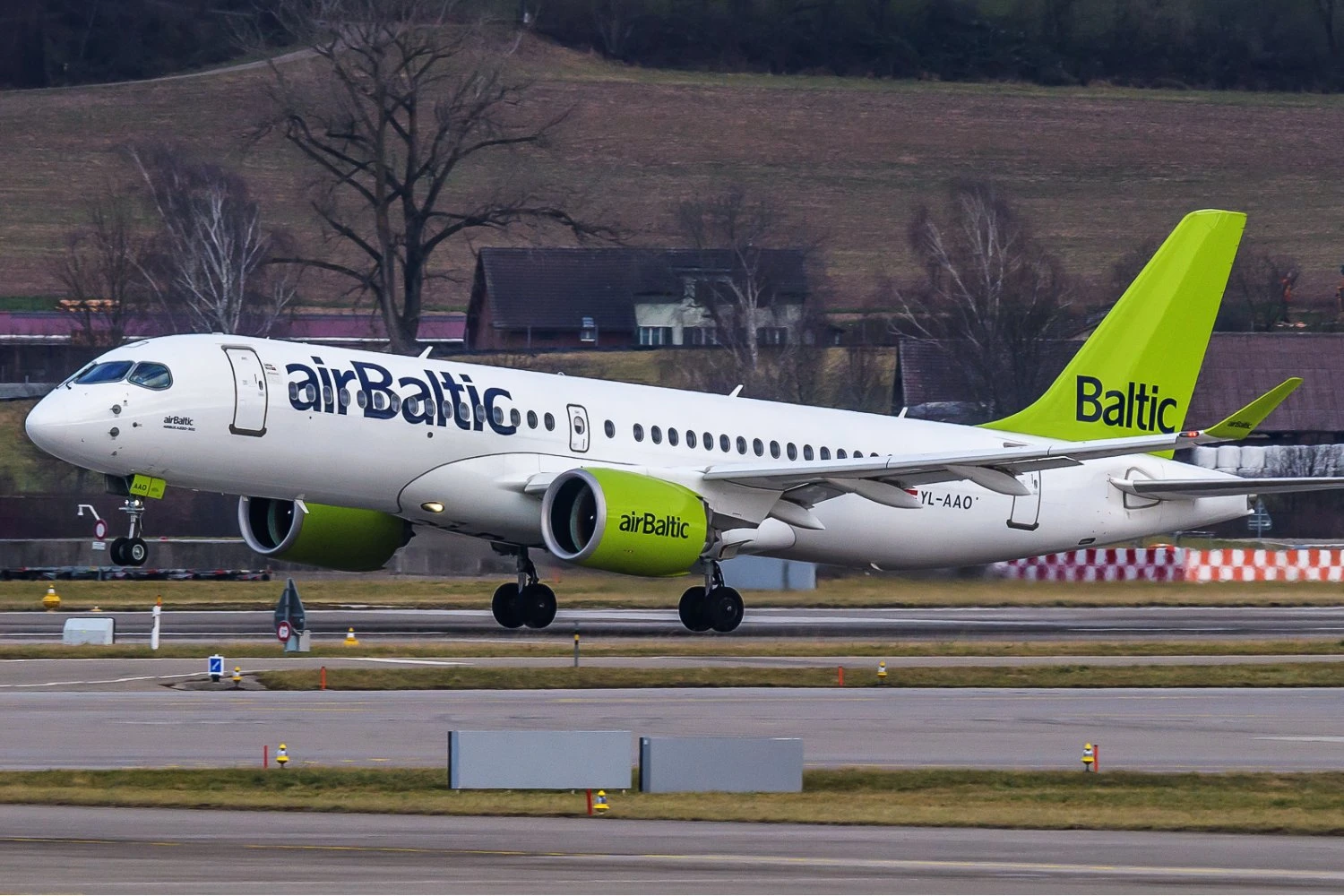
The financial crisis at airBaltic is forcing SWISS to consider alternatives for the five Airbus A220-300s it currently receives from the Latvian carrier under a wet-lease agreement.
SWISS told Swiss media that the aircraft continue to operate normally and that no immediate changes are planned. However, the airline is examining alternatives because airBaltic's restructuring could affect the availability of aircraft currently assigned to other carriers.
Under a wet-lease agreement, airBaltic provides the aircraft, crews, maintenance and insurance, with the flights operating on behalf of SWISS. The arrangement has allowed the Swiss carrier to supplement its own fleet, particularly during periods of limited aircraft availability.
Lufthansa Group is also an airBaltic shareholder
The situation is unusual because SWISS is part of Lufthansa Group, which itself owns 10% of airBaltic. The German aviation group invested €14 million in the Latvian airline in 2025 and obtained a seat on its supervisory board.
The investment was closely linked to airBaltic's role as a wet-lease supplier for Lufthansa Group airlines. At the time, Lufthansa said the transaction would strengthen the partnership and give the group greater flexibility in deploying additional capacity.
SWISS also relies on Helvetic Airways for part of its operation. The regional airline operates Embraer E-Jets on behalf of SWISS, and CEO Jens Fehlinger recently said the partnership should continue for at least another three to five years.
The airline has nevertheless been reducing the overall number of aircraft supplied by external operators. SWISS CFO Dennis Weber said in August that the number of wet-leased aircraft was expected to fall from 27 to around 20.
airBaltic plans smaller fleet after restructuring
airBaltic filed for Chapter 11 protection in the United States in September as it seeks to restructure its financial obligations. The procedure allows the company to continue operating during the process.
One of the most significant changes concerns its Airbus A220 fleet. airBaltic plans to return 20 aircraft to lessors and finish 2026 with 36 aircraft, substantially reducing the capacity available both for its own network and wet-lease contracts.
The Latvian airline built a major part of its recent business around supplying A220s to other European carriers. This strategy helped place aircraft and crews outside the seasonal Baltic market, but the reduction in fleet size now raises questions about how much of that activity can be maintained.
Ryanair targets capacity left by airBaltic
airBaltic's retreat is also attracting competitors in its home region. Ryanair announced plans to invest US$1.6 billion in the Baltic states and increase the number of aircraft based there from seven to 16 by 2031.
The Irish low-cost carrier said the expansion could raise its annual capacity in the region to 11 million seats. Ryanair explicitly linked the opportunity to airBaltic's planned fleet reduction, with additional capacity already scheduled for Riga during the coming winter.