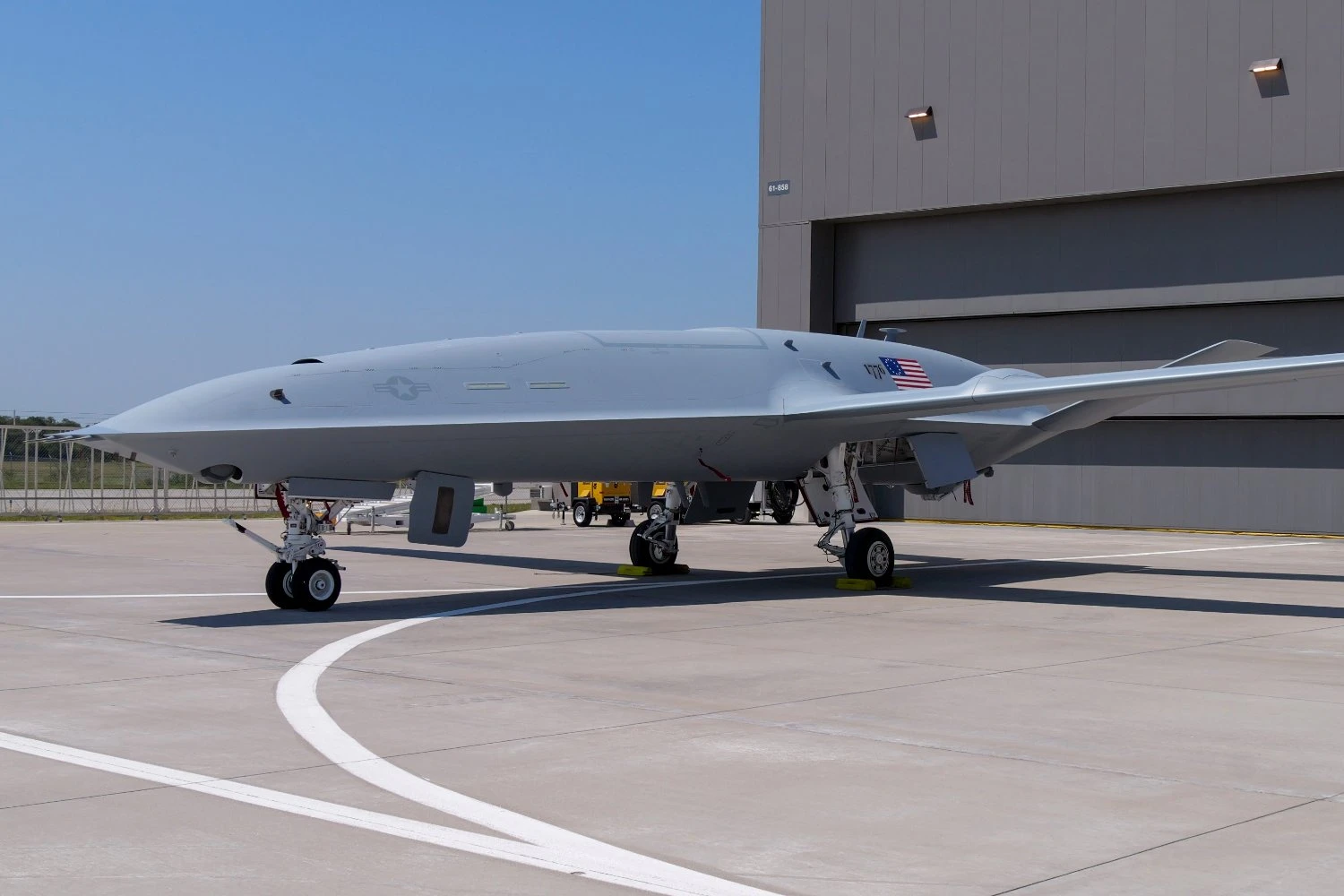
The U.S. Navy has awarded Boeing the first production contract for the MQ-25A Stingray, its carrier-based unmanned tanker designed to replace the F/A-18E/F Super Hornet in the aerial refueling role.
The US$562 million fixed-price incentive contract covers three MQ-25As under Low Rate Initial Production Lot 1. It also provides advance funding for long-lead components for another three aircraft planned for Lot 2. Deliveries from the first production batch are expected to begin in 2029.
Boeing said the three aircraft increase the number of MQ-25As under contract to 14. Lot 2 is planned for award in 2027.
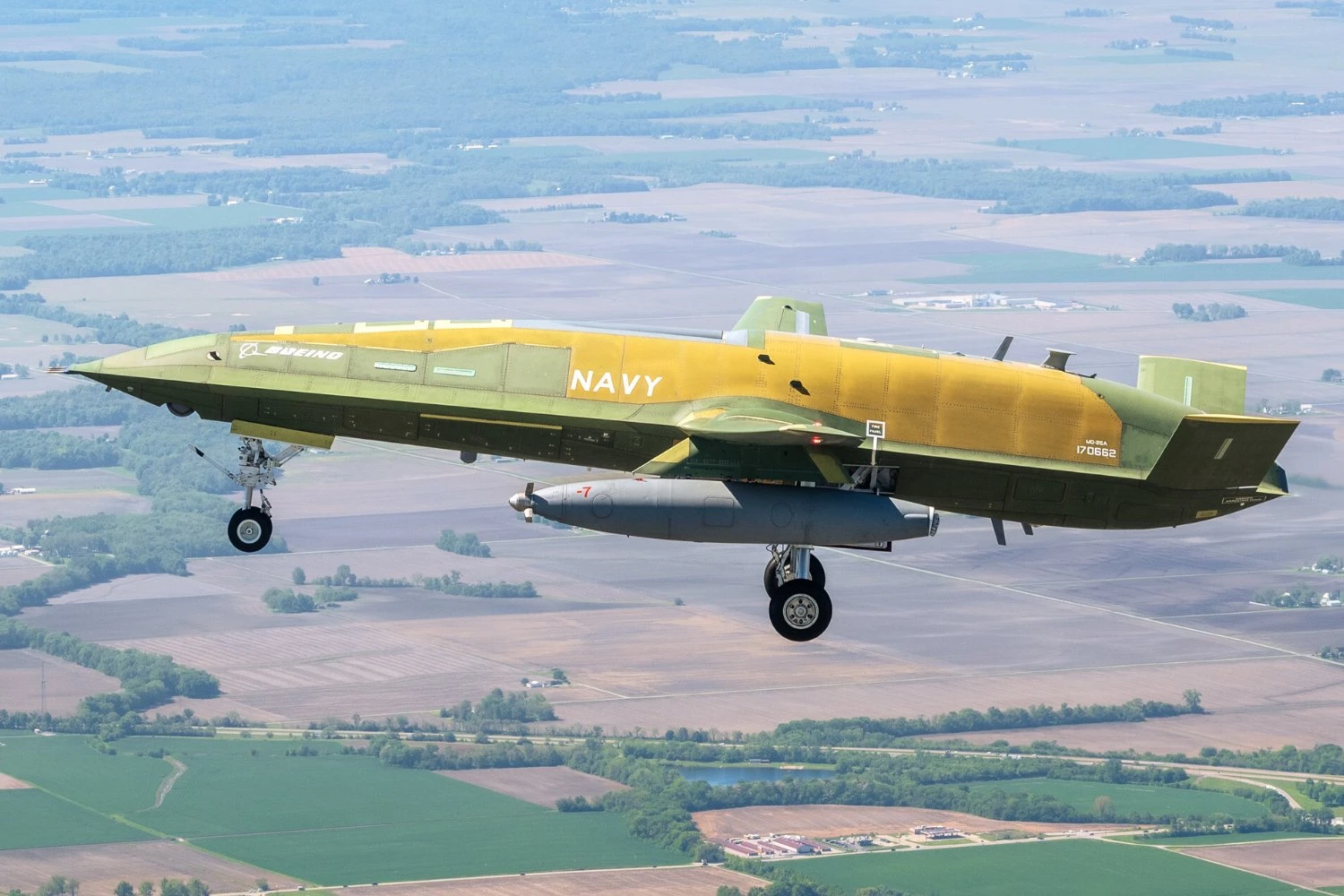
The production order follows Milestone C approval in May, which authorized the Stingray to enter the Production and Deployment phase. The decision came less than a month after the first MQ-25A Engineering Development Model completed its maiden flight on April 25 from Boeing's facility at MidAmerica Airport in Mascoutah, Illinois.
Follow Air Data News: WhatsApp | Instagram | LinkedIn | Twitter | Facebook
During the approximately two-hour flight, the aircraft taxied, took off, flew and landed autonomously while Navy and Boeing Air Vehicle Pilots monitored the mission and sent commands through the Unmanned Carrier Aviation Mission Control System. Further flight testing is planned before the program moves to Naval Air Station Patuxent River in Maryland for work toward carrier qualification.
Production program covers 76 aircraft
The Navy currently lists 76 air vehicles in the MQ-25A program of record, including four Engineering Development Models and five System Demonstration Test Articles. Seven test aircraft are now in production at Boeing facilities in St. Louis and Mascoutah.
Boeing's development program also includes two ground-test articles for static and fatigue testing. The new Lot 1 aircraft are the first Stingrays ordered specifically under low-rate production rather than the development and test program.
The MQ-25A is intended primarily to provide organic aerial refueling for carrier air wings. The Navy currently uses F/A-18E/F Super Hornets for part of that role, requiring combat aircraft to carry external fuel tanks and refueling equipment instead of performing strike missions.
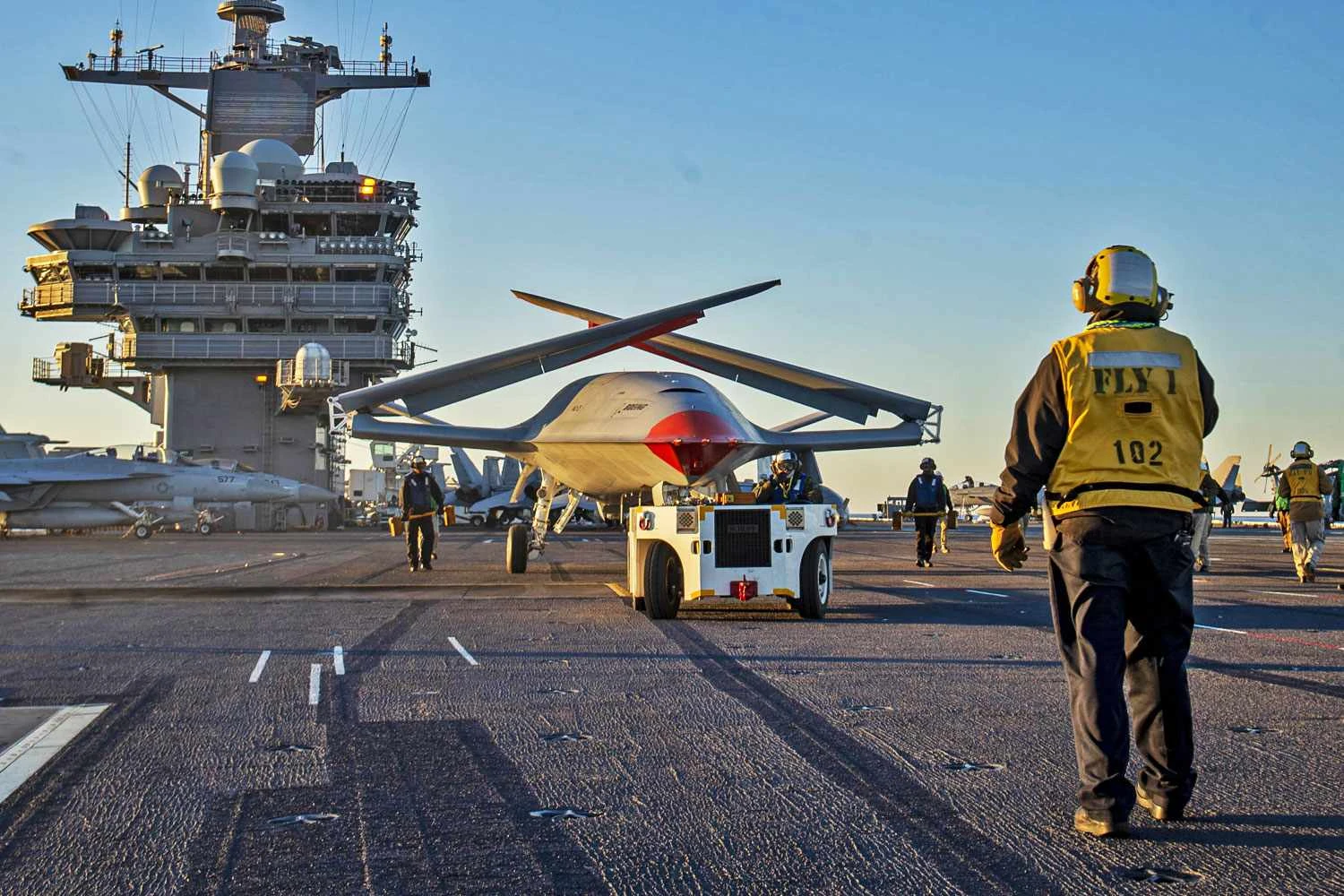
Once operational, the Stingray will become the Navy's first operational carrier-based unmanned aircraft. It will be controlled through the Unmanned Carrier Aviation Mission Control System, which integrates ground control stations, communications and carrier infrastructure. The Navy plans eventually to make both Nimitz- and Ford-class aircraft carriers capable of operating the MQ-25.
Program slipped from original 2024 target
The production milestone comes considerably later than originally planned. When Boeing won the US$805.3 million Engineering and Manufacturing Development contract in August 2018, the Navy expected the MQ-25A to achieve initial operational capability by 2024.
The original contract covered the design, development, construction, testing and support of four aircraft and was part of an accelerated acquisition effort intended to shorten development timelines.
The aircraft that flew this year is distinct from Boeing's earlier company-owned T1 demonstrator, which first flew in 2019 and subsequently conducted aerial refueling demonstrations with the F/A-18 Super Hornet, F-35C and E-2D Advanced Hawkeye.
Carrier infrastructure has meanwhile begun to take shape. The Navy installed its first operational Unmanned Air Warfare Center aboard the USS George H.W. Bush in 2024, providing the shipboard control environment that will eventually be used by Air Vehicle Pilots to operate the MQ-25.