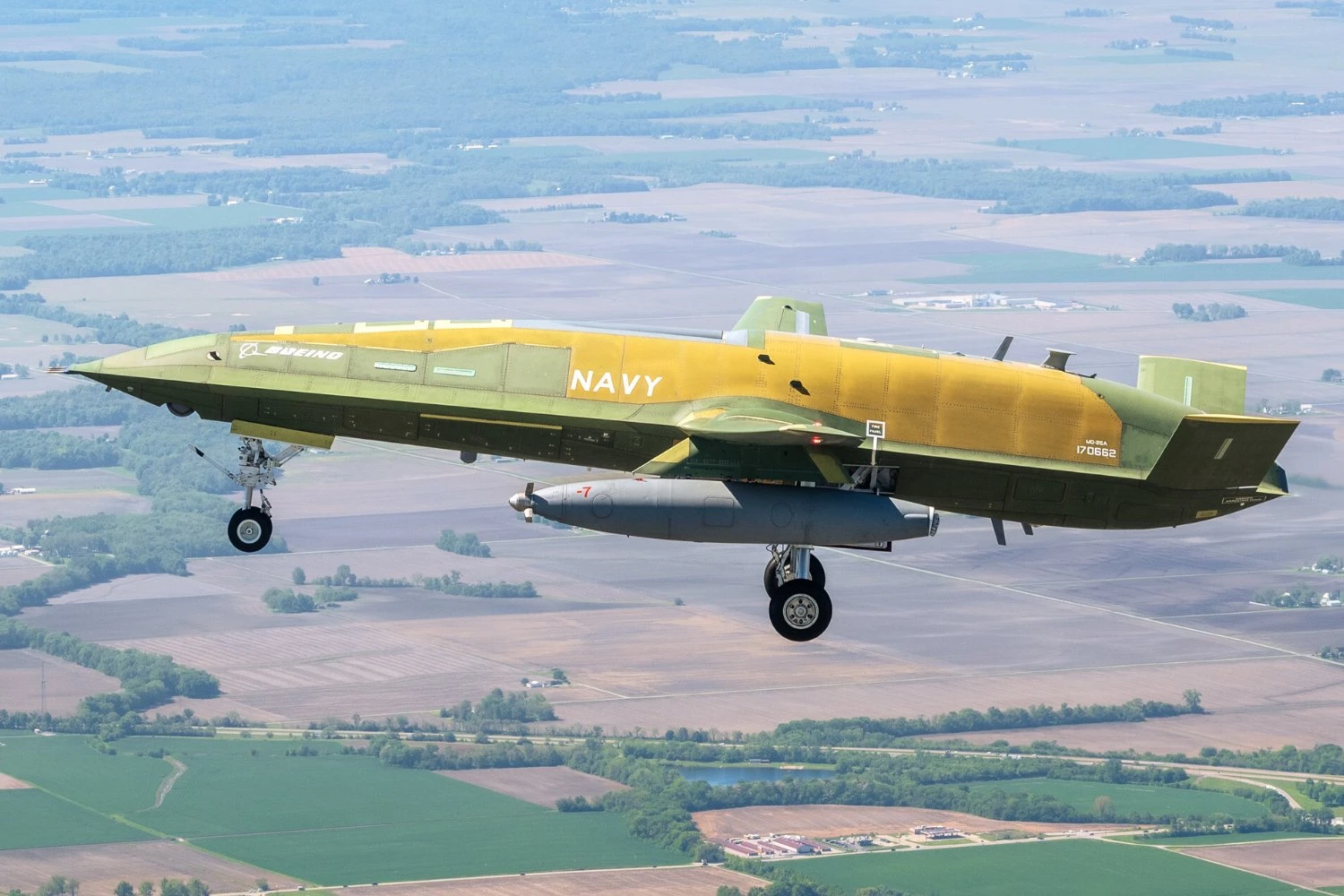
The U.S. Navy’s first production-representative Boeing MQ-25 Stingray completed its maiden flight on April 25, according to The Aviationist. The aircraft is expected to become the first carrier-based unmanned aircraft of the service.
The flight took place from MidAmerica St. Louis Airport in Illinois, with a Boeing-owned Douglas TA-4J Skyhawk and a U.S. Navy Beechcraft UC-12 Huron serving as chase aircraft.
The sortie occurred nearly seven years after the first flight of Boeing’s T1 demonstrator in September 2019 and follows months of ground testing that included autonomous taxi trials, systems checks and integration work.
Follow Air Data News: WhatsApp | Google News | Instagram | LinkedIn | Twitter | Facebook
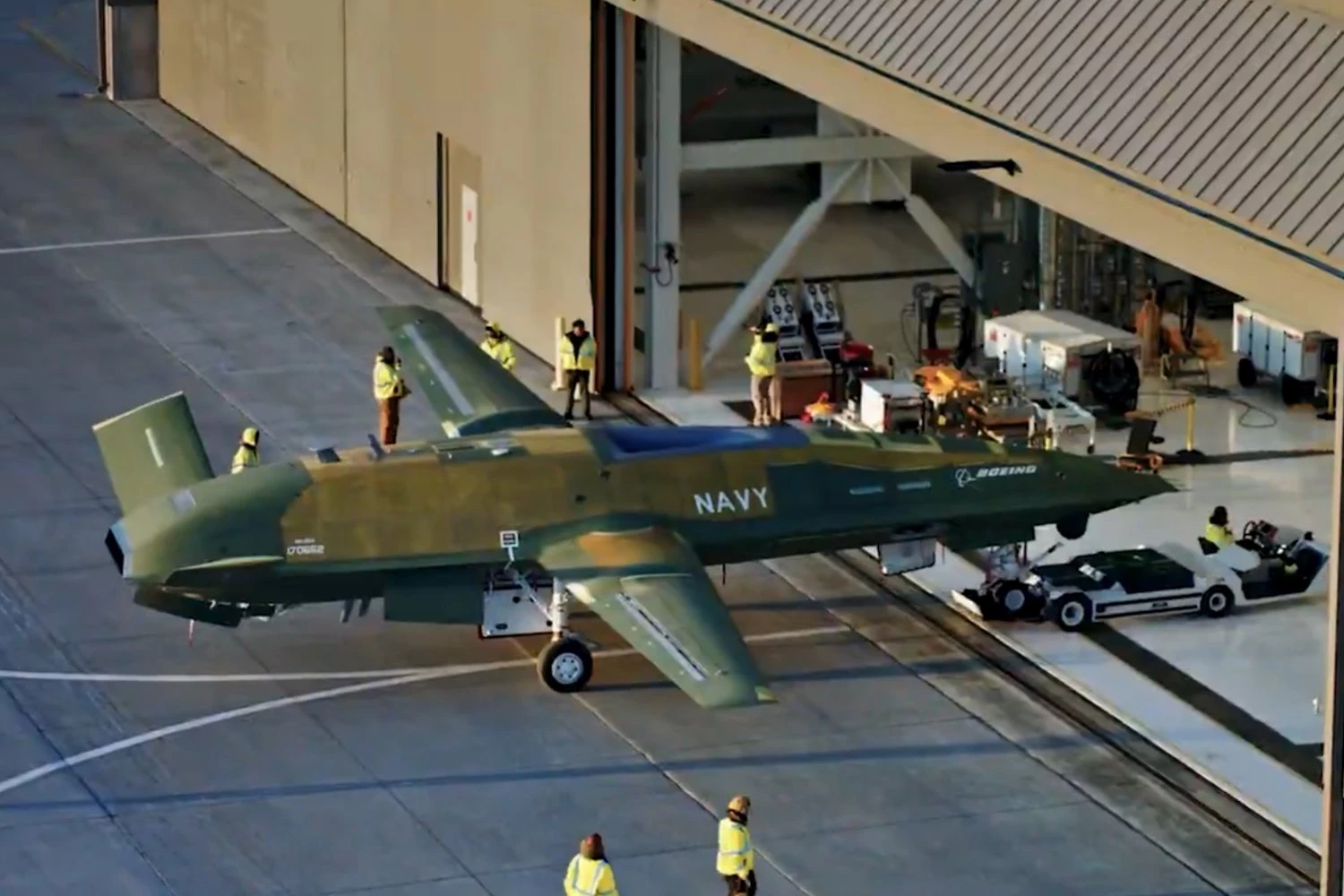
The new aircraft was built to the production-standard configuration that will be used during certification and operational testing. The U.S. Navy plans to produce nine aircraft for the test campaign ahead of an initial operational capability target in fiscal year 2027.
The Boeing MQ-25 Stingray is primarily designed to assume aerial refueling missions currently handled by Boeing F/A-18E/F Super Hornet jets, which the Navy has said devote between 20% and 30% of their flight hours to tanker duties.
Related news

September 16, 2026
September 15, 2026
Using the same Cobham aerial refueling pod carried by Super Hornets, the drone is expected to transfer between 14,000 and 16,000 pounds of fuel at a distance of 500 nautical miles.
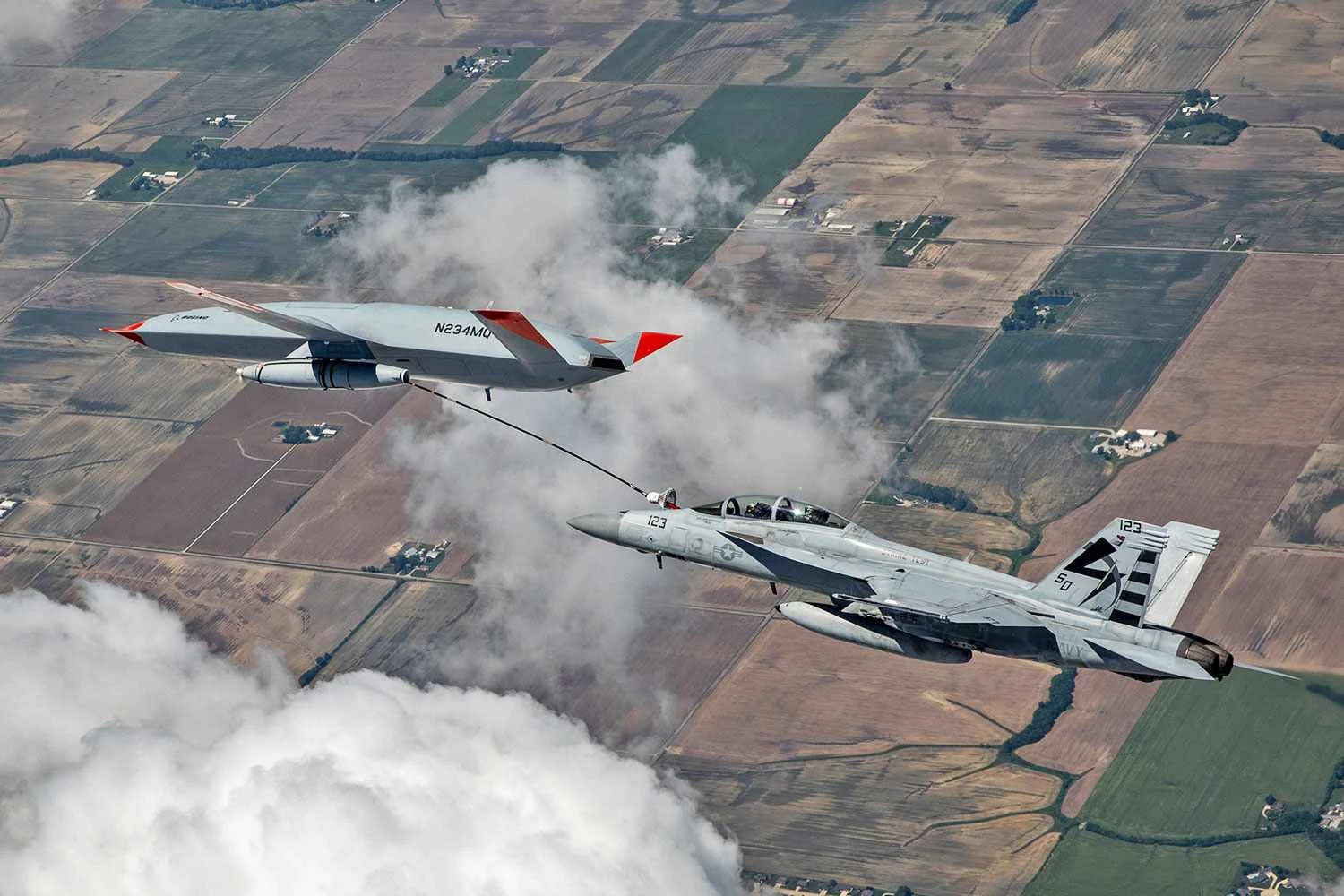
The aircraft also introduces a retractable electro-optical and infrared sensor turret, opening the door for secondary intelligence, surveillance and reconnaissance missions.
Once flight envelope expansion is completed, the program is expected to move toward carrier-based testing. Boeing’s earlier T1 demonstrator already completed deck handling trials aboard the USS George H.W. Bush (CVN-77) in 2021.
The program has faced repeated delays over recent years, with major milestones slipping by roughly two years compared with earlier schedules, according to Pentagon and Government Accountability Office reports.