
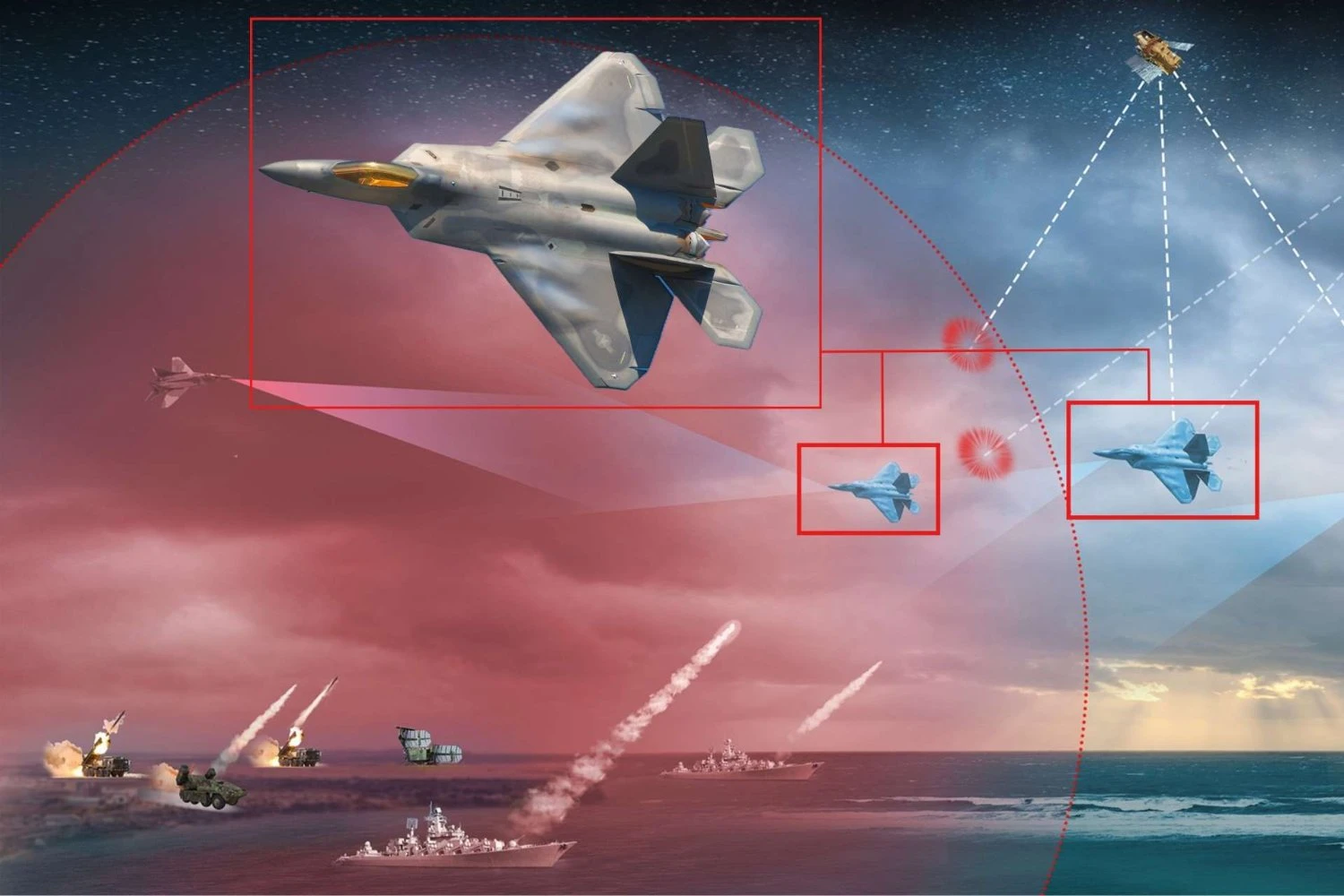
The U.S. Air Force’s Lockheed Martin F-22 Raptor is set to receive a new navigation upgrade designed to keep the stealth fighter operating in environments where GPS signals are jammed or unavailable.
Northrop Grumman said it recently delivered the first production version of its Embedded Global Positioning System/Inertial Navigation System Modernization system, known as EGI-M or LN-351.
The upgrade is designed to improve navigation resilience in contested environments where adversaries may attempt to disrupt satellite signals through jamming or spoofing.
Follow Air Data News: WhatsApp | Google News | Instagram | LinkedIn | Twitter | Facebook
EGI-M uses encrypted military M-code signals transmitted by newer GPS III satellites, which are more resistant to interference than older GPS signals. The system also combines GPS data with inertial navigation, allowing aircraft to maintain accurate positioning even when satellite connectivity is degraded.
The Lockheed Martin F-22 Raptor entered service in 2005 as the world’s first operational stealth fighter built primarily for air superiority missions. Although the aircraft remains one of the U.S. Air Force’s most capable interceptors, it is expected to eventually be replaced in that role by the future Boeing F-47 now under development.
Northrop began development of the new navigation system in 2018 and completed a critical design review in 2020.
The company tested the system aboard a Cessna Citation 560 in 2023, followed by additional U.S. Air Force evaluation flights in early 2025.
In addtion to the F-22, the system is also planned for the Northrop Grumman E-2D Advanced Hawkeye and could later be integrated into other U.S. military aircraft including the Boeing P-8 Poseidon, Sikorsky CH-53K King Stallion and Northrop Grumman RQ-4 Global Hawk.