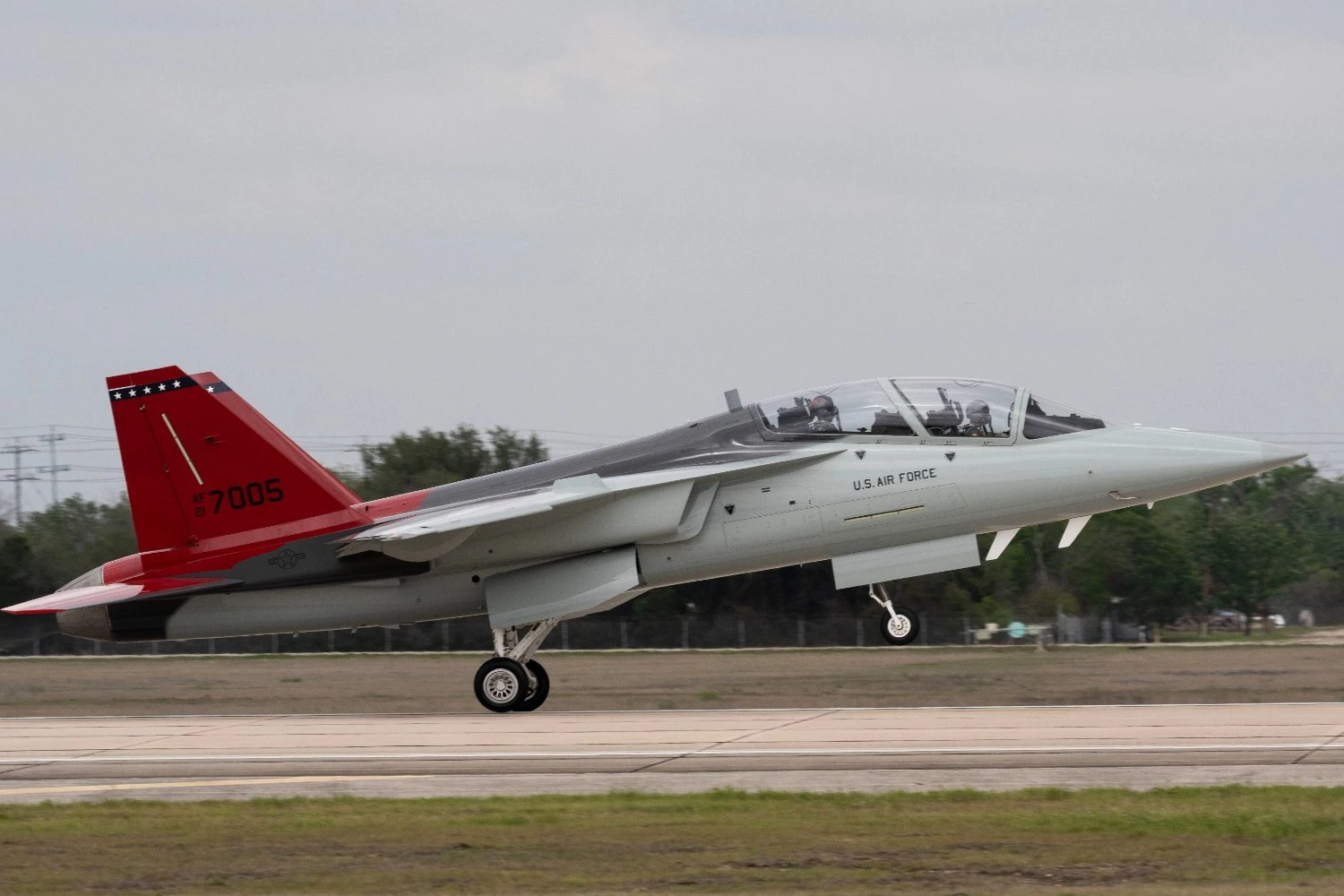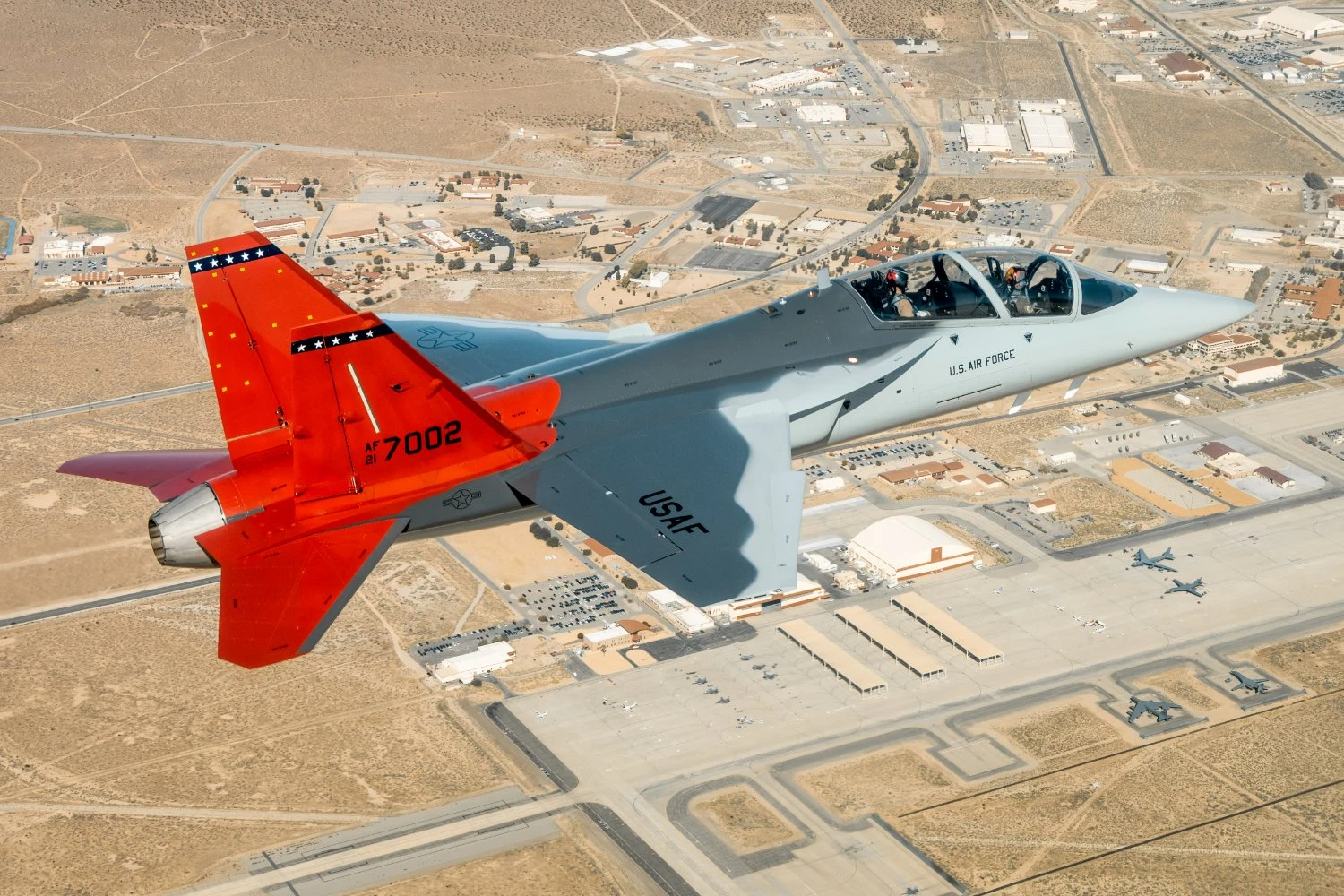
The U.S. Air Force (USAF) has approved the start of production for the T-7A Red Hawk jet trainer, authorizing an initial contract for 14 aircraft following the program’s Milestone C decision.
The $219 million award to Boeing covers the first low-rate initial production batch, along with spares, support equipment and training systems. The aircraft is being developed in partnership with Saab, which supplies major structural sections including the rear fuselage. The approval marks a transition point for a program that has faced repeated delays and technical challenges in recent years.
The T-7A is intended to replace the aging Northrop T-38 Talon fleet, which has been in service for more than six decades. The new aircraft is designed to prepare pilots for fourth-, fifth- and future-generation combat aircraft, including fighters and bombers.
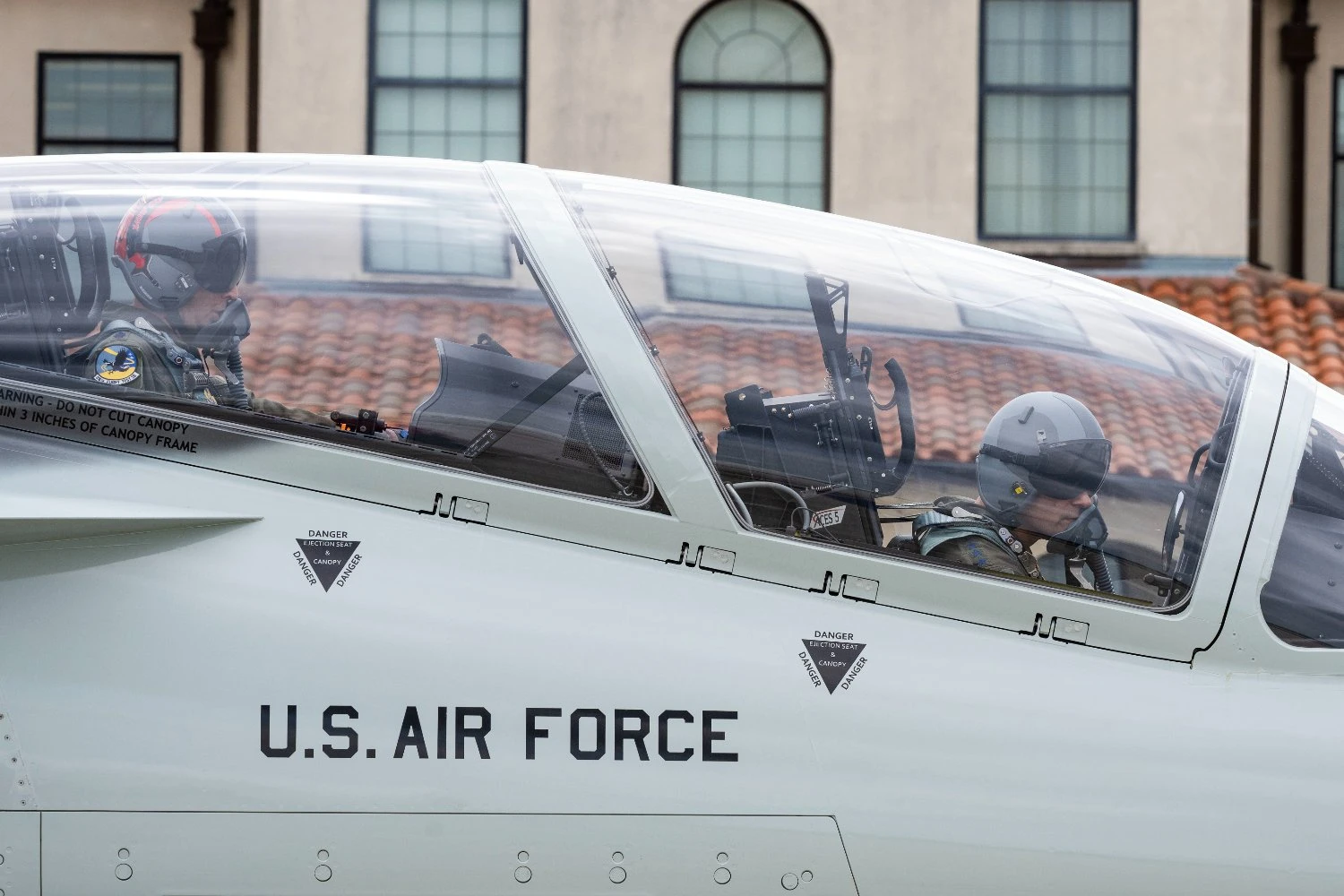
Rather than moving directly into large-scale production, the Air Force plans a phased approach, approving the first batches individually to incorporate results from testing before committing to higher output rates.
The overall program calls for up to 351 aircraft and 46 ground-based simulators to be delivered over the next decade to training bases operated by Air Education and Training Command.
Related news
September 16, 2026
September 14, 2026
The T-7A is also notable for being developed using digital engineering methods, which the Air Force and Boeing say are intended to reduce development time and simplify future upgrades, although the program has still encountered issues during its development phase.
Initial operational capability is currently targeted for 2027, as the Air Force works to bring the new training system into service and begin replacing the T-38 across its pilot training pipeline.