
Three Indian industrial groups are competing to develop the country's first stealth fighter, the Advanced Medium Combat Aircraft (AMCA), in a program that will proceed without state-owned Hindustan Aeronautics Limited (HAL), the traditional manufacturer of India's military aircraft.
The bidders are Tata Advanced Systems, which submitted an independent proposal, and two consortiums led by Larsen & Toubro and Bharat Forge. The winning company or consortium will work with the Aeronautical Development Agency (ADA), responsible for the aircraft's design, to manufacture five prototypes and support their testing.
Larsen & Toubro has partnered with Bharat Electronics and Dynamatic Technologies. Bharat Forge's consortium includes BEML, a manufacturer of railway rolling stock and military vehicles, and defense electronics supplier Data Patterns.
The development program is valued at ₹150 billion (US$ 1.65 billion) and envisions approximately 1,800 test flights. India hopes to have the AMCA ready by the mid-2030s, although construction of the first prototype has not yet begun.
Follow Air Data News: WhatsApp | Instagram | LinkedIn | Twitter | Facebook
The absence of HAL is particularly significant. The state-owned company has traditionally dominated Indian fighter development and production, including the Tejas program. By allowing private companies to lead the AMCA's industrial development, New Delhi is attempting to establish an alternative manufacturing capability for advanced combat aircraft.

Engine development remains a challenge
The AMCA is designed as a twin-engine fifth-generation fighter incorporating stealth characteristics, advanced sensors and integrated mission systems. Its initial version is expected to use two GE Aerospace F414 engines, the American powerplant also selected for India's Tejas Mk2.
India intends to develop a more powerful indigenous engine for later versions of the aircraft. In August, Rolls-Royce and Indian conglomerate Reliance Industries announced plans to explore a partnership for the project. France's Safran has also pursued cooperation with Indian authorities on advanced fighter propulsion.
Developing a domestic engine remains a major technological obstacle. India's earlier Kaveri program failed to produce a powerplant suitable for the Tejas, which entered service with the American GE F404. The AMCA will therefore initially depend on imported propulsion technology despite its ambition to establish a domestic fifth-generation fighter capability.
Related news

November 09, 2026
November 04, 2026
The program also faces a demanding schedule. Its five prototypes must complete an extensive flight-test campaign before production can begin, and the industrial partner responsible for building them has yet to be selected.
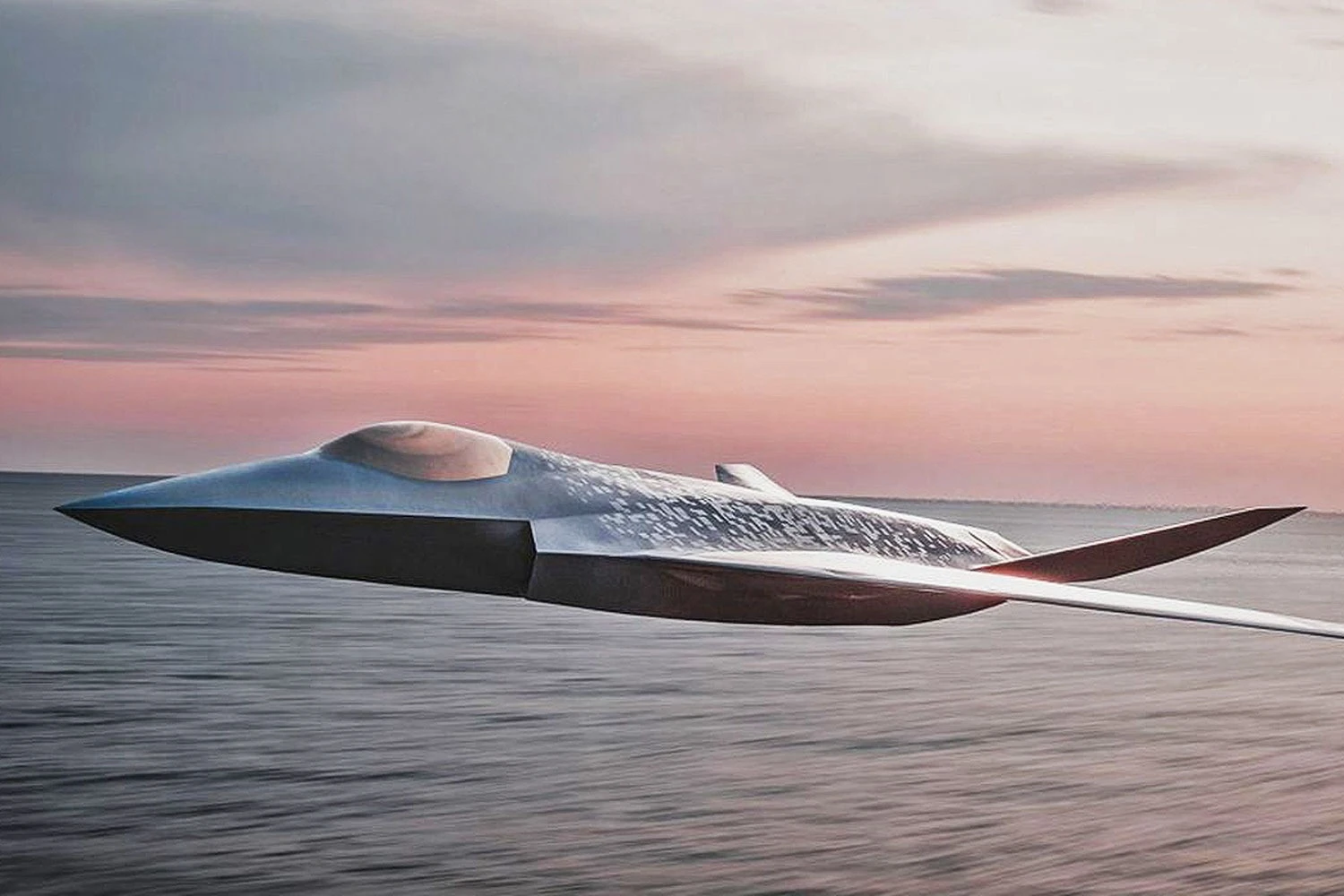
India explores French sixth-generation fighter partnership
India is already looking beyond the AMCA. New Delhi has expressed interest in cooperating with France on a sixth-generation fighter following the breakdown of the Franco-German partnership within the Future Combat Air System (FCAS). The European project encountered years of disagreements between Dassault Aviation and Airbus over industrial leadership, development responsibilities and intellectual property.
The potential partnership would address a different technological generation from the AMCA. The Indian aircraft is intended to introduce a domestic fifth-generation stealth capability in the 2030s, whereas France's future fighter is aimed at the following decade, with more advanced networking and cooperation with unmanned aircraft. Participating in its development could give India access to technologies beyond those planned for the AMCA.
France and India also share requirements for carrier-based aviation and airborne nuclear deterrence, which could provide common ground for a future combat aircraft. However, discussions remain preliminary, and no agreement has been announced on India's participation, financing or division of industrial responsibilities.
