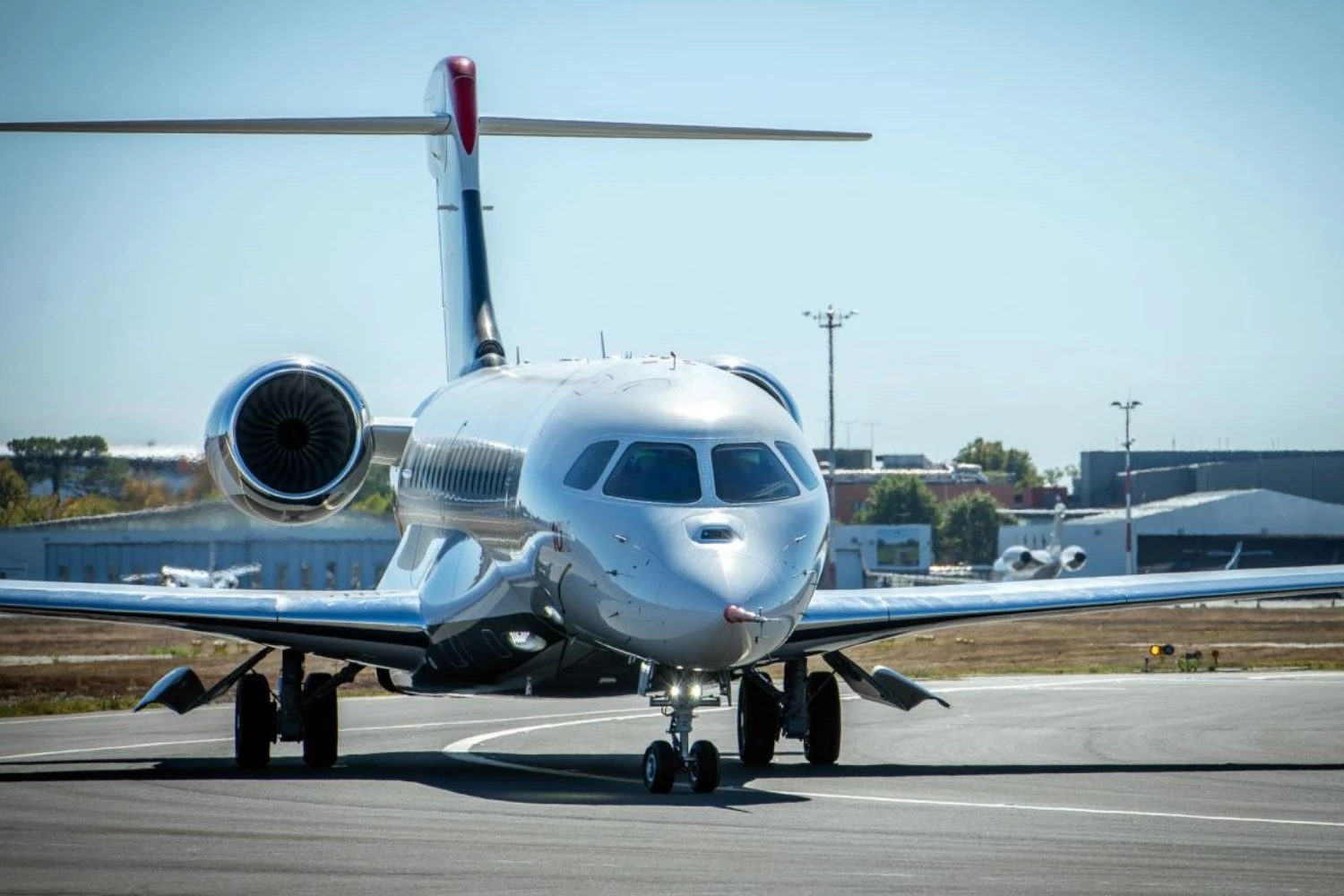
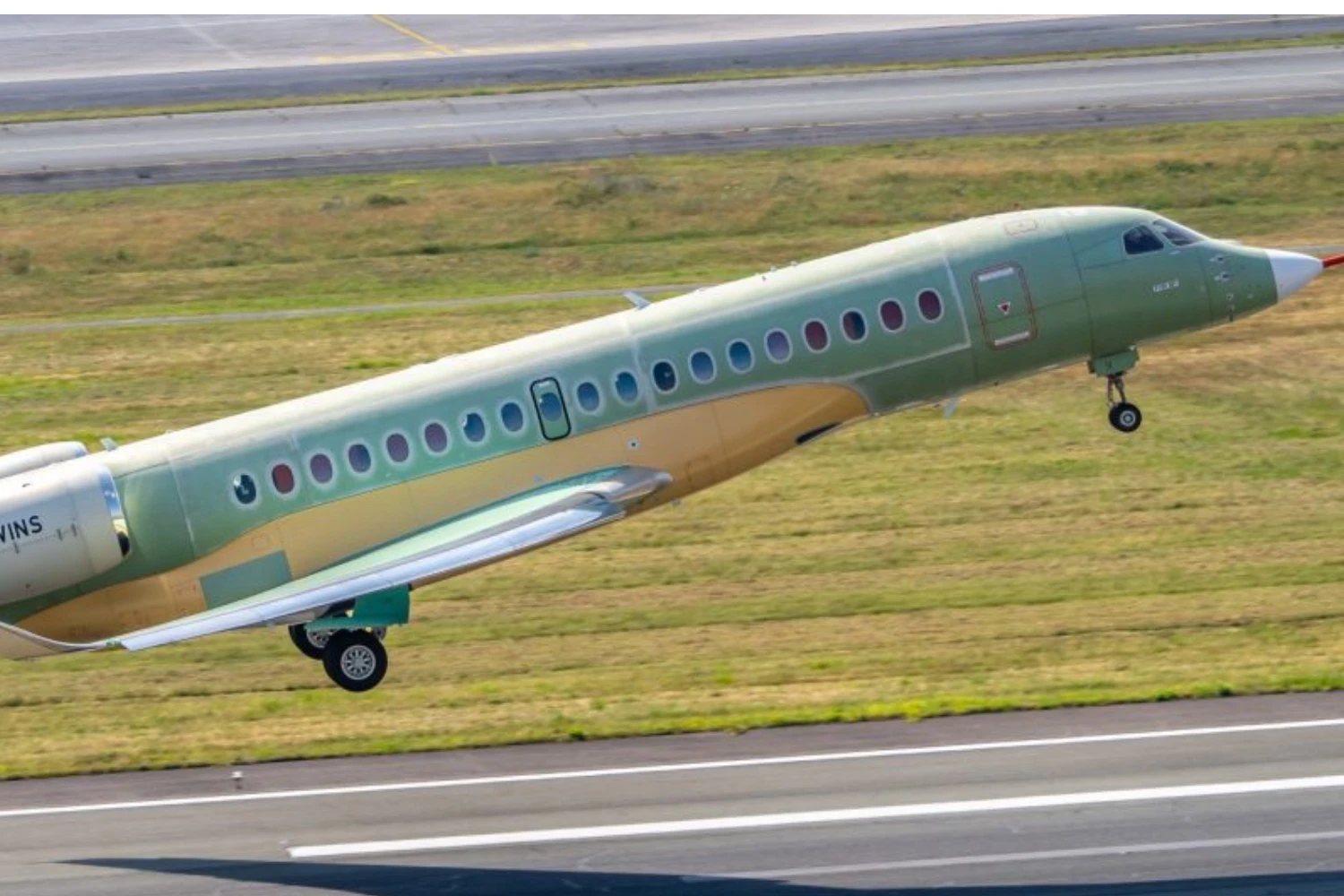
Dassault Aviation has flown the second Falcon 10X test aircraft, three months after the first prototype began the certification campaign for the delayed ultra-long-range business jet.
Dassault disclosed the flight through its Falcon social media accounts, with photos of S/N 2 airborne and the registration F-WTEN visible on the aircraft. The company said the three-hour maiden flight was conducted by test pilots Fabrice Dougnac and Antoine Doussaud.
The French planemaker had already confirmed in June that a second test aircraft was nearing completion and would follow the first prototype into the certification campaign.
SN2 was therefore part of the planned certification fleet rather than an addition prompted by the program's delays. A third aircraft will join the campaign with a fully equipped cabin for functional and reliability testing. Dassault now expects the 10X to enter service in 2029, four years later than the target announced when the aircraft was unveiled in 2021.
The manufacturer plans to use multiple Falcon 10Xs to divide certification work between aircraft. A third flight-test aircraft is expected to feature a fully equipped cabin, allowing Dassault to evaluate interior systems and perform functional and reliability testing under conditions closer to those experienced by customers.
Follow Air Data News: WhatsApp | Instagram | LinkedIn | Twitter | Facebook
The additional aircraft will nevertheless allow Dassault to accumulate flight-test data more quickly than was possible with a single 10X.
Four years later than originally planned
The expansion of the flight-test fleet comes against a very different schedule from the one announced when Dassault unveiled the Falcon 10X in May 2021.
At the time, the French manufacturer planned to introduce its new flagship business jet in 2025. Supply-chain difficulties subsequently pushed the target to 2027, a date Dassault continued to cite as development work progressed.
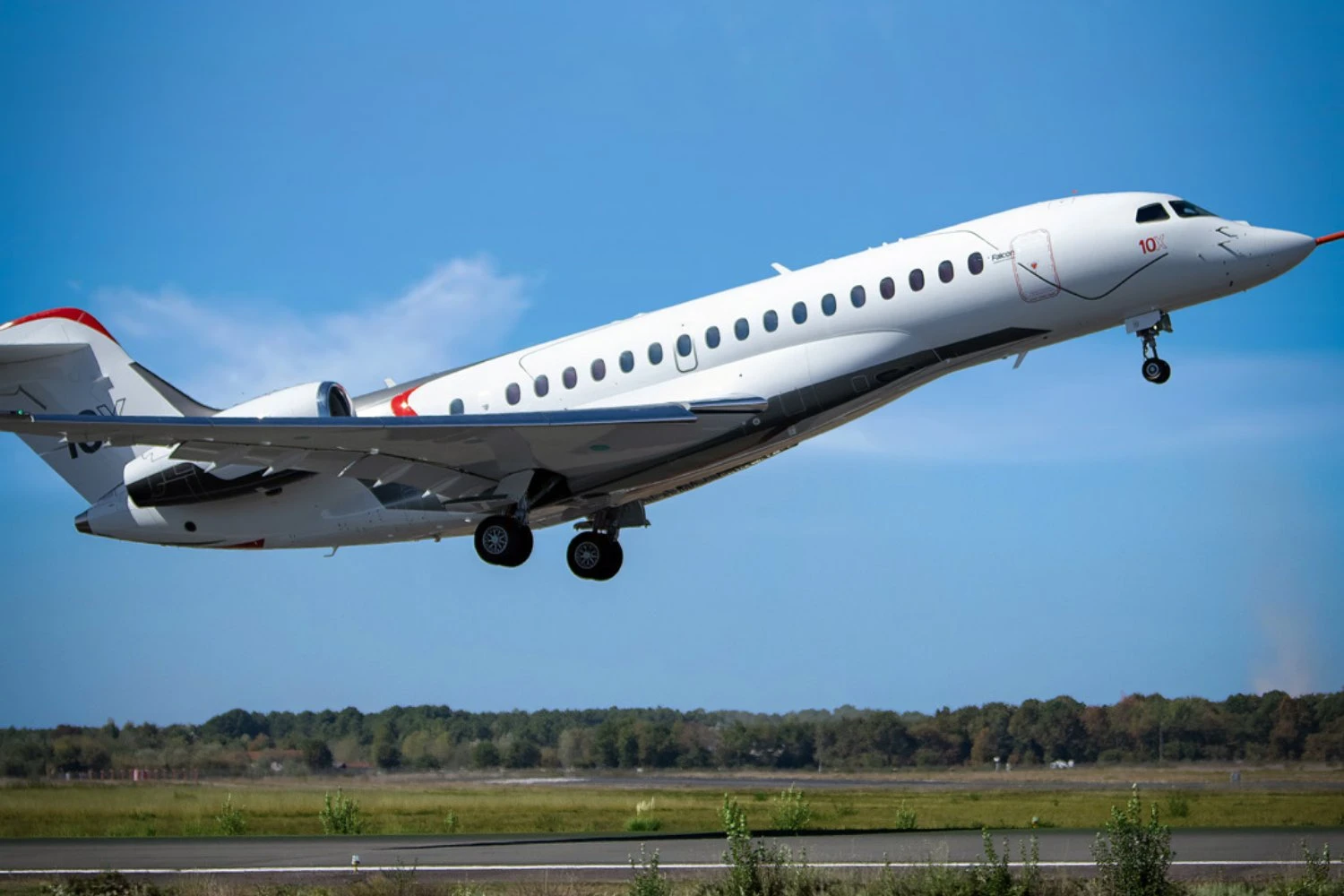
The first aircraft eventually took off in June 2026, approximately four years after the 10X was unveiled.
Related news
October 02, 2026
September 18, 2026
Dassault has since moved the expected certification and entry into service to 2029. Chief executive Éric Trappier has said the company expects certification to take approximately two and a half years following the beginning of flight testing.
Trappier has also pointed to increasingly demanding certification requirements following the Boeing 737 MAX accidents, noting that the Falcon 10X is an all-new aircraft and therefore faces a different certification process from the Falcon 6X.
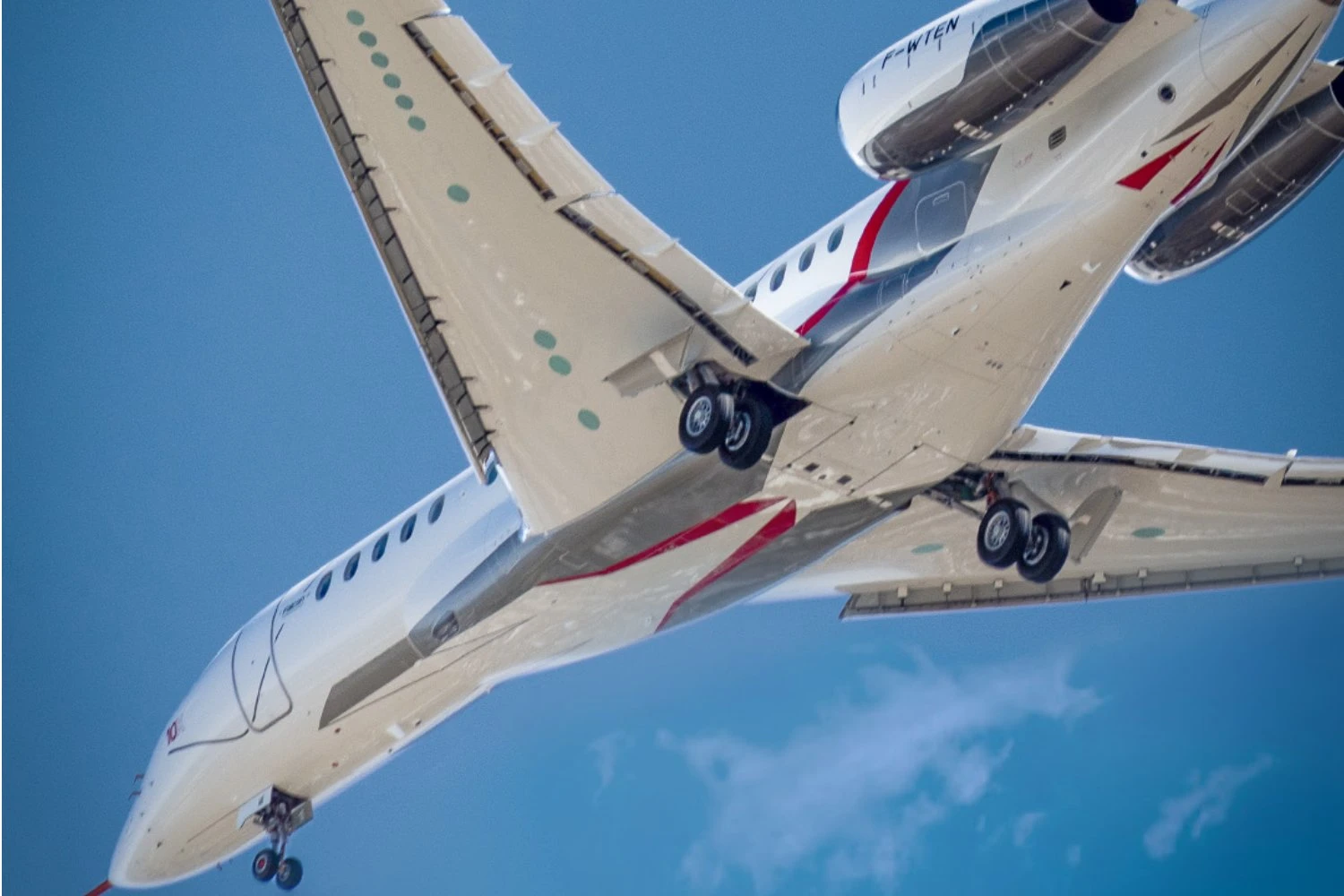
Dassault spent about five years conducting ground testing before allowing the 10X to fly. The program involves a new large-diameter fuselage, a composite wing developed specifically for the aircraft, Rolls-Royce Pearl 10X engines and a new generation of Dassault's digital flight-control system.
The Falcon 10X is intended to compete at the top of the business jet market against aircraft including the Gulfstream G700 and Bombardier Global 7500. It will have a range of 7,500 nautical miles (13,890 km) and the largest cabin cross-section of any purpose-built business jet currently under development.
With SN2 now flying, Dassault can distribute certification tasks between aircraft while work continues on the remaining test fleet. The current 2029 target would put the Falcon 10X into service about eight years after its unveiling and four years later than originally planned.