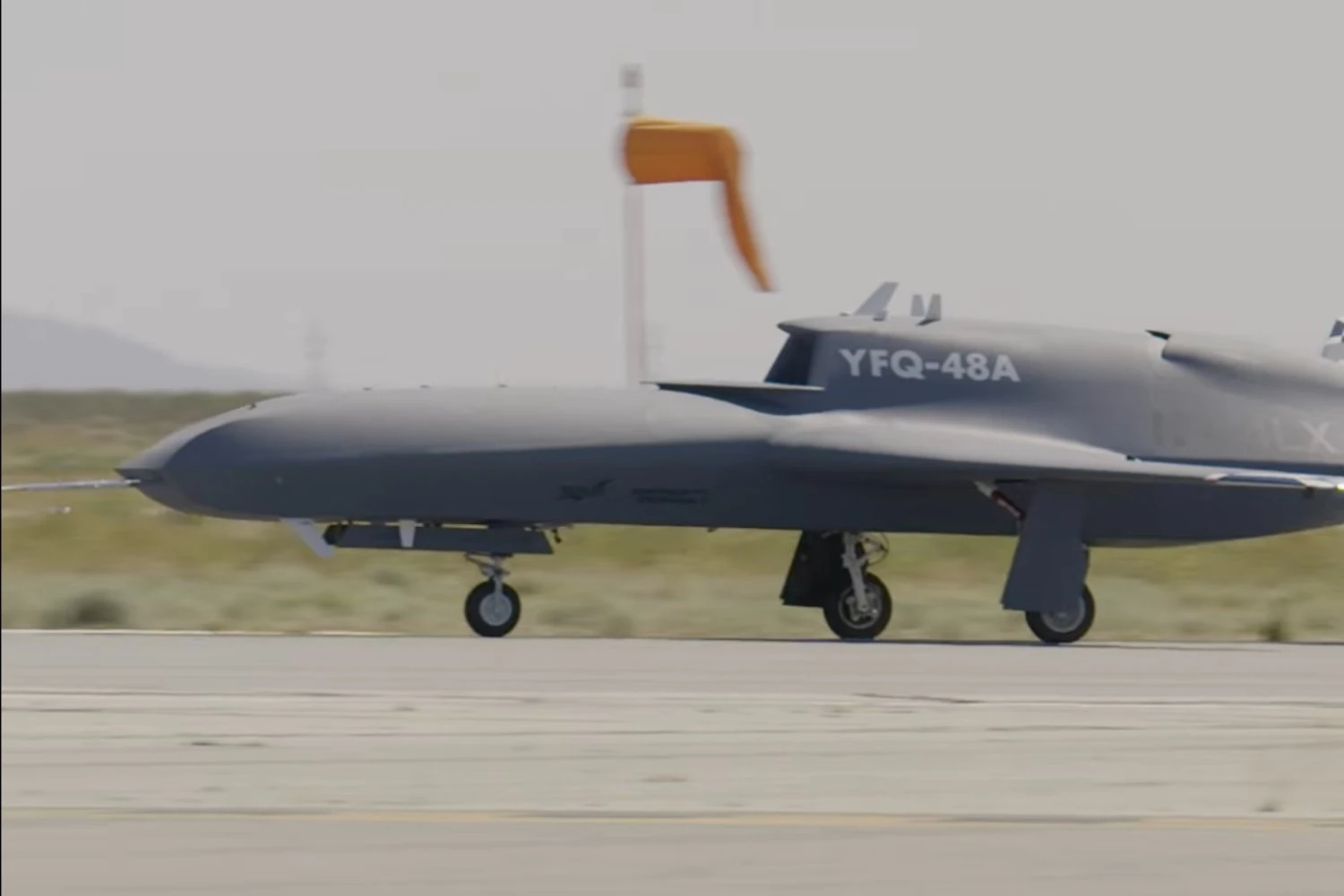
Northrop Grumman has released footage showing the YFQ-48A Talon Blue performing autonomous taxi tests, providing the clearest indication so far that the uncrewed combat aircraft is approaching its first flight.
The company published the video on 19 May, showing the aircraft taxiing without pilot input at what is believed to be Mojave Air and Space Port in California. Northrop said the YFQ-48A “precisely guided itself down the runway” during the test.
The aircraft had already been photographed days earlier during taxi trials, when images circulating on social media revealed details of the design, including the YFQ-48A designation applied to the fuselage. The latest footage confirms the aircraft is actively undergoing ground testing with the US Air Force (USAF).
https://www.instagram.com/reel/DYfcwPNk2Bq/
Northrop’s prototype is powered by a single Pratt & Whitney PW500 turbofan engine and carries the civil registration N444LX. The aircraft features a relatively compact layout with a blended fuselage and V-tail configuration optimized for low observability.
Follow Air Data News: WhatsApp | Google News | Instagram | LinkedIn | Twitter | Facebook
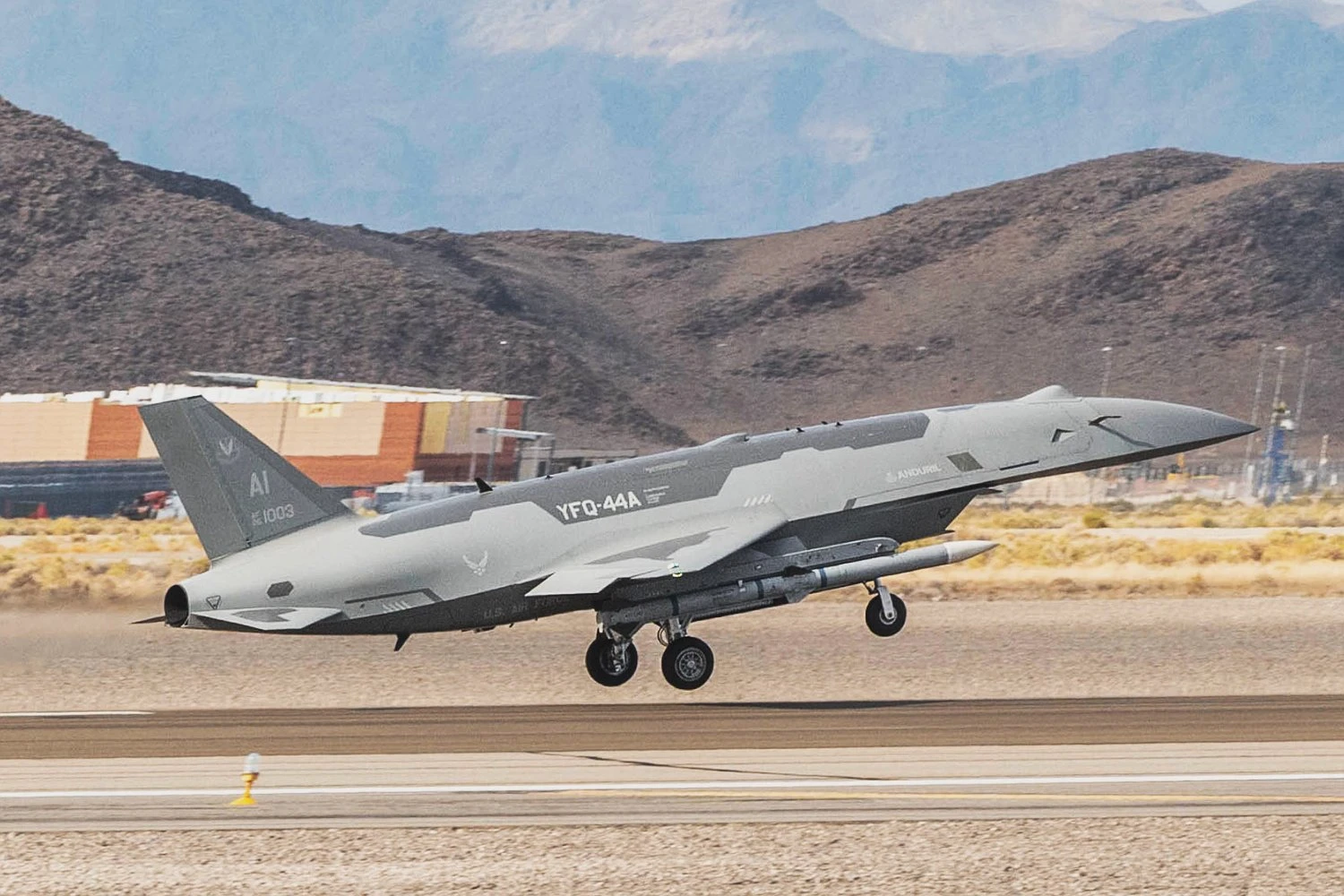
The YFQ-48A is not part of the US Air Force’s Increment 1 collaborative combat aircraft (CCA) competition, which selected designs from General Atomics and Anduril. Northrop nevertheless continued development with company funding after being eliminated earlier in the process.
The Air Force later assigned the aircraft an official military prototype designation, an unusual move that suggested continued interest in the platform for future CCA increments or other autonomous combat programs.
Collaborative combat aircraft are expected to operate alongside crewed fighters such as the F-35 and future NGAD platforms, carrying sensors, weapons or electronic warfare systems while being controlled by pilots or mission commanders aboard manned aircraft.
Separately, Northrop was also selected as one of the preferred suppliers under the Pentagon’s Drone Dominance initiative, a $1 billion effort aimed at rapidly fielding low-cost attritable drones and associated payload systems for future conflicts.
Related news
September 14, 2026
August 18, 2026