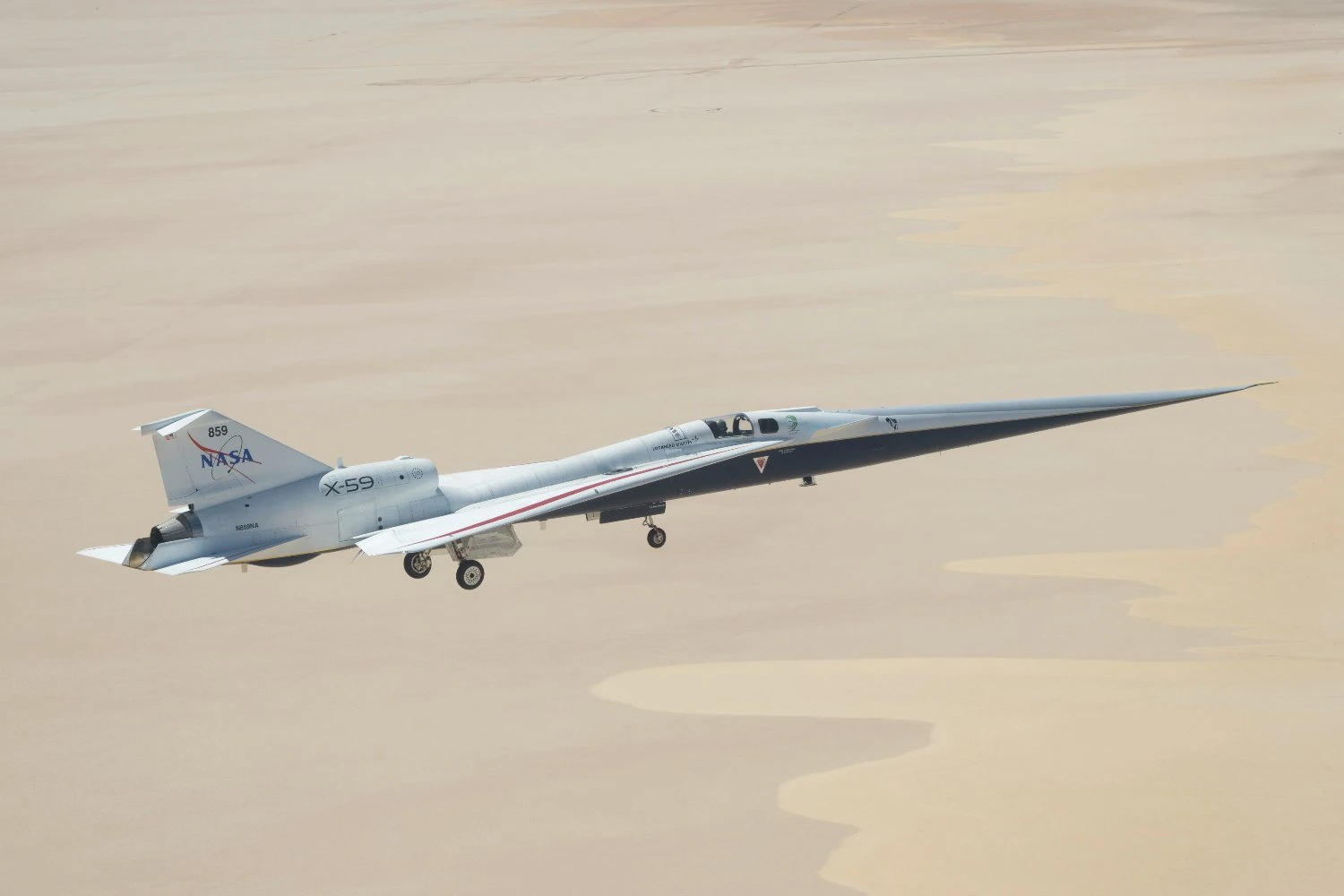
After a year of flight testing in California, NASA's unusual X-59 supersonic aircraft is taking a few days off from its regular job and heading to Florida.
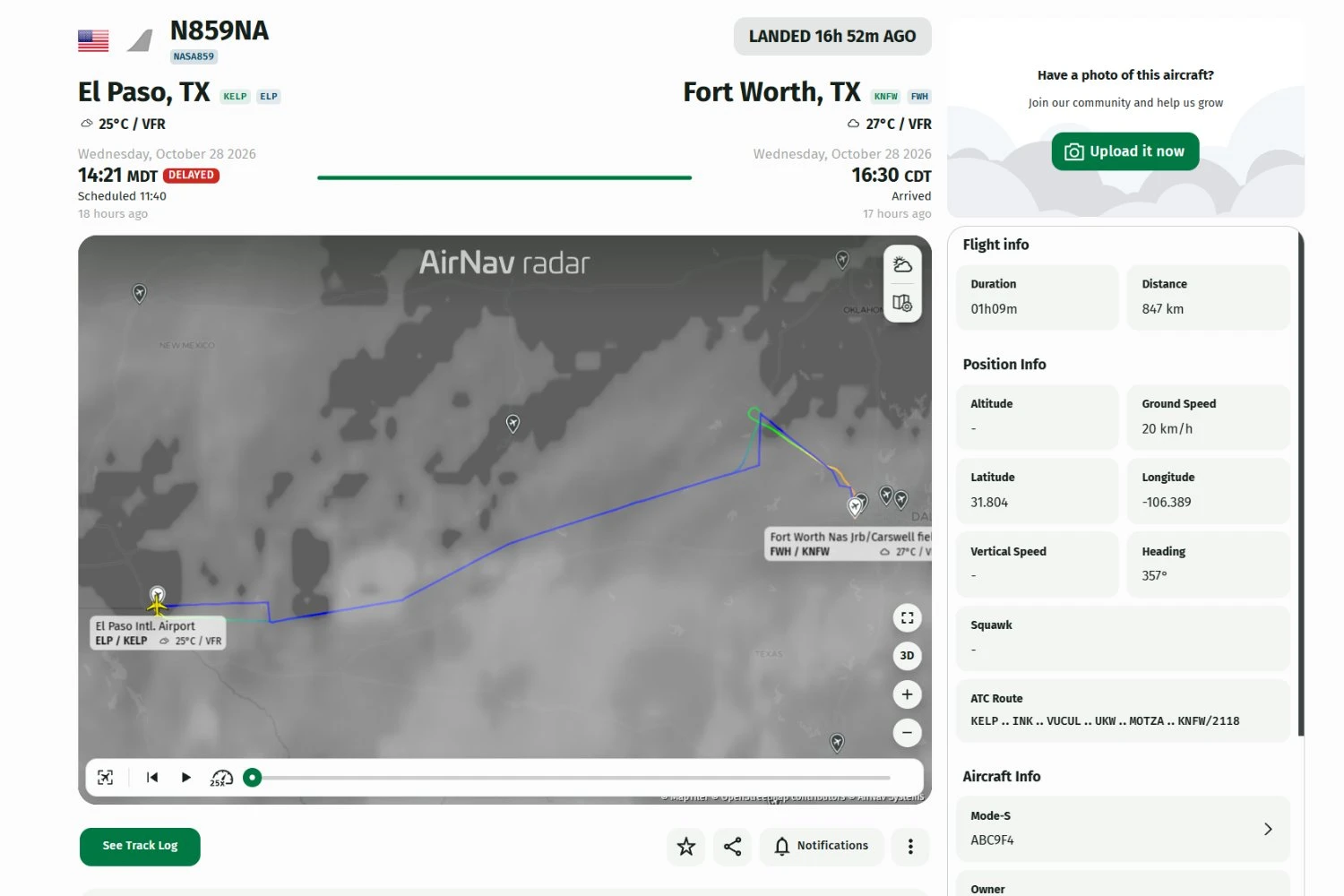
The X-59 left Edwards Air Force Base on October 28 on its first major trip away from its California test area. The aircraft, registered N859NA and flying as NASA859, first stopped in El Paso before continuing to Fort Worth, Texas.
Its eventual destination is NASA's Kennedy Space Center in Florida, where the aircraft is expected to appear at the agency's MAX POWER event on November 7 and 8.
The trip comes almost exactly one year after the X-59 made its first flight on October 28, 2025.
Follow Air Data News: WhatsApp | Instagram | LinkedIn | Twitter | Facebook
Since then, the experimental aircraft has completed more than 40 additional flights as NASA and Lockheed Martin gradually expanded its flight envelope. It has flown above 56,000 feet and reached Mach 1.53.
The X-59 has also demonstrated the conditions planned for its primary mission, flying at Mach 1.4 at 55,000 feet.
Its current journey across the United States is therefore something of a break from the test routine. But the X-59's work is far from over.
Supersonic flight without the boom
NASA did not build the X-59 simply to demonstrate another supersonic aircraft.
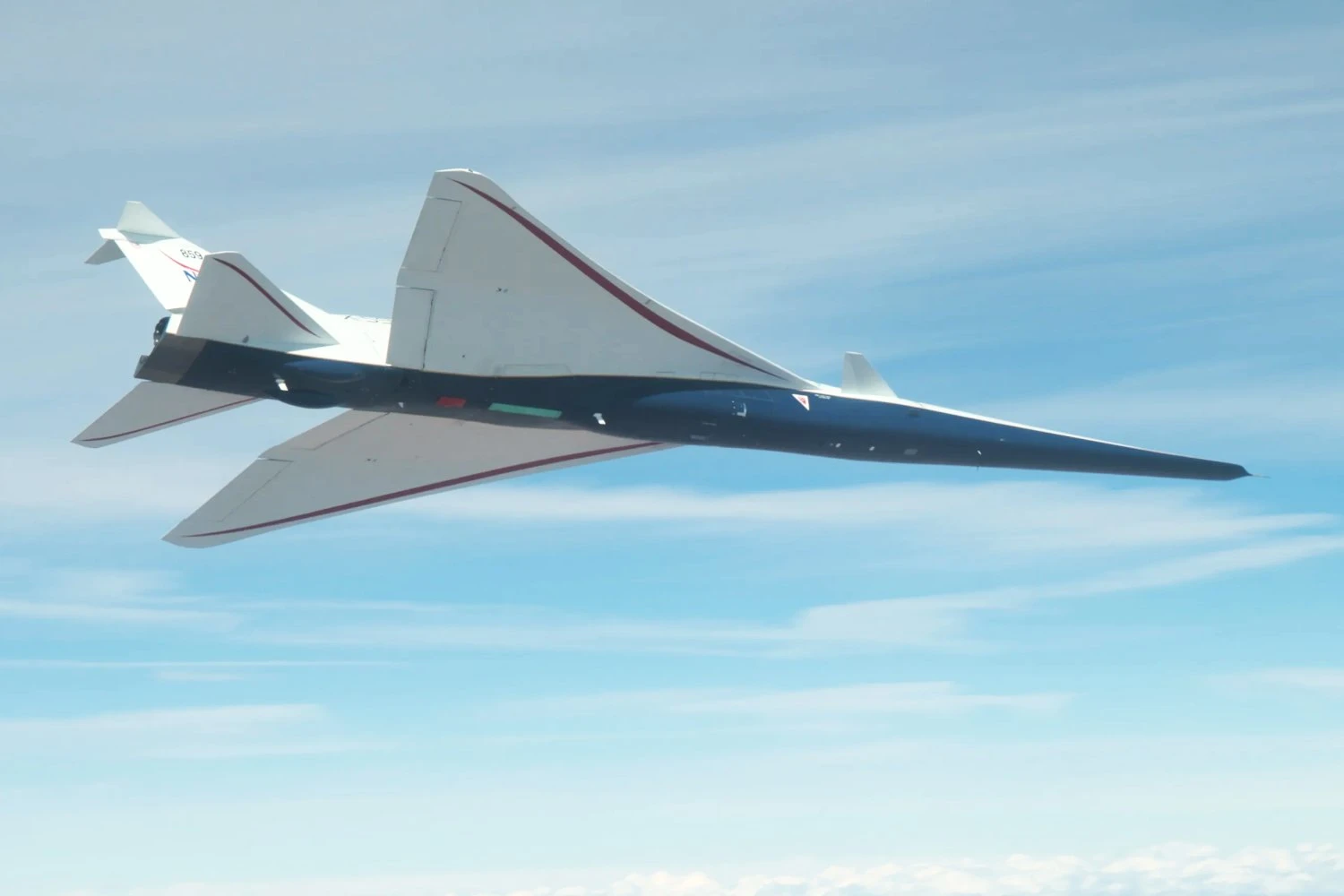
The airplane is the centerpiece of the agency's Quesst program, which is investigating whether an aircraft can fly faster than sound without producing the disruptive sonic boom normally associated with supersonic flight.
Its long, highly unusual shape was designed so that shock waves generated by different parts of the aircraft do not combine into the powerful pressure change responsible for a conventional sonic boom.
Instead, NASA expects people on the ground to hear a much quieter "sonic thump." The agency compares the target sound level with hearing a car door close from about 20 feet (6 m) away.
Related news
Proving that this actually happens is one of the major jobs still waiting for the X-59. NASA is moving toward acoustic validation flights in which equipment on the ground and in the air will measure the sound produced by the aircraft during supersonic flight.
Those tests will determine whether the X-59 produces the expected noise signature under real operating conditions.
Communities will have the final say
The next stage will take the experiment beyond measurements made by engineers. NASA plans to fly the X-59 over selected communities in the United States and collect feedback from people on the ground about how they perceive the sound.
That is ultimately the purpose of the Quesst program. Current regulations generally prohibit routine civil supersonic flight over land because of sonic booms. NASA wants to provide regulators with data that could eventually allow restrictions to be based on how much noise an aircraft produces rather than simply whether it exceeds the speed of sound.
The results will be provided to aviation regulators in the United States and internationally as they consider possible future standards for commercial supersonic flight over land.
Before that work begins, however, N859NA has a rather different assignment: finish its journey across the country and spend a few days in Florida showing itself off to the public.