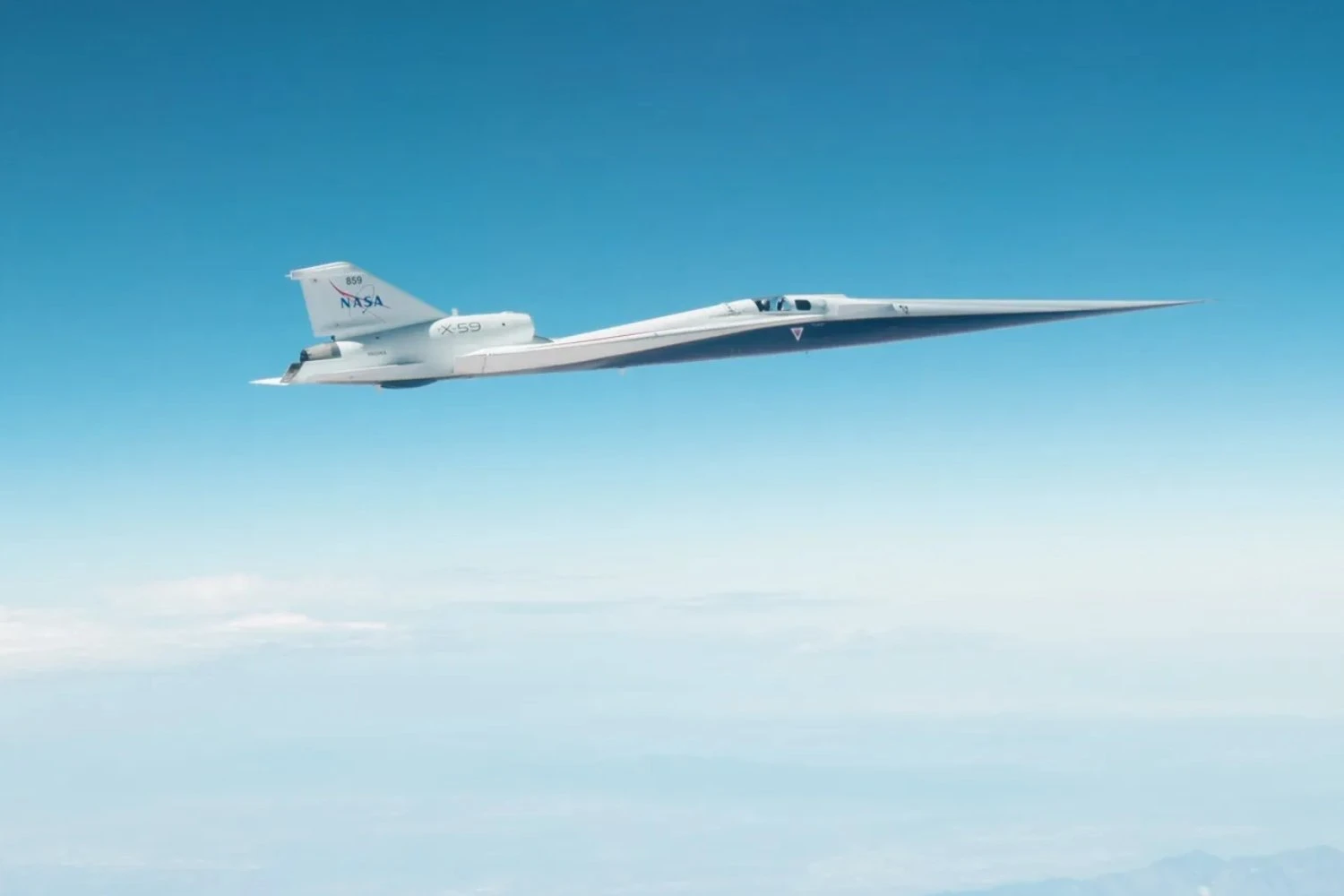
NASA’s X-59 experimental aircraft reached Mach 1.53 during an intensive series of six flights in four days, setting a new speed record for the supersonic demonstrator developed to test quieter flight over land.
The flights took place between September 22 and 25 from NASA’s Armstrong Flight Research Center in California. The agency disclosed the results on October 2 as the aircraft entered a planned maintenance period.
During one of the flights, the X-59 accelerated to Mach 1.53, or approximately 1,010 mph (1,625 km/h), the highest speed achieved by the aircraft since flight testing began in October 2025.
The milestone also took the X-59 beyond the Mach 1.4 speed NASA plans to use during future acoustic evaluation flights. Those missions will assess whether the aircraft’s distinctive shape can reduce the conventional sonic boom to a quieter sound on the ground.
Six flights in four days
The latest campaign also demonstrated a considerably higher flight tempo. NASA flew the X-59 twice on September 22, twice on September 24 and twice again on September 25.
Follow Air Data News: WhatsApp | Instagram | LinkedIn | Twitter | Facebook
Six flights in a single week set another record for the program. The X-59 had previously completed no more than four flights during the same period.
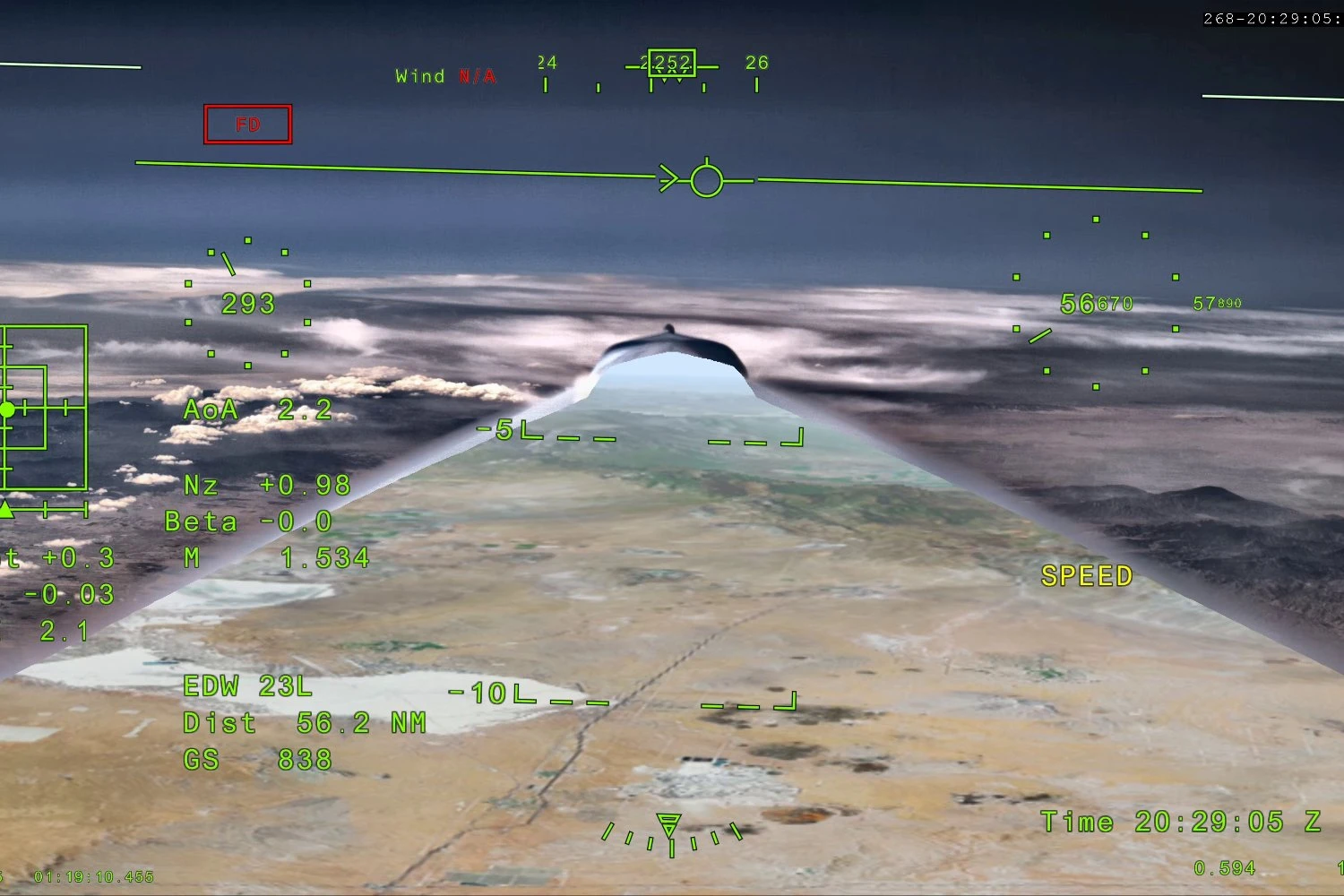
The aircraft reached 38 flights since its maiden flight in October 2025, allowing NASA and Lockheed Martin to progressively explore its operating envelope at different speeds, altitudes and flight conditions.
Earlier this year, the X-59 reached Mach 1.4 at 55,000 feet, conditions representative of those planned for its acoustic research missions. The Mach 1.53 flight extended the aircraft beyond that intended test point.
NASA did not identify which of the six September flights produced the speed record.
Acoustic testing comes next
The X-59 was developed under NASA’s Quesst mission to determine whether an aircraft can fly supersonically over land without producing the disruptive sonic boom associated with conventional supersonic aircraft.
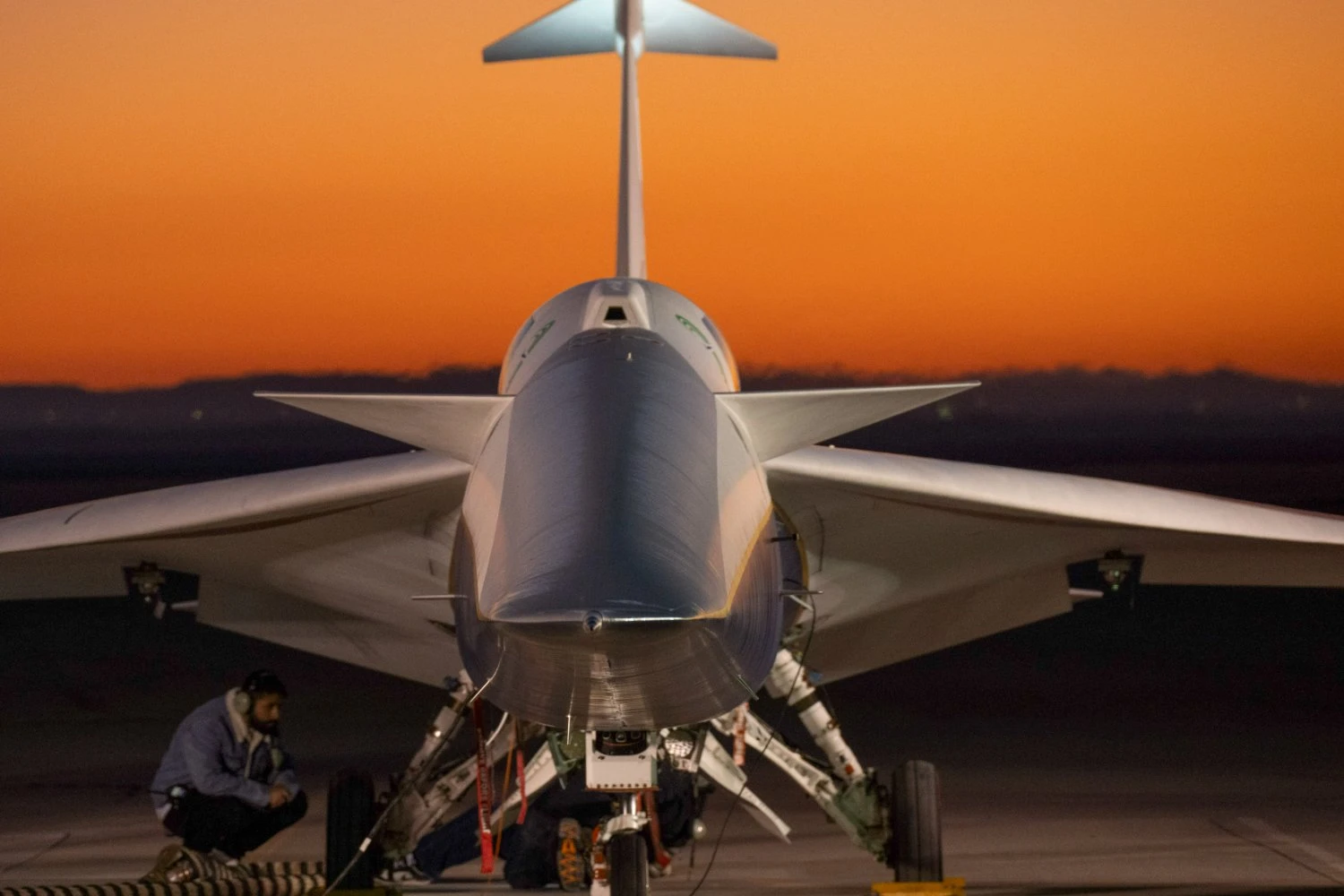
Its long nose and carefully shaped fuselage are designed to prevent shock waves from combining into a powerful boom before they reach the ground. NASA expects the aircraft to produce a much quieter sonic “thump.”
The recent speed record does not itself demonstrate that capability. NASA will conduct dedicated acoustic measurements before eventually flying the X-59 over selected U.S. communities to collect public responses to the sound.
Related news
Data from those flights are intended to support regulators considering whether current restrictions on civil supersonic flight over land could eventually be replaced by noise-based standards.
Following the September campaign, the X-59 entered approximately three weeks of scheduled maintenance. NASA plans to inspect the aircraft and its systems before resuming the flight-test program.