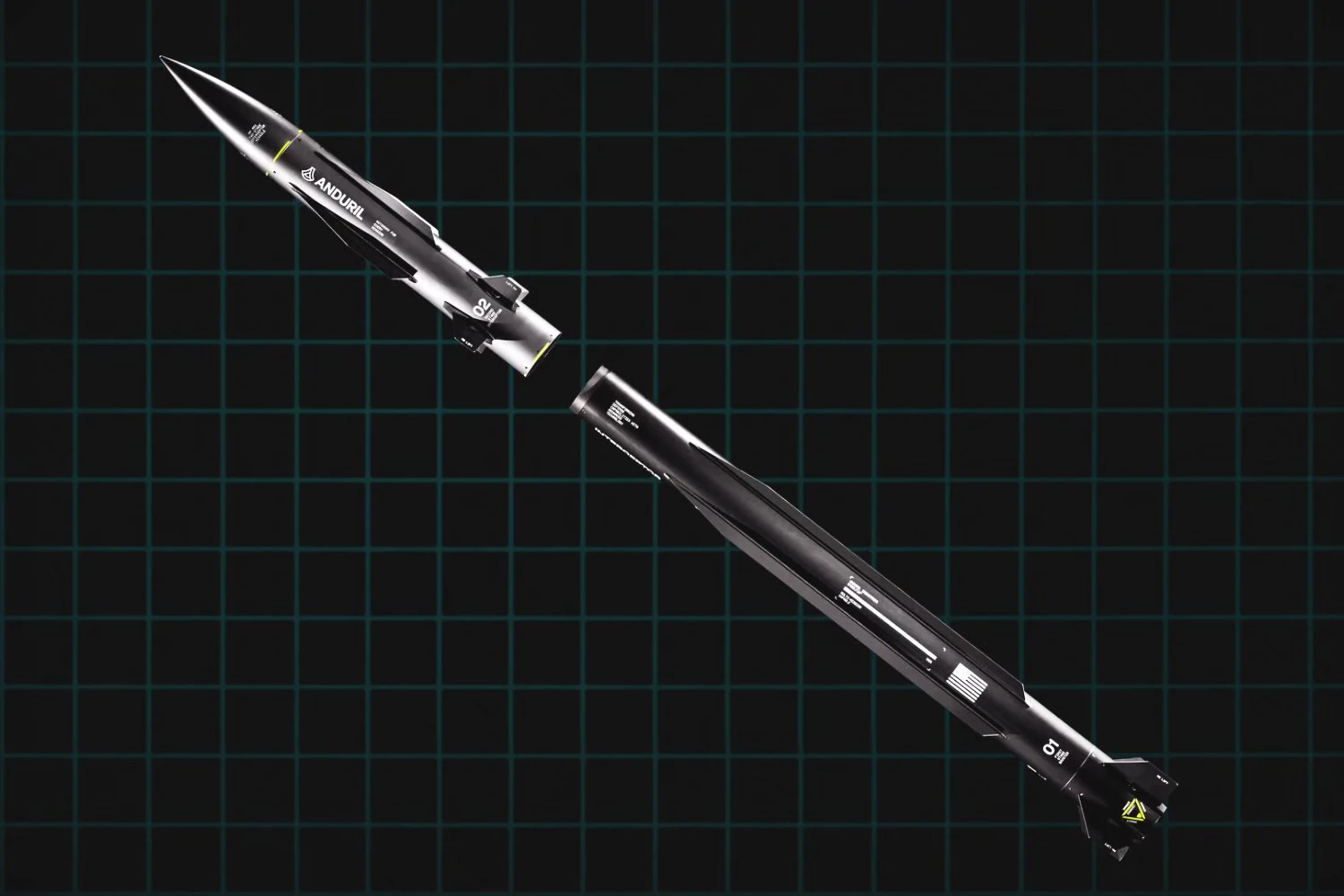
Anduril has unveiled Steelfin, a new family of surface-to-air missile interceptors designed to counter threats ranging from drones and cruise missiles to ballistic and hypersonic weapons.
The system uses a modular architecture built around a common terminal interceptor paired with different first-stage boosters. Anduril says this approach will allow Steelfin variants to address different ranges and threats without requiring separate missile designs.
The company disclosed configurations with 10-inch, 18-inch and 21-inch diameter boosters. The common upper stage includes the interceptor's avionics, flight controls and other key components, an arrangement intended to simplify manufacturing and increase production rates.
According to Breaking Defense, Anduril is targeting a Steelfin unit cost of roughly one-third that of a PAC-3 Missile Segment Enhancement (MSE). The figure is a company objective rather than a contracted price and would depend on the configuration and production scale.
Beyond autonomous aircraft
The announcement comes only days after Lockheed Martin unveiled PAC-3 Edge, its proposed next-generation interceptor for the U.S. Army's Future Interceptor program. The missile is designed to provide greater range, altitude and maneuverability than the PAC-3 MSE and is scheduled to begin flight testing in 2027.
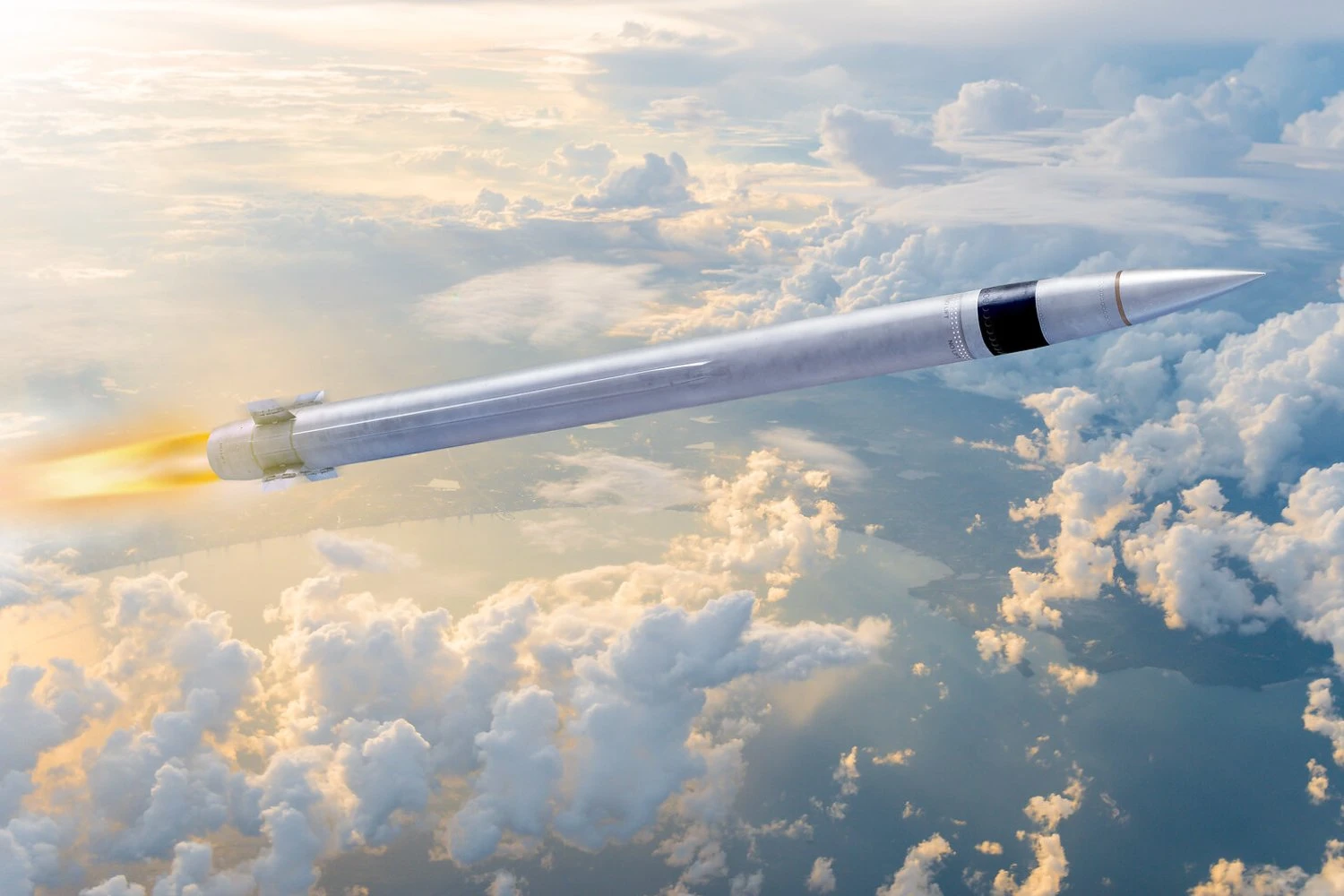
Anduril has also positioned a Steelfin configuration for the Future Interceptor requirement, potentially placing the company against Lockheed Martin in an area of missile defense traditionally dominated by established defense contractors.
Follow Air Data News: WhatsApp | Instagram | LinkedIn | Twitter | Facebook
The company says Steelfin is intended to counter a broad spectrum of targets, allowing operators to select different members of the family according to the threat instead of relying on a single high-cost interceptor for every engagement.
Anduril has already conducted ballistic tests with representative Steelfin vehicles. Flight testing is expected to begin in 2027, with the company targeting large-scale production around late 2028 or early 2029.
Future Interceptor competition
Manufacturing is central to the proposal. Anduril intends to produce Steelfin in large quantities using its Arsenal manufacturing strategy, with much of the work planned for the Arsenal-1 facility in Ohio.
The company has also expanded its ability to produce solid rocket motors, a critical component for missile manufacturing. Its broader strategy is intended to reduce dependence on the limited production capacity that has become a constraint for several U.S. weapons programs.
Steelfin expands Anduril's presence in a defense market historically led by companies such as Lockheed Martin and RTX. The California-based company has grown rapidly through autonomous systems and has increasingly moved into larger and more complex weapons programs.
Recent news

One of its highest-profile projects is the YFQ-44A Fury, an autonomous combat aircraft developed for the U.S. Air Force's Collaborative Combat Aircraft (CCA) program. The aircraft has entered flight testing as Anduril competes for a role in the service's planned fleet of uncrewed combat aircraft.
Anduril is already involved in another U.S. Army interceptor effort. The company is working with Boeing on a mid-range interceptor for the Integrated Fires Protection Capability (IFPC) Increment 2 program, where Anduril provides the solid rocket motor.
Steelfin takes that expansion into higher-end air and missile defense missions, including ballistic and hypersonic threats. Its first flight tests are expected in 2027.