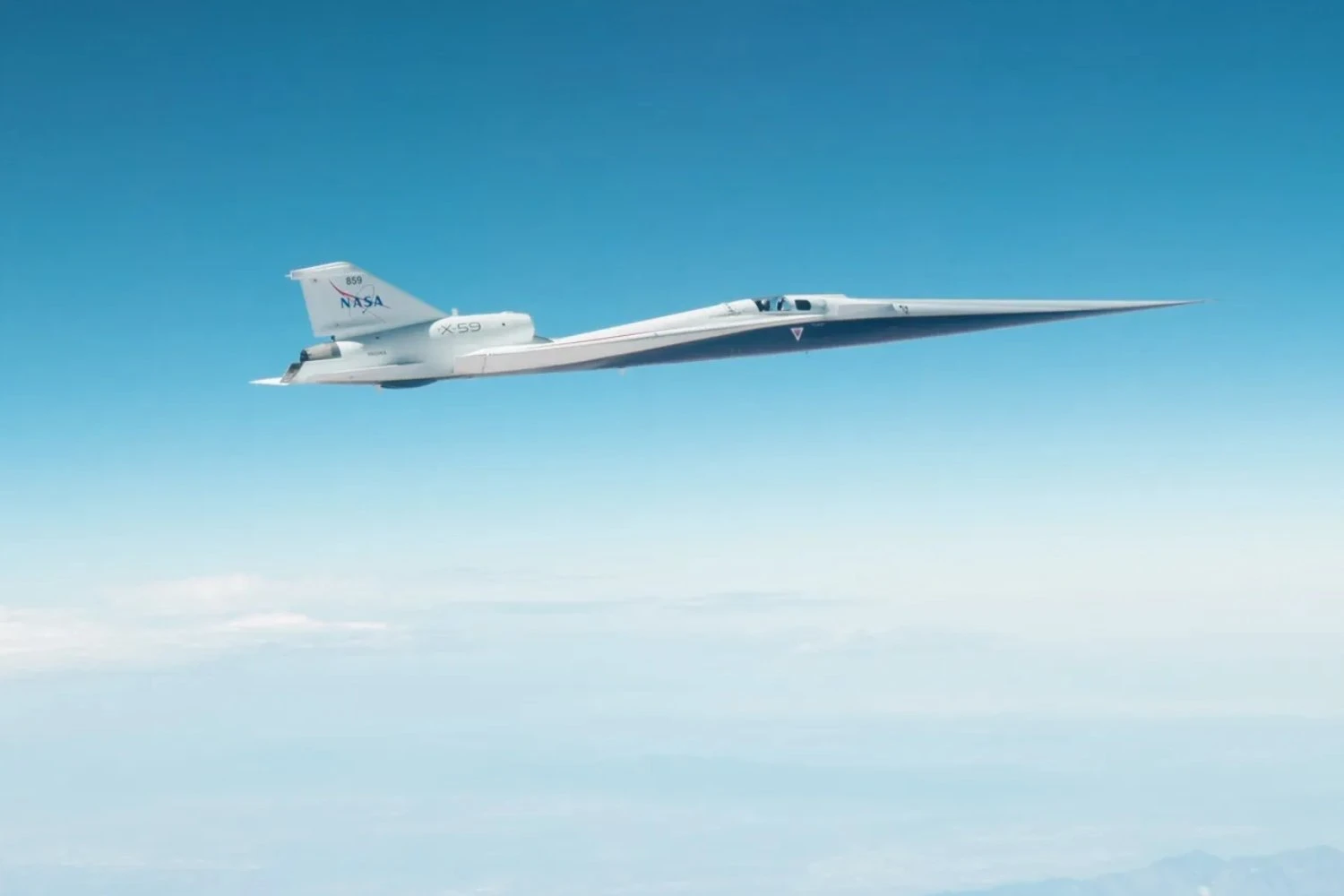
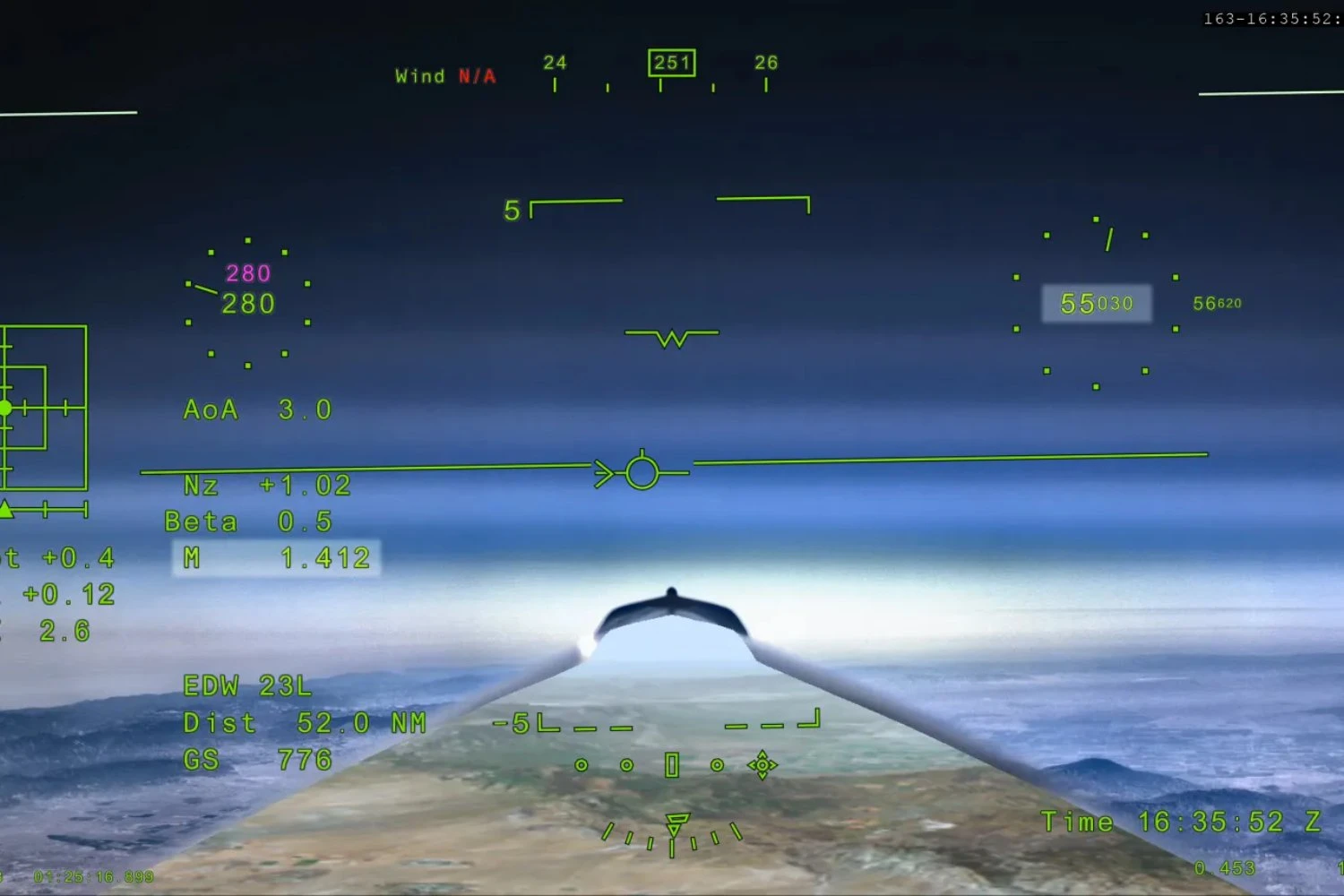
NASA's X-59 experimental aircraft flew at Mach 1.4 and 55,000 feet on June 12, reaching the flight conditions planned for future community overflights under the agency's Quesst program.
The flight came days after the X-59's first supersonic sortie at Mach 1.1 and allowed engineers to continue expanding the aircraft's operating envelope ahead of the next phase of testing.
The X-59 is being developed under NASA's Quesst program, which aims to reduce the noise associated with traditional sonic booms. The aircraft features a long, narrow fuselage and other design changes intended to generate a softer sound, described by NASA as a "sonic thump."
Related news
For the current phase of testing, the X-59 has been accompanied by a NASA F-15 research aircraft. Because the F-15 produces conventional sonic booms, it masks any noise generated by the X-59 while engineers focus on evaluating performance at increasing speeds and altitudes.
NASA said future flights will use a shock-sensing probe mounted on the F-15 to collect data on the X-59's shock wave signature.
The aircraft will continue flight testing in the coming months before entering an acoustic validation campaign. During that phase, researchers will measure its noise characteristics and compare them with design expectations.
Data collected from later community overflights will be used by NASA as it studies public reaction to low-noise supersonic flight, information that could help inform future regulations for commercial supersonic aircraft operating over land.