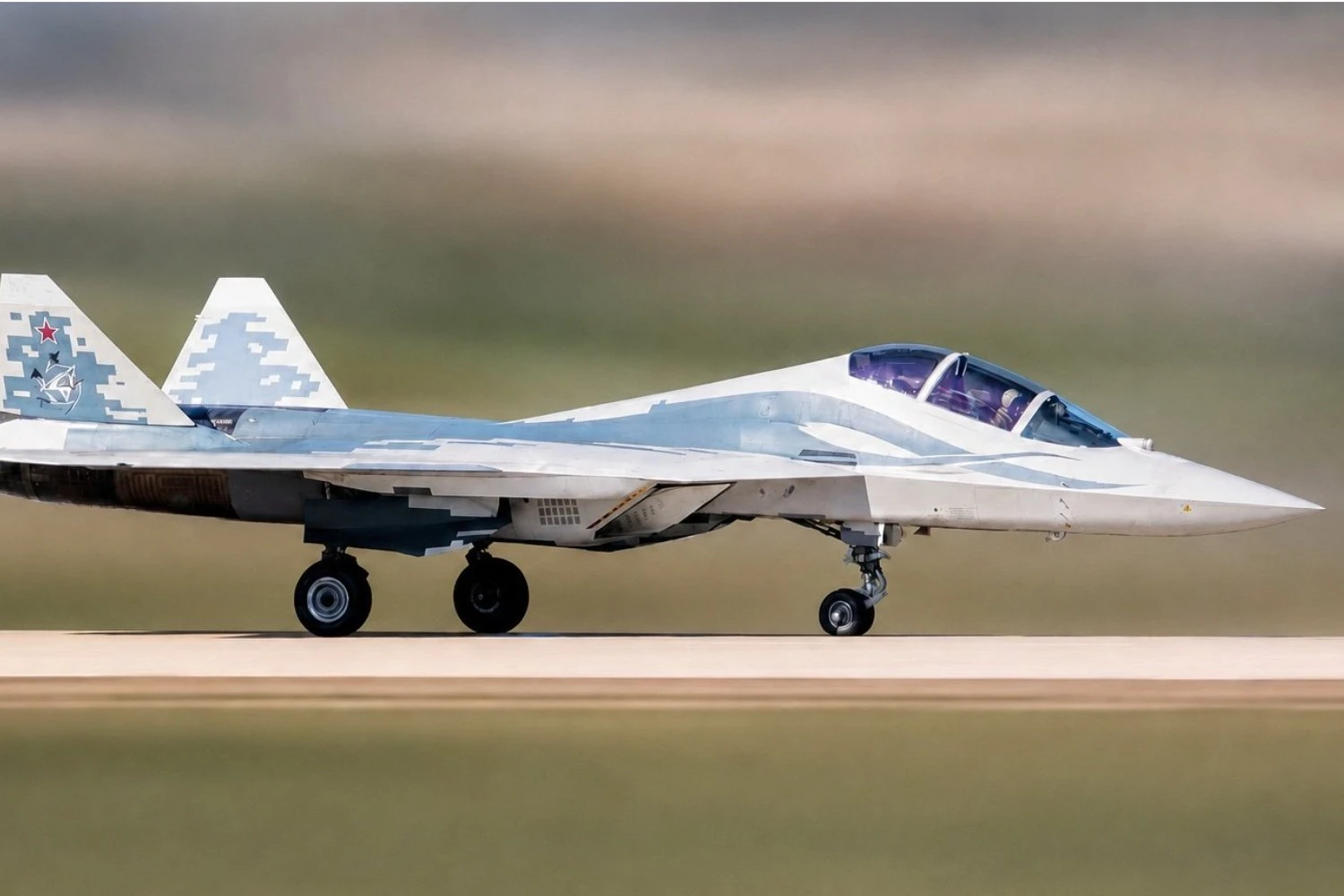
Images circulating on Russian social media appear to show a previously unknown two-seat version of the Sukhoi Su-57 stealth fighter undergoing ground tests, although the aircraft has not been officially acknowledged by Russian authorities or manufacturer Sukhoi.
The images, first shared by the Fighterbomber Telegram channel, show a Su-57 with a redesigned forward fuselage and tandem cockpit arrangement similar to older two-seat Flanker variants such as the Su-30 and Su-27UB.
Reports in Russian media have speculated the aircraft could carry the designation Su-57UB or Su-57D, but no official confirmation has emerged.
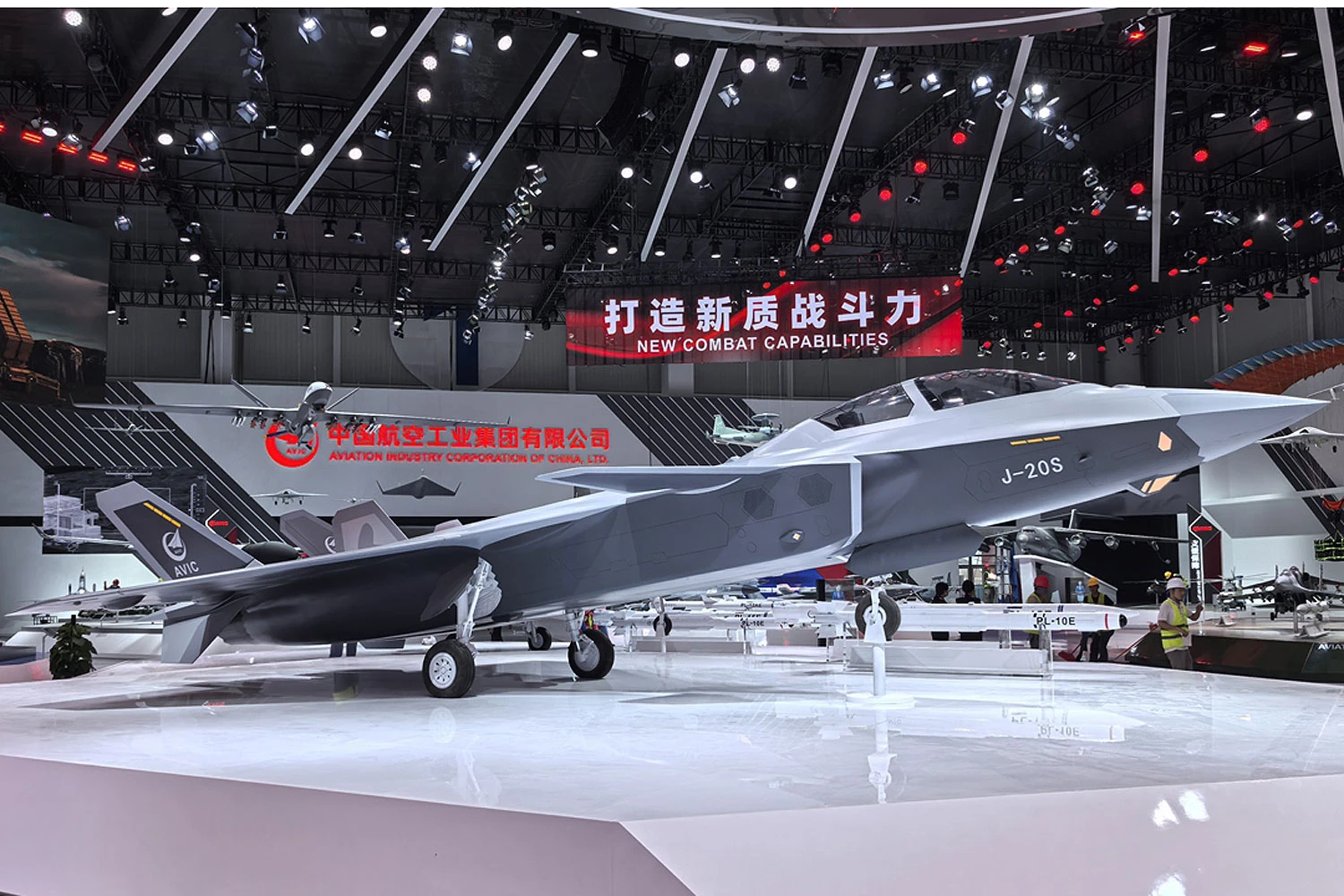
Two-seat stealth fighters have historically been uncommon because modern combat aircraft rely heavily on automation and simulator-based pilot training. That trend changed recently after China introduced the twin-seat J-20S, a variant of its J-20 stealth fighter.
Related news
September 18, 2026
September 18, 2026
Analysts increasingly view these aircraft less as trainer versions and more as airborne command platforms capable of managing drones and collaborative combat aircraft during missions.
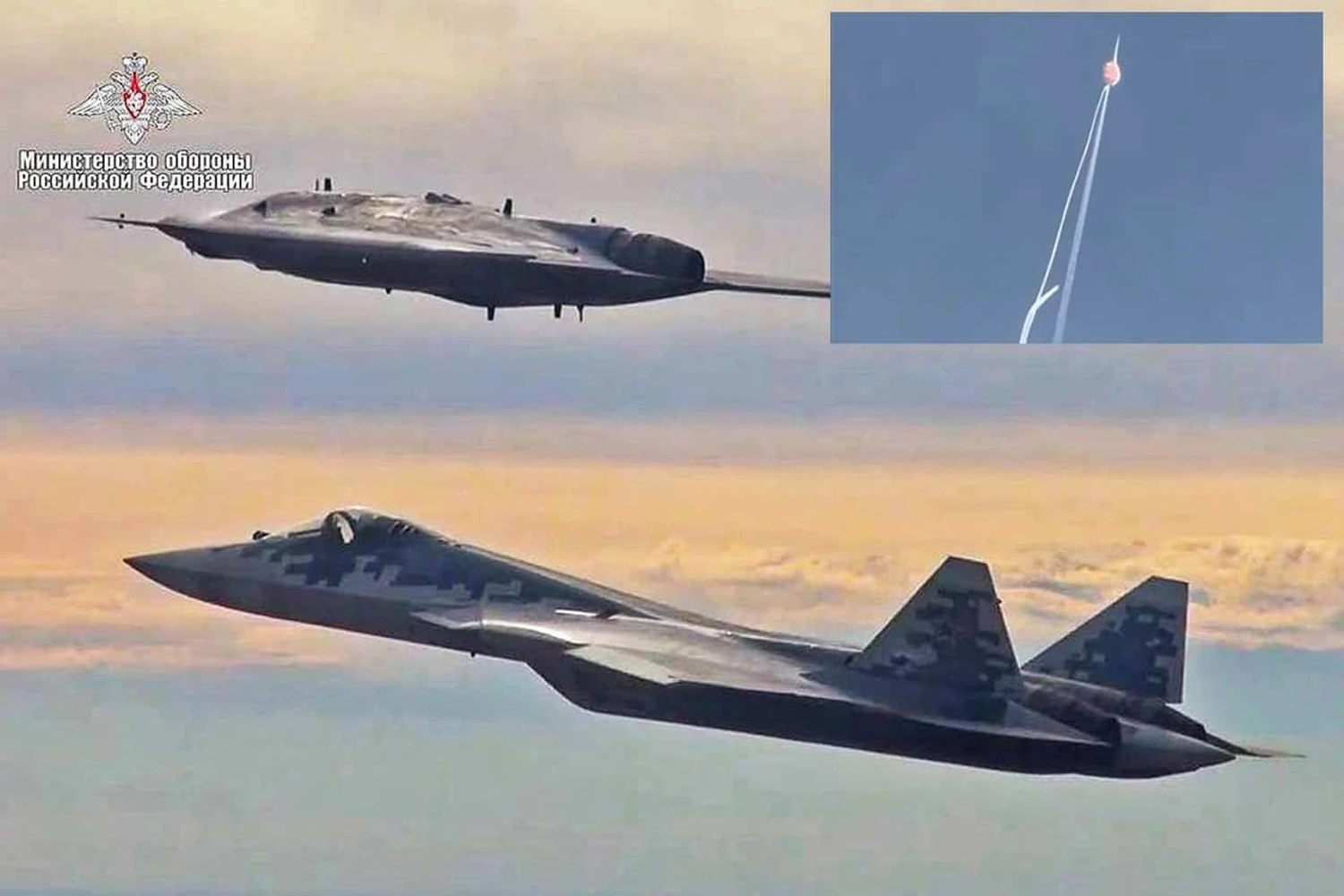
In Russia’s case, the two-seat Su-57 could eventually work alongside the S-70 Okhotnik-B unmanned combat aircraft, which has already participated in flight testing linked to the Felon program.
A second crew member could help coordinate drone operations, sensor management and strike missions while the pilot focuses on flying and tactical maneuvering.
Russia has previously explored similar concepts with twin-seat combat aircraft. The Su-30 family, for example, was designed around long-range missions where the second crew member handled navigation, sensors and weapons systems.
The emergence of the aircraft is notable because the Su-57 program itself remains relatively limited in scale. Russia has ordered 76 production aircraft, far fewer than originally projected, while continuing to rely heavily on Su-35 and Su-30 fighters for frontline operations.
The Su-57 first flew in prototype form in 2010, but production has advanced slowly amid technical challenges, sanctions and the pressures facing the Russian aerospace industry since the invasion of Ukraine.