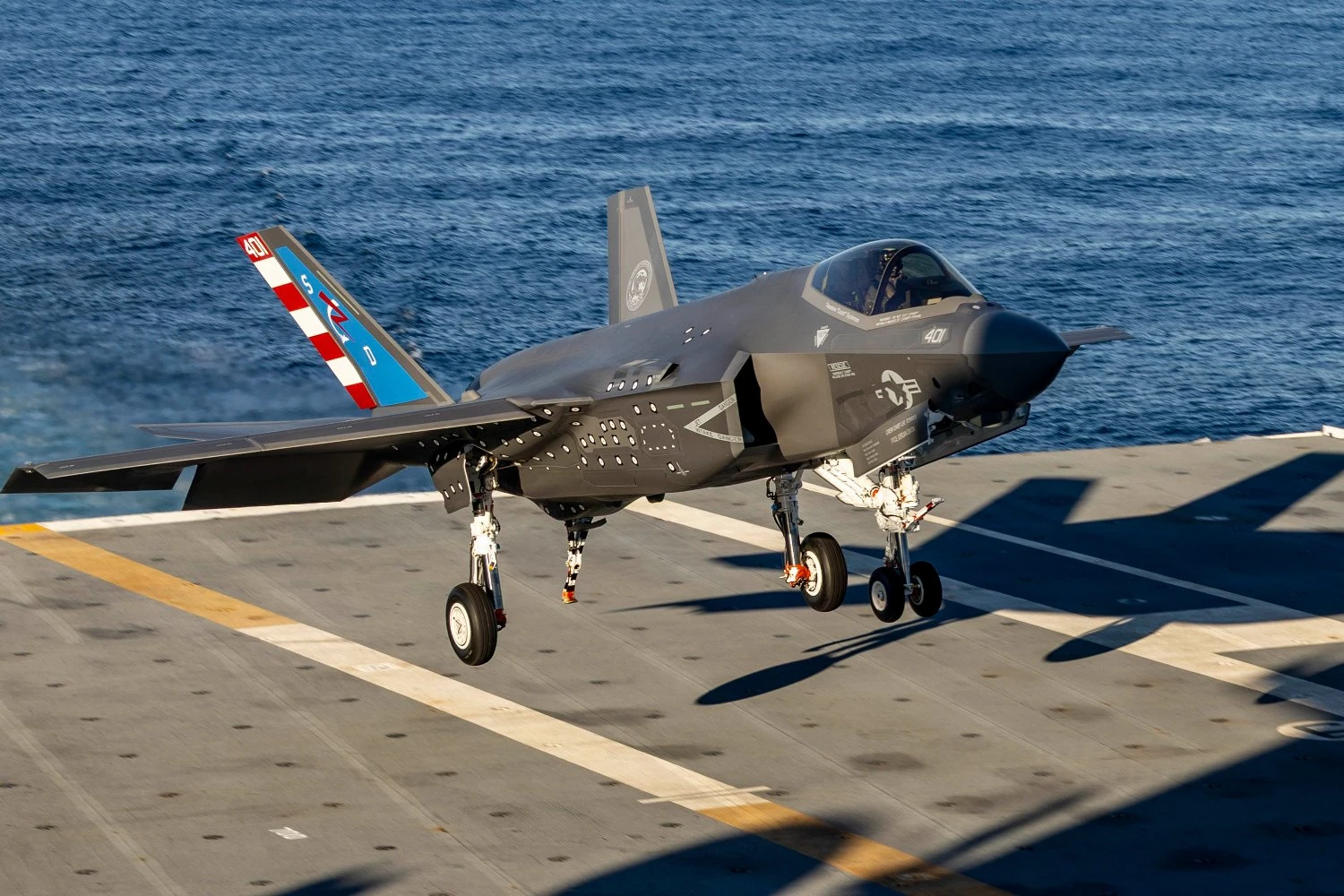
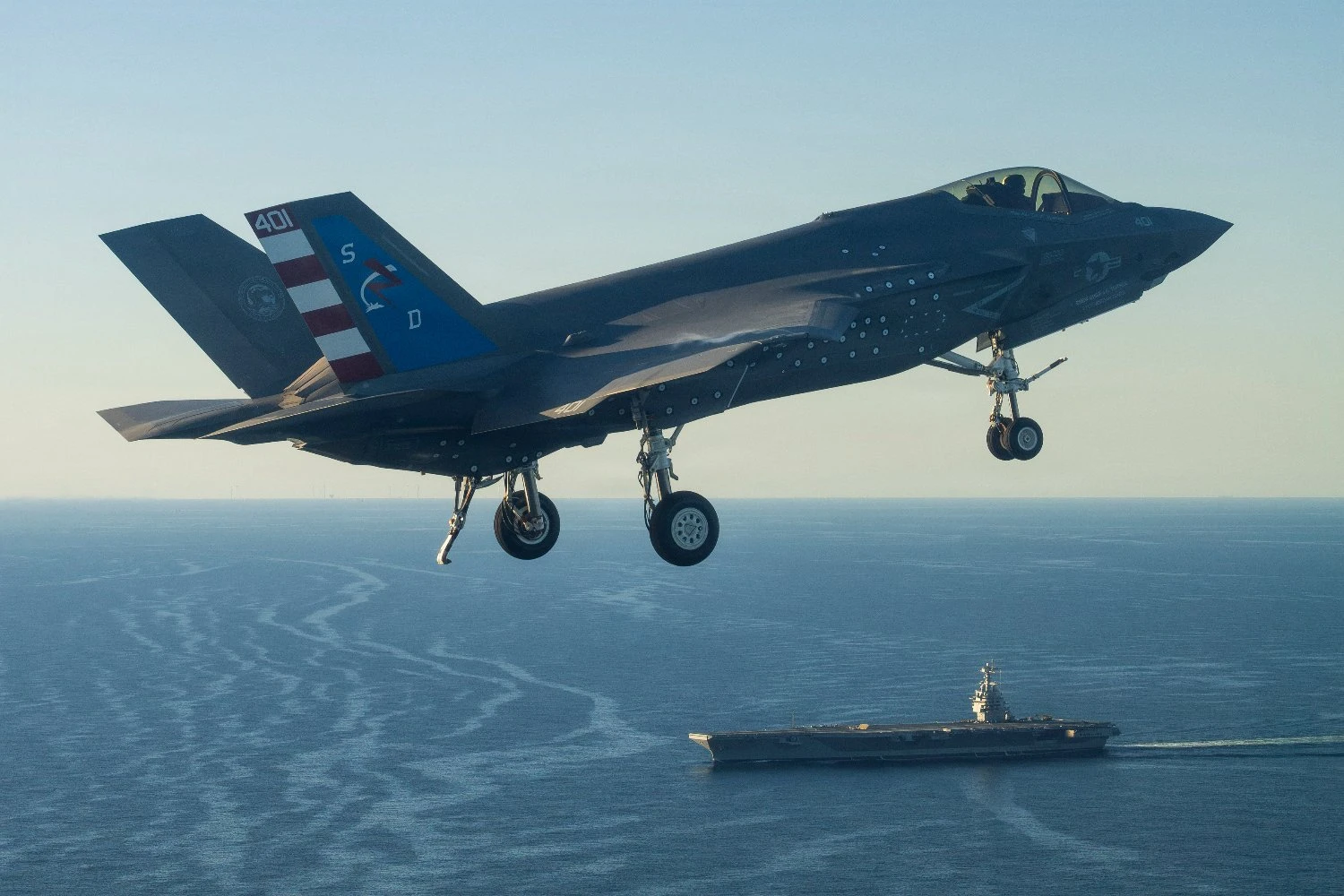
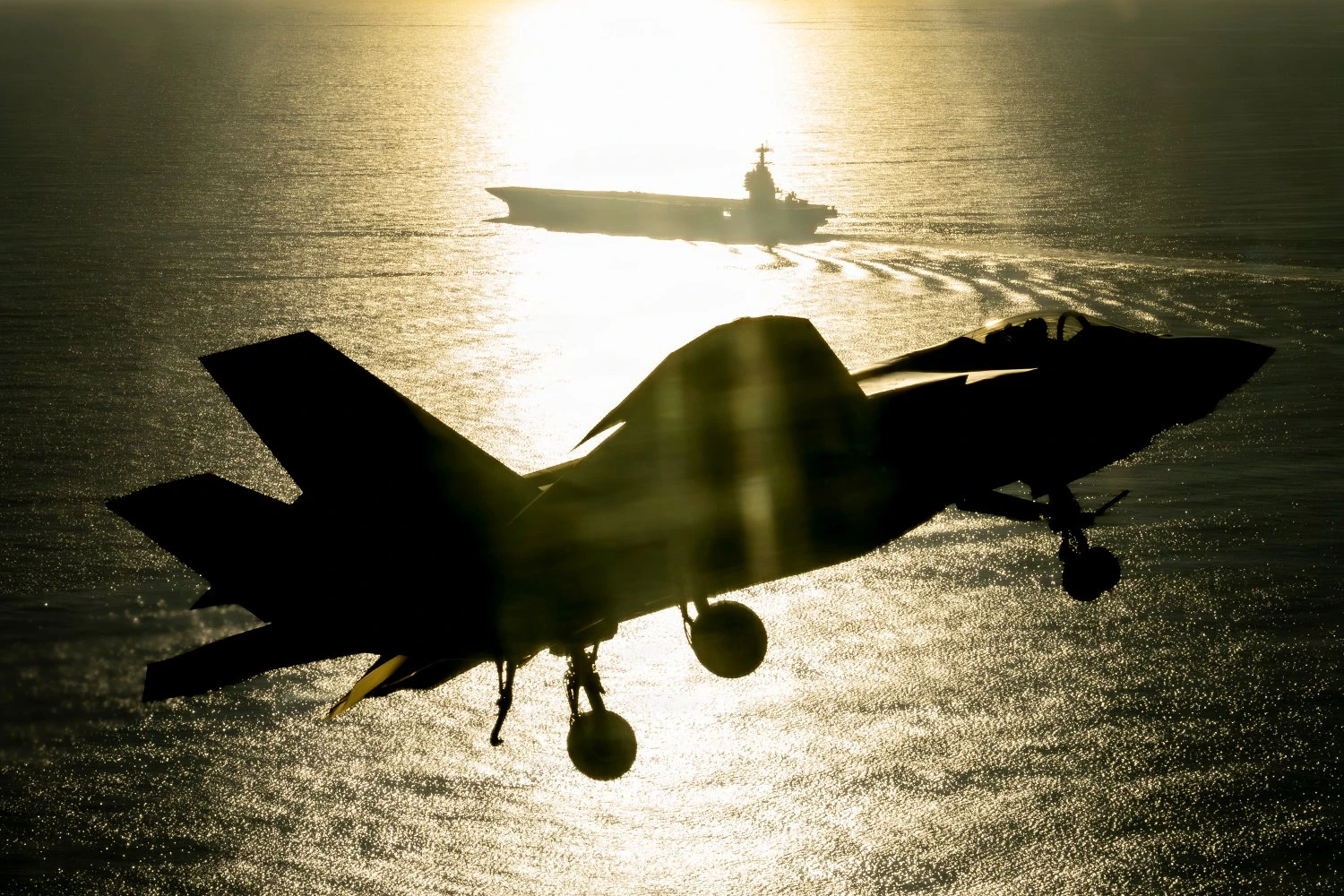
A Lockheed Martin F-35C Lightning II stealth fighter landed aboard the future USS John F. Kennedy (CVN 79) on October 13, becoming the first aircraft of its type to land on a Gerald R. Ford-class aircraft carrier.
The aircraft belonged to Air Test and Evaluation Squadron 23 (VX-23), known as the Salty Dogs, a U.S. Navy test unit based at Naval Air Station Patuxent River in Maryland.
Follow Air Data News: WhatsApp | Instagram | LinkedIn | Twitter | Facebook
The landing was conducted as part of aircraft compatibility testing aboard Kennedy, the second carrier of the Ford class, which is currently undergoing trials ahead of its formal delivery to the Navy in 2027.
The event is particularly significant because the first ship of the class, USS Gerald R. Ford (CVN 78), entered service in July 2017 but has yet to deploy with the F-35C, despite being designed to accommodate the fifth-generation fighter.
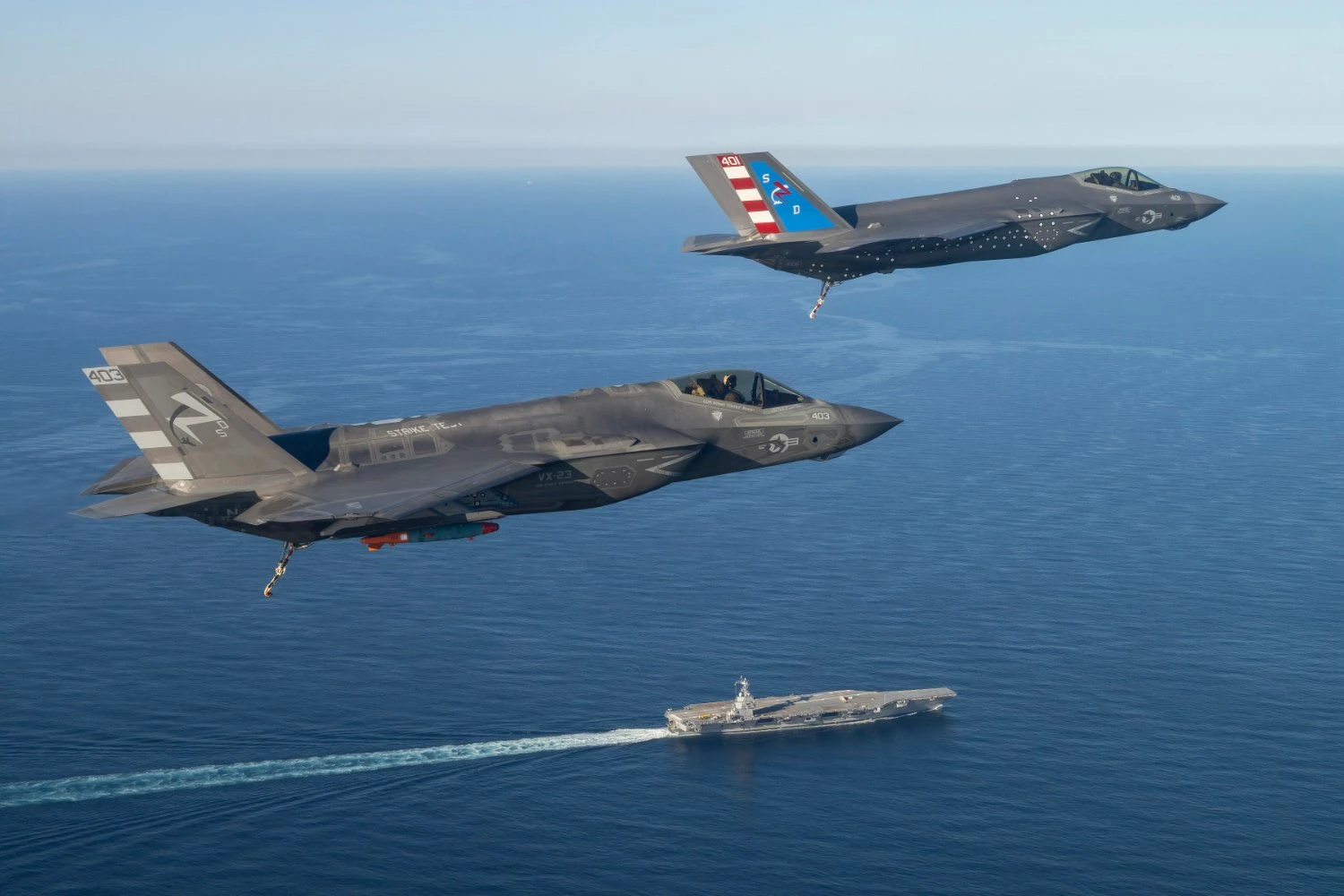
F-35C limitations aboard Gerald R. Ford
Although Gerald R. Ford is capable of launching and recovering the F-35C, it has not received all the modifications required to support the aircraft during extended operational deployments.
The distinction involves more than the carrier's electromagnetic catapults and arresting equipment. The F-35C requires additional infrastructure to support maintenance, logistics and other aspects of operating the stealth fighter at sea.
According to previous U.S. Navy explanations, the modifications include reinforced jet blast deflectors and specialized spaces and equipment associated with F-35C operations.
Without these upgrades, the carrier can accommodate the fighter for limited periods but cannot routinely sustain an embarked F-35C squadron throughout a deployment.
Recent news
Gerald R. Ford has consequently continued operating with Boeing F/A-18E/F Super Hornets as its principal strike fighters.
Kennedy followed a different construction approach. The Navy originally intended to install the necessary F-35C modifications after delivery, as planned for the first carrier.
However, the service changed its strategy in 2020, incorporating the upgrades into the construction program so that Kennedy could deploy with the F-35C from the beginning of its operational career.
The decision contributed to the carrier's extended construction schedule, alongside difficulties involving its Advanced Arresting Gear (AAG) and Advanced Weapons Elevators (AWE).
Kennedy still undergoing tests
The first F-35C landing occurred just two weeks after the Navy took preliminary acceptance of Kennedy on September 29.
Under that arrangement, the ship and its crew can conduct operations and testing at sea even though Newport News Shipbuilding has not completed all contractual work.
The Navy reported that Kennedy was approximately 99% complete at the time of preliminary acceptance. Four of its 11 advanced weapons elevators still required final testing, although the seven completed units already provided access to the ship's ammunition magazines.
The carrier's formal delivery is scheduled for spring 2027, following several postponements from earlier targets.
Kennedy is expected to replace USS Nimitz (CVN 68) in the Pacific Fleet and will eventually be based at Naval Base Kitsap-Bremerton in Washington state.
The Navy has not yet announced which carrier air wing or F-35C squadron will make the ship's first operational deployment.