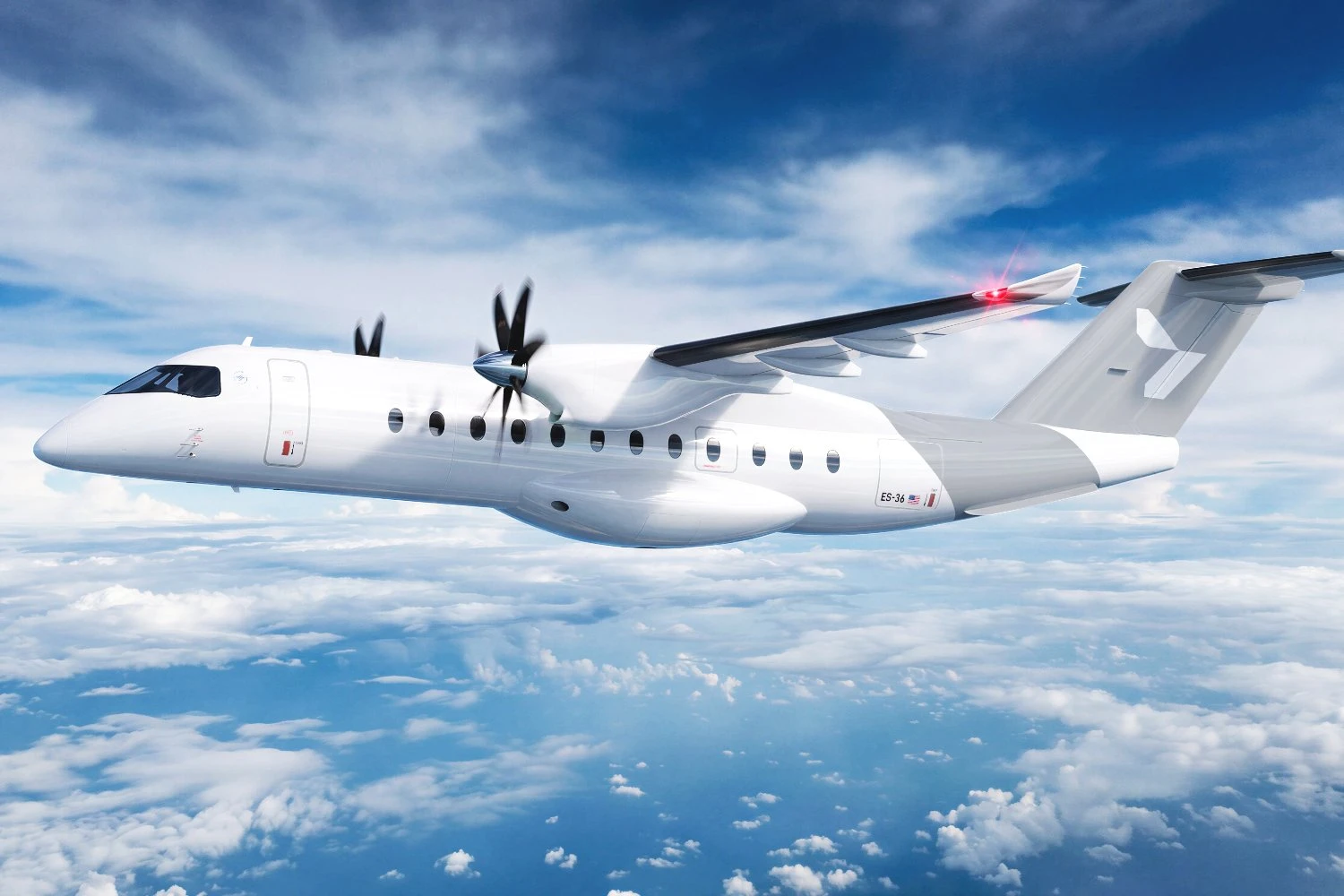
Heart Aerospace has received a US$2.9 million award from the Federal Aviation Administration (FAA) to develop and test the hybrid-electric propulsion system of its ES-36, a 36-seat regional airliner. The manufacturer will contribute an equal amount, bringing the total investment to US$5.8 million over two years.
Announced on October 12, the funding comes under Phase IV of the FAA's Continuous Lower Energy, Emissions, and Noise (CLEEN) program, a public-private initiative supporting aircraft technologies designed to reduce fuel consumption, emissions and noise.
Follow Air Data News: WhatsApp | Instagram | LinkedIn | Twitter | Facebook
The investment will support Project HYPER (Hybrid Propulsion Environmental Readiness), which focuses on developing a megawatt-class turbogenerator for the ES-36's propulsion system.
The aircraft will use two electrically driven propellers, each powered by a 1.65-megawatt motor. A turbogenerator installed in each nacelle will produce electricity during flight, allowing the aircraft to operate beyond the range provided by its batteries alone.
Turbines generate power instead of driving propellers
Unlike conventional turboprops, the ES-36 will have no mechanical connection between its gas turbines and propellers. Instead, the turbines will generate electricity to supplement battery power during longer flights.
Under the FAA-funded program, Heart will initially conduct ground tests to evaluate how the turbogenerators, batteries and electric motors operate together under different conditions.
The company then plans to demonstrate the system aboard a preproduction ES-36, which is scheduled to make its first flight in 2028.
Recent news
October 14, 2026
The tests will collect information on energy consumption, fuel burn, emissions and noise. Heart expects the results to support certification of the ES-36 and help the FAA establish procedures for evaluating hybrid-electric aircraft.
The latest award follows previous FAA support through the Fueling Aviation's Sustainable Transition (FAST) program. In August 2024, Heart received US$4.1 million to develop its Total Hybrid Electric Management and Integration System (THEMIS), which coordinates the aircraft's motors, batteries and turbogenerators.
A redesigned regional aircraft
Heart introduced the ES-36 in September as the successor to its earlier ES-30 project, increasing passenger capacity from 30 to 36 seats.
The redesign also replaced the previous four-propeller configuration with two propulsion nacelles, each housing an electric motor and a turbogenerator.
Heart is targeting an all-electric range of 125 miles (200 km) and a hybrid-electric range of up to 745 miles (1,200 km), both with additional reserves. The turbogenerators will operate on conventional Jet A fuel or sustainable aviation fuel (SAF).
The manufacturer plans to certify the ES-36 under FAA Part 25 regulations and introduce it into commercial service in 2031.
The company completed the first flight of its X1 battery-electric demonstrator in August 2026. The experimental aircraft was developed to validate technologies for Heart's regional aviation program.
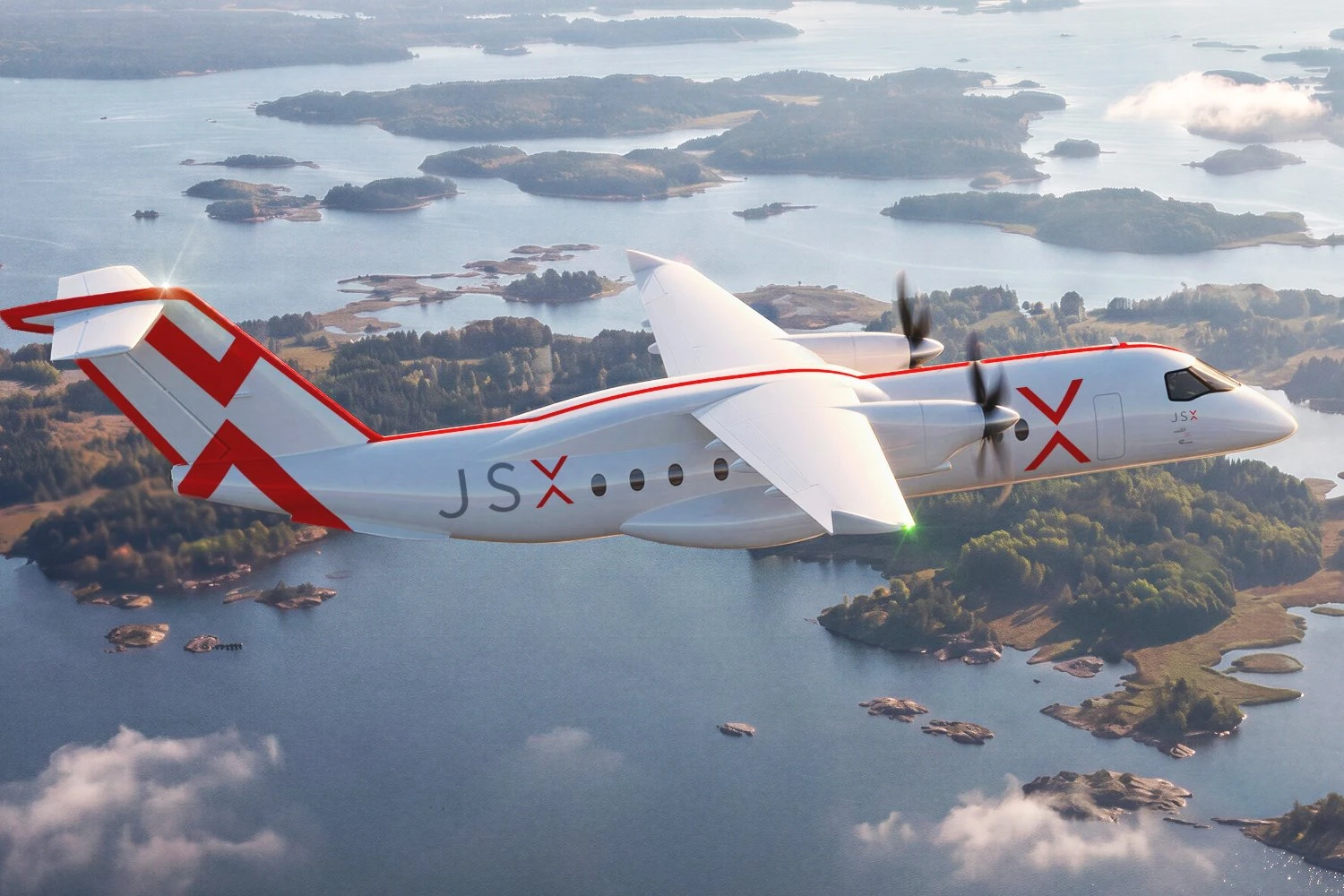
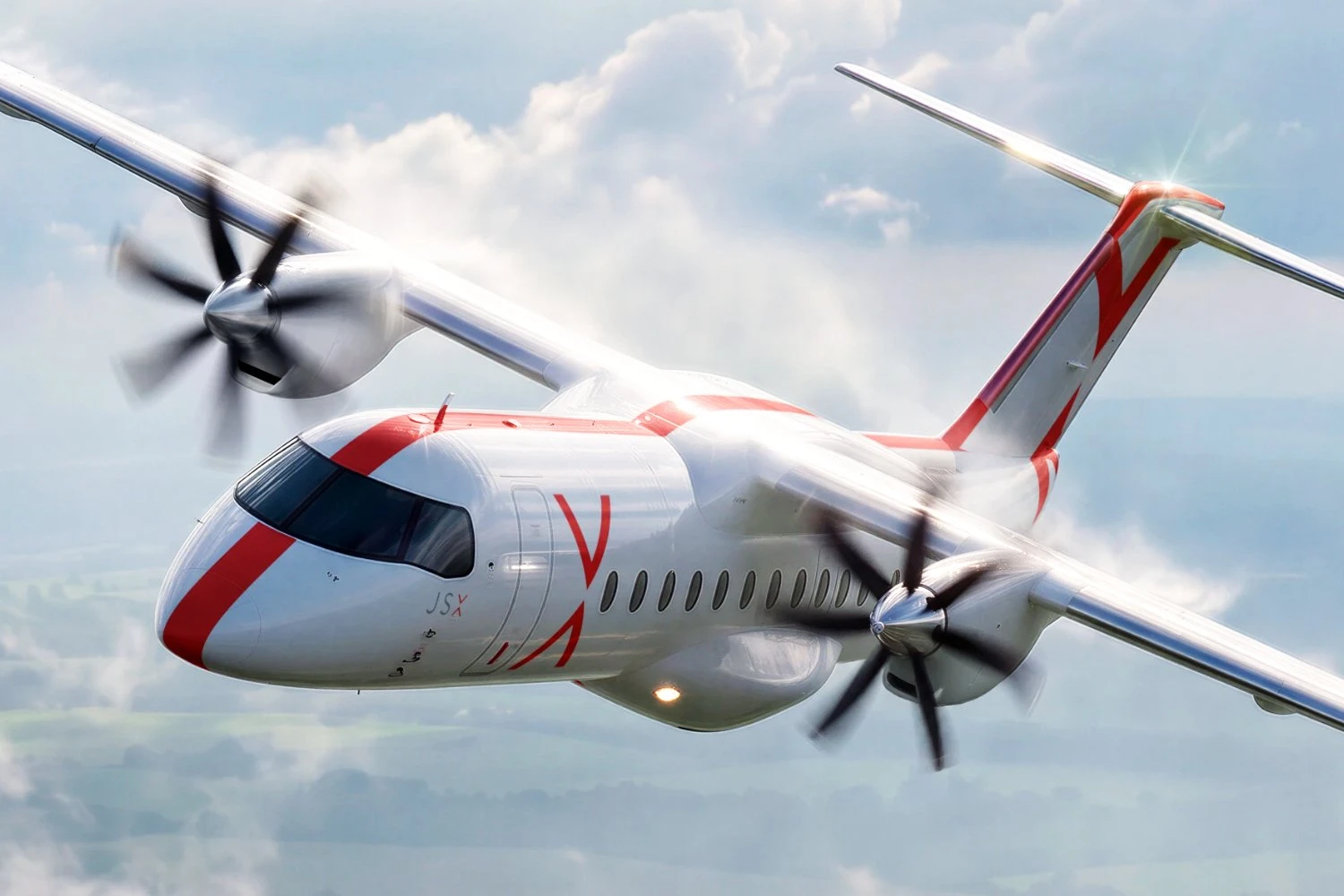
In September, US charter operator JSX signed a deposit-backed purchase agreement for 50 ES-36 aircraft, with purchase rights for another 50.
Heart, originally founded in Sweden and now based in the Los Angeles area, reports more than US$9 billion in customer commitments, including agreements involving United Airlines, Air Canada and JSX.