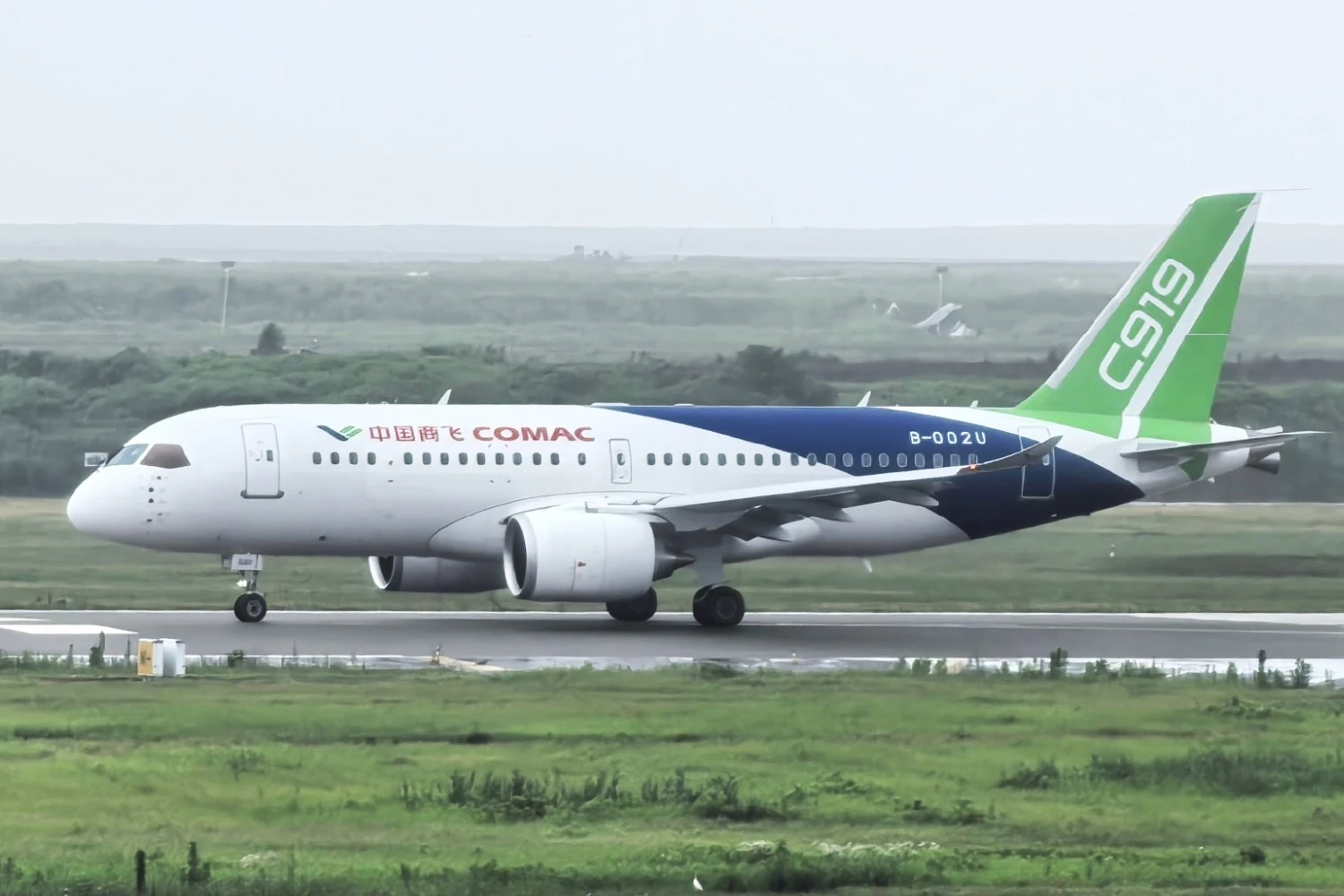
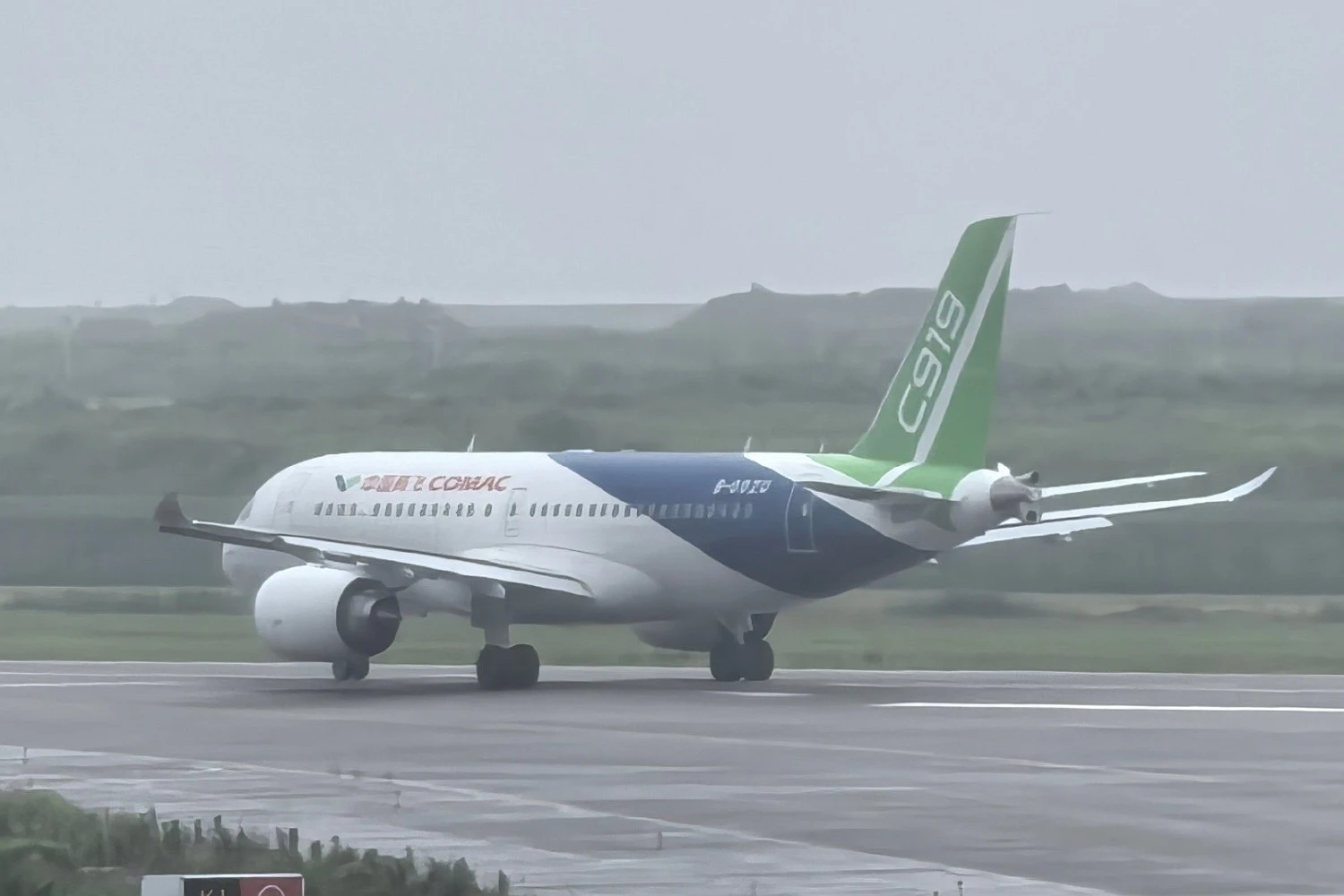
COMAC has begun taxiing tests of the C919-600, a shortened variant of its C919 narrowbody designed for operations at high-altitude airports.
Images shared on Chinese social media in recent days show the aircraft moving under its own power during ground tests. While COMAC has not disclosed the location, the tests appear to have taken place at the manufacturer’s facilities in Shanghai, where final assembly of the C919 is carried out.
Known as the “Plateau” variant, the C919-600 is being developed jointly by COMAC and Tibet Airlines to serve airports in western China, including destinations on the Tibetan Plateau where high elevations and thinner air present operational challenges for commercial aircraft.
Compared with the baseline C919, the new variant features a shorter fuselage measuring about 34 meters, versus 38.9 meters for the standard model. The reduction in length lowers passenger capacity to between 138 and 160 seats, around 28 fewer than the current version.
Related news
September 09, 2026
The design is intended to improve performance in so-called “hot and high” conditions, where reduced air density affects both engine thrust and aerodynamic lift. COMAC is targeting a range of approximately 3,000 km for the aircraft.
The project emerged from a cooperation agreement signed between COMAC and Tibet Airlines in 2023. Tibet Airlines later became the launch customer, ordering 40 C919-600s as part of a larger agreement announced during the Singapore Airshow in February 2024.
Follow Air Data News: WhatsApp | Google News | Instagram | LinkedIn | Twitter | Facebook
Development work has continued over the past two years. In September 2024, a standard C919 conducted test flights at Lhasa Gonggar Airport, which sits at an elevation of 3,569 meters (11,709 ft), to evaluate aircraft systems and operational procedures in high-altitude conditions.
The C919-600 is expected to compete in a niche market currently served by aircraft such as the Airbus A319neo, which is widely used on mountain routes and at airports with performance restrictions.
Taxiing tests are among the final ground evaluations conducted before an aircraft’s maiden flight. During these trials, engineers assess systems including steering, braking and low-speed handling before the start of flight testing.