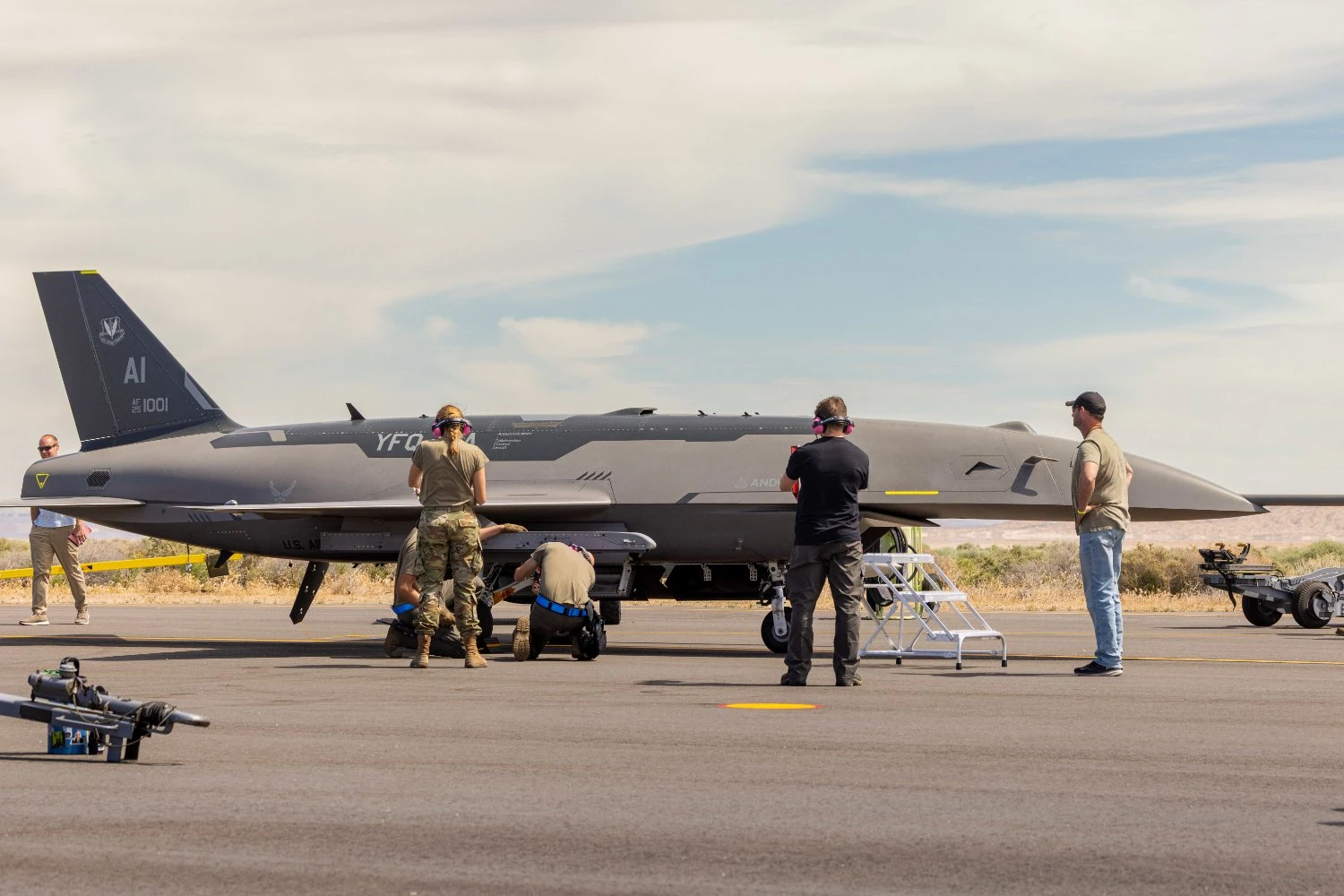
The U.S. Air Force (USAF) has conducted an exercise in which operational personnel, rather than test pilots, took direct control of a Collaborative Combat Aircraft (CCA) prototype to evaluate how the system could be used in real missions. The activity took place at Edwards Air Force Base and involved the Experimental Operations Unit (EOU), a formation created to develop tactics for the new class of uncrewed aircraft.
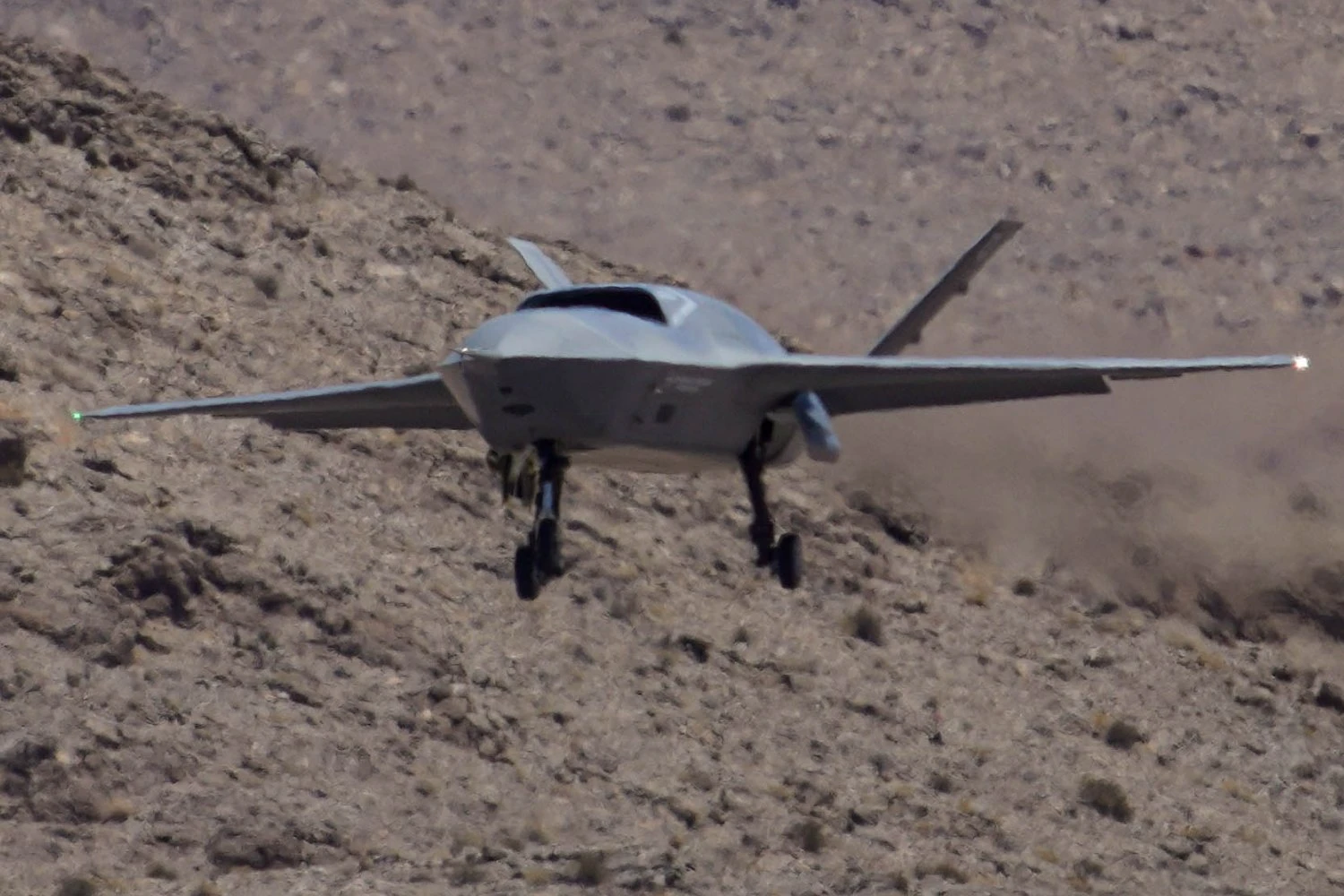
The tests were carried out with the YFQ-44A, developed by Anduril Industries, and included a series of sorties in which Airmen handled mission planning, aircraft preparation, launch procedures and in-flight tasking. According to the Air Force, crews operated the aircraft using deployable systems rather than fixed infrastructure, simulating conditions closer to a forward operating base.
“This experimental operations event was executed by EOU members from start to finish. Every sortie generated and flown was done with a warfighter, not an engineer or test pilot, kicking the tires and controlling the prototypes,” said Lt. Col. Matthew Jensen, commander of the unit.
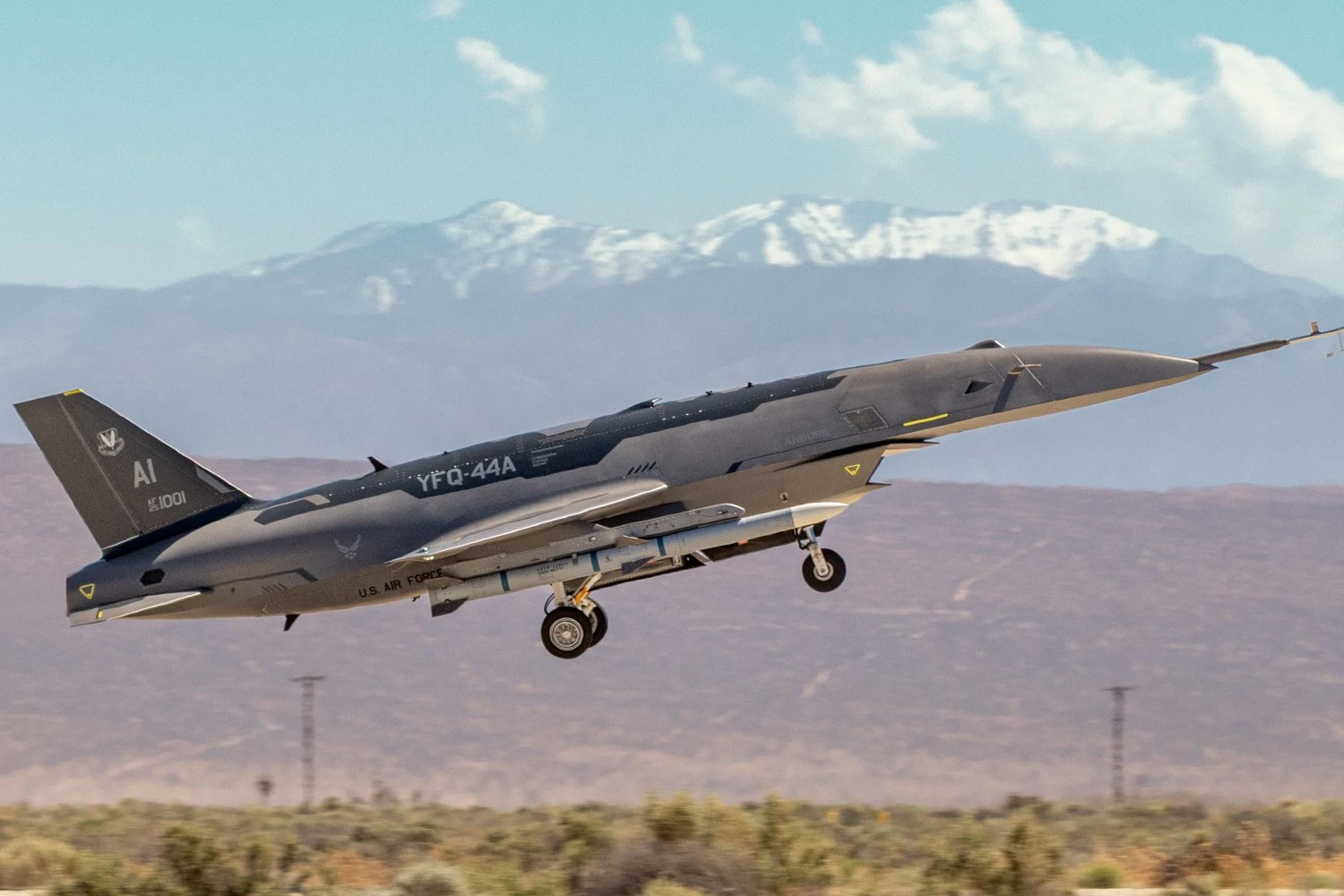
YFQ-44A unmanned aircraft | USAF 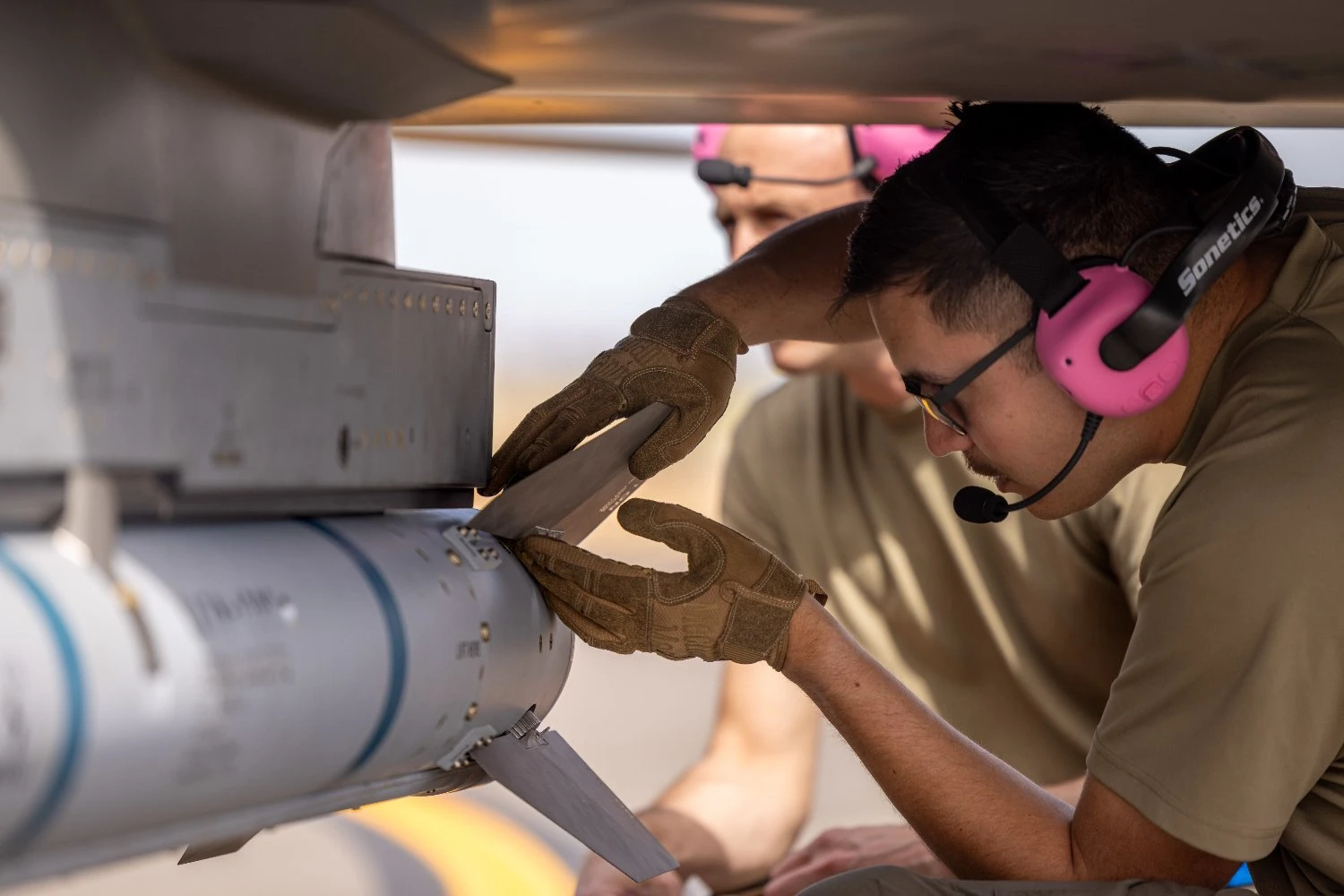
YFQ-44A unmanned aircraft | USAF 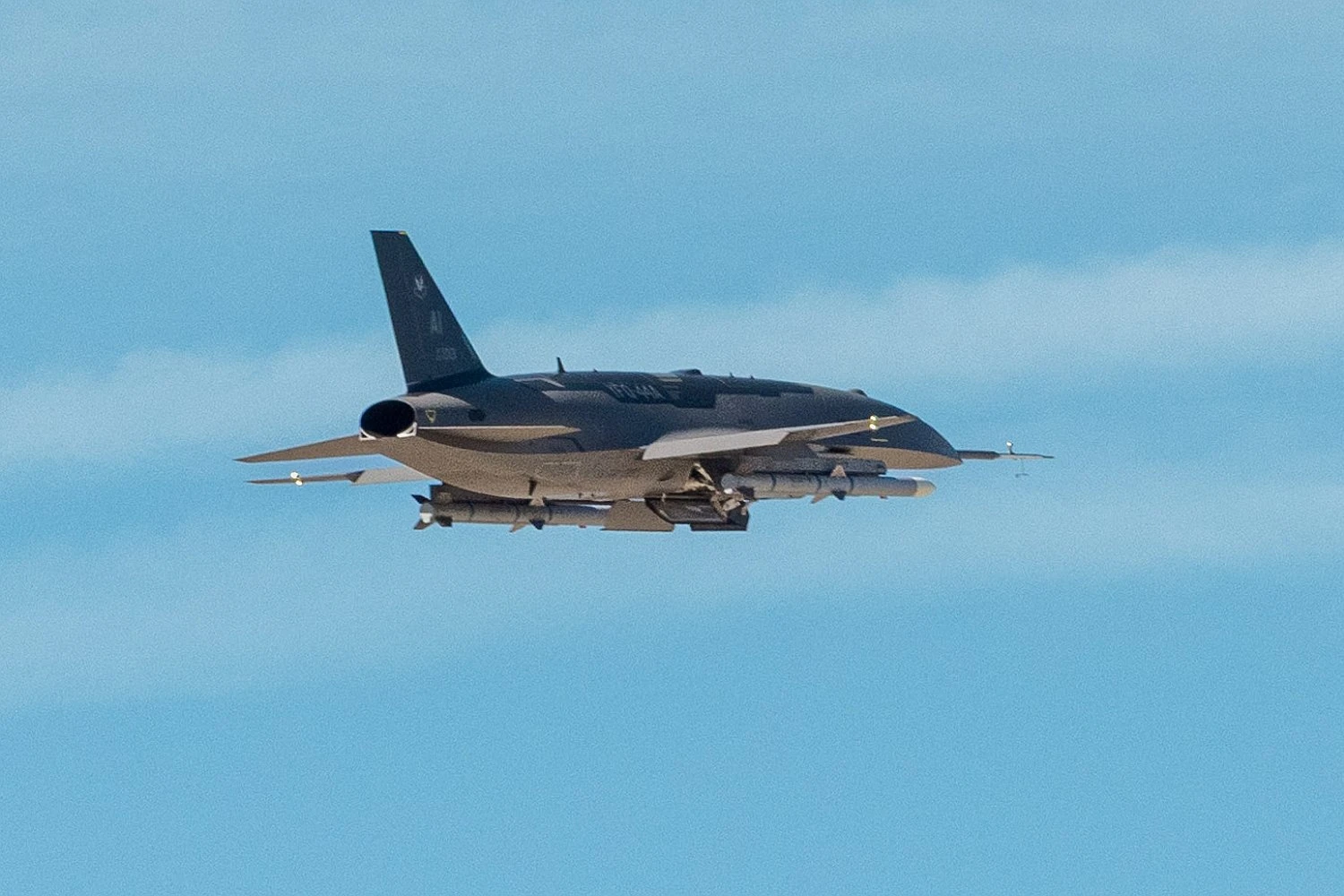
YFQ-44A unmanned aircraft | USAF



During the exercise, personnel also worked on ground operations such as maintenance, weapons handling and turnaround procedures, testing how a small team could sustain flight operations. The Air Force said the goal was to define the initial “playbook” for employing CCA systems, including tactics, techniques and logistical requirements.
Collaborative Combat Aircraft are designed to operate alongside crewed fighters such as the F-35 Lightning II, carrying out missions that may include strike, reconnaissance and electronic warfare while being controlled or supervised by human operators.
Related news
September 15, 2026
September 14, 2026
The YFQ-44A is one of two prototypes currently under evaluation. The competing YFQ-42A, developed by General Atomics, recently lost one aircraft during a test flight in California, an incident that has not yet been explained by the Air Force.
The service said the exercise is intended to establish how these aircraft would be deployed and sustained in combat, with feedback from operators used to shape both the design and the acquisition process as the program moves forward.