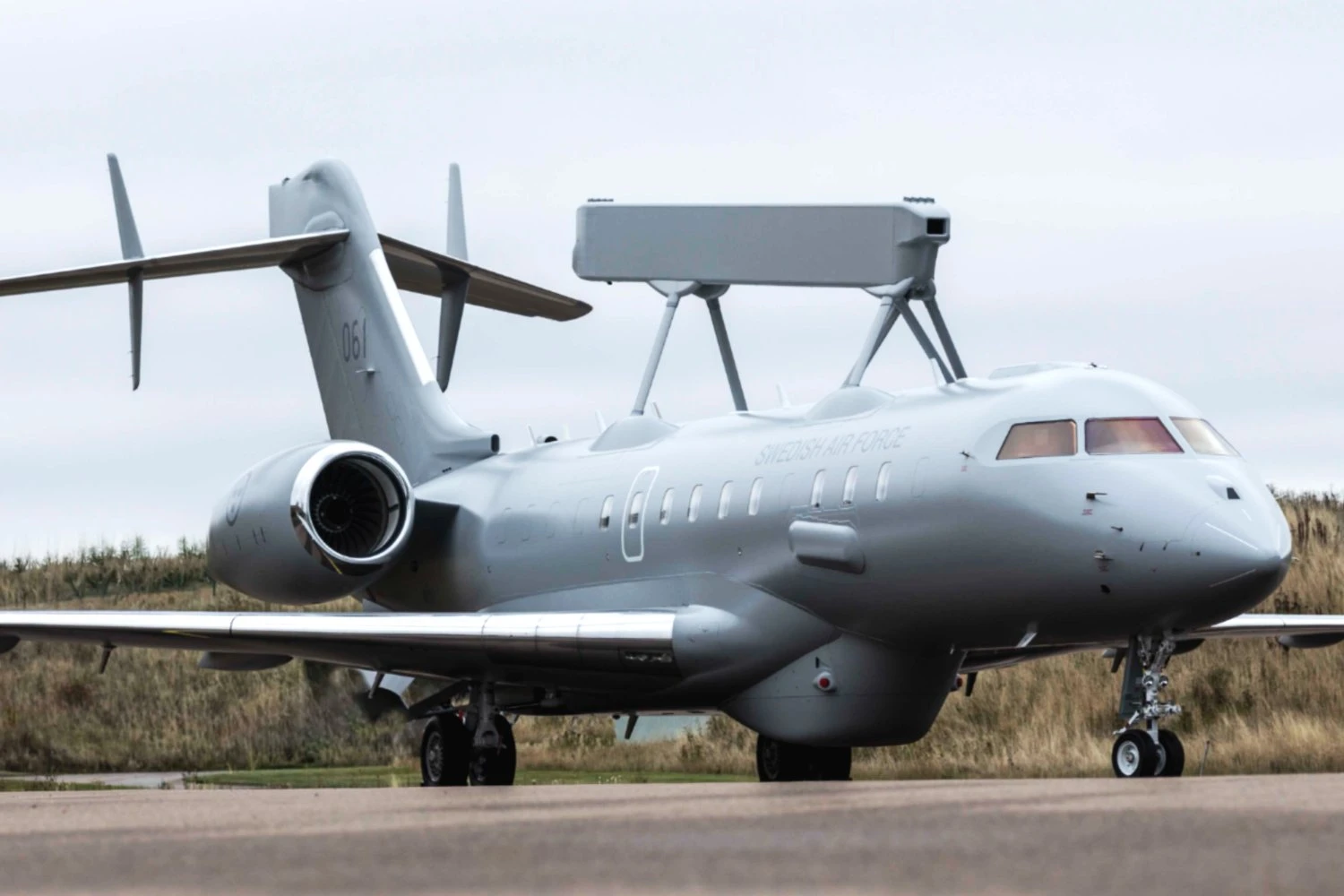
Saab unveiled the first GlobalEye airborne early warning and control (AEW&C) aircraft built for the Swedish Air Force on October 15. The surveillance jet, based on the Bombardier Global business aircraft family, will now undergo testing and verification before its maiden flight and delivery.
Sweden has ordered three GlobalEye aircraft, designated S 106 in Swedish military service. The first two were contracted in June 2022 for approximately SEK 7.3 billion (US$732 million), with deliveries originally scheduled for 2027. A third aircraft was ordered in June 2024 for SEK 2.6 billion (US$261 million).
The new aircraft will replace Sweden's older Saab 340-based S 100 Argus surveillance aircraft, providing greater range, endurance and surveillance capabilities.
Unlike conventional airborne early warning aircraft primarily designed to monitor airspace, GlobalEye combines air, maritime and ground surveillance capabilities.
Follow Air Data News: WhatsApp | Instagram | LinkedIn | Twitter | Facebook
Its main sensor is Saab's Erieye Extended Range radar, mounted in a distinctive structure above the fuselage. The system has a reported detection range exceeding 550 kilometers and is supported by additional sensors and a command-and-control system.
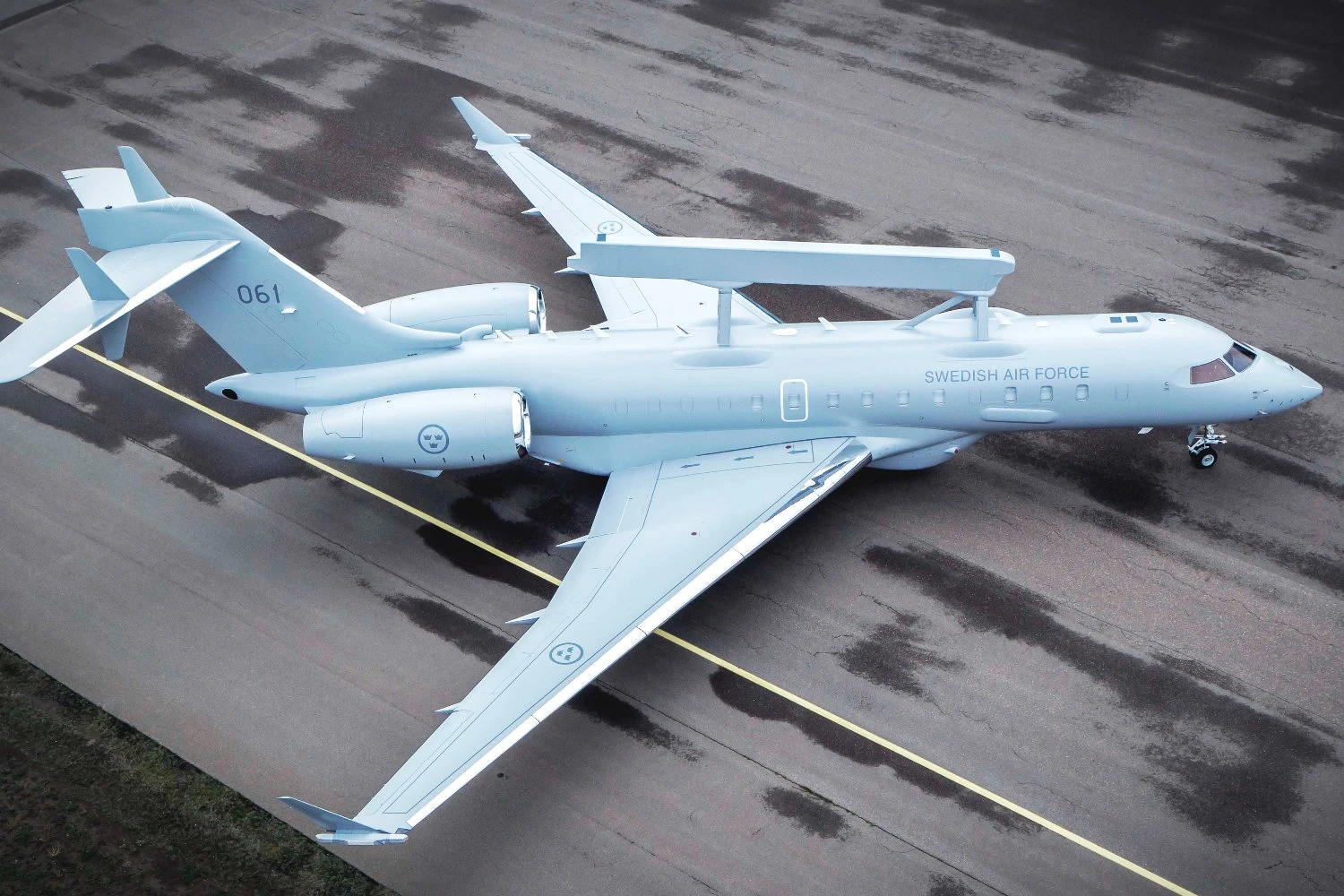
The aircraft can detect and track airborne threats, monitor maritime activity and provide information to military units operating across different domains.
Sweden's first GlobalEye will enter flight testing before delivery, although Saab has not announced a specific date for its maiden flight.
European alternative to American E-7
The Swedish aircraft was unveiled at a time when GlobalEye has attracted substantial international interest, particularly among countries seeking alternatives to American-built airborne early warning systems.
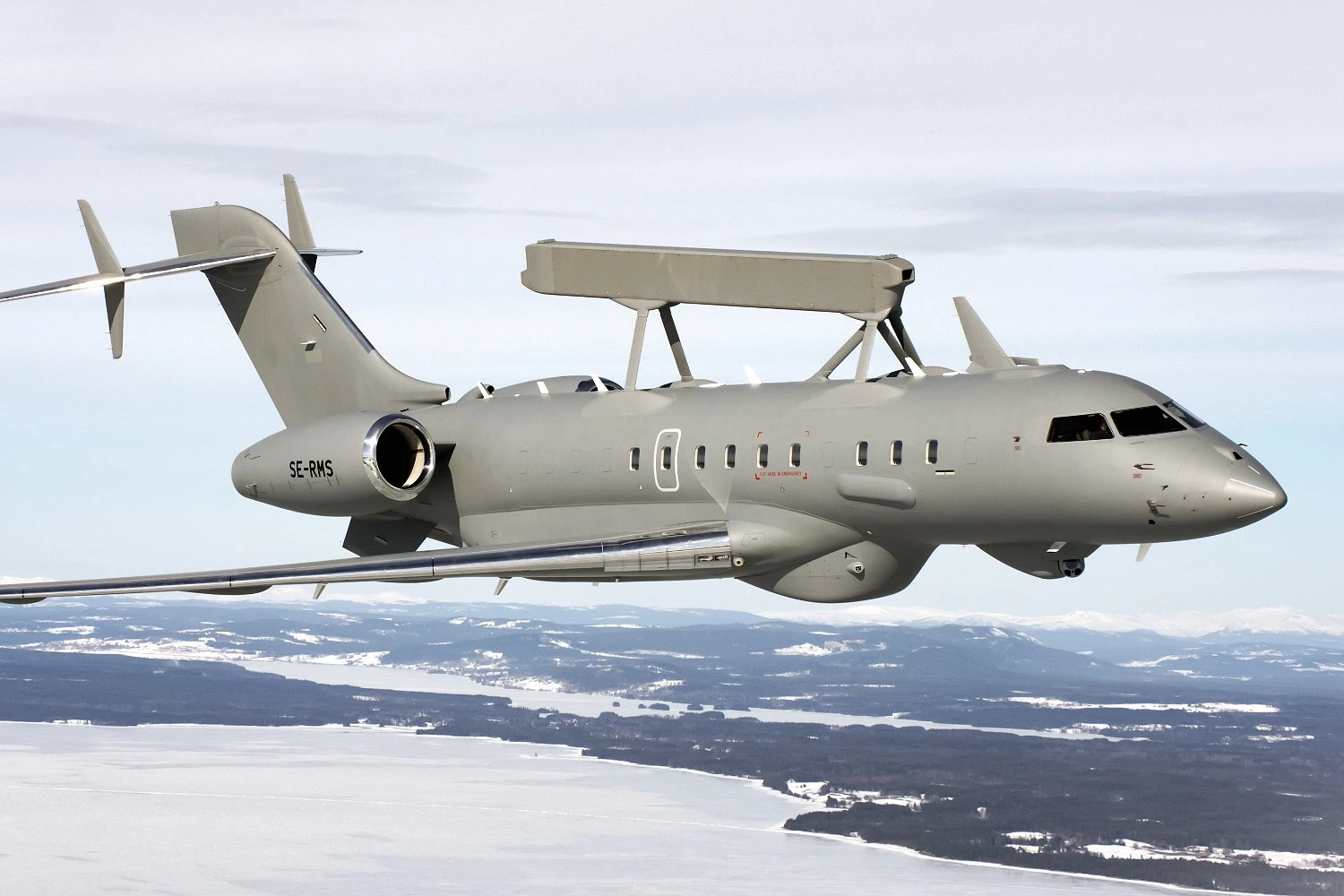
The United Arab Emirates became the launch customer for GlobalEye and received five aircraft between 2020 and 2024.
France followed with a firm order for two aircraft in December 2025, valued at approximately SEK 12.3 billion (US$1.23 billion), with deliveries scheduled between 2029 and 2032. The agreement includes options for two additional aircraft.
The French decision is particularly significant because the country's air force currently operates Boeing E-3F Sentry aircraft, a US-designed airborne warning and control platform.
In July 2026, NATO selected GlobalEye as its future AEW&C solution, opening negotiations with Saab for the acquisition of up to ten aircraft.
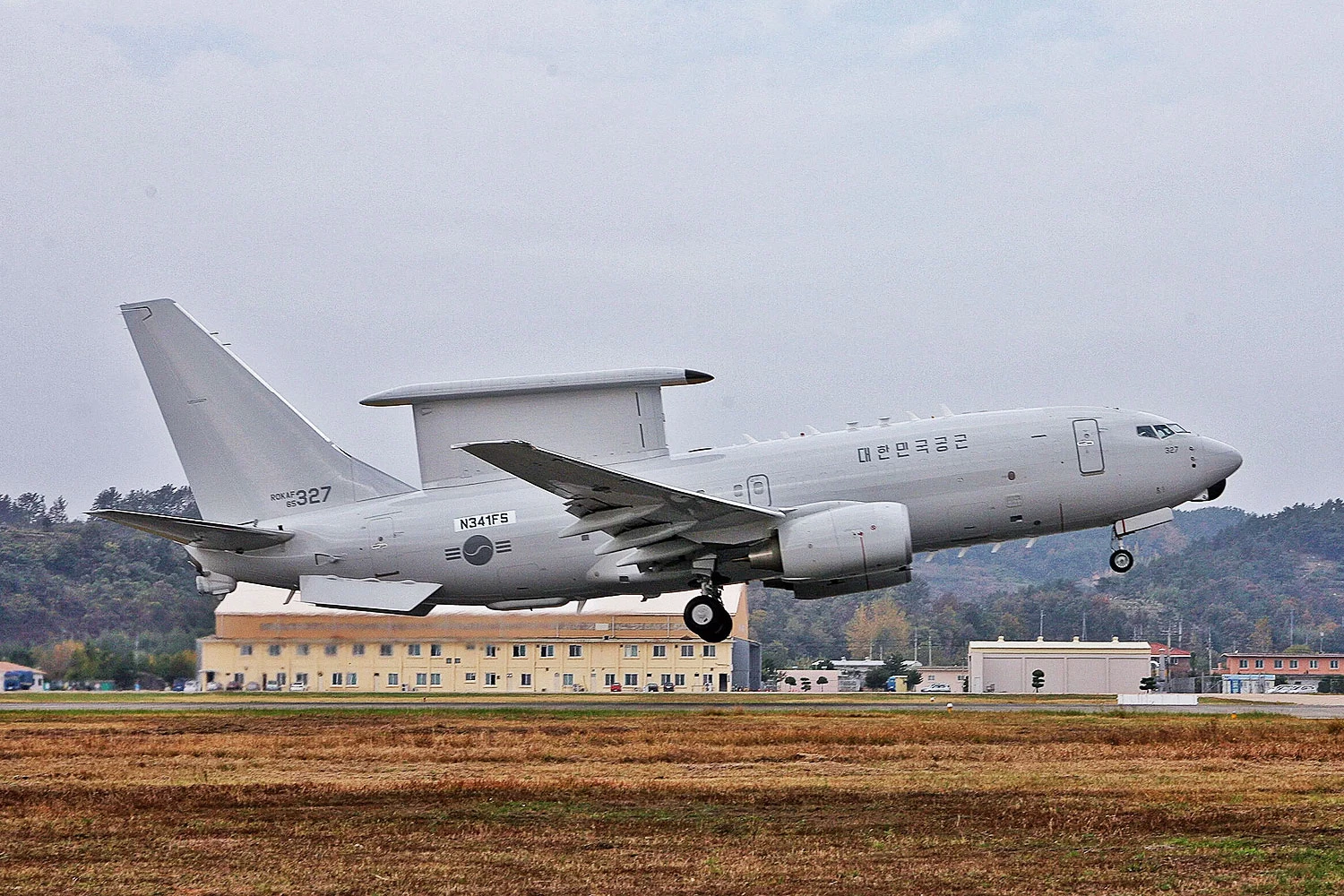
The decision followed the alliance's reconsideration of plans to replace its Boeing E-3A fleet with the Boeing E-7 Wedgetail, amid uncertainty surrounding the American program.
Although NATO has selected the Swedish system, Saab has not yet received a firm order for the proposed fleet.
Canada is another potential major customer. In May 2026, Ottawa identified Saab as its preferred supplier for a future AEW&C capability, and the two sides signed a non-binding agreement in September establishing the framework for further negotiations.
The proposed Canadian acquisition covers six GlobalEye aircraft, including training, support and associated systems. Saab has offered to involve Canadian industry in production, maintenance and upgrades.
The aircraft's Canadian origins are particularly relevant to the proposal, since GlobalEye uses Bombardier's Global 6000/6500 business jet platform.
The Netherlands also signed a letter of intent in September 2026 to acquire one GlobalEye, although no contract has been concluded.
Orders from the Middle East
Saab received another order in July 2026 for two GlobalEye aircraft from an undisclosed Middle Eastern customer.
The contract is valued at SEK 10.1 billion (US$1.01 billion), with deliveries planned for 2030. Saab has declined to identify the buyer.
Including the United Arab Emirates, Sweden, France and the unidentified Middle Eastern customer, Saab has secured firm orders for 12 GlobalEye aircraft.
Potential acquisitions by NATO, Canada and the Netherlands could substantially increase that number, although these programs remain subject to contract negotiations. GlobalEye first flew in March 2018 and entered service with the United Arab Emirates in 2020.