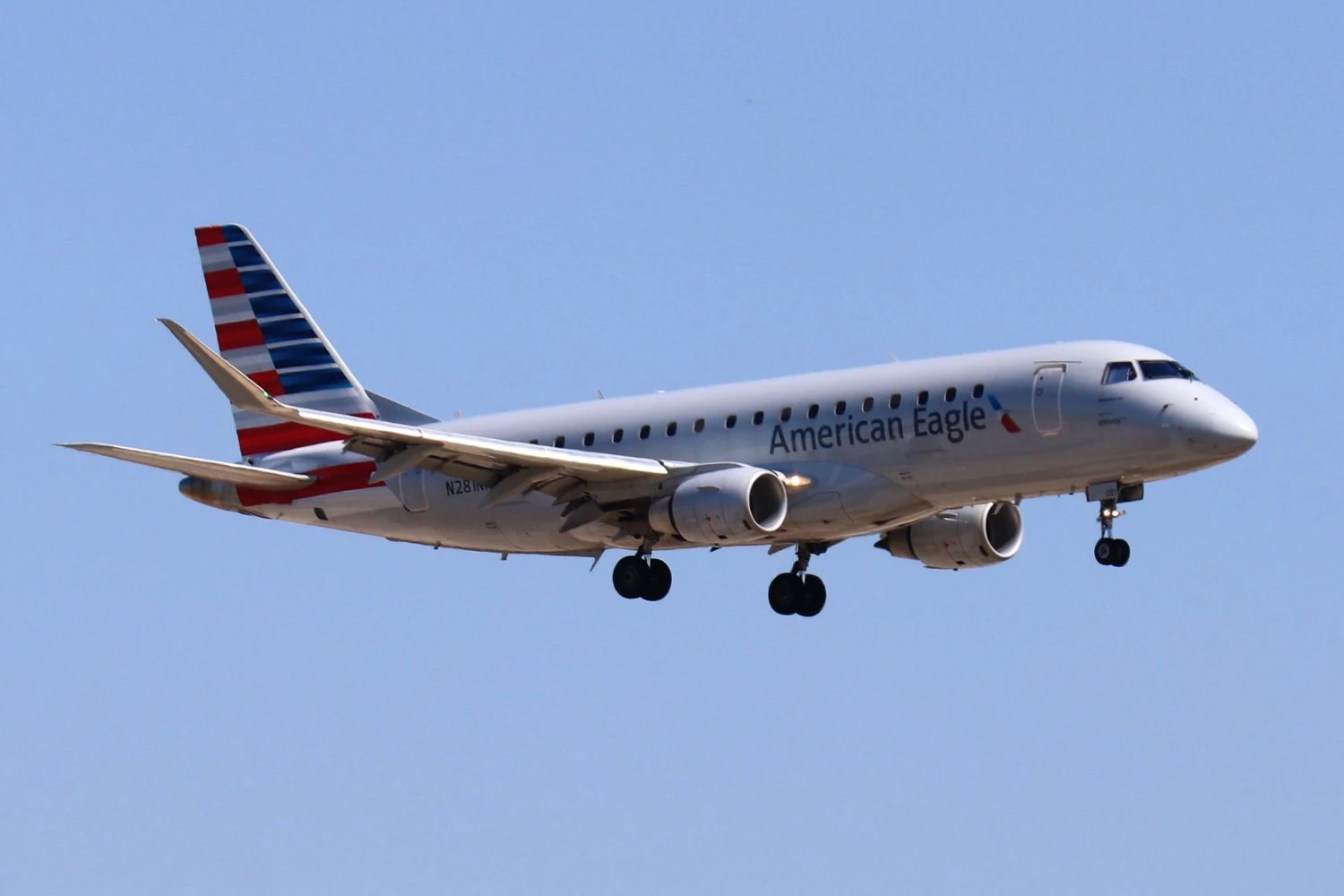
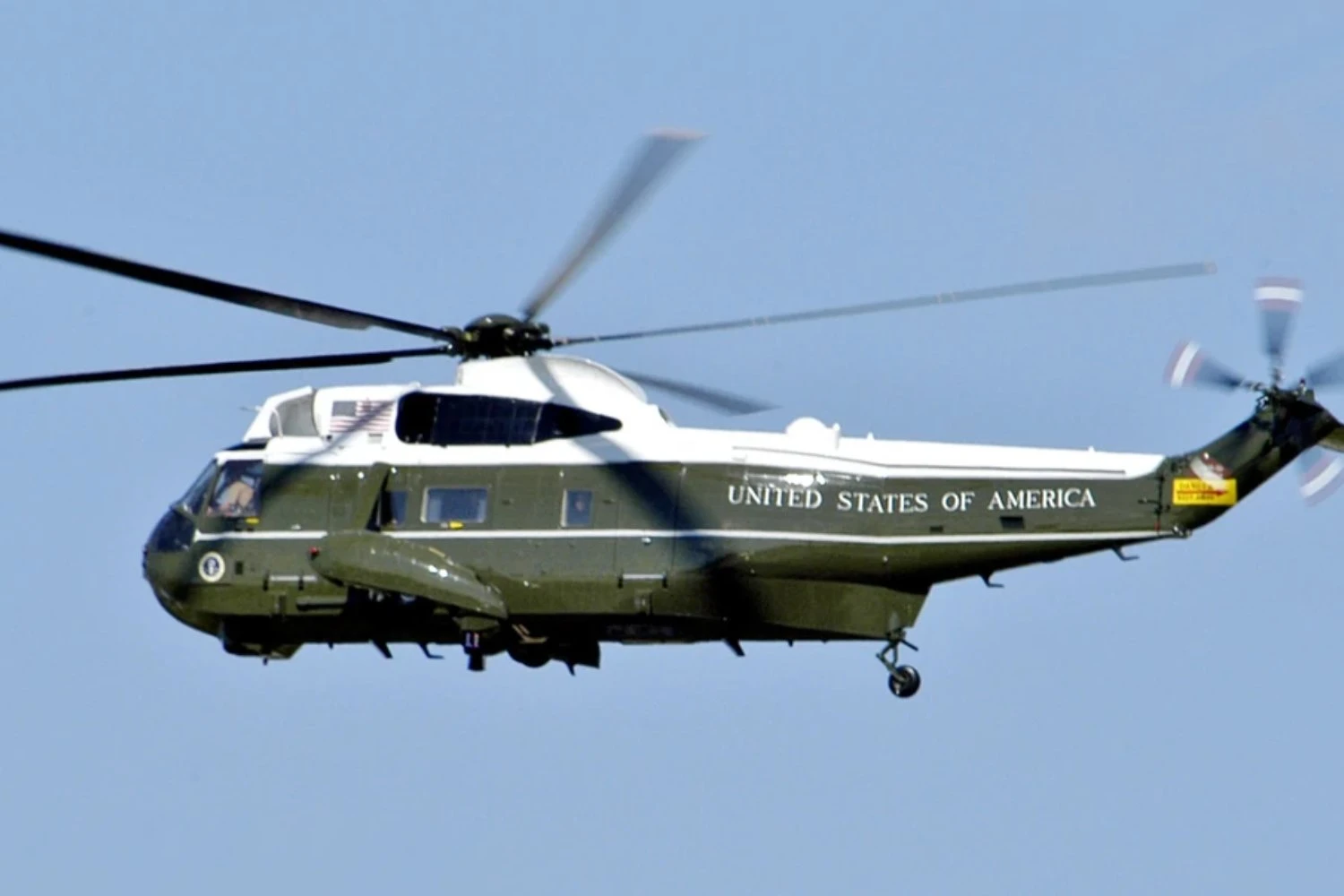
A radio communications problem involving Marine One prevented air traffic controllers from receiving advance notice of the presidential helicopter's departure before a loss of separation with an Envoy Air Embraer E175LR near Washington Reagan National Airport on August 4.
A preliminary report released by the US National Transportation Safety Board (NTSB) on August 27 provides new details about the sequence that brought the aircraft into proximity shortly after the regional jet departed the airport.
Follow Air Data News: WhatsApp | Instagram | LinkedIn | Twitter | Facebook
Marine One, a Sikorsky VH-3D carrying US President Donald Trump, was departing the Ellipse near the White House at about 2:34 p.m. local time. Envoy Air Flight 3742, operated by E175LR N307LH, was taking off from Runway 1 at Reagan National for a flight to Pensacola, Florida.
According to a preliminary Federal Aviation Administration (FAA) estimate cited by the NTSB, the aircraft were separated by about 0.82 nautical miles (1.52 km) laterally and 700 ft (213 m) vertically during the event. The NTSB is continuing to analyze surveillance data to determine the separation between the two aircraft.
The E175 crew received a Traffic Collision Avoidance System (TCAS) traffic advisory during the climb. Neither pilot was able to visually identify the helicopter.
According to the crew, the TCAS display showed the helicopter passing behind and to the right of the E175 with 600 ft of vertical separation. The system did not generate a resolution advisory requiring an avoidance maneuver.
Failed calls before departure
Procedures between Marine Helicopter Squadron One (HMX-1) and Washington-area air traffic control facilities require the presidential helicopter crew to contact the Reagan National tower three minutes before departure when the president is aboard.
The notification allows controllers to stop departures from the airport while the presidential flight leaves the area.
The NTSB said Marine One's first attempt to contact the tower was not received. A second transmission was broken and "completely unintelligible."
Recent news
September 21, 2026
September 21, 2026
September 21, 2026
The crew also attempted to relay the three-minute notification through the Joint Base Anacostia-Bolling helicopter facility, but the message did not reach the tower.
Without receiving the advance notification, the controller cleared Envoy Flight 3742 for takeoff. The E175 was becoming airborne at approximately the same time Marine One climbed high enough to establish radio contact with the tower.
The controller subsequently advised the helicopter crew of the Envoy aircraft, and Marine One reported having the traffic in sight.

White House construction affected radio coverage
The investigation found that the communications problem was associated with the temporary use of the Ellipse for presidential helicopter operations while construction was underway at the White House.
FAA spectrum engineering personnel conducted a coverage analysis after the incident and determined that there was inadequate line of sight between the radio transmitter/receiver site and the Ellipse.
There was no documented history of reported problems with the frequency. However, the NTSB said HMX-1 personnel had told controllers during a July 30 meeting, five days before the incident, that communications from the Ellipse had been intermittent.
After the August 4 event, the FAA relocated radio equipment from a nearby neighborhood to the top of the Reagan National control tower. Subsequent testing involving two HMX-1 helicopters operating at and around the Ellipse found no further communications deficiencies.
Related news
September 21, 2026
September 18, 2026
The incident occurred about 18 months after the January 29, 2025 collision between an American Eagle Bombardier CRJ700 and a US Army Sikorsky UH-60 Black Hawk near Reagan National. All 67 people aboard the two aircraft were killed.
That accident led the FAA to impose restrictions on helicopter operations around Reagan National, including measures intended to prevent simultaneous helicopter and commercial aircraft movements in parts of the airspace surrounding the airport.
Marine One and the Envoy E175 continued their flights after the August 4 incident. There were no injuries or aircraft damage. The NTSB investigation remains in progress.