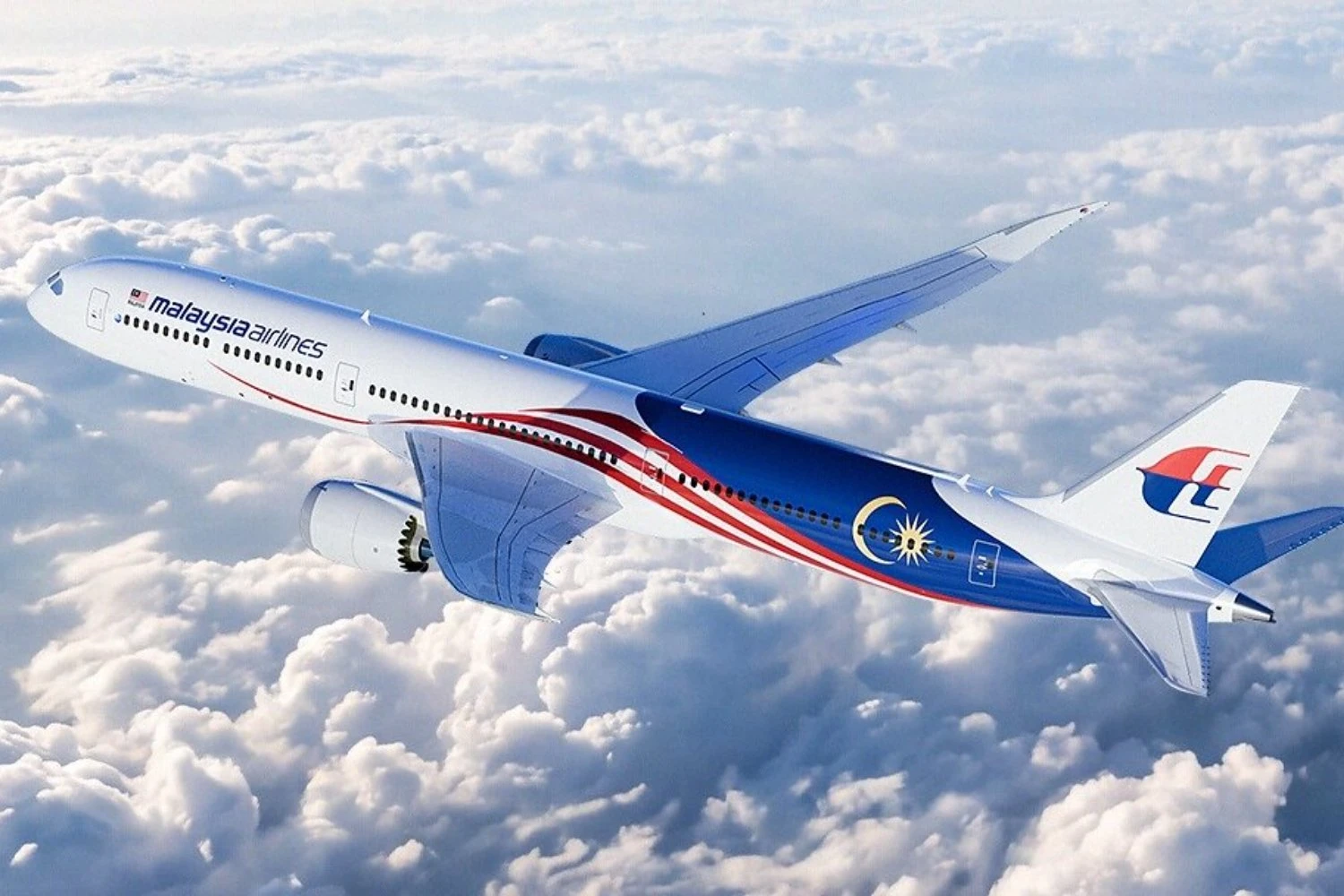
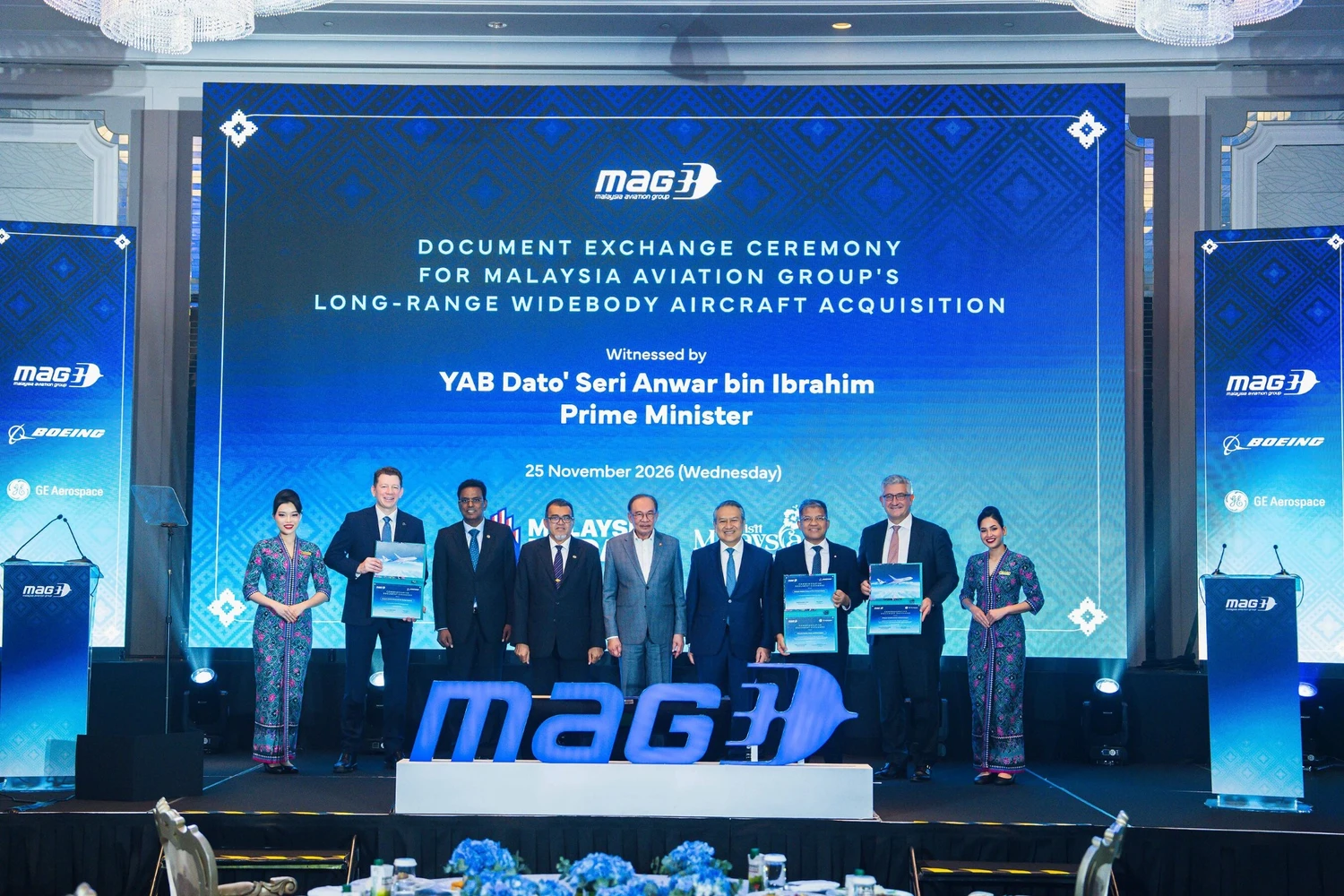
Malaysia Aviation Group (MAG) has committed to order 10 Boeing 787-10s with options for six more aircraft, marking the first firm Dreamliner order for parent company Malaysia Airlines and Boeing's return to its long-haul fleet.
The agreement announced on Wednesday still needs to be finalized. Deliveries are scheduled between 2032 and 2035, giving MAG several years before the 787 begins reshaping a widebody fleet that is currently becoming increasingly centered around Airbus aircraft.
Follow Air Data News: WhatsApp | Instagram | LinkedIn | Twitter | Facebook
Malaysia Airlines plans to configure the 787-10 with 319 seats in three classes and use the aircraft on long-haul services. MAG cited London, Paris, Sydney, Melbourne, Tokyo, Osaka and Seoul among potential destinations, although the network could change considerably before deliveries begin.
The deal confirms a selection that had been taking shape for months. Malaysia Airlines had been evaluating Boeing and Airbus widebodies to replace its seven A350-900s and provide additional capacity. The airline previously signed a memorandum of understanding for eight 787-9s in 2017, but that proposal expired without becoming a firm order.
787-10 will replace more capable A350s
The decision produces an unusual fleet transition. Malaysia Airlines' seven A350-900s offer considerably more range than the 787-10s that will replace them, but the Airbus jets are leased and their economics had become an important factor in the replacement evaluation.
The airline plans to phase out the A350s between 2032 and 2035, as their leases approach the end of their economic cycle for MAG. Earlier reports during the selection process indicated that Boeing also benefited from aircraft availability and commercial terms involving GE Aerospace, whose GEnx engines will power the new Dreamliners.
Malaysia Airlines currently configures its A350-900s with 286 seats. The future 787-10 will carry 319 passengers, although the difference comes from a different cabin strategy rather than simply the relative size of the two aircraft. The Dreamliner will have three classes, and MAG has not yet disclosed the detailed seating layout.
Related news
November 24, 2026
November 24, 2026
The change comes with a substantial reduction in range. Airbus lists the A350-900 at up to 8,500 nautical miles (15,750 km), compared with 7,500 nautical miles (13,890 km) for the 787-10. The Boeing figure already includes an increase in maximum takeoff weight certified by the FAA in 2026, which added more than 400 nautical miles (740 km) of range to the largest Dreamliner.
Even with that improvement, the 787-10 remains below the smaller 787-9, which can fly up to 8,300 nautical miles (15,370 km). The stretched variant has a larger cabin instead, with Boeing listing capacity for 300 to 375 passengers in a typical two-class configuration.
Two different widebody strategies
The arrival of the Dreamliners will follow another major widebody expansion at Malaysia Airlines. MAG has ordered 40 Airbus A330-900s, including a second batch of 20 aircraft announced in 2025, with deliveries extending into the beginning of the next decade.
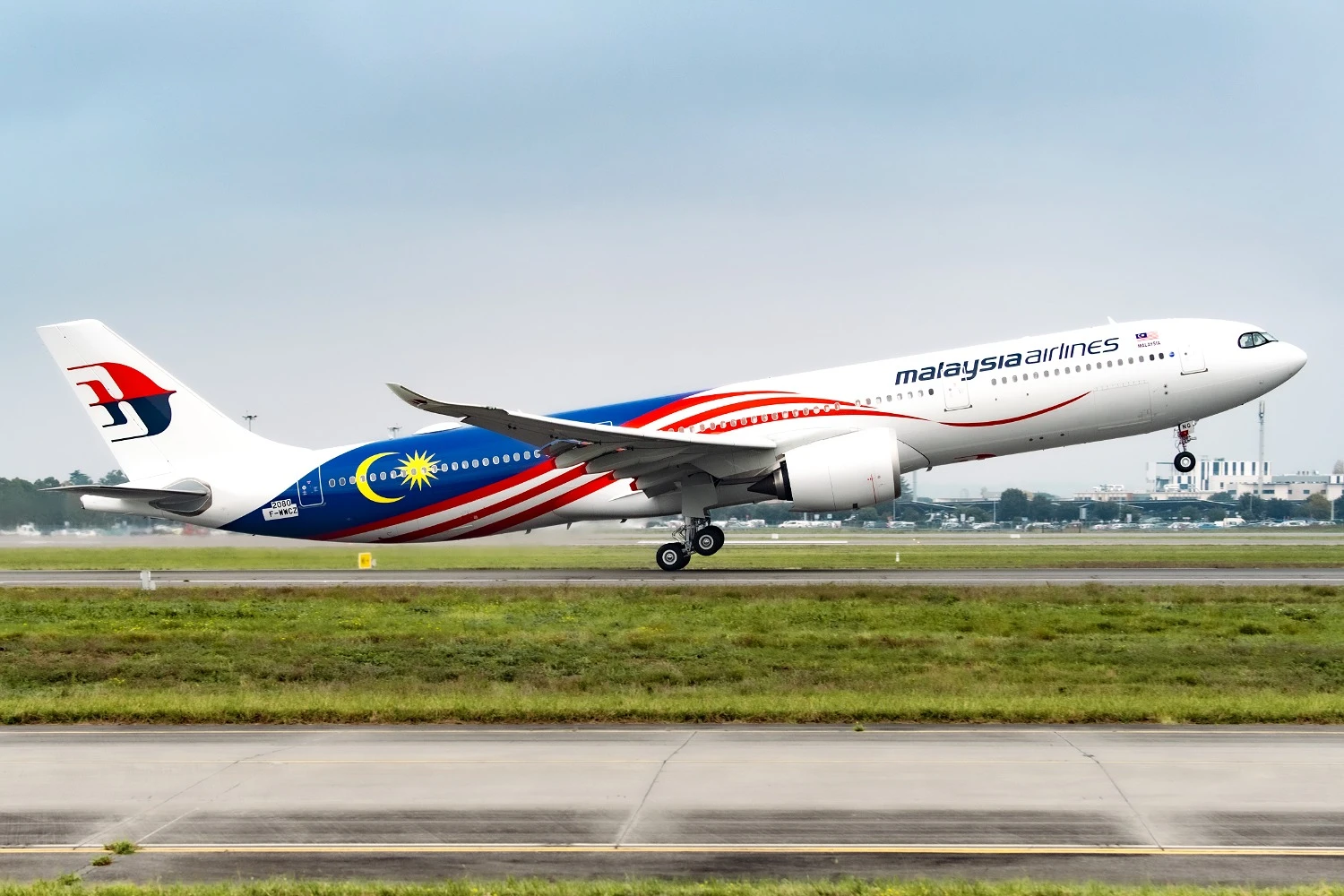
Those aircraft are configured very differently. Malaysia Airlines' A330-900 accommodates 297 passengers in two classes, with 28 Business Class seats and 269 in Economy. Airbus lists the type with a range of about 7,350 nautical miles (13,600 km), surprisingly close to the improved 787-10 despite the different roles MAG intends for the two fleets.
MAG plans to use the A330neo across ASEAN, China, India and Australasia as well as on longer routes. The 787-10, with its three-class cabin, is intended for selected long-haul markets.
The result is an unusual division of the future widebody fleet. The 40 A330-900s will cover regional and long-haul services with a two-class cabin, while the 787-10 will serve some of Malaysia Airlines' longest routes with only 150 nautical miles (290 km) more nominal range.

Report an error