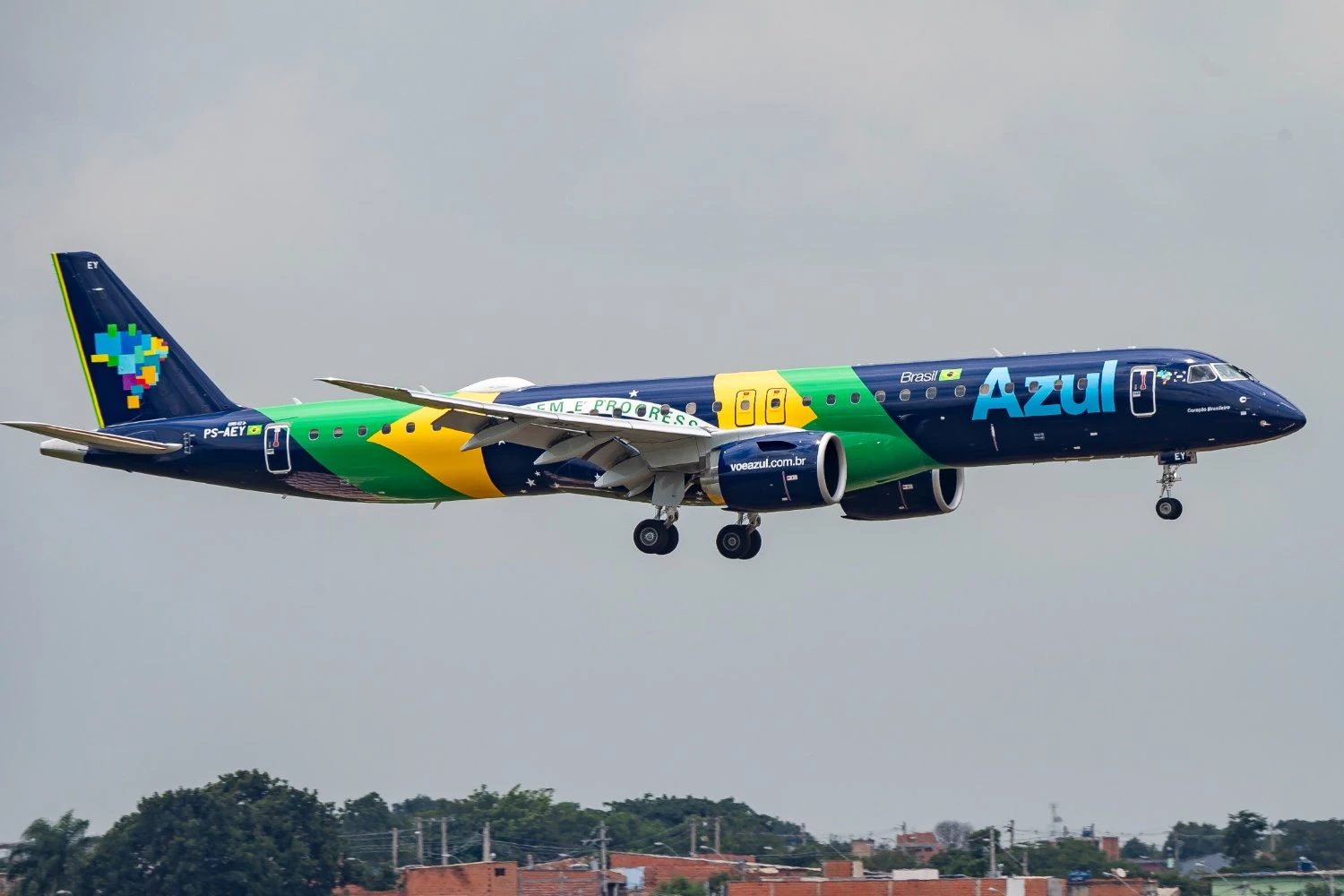
A GPS reception problem brought Azul’s Embraer E195-E2 flights to a halt for nearly three hours on Tuesday, September 22, causing cancellations and delays across the Brazilian airline’s network.
Azul initially said that what it described as a “global instability in the GPS system” was affecting the operation of its E2 fleet. The airline said precautionary measures could result in changes to its schedule, but did not disclose how many aircraft were affected or indicate that the entire fleet had stopped flying.
Historical flight tracking reviewed by Air Data News shows that the disruption was much more extensive.
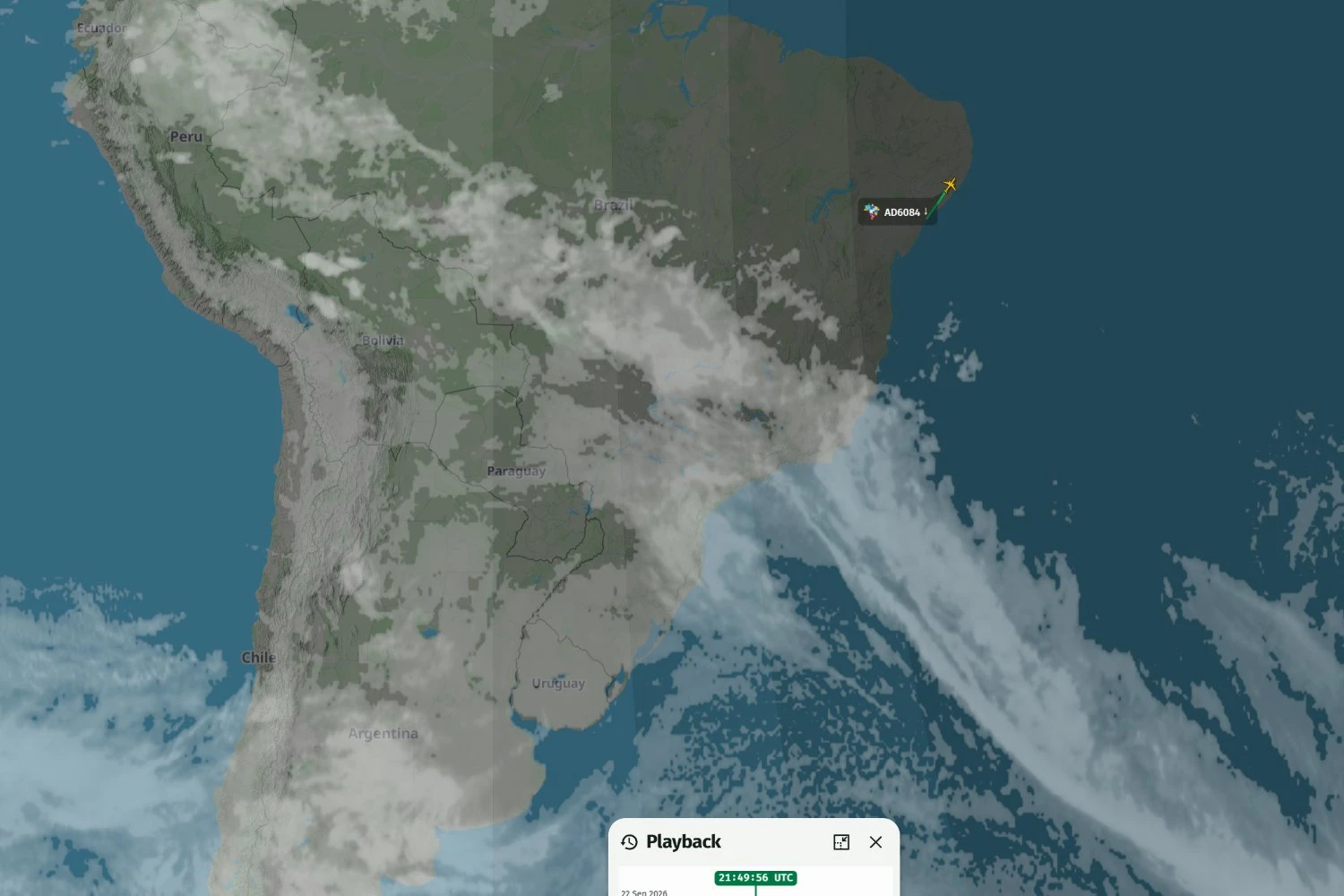
Azul’s E195-E2 operation progressively declined during the evening as aircraft completed their flights without new departures replacing them. By around 7 p.m. local time, no E195-E2 from the airline appeared in flight on AirNav Radar.
Follow Air Data News: WhatsApp | Instagram | LinkedIn | Twitter | Facebook
The situation continued for nearly three hours. Operations began to resume shortly before 10 p.m., when E195-E2 PS-AEH departed Campinas Viracopos for Brasília as flight AD4978, the first Azul E2 departure identified by ADN after the interruption.
Other E2 operators kept flying
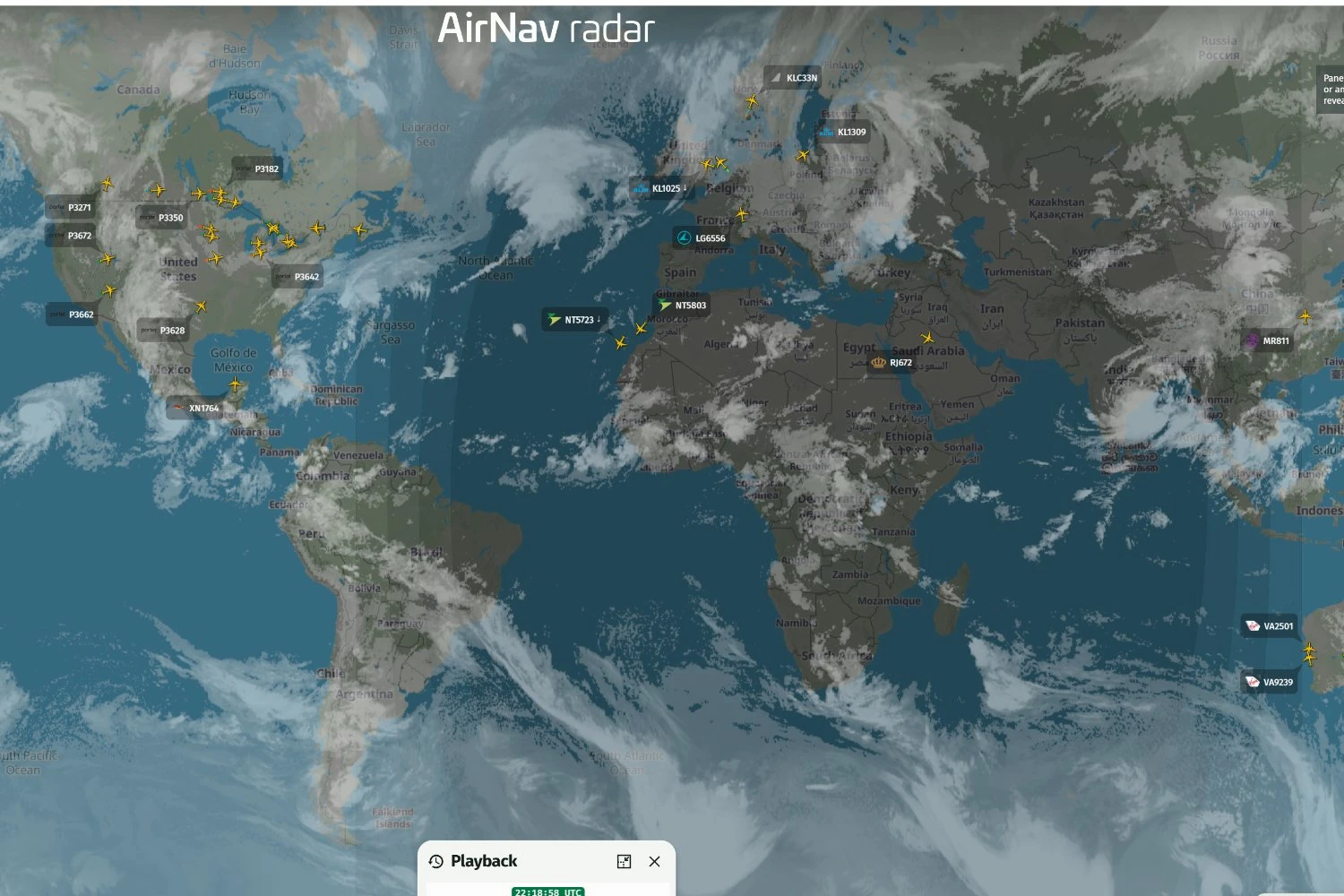
Despite the reference to a global GPS problem, ADN found no comparable interruption among other operators of the Embraer E2.
Flight activity was monitored during the period in which Azul had no E195-E2s in the air and through Wednesday morning, taking normal overnight gaps in airline schedules into account.
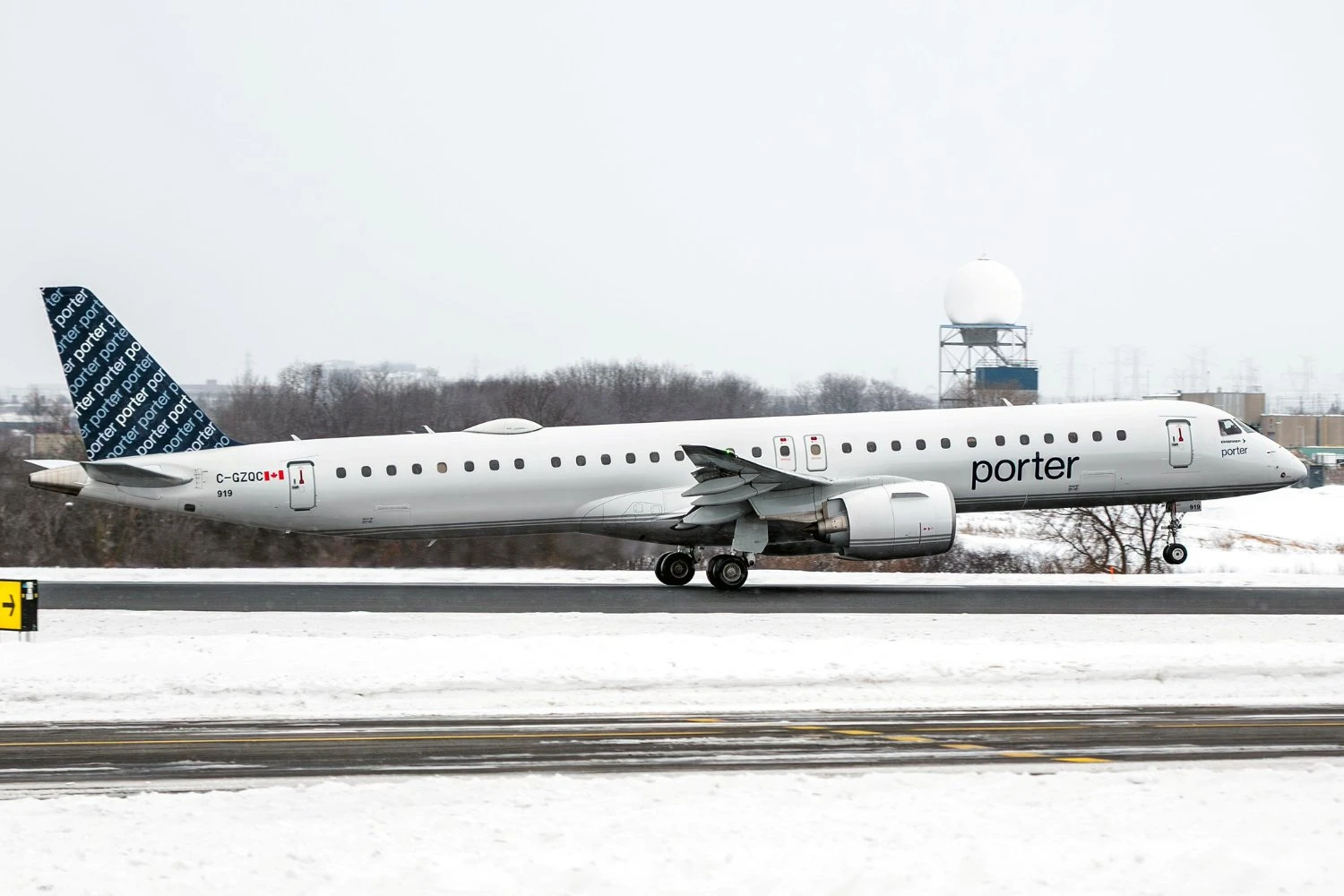
E190-E2s and E195-E2s operated by other airlines continued flying in North America, Europe, Asia, Africa and Oceania. Porter Airlines, in particular, had several E195-E2s operating in Canada and the United States while Azul’s aircraft were no longer appearing in the air over Brazil.

So far, Azul is the only E2 operator known to have publicly reported a major operational disruption associated with the GPS problem.
The scale of the incident is significant because Azul has the world’s second-largest E2 fleet. The Brazilian airline operates more than 40 E195-E2s and was the launch operator of the larger member of the E2 family in 2019.
Canada’s Porter Airlines has the largest E2 fleet, with 54 E195-E2s delivered by July and firm orders for 75 aircraft.
Cause remains unknown
Embraer said it had received reports of GPS instability affecting some aircraft types, including the E2, and was working with customers and the equipment manufacturer to address the issue.
The Brazilian manufacturer said the occurrence could affect airline schedules but did not compromise flight safety. According to Embraer, the E2 has navigation systems and procedures that allow it to operate safely under conditions of GPS instability and comply with applicable civil aviation requirements.
Honeywell, which supplies the Primus Epic 2 avionics suite used by the E2, said it was investigating an issue related to the reception of GPS signals by aircraft globally and was working to determine the underlying cause.
Loss of GPS reception does not necessarily leave an aircraft without navigation capability, but it can make some navigation functions and procedures unavailable and affect whether a flight can be dispatched under particular operating conditions.
Neither Embraer nor Honeywell has explained why Azul’s E195-E2 operation was so severely affected while other airlines continued flying E2 aircraft.
Azul received its first E195-E2 in September 2019. Earlier this month, the airline received another aircraft of the type that became the 2,000th E-Jet delivered by Embraer since the first generation of the jet family entered service.