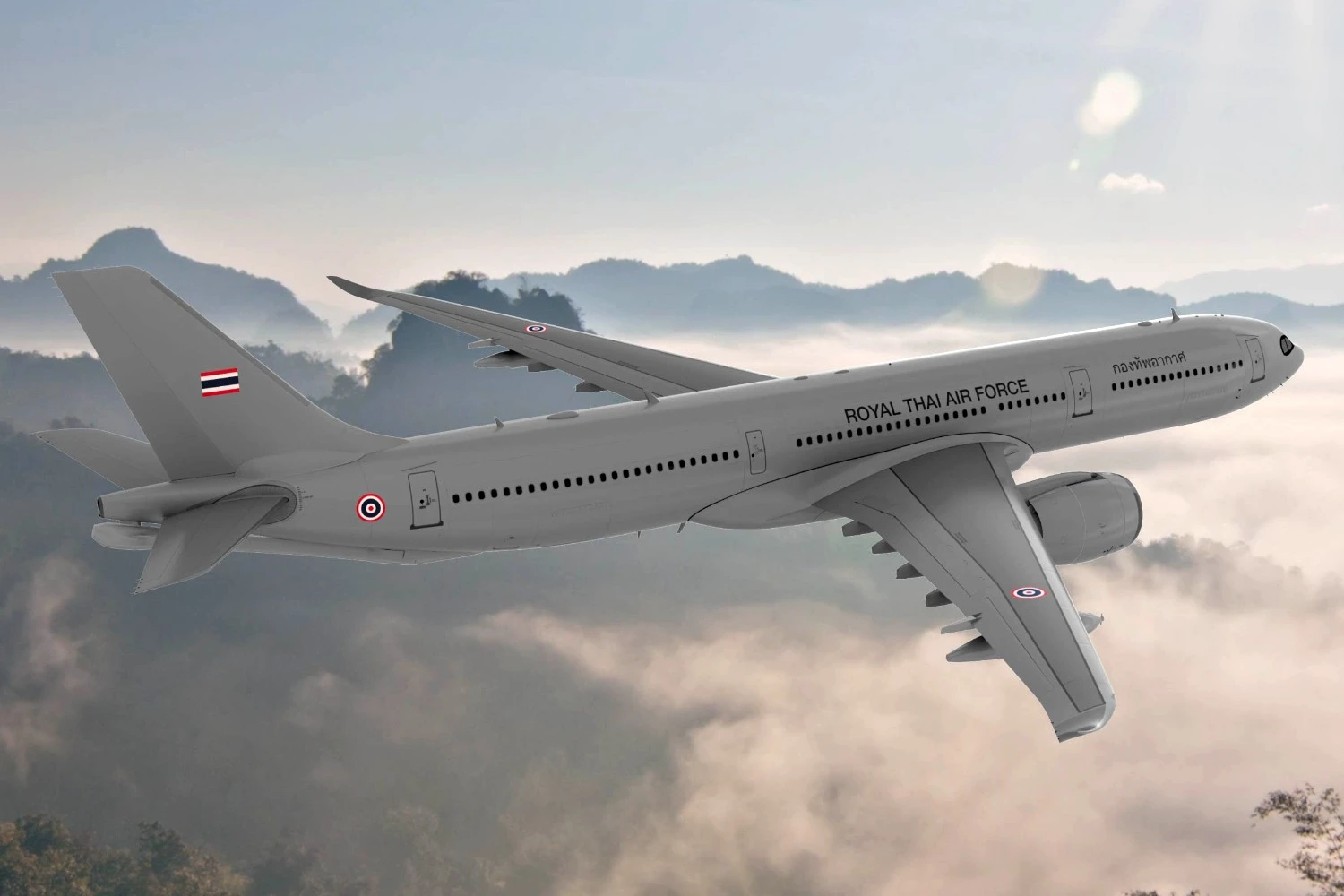
The first Airbus A330 MRTT+ has emerged from the final assembly line in Toulouse, giving the first glimpse of the aircraft that will introduce a new generation of the European manufacturer’s tanker and transport platform.
Images published by the French Painter aviation photography profile show the aircraft outside Airbus facilities in Toulouse in primer, with “MRTT+” already applied to the vertical stabilizer. The aircraft is still incomplete, with its Rolls-Royce Trent 7000 engines yet to be installed.
Follow Air Data News: WhatsApp | Instagram | LinkedIn | Twitter | Facebook
The aircraft is destined for the Royal Thai Air Force (RTAF), which became the launch customer for the A330 MRTT+ when it ordered one aircraft in September 2025. Airbus plans to deliver it in 2029.
Before then, the A330 will have to undergo its military conversion at Airbus Defence and Space’s A330 MRTT Centre in Getafe, Spain. The work will transform the commercial airframe into a tanker equipped with both the Airbus Aerial Refuelling Boom System and hose-and-drogue refuelling equipment.
https://x.com/frenchpainter/status/2098347826371572086
Thailand’s aircraft is particularly significant because it is the first MRTT based on the A330neo. Airbus launched the A330 MRTT+ at the Farnborough International Airshow in 2024 as the successor to the current A330 MRTT, whose airframe is derived from the older A330-200.
For the new version, Airbus selected the A330-800, the shorter and much less successful member of the A330neo family. The model has attracted only 14 commercial orders, making it by far the least successful commercial jet variant developed by Airbus in terms of sales.
The A330-800 entered flight testing in 2018 and was conceived as the successor to the A330-200, combining a relatively small widebody cabin with very long range. But airlines overwhelmingly preferred the larger A330-900, while the Boeing 787 also occupied much of the market for long-range aircraft in this capacity category.
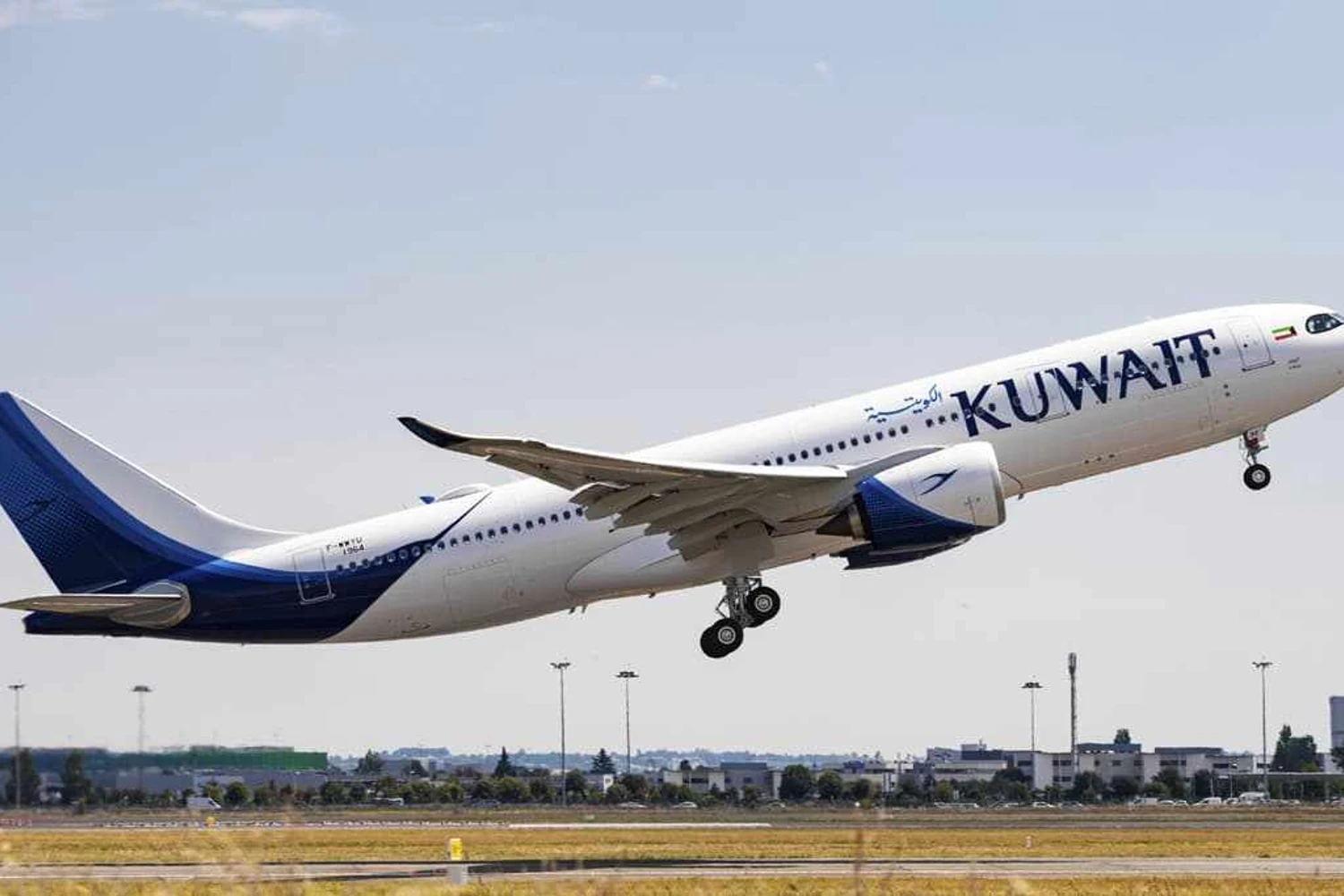
The limited customer base left the A330-800 in an unusual position within Airbus’ commercial portfolio, but its characteristics proved suitable for the MRTT mission. Its smaller airframe retains the fuel capacity and long-range capabilities required for aerial refuelling while incorporating the aerodynamic and propulsion changes introduced with the A330neo.
Recent news
September 11, 2026

Compared with the A330-200-based MRTT, the MRTT+ receives the Trent 7000 engines, revised wings and new wingtip devices. Airbus says these changes can reduce fuel consumption by up to 8%. Maximum takeoff weight also increases from 233 to 242 tonnes, which can provide additional range or fuel offload capacity.
Despite the change of commercial baseline, Airbus says the MRTT+ retains 95% airframe commonality with the existing A330 MRTT. The current generation has accumulated more than 340,000 flight hours, while Thailand remains the first announced customer for the new A330-800-based version.