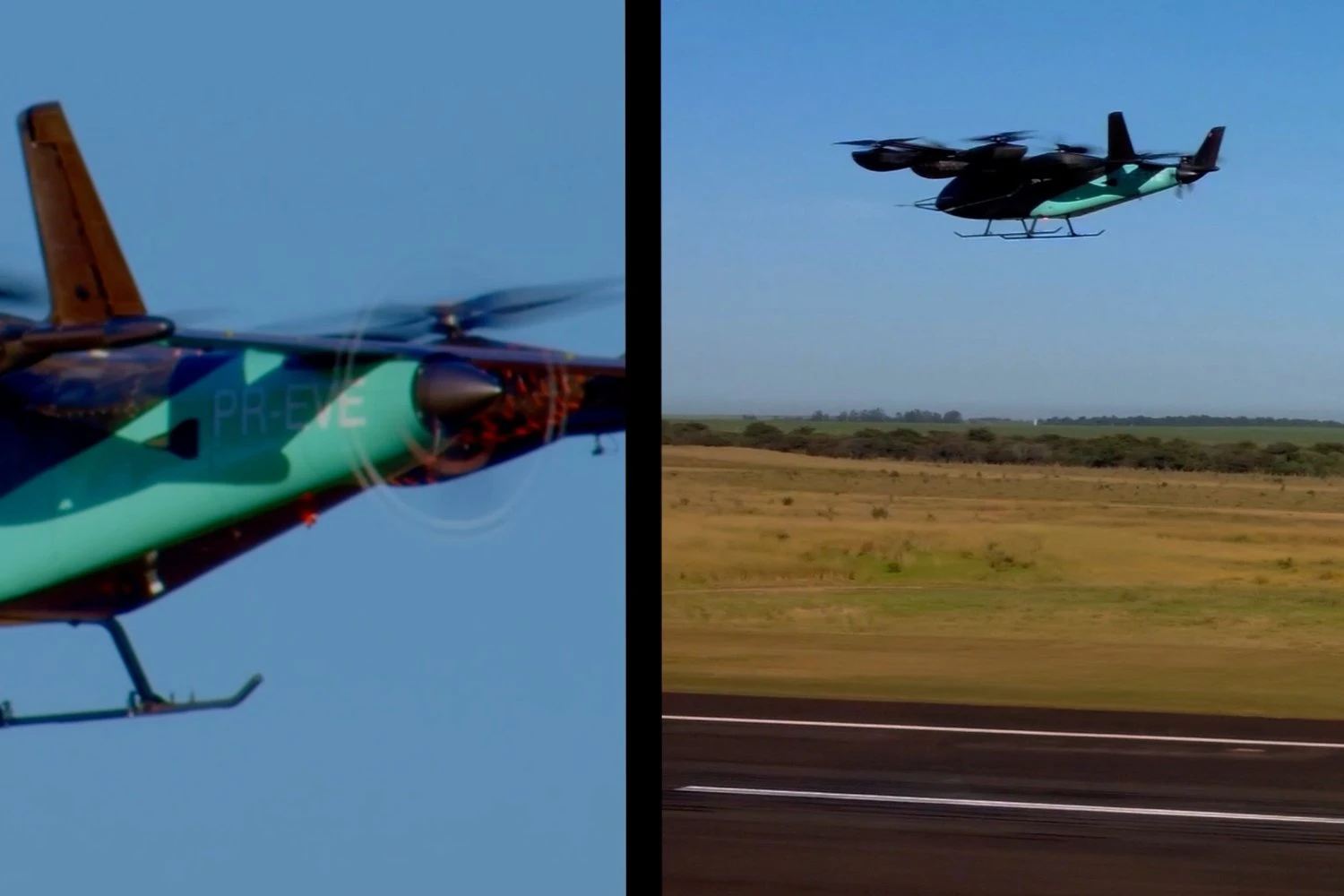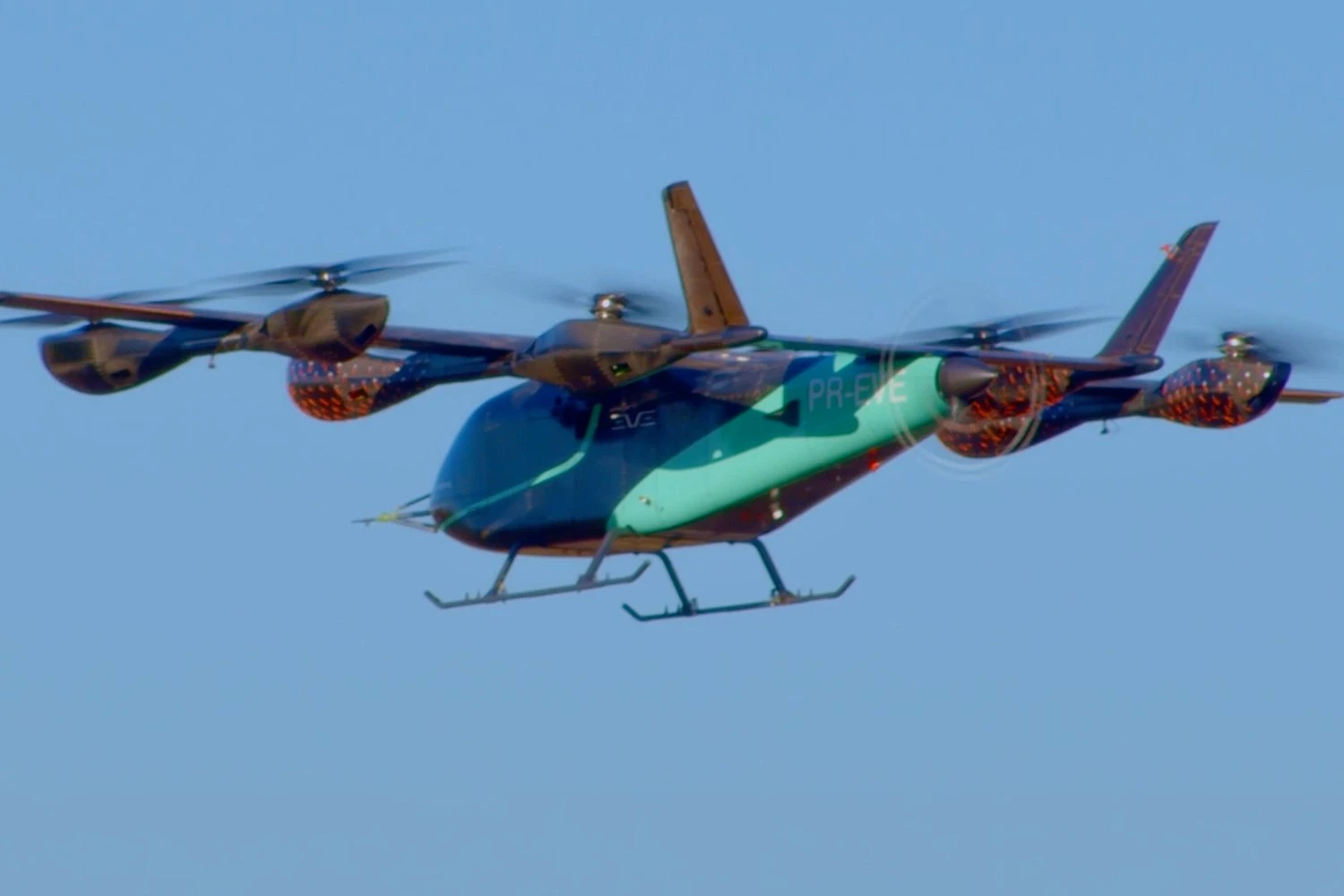
Eve Air Mobility has completed the first partial transition flight of its eVTOL engineering prototype, activating the aircraft's rear pusher propeller in flight for the first time.
The Embraer's subsidiary said the test marks the beginning of the transition phase between vertical and wing-borne flight, one of the most demanding stages in eVTOL development.
Related news
During the flight, the prototype reached a stabilized speed of 27 knots and a maximum of 30 knots, with the pusher propeller operating at up to 1,200 rpm. The aircraft remained airborne for 3 minutes and 9 seconds, covering about 0.84 nm (1.55 km) at an altitude of 90 ft.
The engineering prototype continues to perform relatively short flights over Embraer's test site in Gavião Peixoto, Brazil, while engineers gradually expand the aircraft's flight envelope.
https://x.com/EveAirMobility/status/2084257481467814059
According to the company, the next phase will include data-link evaluations and progressively higher speeds, with the objective of reaching 50 knots before advancing to more demanding transition tests.
Unlike previous updates, Eve did not disclose new certification milestones or entry-into-service targets. Until recently, Eve had been targeting entry into service in 2027. The company now says the aircraft is expected to enter the market later this decade, without providing a more specific timeline.