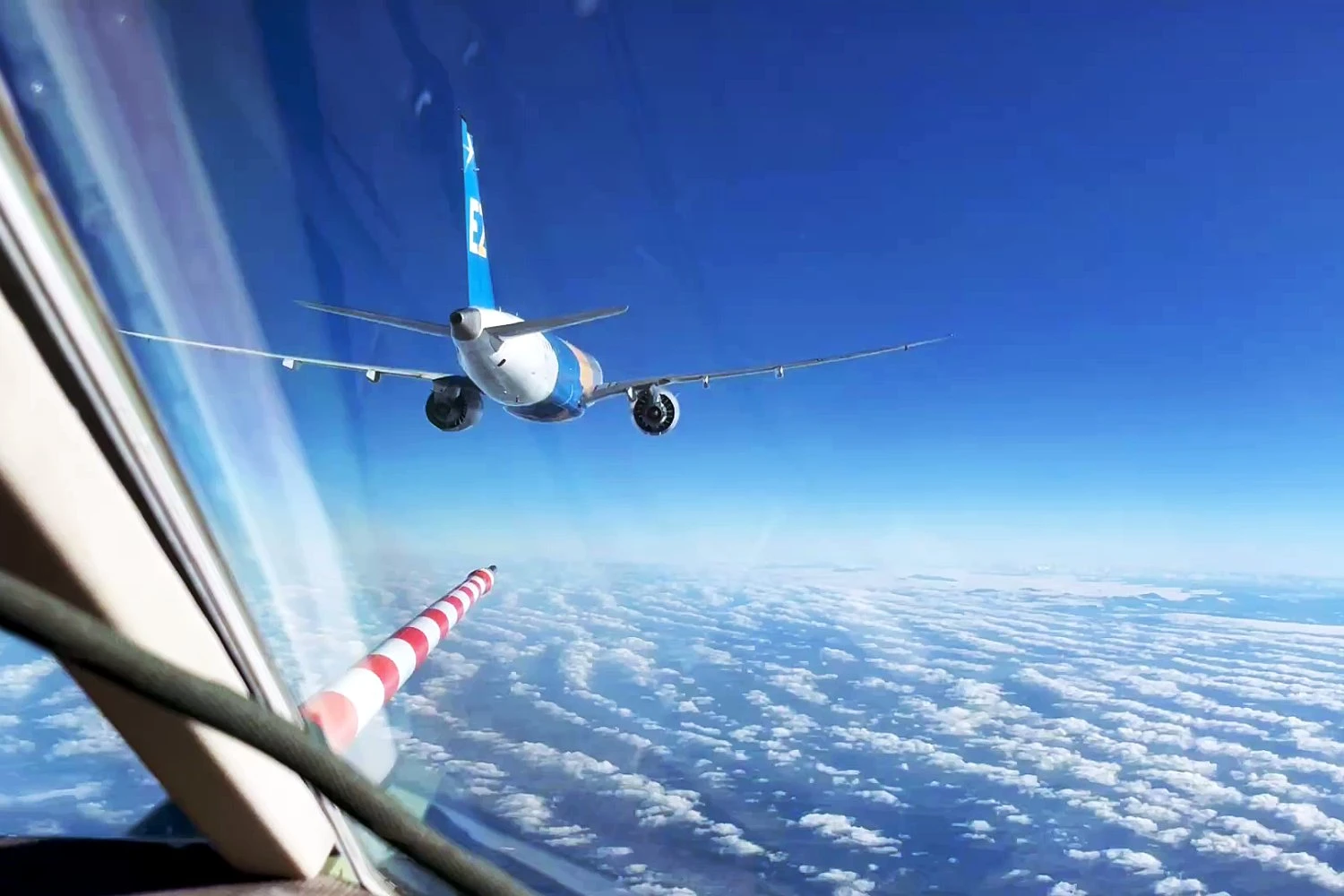
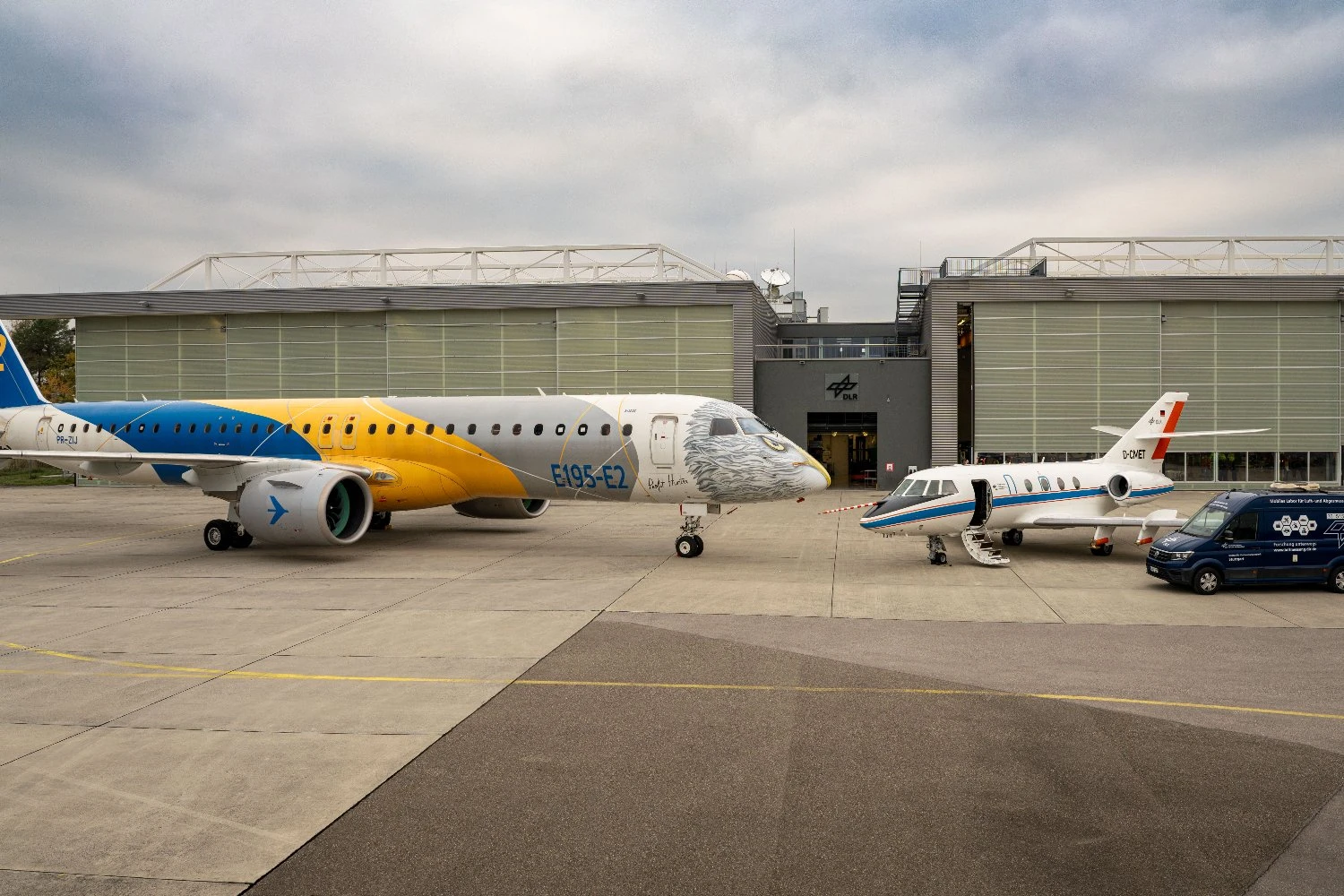
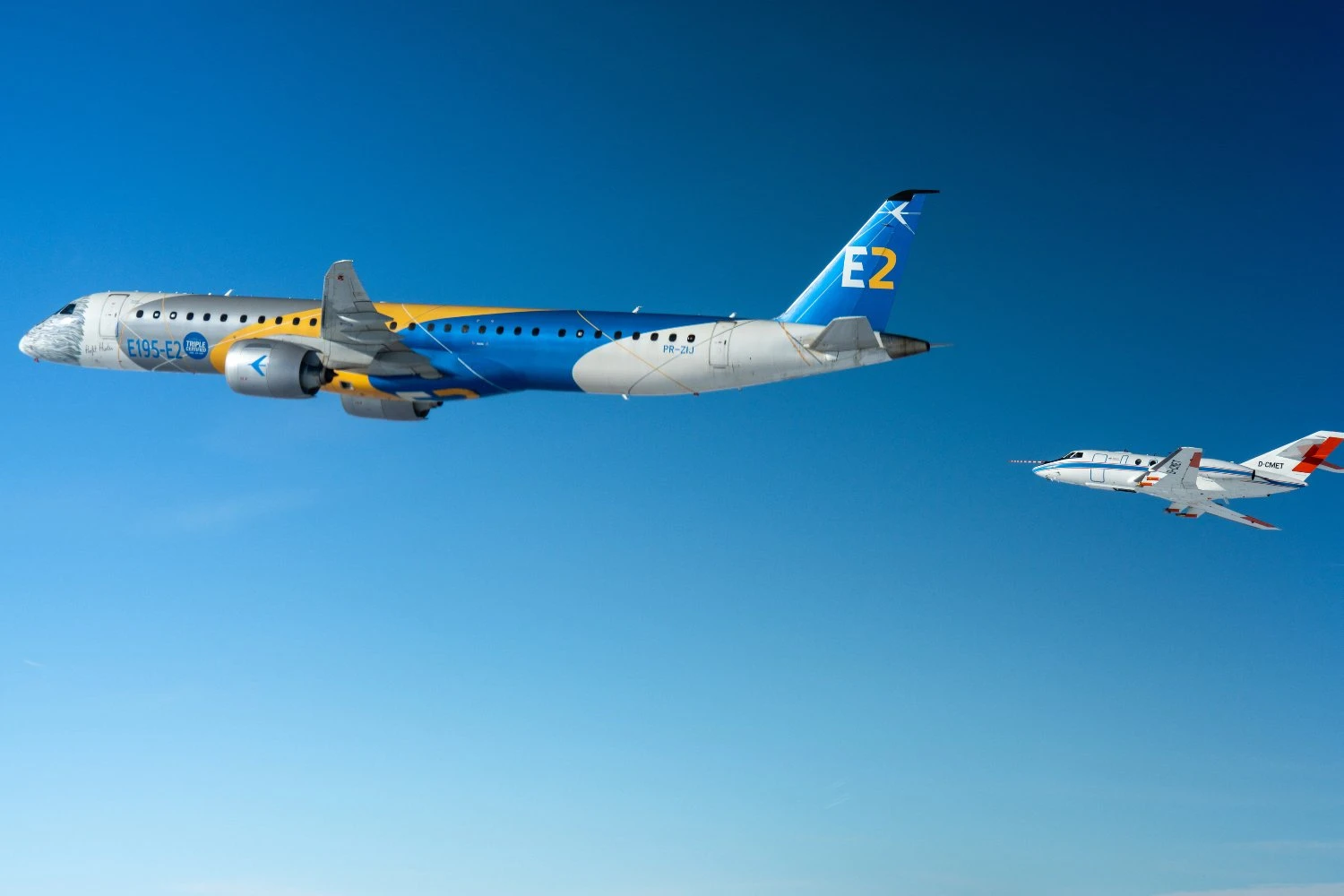
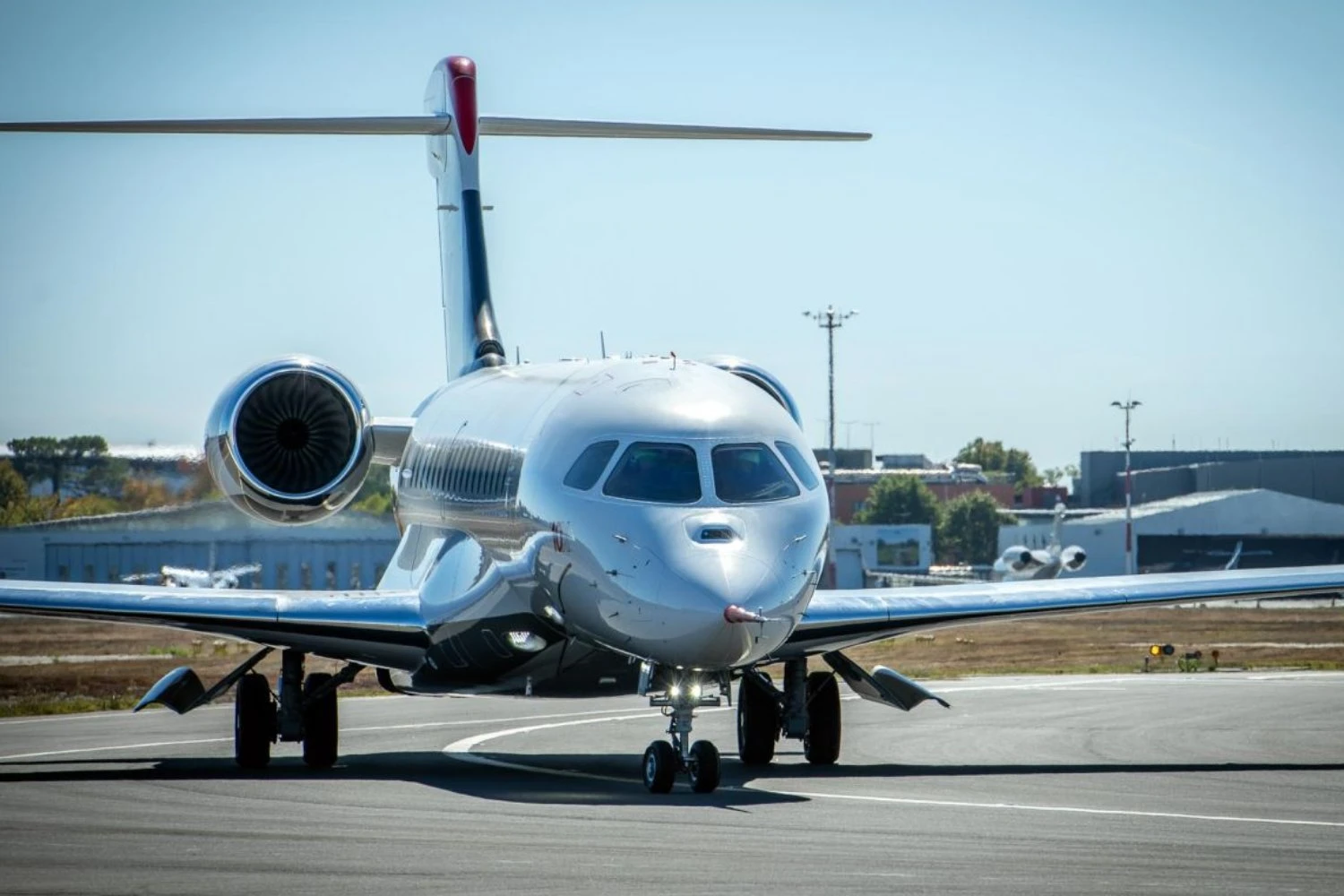
An Embraer E195-E2 was closely followed by another aircraft during a series of research flights over Germany, with the two jets coming within approximately 100 feet (30 meters) of each other. The unusual maneuver was part of an experiment to determine whether reducing sulfur in aviation fuel could help limit the formation of contrails, the white streaks left behind by aircraft at high altitude.
The flights were conducted under IGNITE-X (International Ground and Inflight Turbine Emission Experiment), an international research project led by the German Aerospace Center (DLR). The E195-E2 served as the test aircraft, operating its Pratt & Whitney PW1900G engines with conventional jet fuel and a specially produced low-sulfur alternative.
To measure the differences, researchers used a specially equipped Dassault Falcon 20E to collect exhaust gases and particles directly behind the Embraer jet. The DLR aircraft followed the E195-E2 at different distances, entering its exhaust plume to examine how emissions changed after leaving the engines.
The close approaches required specialized crew preparation because the Falcon had to operate in turbulent air containing concentrated engine emissions. The flights took place over Bavaria and Saxony, with measurements also conducted at distances of up to 19 miles (30 kilometers) behind the E195-E2.
Why aircraft contrails matter
Contrails are clouds of ice crystals that form when hot, moist aircraft exhaust mixes with the cold surrounding air at cruising altitude. Although they resemble smoke, they are primarily composed of frozen water.
Depending on atmospheric temperature and humidity, these trails may disappear within seconds or persist for hours, spreading into thin clouds resembling natural cirrus formations.
Follow Air Data News: WhatsApp | Instagram | LinkedIn | Twitter | Facebook
Persistent contrails can influence Earth's energy balance. They reflect some incoming sunlight but also trap heat that would otherwise escape into space. Under certain conditions, their net effect contributes to global warming.
Sulfur in aviation fuel is one factor being investigated. During combustion, sulfur compounds can contribute to the formation of tiny particles involved in the processes that produce contrails.
The IGNITE-X researchers are examining whether lower sulfur content, combined with modern low-emission engines, changes particle concentrations and properties enough to influence the formation of ice crystals.
E195-E2 becomes a flying laboratory
The E195-E2 is powered by Pratt & Whitney PW1900G geared turbofan engines, which use a reduction gearbox to allow the fan and turbine to operate at more suitable rotational speeds.
Embraer says the aircraft can deliver fuel consumption reductions of up to 30% compared with previous-generation aircraft, depending on the comparison. The IGNITE-X campaign, however, was not designed to assess the jet's fuel efficiency. Its purpose was to investigate the relationship between fuel composition, engine emissions and contrail formation.
Alongside the flight campaign, researchers conducted ground measurements at the Manching military airfield in Germany. Instruments examined ultrafine particle emissions across different engine operating conditions, allowing scientists to compare those results with samples collected by the Falcon 20E.
The project brings together Embraer, DLR, Pratt & Whitney, Aerodyne Research and Missouri University of Science and Technology.
According to Cleiton Silva, Embraer's Vice President of Technology Development and Electronic Equipment, the research is intended to improve understanding of how fuel characteristics and engine performance affect contrail formation.
What the experiments could change
The flight campaign has been completed, and researchers are analyzing the collected data. No definitive reduction in contrail formation has yet been established from these experiments.
The findings could help identify fuel properties and engine technologies capable of reducing aviation's non-CO₂ climate effects, which are separate from the carbon dioxide emissions associated with burning jet fuel.
Related news

This distinction matters because improving aircraft fuel efficiency does not necessarily eliminate contrail formation. Even modern jets can produce persistent ice-crystal clouds when flying through atmospheric conditions favorable to their development.
The research could also inform future operational strategies, including ways to identify atmospheric regions where persistent contrails are more likely to form and evaluate whether changes in fuel composition can reduce their climate impact.

Report an error