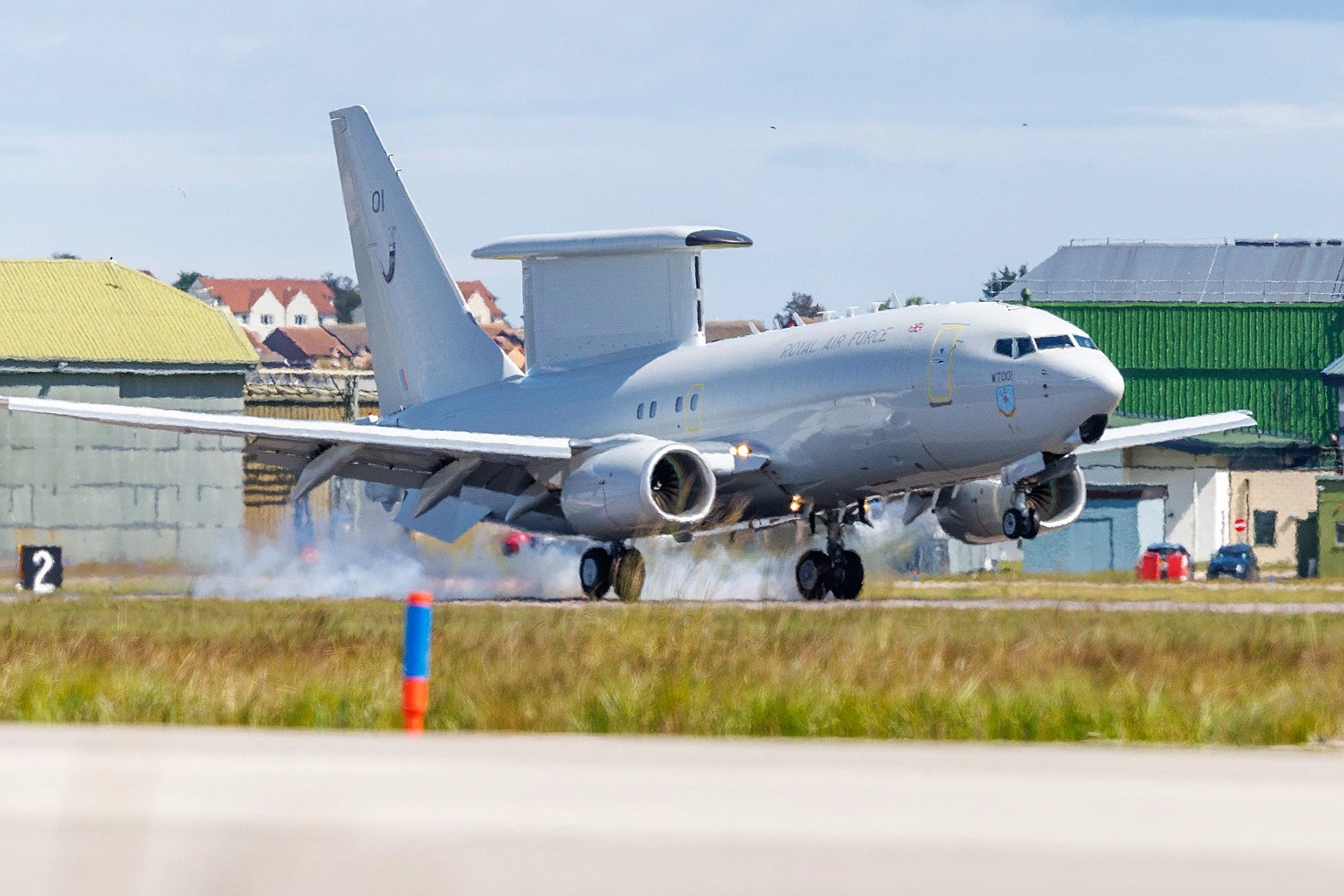
The first Boeing E-7 Wedgetail Airborne Early Warning (AEW) Mk1 aircraft destined for the Royal Air Force arrived at RAF Lossiemouth on May 21 to continue its Test and Evaluation phase ahead of entry into service.
The aircraft, registered WT001, departed from STS Aviation Services at Birmingham Airport before flying to its future main operating base in Scotland with a mixed crew of Boeing UK and RAF personnel. According to the RAF, testing activities will be split between RAF Lossiemouth and MOD Boscombe Down as the service prepares the platform for operational use.
When the evaluation phase is complete, the aircraft will be formally handed over by Boeing UK to the RAF, where it will be operated by 8 Squadron. The E-7 will serve alongside the RAF’s fleet of nine Boeing P-8 Poseidon maritime patrol aircraft, which are also based at Lossiemouth and share the Boeing 737 Next Generation airframe.
“We are delighted to welcome the arrival of the first Wedgetail aircraft to RAF Lossiemouth to continue its Test and Evaluation phase,” said Group Captain Sarah Brewin, station commander at RAF Lossiemouth. “This marks a significant step in delivering the Royal Air Force’s next generation of airborne surveillance and control capabilities.”
Related news

September 21, 2026
September 21, 2026

The E-7 Wedgetail is designed to provide long-range airborne surveillance, battle management and command-and-control functions for air and joint operations. The aircraft is already operated by the air forces of Australia, South Korea and Turkey, while additional customers have selected the platform in recent years.
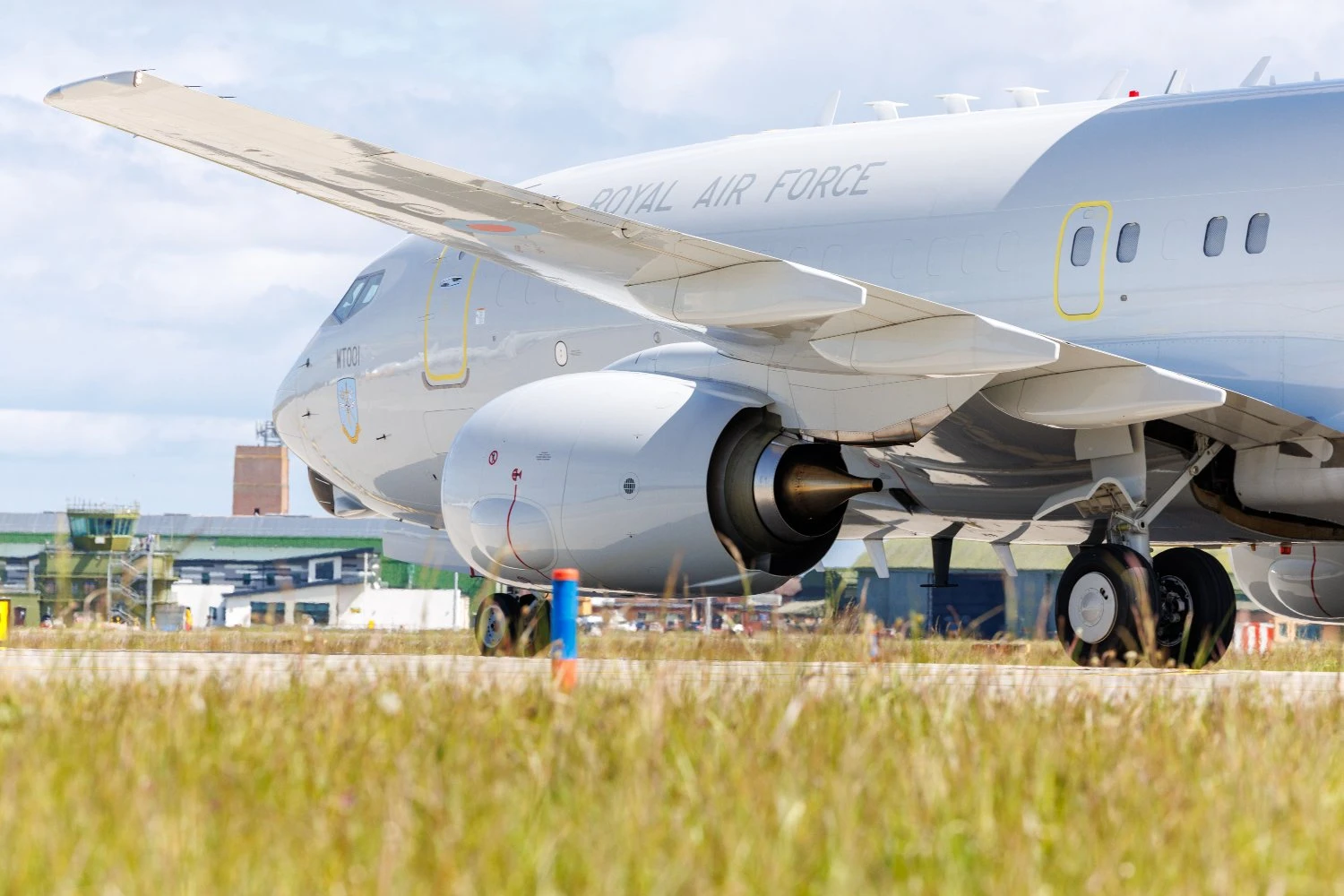
Boeing says the E-7 will provide the UK with an advanced airborne early warning capability while also supporting British industry through local jobs and supply-chain work. The aircraft is based on the Boeing 737-700 platform and equipped with the Northrop Grumman Multi-role Electronically Scanned Array (MESA) radar.
The Wedgetail remains one of the few modern AEW platforms using an electronically scanned dorsal radar array and has attracted interest from several air forces worldwide. In the United States, however, the aircraft has become the subject of debate after the US Air Force signaled interest in reducing planned procurement in favor of future surveillance technologies, while Congress has pressed the service to retain the platform amid concerns over the aging Boeing E-3 Sentry fleet.
NATO had also announced plans to replace its E-3 aircraft with the E-7, but recent reports indicate the alliance is now studying alternative European-based solutions, including Saab’s GlobalEye surveillance aircraft.