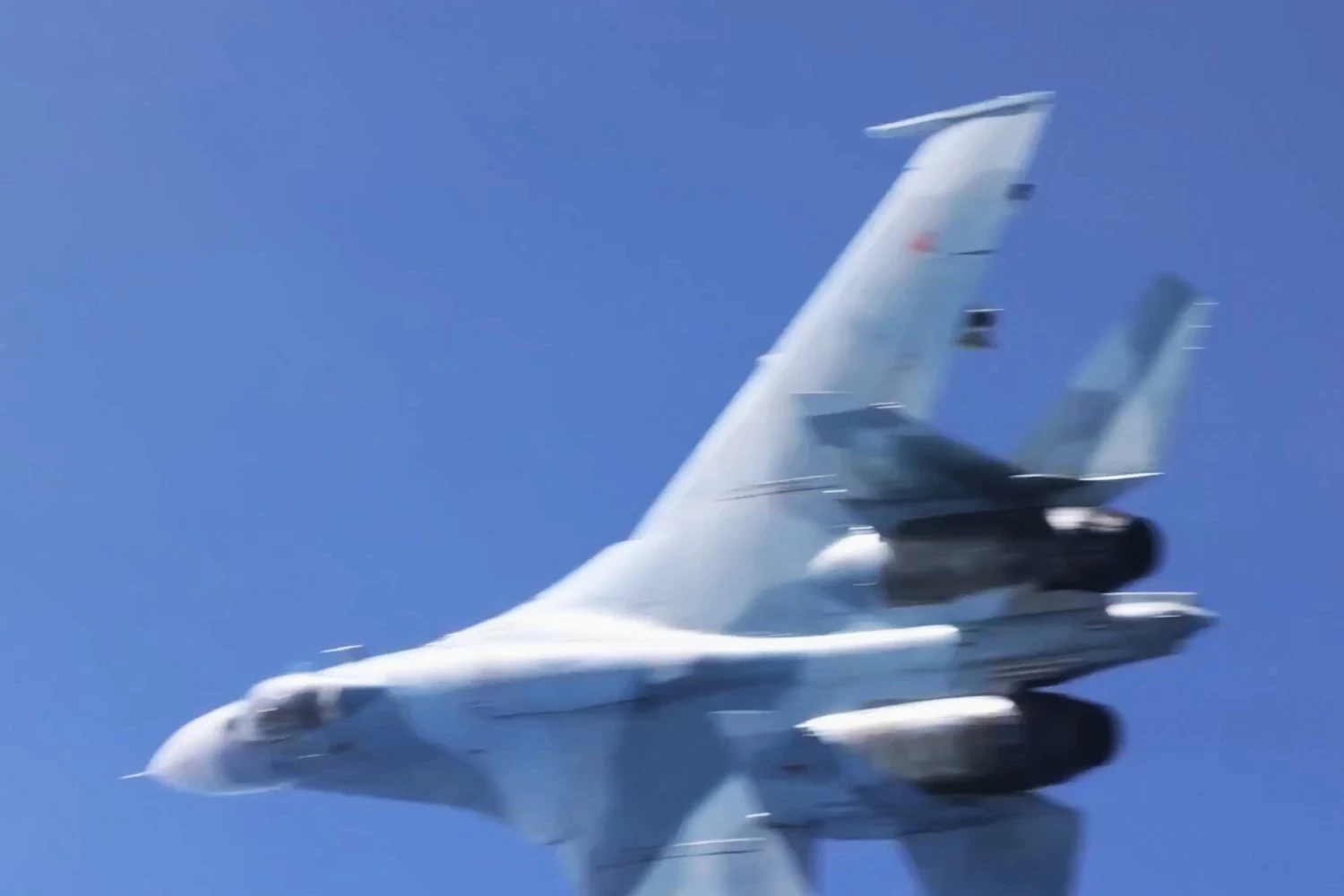
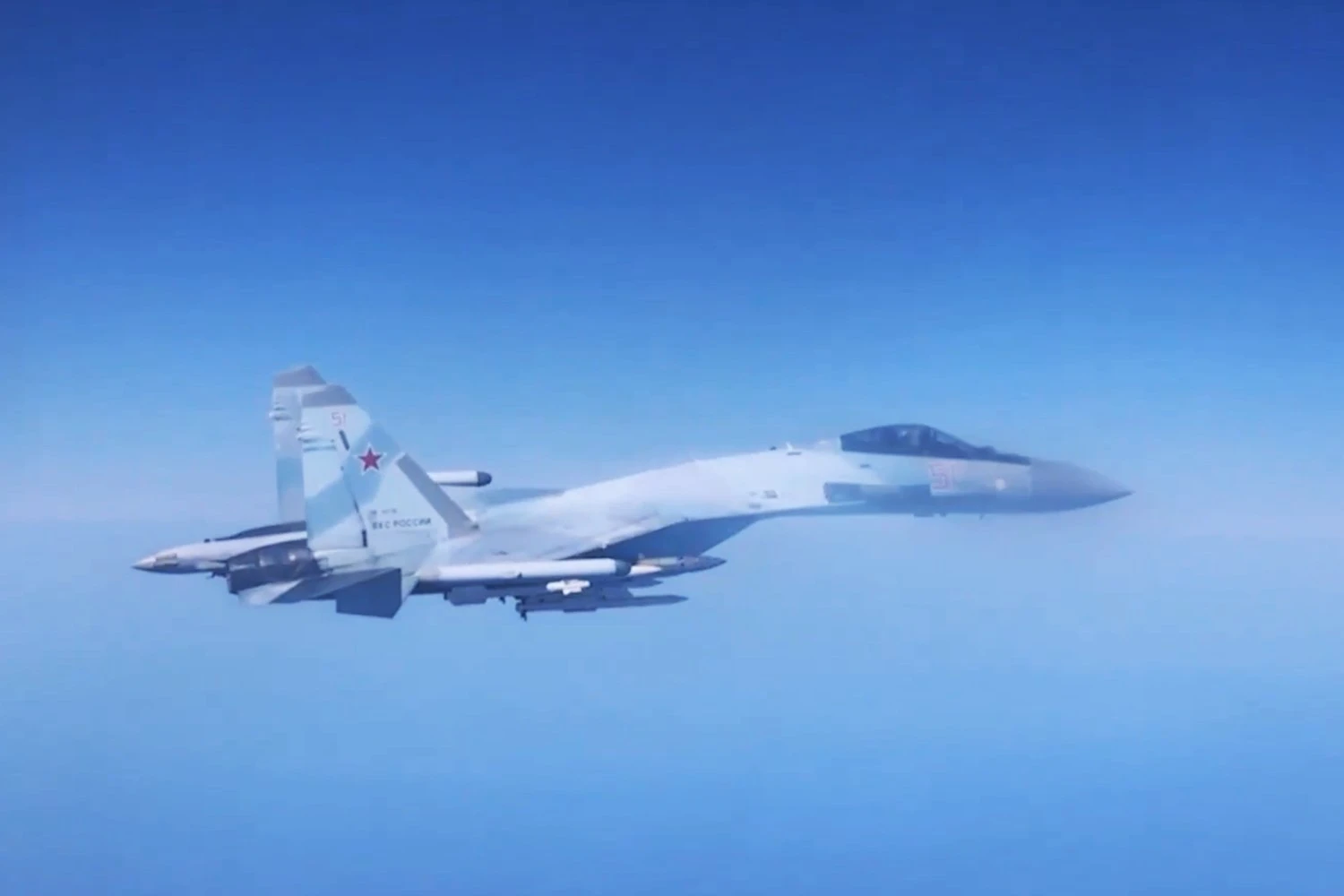
The UK Ministry of Defence has released video footage showing Russian fighter aircraft flying dangerously close to a Royal Air Force RC-135W Rivet Joint reconnaissance aircraft over the Black Sea last month.
The footage, published by the ministry on social media, shows at least two Russian jets approaching the British aircraft during the incident, including a Su-27 and a Su-35. According to the UK government, one of the fighters flew as close as six meters from the nose of the RAF aircraft.
London said the unarmed RC-135W was operating in international airspace during a routine intelligence-gathering mission in support of NATO operations along the alliance’s eastern flank.
The UK Ministry of Defence stated that one of the close approaches triggered emergency systems aboard the Rivet Joint, temporarily disabling the aircraft’s autopilot.
https://x.com/DefenceHQ/status/2057129219855962481
Despite the interceptions, the RAF crew completed the mission safely and returned to base without damage to the aircraft.
In a statement accompanying the video release, the ministry described the Russian maneuvers as “reckless” and accused Moscow of continuing aggressive military activity across Eastern Europe and the High North.
The RAF’s RC-135W Rivet Joint fleet is operated by 51 Squadron from RAF Waddington. The aircraft are equipped with electronic surveillance systems used to collect signals intelligence and monitor military activity.
British Defence Secretary John Healey previously called the incident “dangerous and unacceptable behaviour” and warned that such actions increased the risk of escalation and accidents.
The UK government said it formally protested the incident to the Russian embassy in London.
The episode was described by the Ministry of Defence as the most serious encounter involving a British Rivet Joint aircraft since September 2022, when a Russian fighter released a missile near another RAF RC-135W over the Black Sea.
Encounters between NATO surveillance aircraft and Russian fighters have become increasingly common since the start of the war in Ukraine, particularly over the Black Sea and Baltic regions.