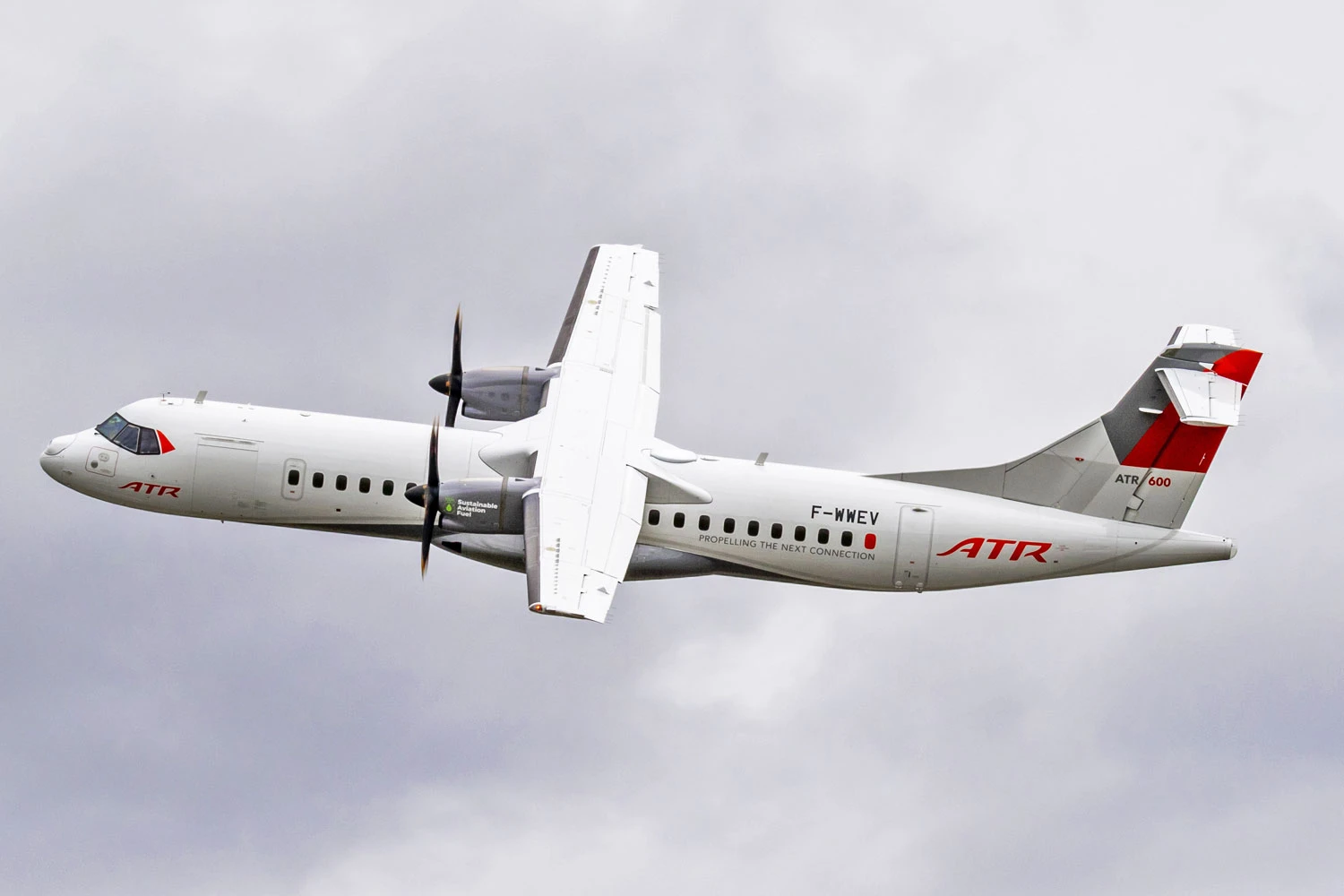
ATR argued in a recently published article that retrofitting aging 50-seat regional jets will not rescue regional flying in the United States, saying the segment is structurally broken regardless of upgrades.
The Franco-Italian turboprop manufacturer says scope clauses, pilot shortages and poor economics undermine any attempt to extend the life of aging 50-seat jets. Unsurprisingly, ATR also points to its ATR 42 and ATR 72 turboprops as the most suitable alternative for the US regional market, despite the segment’s longstanding resistance to turboprop aircraft.
The US regional market shifted decisively toward jets in the late 1990s and early 2000s with the introduction of the Embraer ERJ 145 and Bombardier CRJ200. These 50-seat aircraft allowed airlines to bypass scope clauses that limited the size of regional aircraft operated under mainline contracts.
As restrictions relaxed, larger models such as the Embraer E175 and CRJ700/900 became dominant, offering higher passenger capacity and better economics.

Today, no manufacturer builds new 50-seat regional jets. Embraer ended production of the ERJ 145 family, and Bombardier stopped making the CRJ200 after its acquisition by Mitsubishi Heavy Industries. The remaining fleet is aging, with many aircraft approaching 20 years of service. ATR says merely retrofitting those jets with new cabins or engines ignores fundamental market constraints.
ATR aircraft requires fewer pilots
“Retrofitting 50-seat jets will not address the underlying issues that have already pushed them out of the market,” ATR said in a statement published on its website. “Scope clauses, pilot shortages and deteriorating unit economics are not solved by new seats or engines.”
Related news


The company argues that turboprops offer lower fuel burn, shorter runway requirements and better performance on thinner routes where 50-seat jets struggle to make money.
The pilot shortage has hit US regional carriers particularly hard. As mainline airlines and low-cost competitors raise wages and sign, regional carriers face difficulty attracting and retaining pilots, especially for smaller aircraft. ATR says its aircraft require fewer pilots per seat because of higher utilization potential and lower crew costs relative to capacity, though it does not provide specific figures.
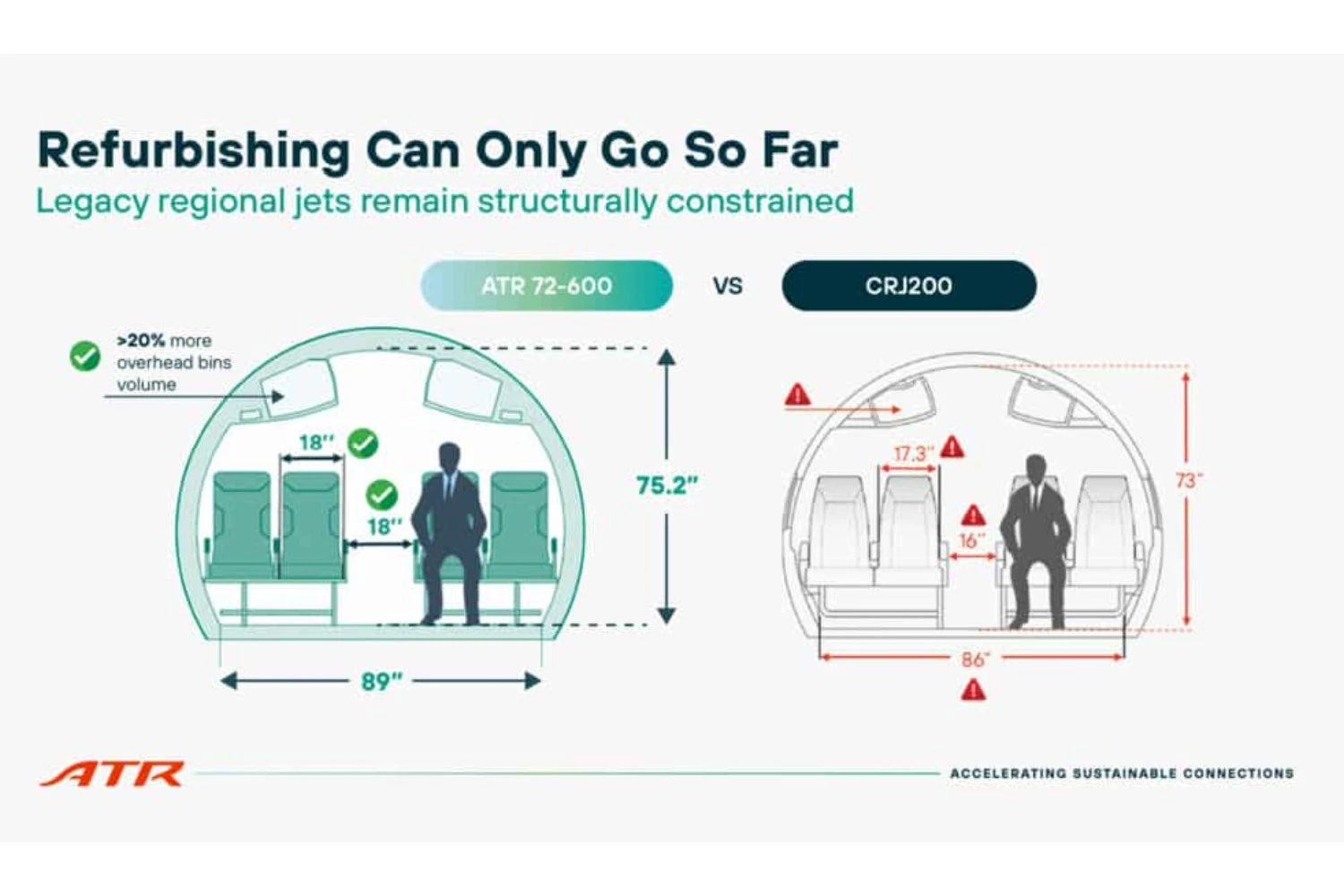
Scope clauses in union contracts limit how many regional aircraft a mainline carrier can use and what size they can be. Contract negotiations have allowed larger regional jets, pushing 50-seat aircraft further out of use. ATR argues that turboprops, with 30 to 78 seats, fit under current scope restrictions in a way that does not conflict with existing mainline flying.
Some analysts have noted that US airlines are unlikely to reintroduce turboprops on a large scale because of historical preferences, network structure and passenger expectations. However, ATR points to Canada, parts of Europe and Asia as examples where turboprops remain central to regional connectivity. The company believes that with rising fuel costs and environmental pressure, US carriers may reconsider the turboprop equation.
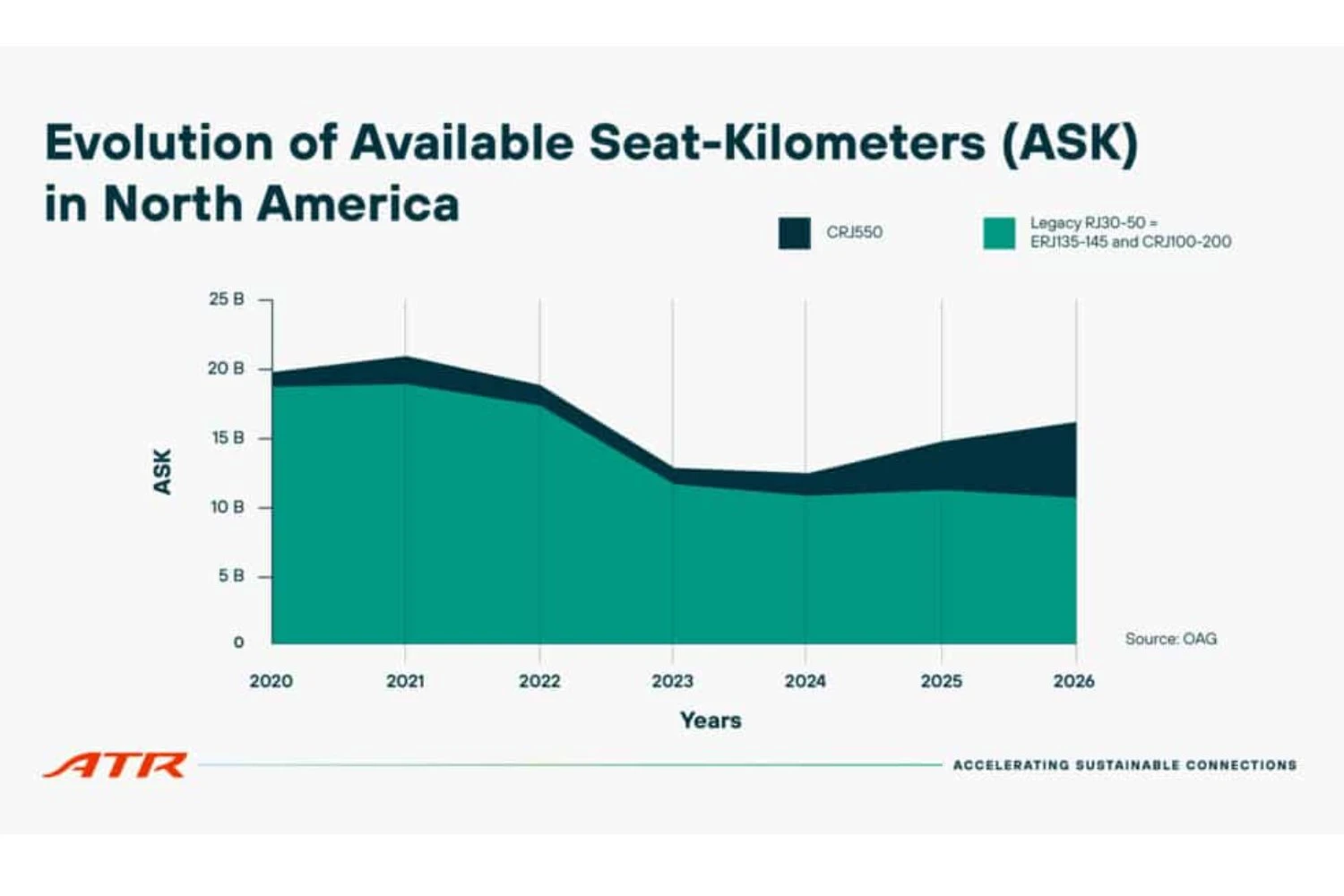
ATR estimates that around 1,200 50-seat jets remain in service in North America, most of which will need replacement within the next decade. The manufacturer is offering its ATR 42-600 and ATR 72-600 as natural successors, claiming they burn 40% less fuel per seat than comparable regional jets. Whether US airlines take that path remains uncertain, but ATR is making its case as the window for a turboprop comeback narrows.