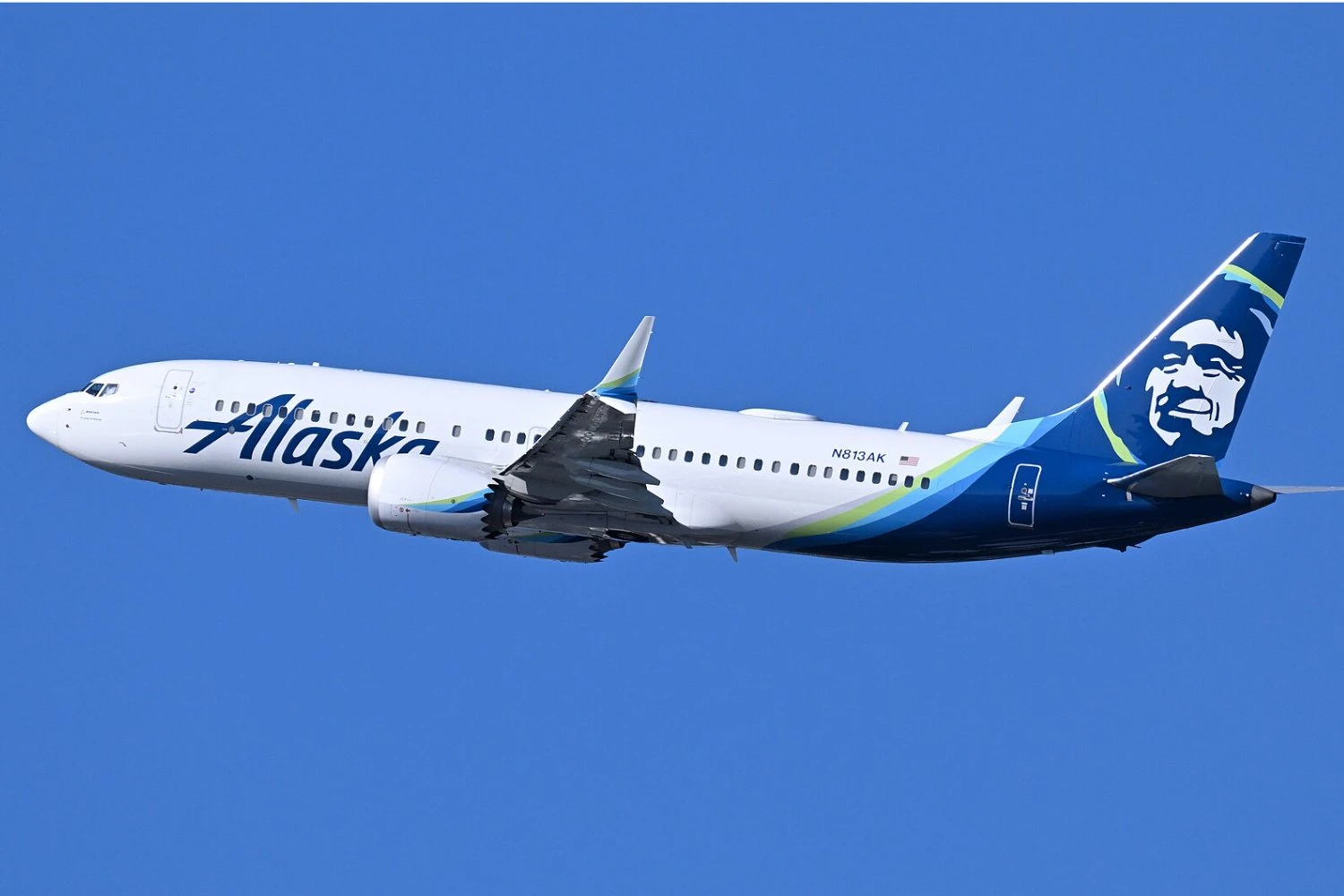
Alaska Airlines will put a Boeing 737 MAX 8 on a route that may look more suited to a widebody aircraft: an eight-hour flight between Anchorage and Tokyo.
The carrier will begin nonstop service between Ted Stevens Anchorage International Airport and Tokyo Narita on May 13, 2027, subject to government approval. Flights will operate daily through early September before returning three times a week in January 2028.
Despite connecting the United States with Japan across the Pacific, the route is well within the capabilities of the 737 MAX 8. Anchorage and Tokyo Narita are about 2,980 nautical miles (5,526 km) apart, a consequence of their positions in the northern Pacific.
The flight from Anchorage is scheduled to depart at 14h10 and arrive at Narita at 15h25 the following day, with a scheduled duration of 8h15. The return leaves Tokyo at 21h45 and reaches Anchorage at noon, taking 7h15.
Alaska said the MAX 8 is the only 737 in its fleet capable of operating the route. The airline specifically cited its longer range compared with the larger 737 MAX 10.
Follow Air Data News: WhatsApp | Instagram | LinkedIn | Twitter | Facebook
The aircraft will retain Alaska's regular narrowbody cabin rather than receiving a dedicated long-haul configuration. Passengers in First Class will travel in recliner seats rather than the lie-flat seats normally associated with international flights of this duration.
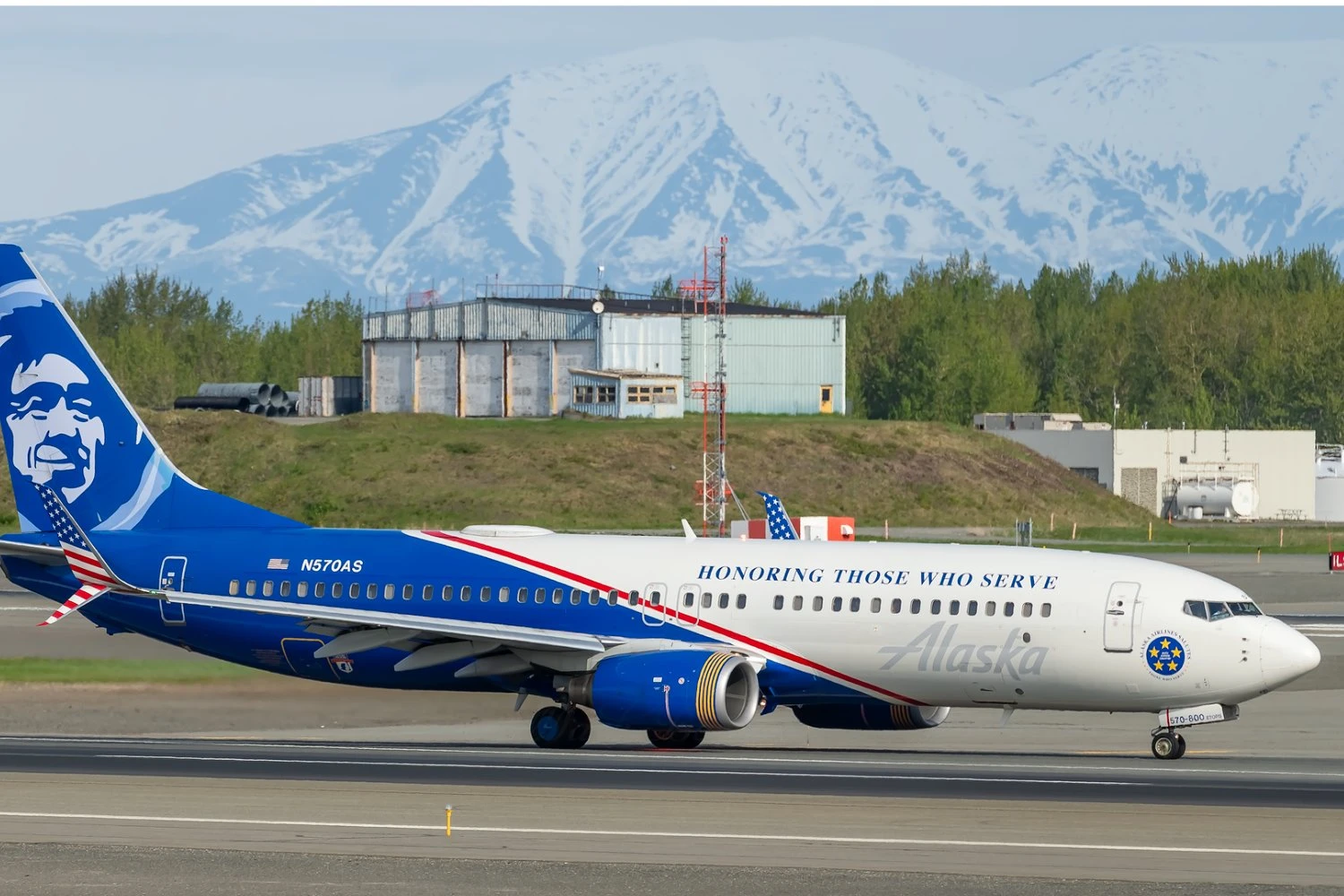
Geography makes MAX flight possible
Anchorage-Tokyo illustrates how conventional maps can distort perceptions of distances at high latitudes.
Rather than crossing the central Pacific, the most direct path runs across the northern Pacific, greatly reducing the distance between Alaska and Japan.
The 3,430-mile sector is not even Alaska's longest scheduled MAX 8 route. Its Seattle-Reykjavik service covers about 3,147 nautical miles (5,829 km).
The difference is that Anchorage-Tokyo crosses the International Date Line and connects two countries normally associated with long-haul widebody operations. Alaska will be the only U.S. domestic carrier operating scheduled service to Tokyo and the route will be the only nonstop connection between Alaska and Japan.
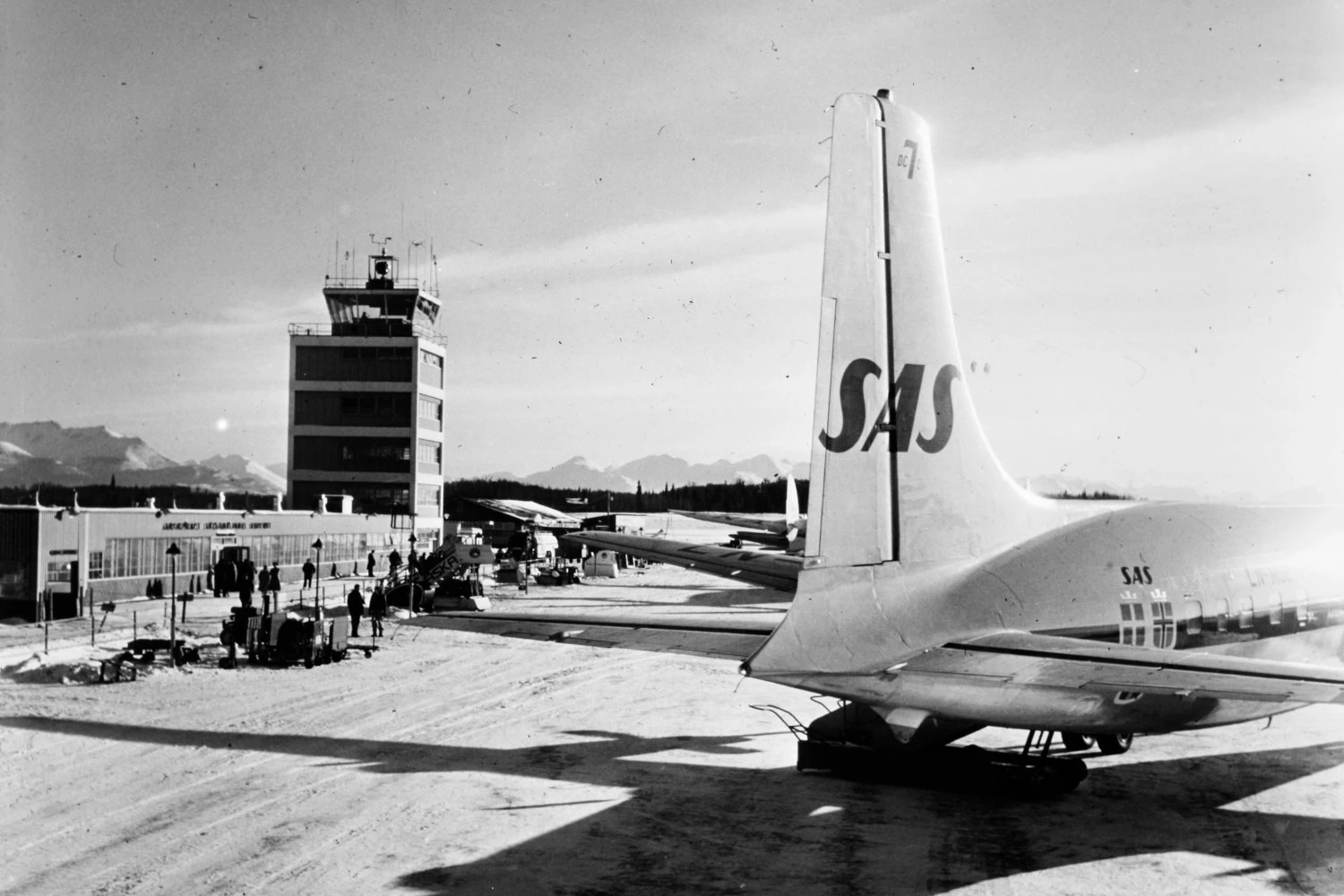
Anchorage was once a gateway to Asia
The connection also revives a route with an important place in commercial aviation history.
Before long-range twin-engine aircraft became commonplace, Anchorage was one of the world's major technical stops for flights between Europe, North America and Asia. Its geographic position made Alaska a convenient refueling point for aircraft that could not economically fly many of those routes nonstop.
Tokyo was particularly important. Airlines including Japan Airlines, Air France, British Airways, KLM and SAS operated through Anchorage on services involving Japan into the early 1990s.
Recent news

The airport's role declined as new generations of aircraft acquired enough range to bypass Alaska. The end of the Cold War also opened Russian and Siberian airspace to Western airlines, allowing more direct routes between Europe and Asia.
Russia's closure of its airspace to many Western airlines following the invasion of Ukraine in 2022 has since changed some of those flight paths again, but modern aircraft no longer require Anchorage as a technical stop.