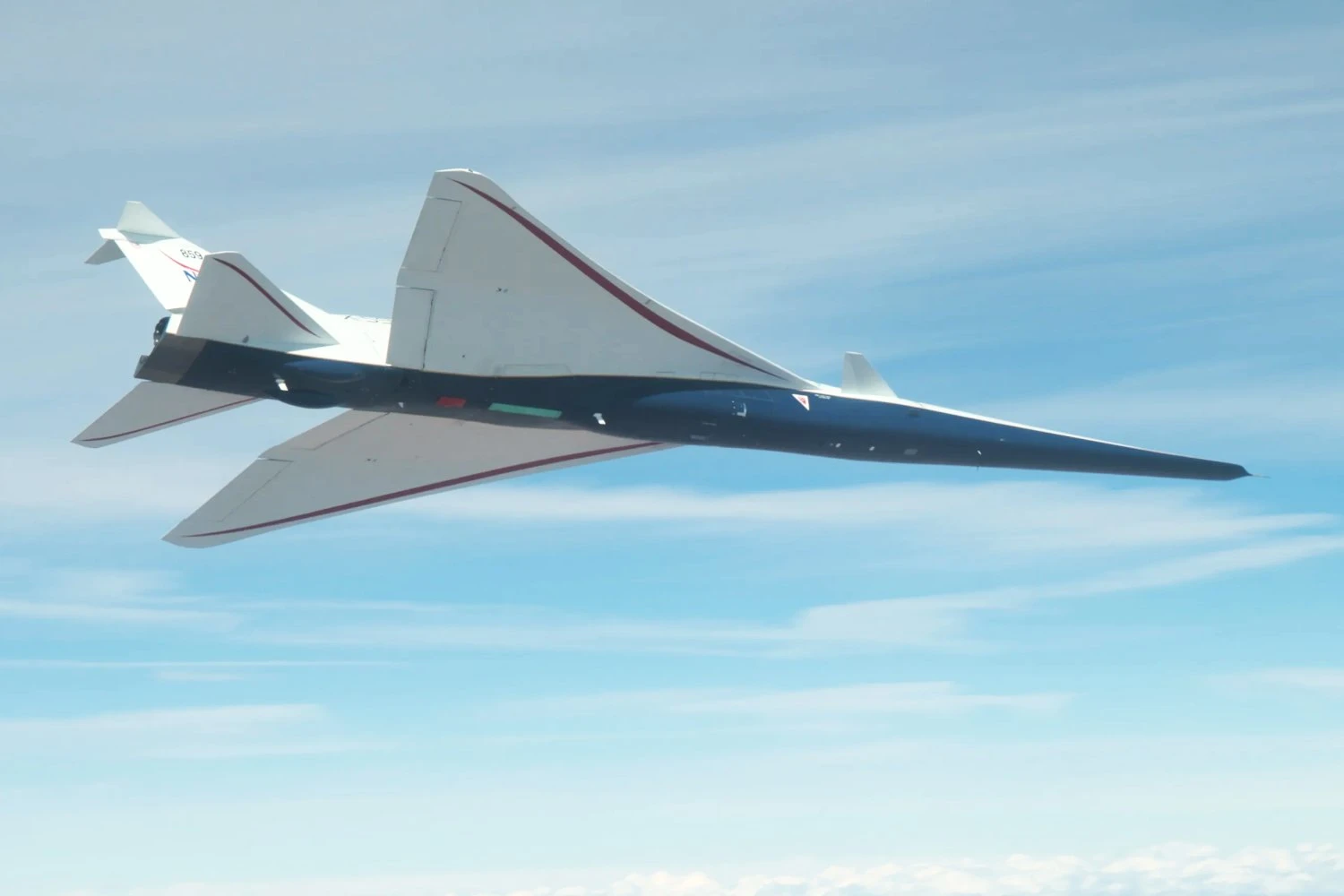
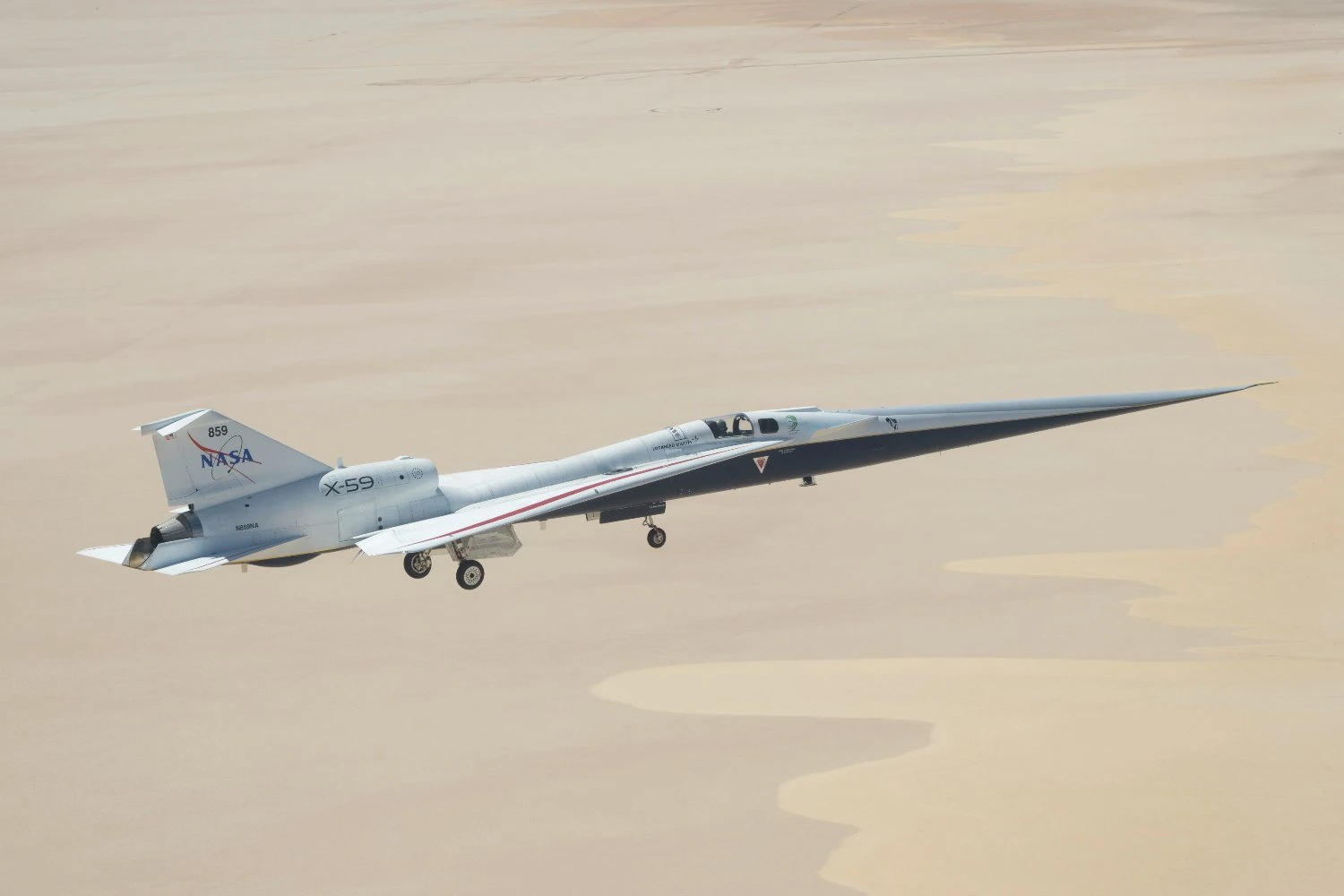
Lockheed Martin has formally delivered the X-59 to NASA after more than a year of flight testing that has taken the experimental aircraft beyond Mach 1.5. The transfer marks the completion of an acceptance process that had kept the aircraft under the manufacturer's ownership even after it moved to NASA's Armstrong Flight Research Center.
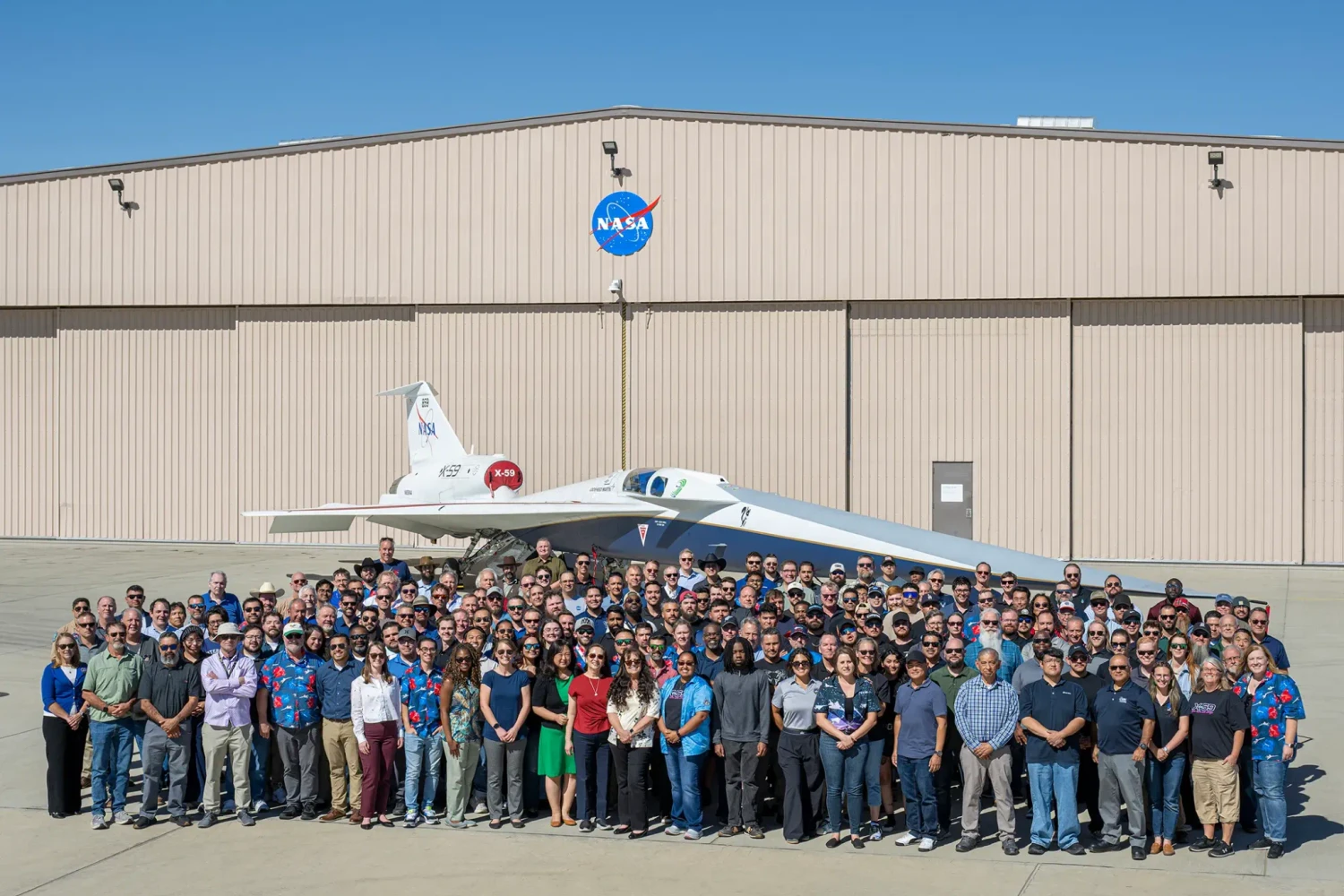
NASA officially took ownership on November 18 following completion of an aircraft acceptance review, which is one of the final steps in closing out the agency's contract with Lockheed Martin Skunk Works. The company was selected to collaborate on the X-59's design and lead construction and testing of the aircraft for NASA's Quesst mission.
Follow Air Data News: WhatsApp | Instagram | LinkedIn | Twitter | Facebook
The arrangement explains an unusual situation since the X-59's maiden flight. Although the aircraft departed Lockheed Martin's Palmdale facility on October 28, 2025, and landed at NASA Armstrong at Edwards Air Force Base, which has remained its home since then, it had not yet been formally delivered to the agency.
Lockheed Martin retained ownership as flight testing continued and the two organizations worked toward completing the acceptance review. The company will remain involved after the transfer, providing supplemental support when required.
From first flight to Mach 1.53
The first flight began an envelope-expansion campaign intended to progressively demonstrate the X-59's handling and performance before NASA could use it for the research work for which it was designed.
The aircraft subsequently passed through the sound barrier and reached the conditions planned for its low-boom research mission. During the campaign, the X-59 has flown above 56,000 ft (17,100 m) and reached a maximum reported speed of Mach 1.53.
Unlike a conventional supersonic aircraft, the X-59 was shaped to prevent its shock waves from combining into the powerful sonic boom normally heard on the ground. NASA expects the aircraft instead to produce a substantially quieter sound described as a "sonic thump."
Related news
That characteristic is central to Quesst. The program is intended to generate data that could eventually allow regulators to replace restrictions on civil supersonic flight over land with noise-based standards.
X-59 still has its most important tests ahead
Formal acceptance does not mean that the X-59's test program is complete. Flight testing will continue with NASA as the aircraft's owner, but the emphasis will increasingly shift from proving the aircraft itself to measuring the acoustic signature it was built to produce.
The next major stage is acoustic validation. NASA will fly the X-59 supersonically while researchers measure how its shock waves propagate through the atmosphere and what actually reaches the ground. Those tests are intended to verify whether the aircraft produces the predicted low-boom signature under real flight conditions.
Once that signature has been validated, NASA plans to fly the X-59 over selected U.S. communities. Researchers will compare acoustic measurements with responses from people on the ground to determine how communities perceive the quieter supersonic sound.
The resulting data will then be provided to U.S. and international regulators. The objective is not to certify the X-59 as a commercial aircraft, but to provide evidence that could support future rules allowing civilian aircraft to fly supersonically over land if they remain below acceptable noise thresholds.

Report an error