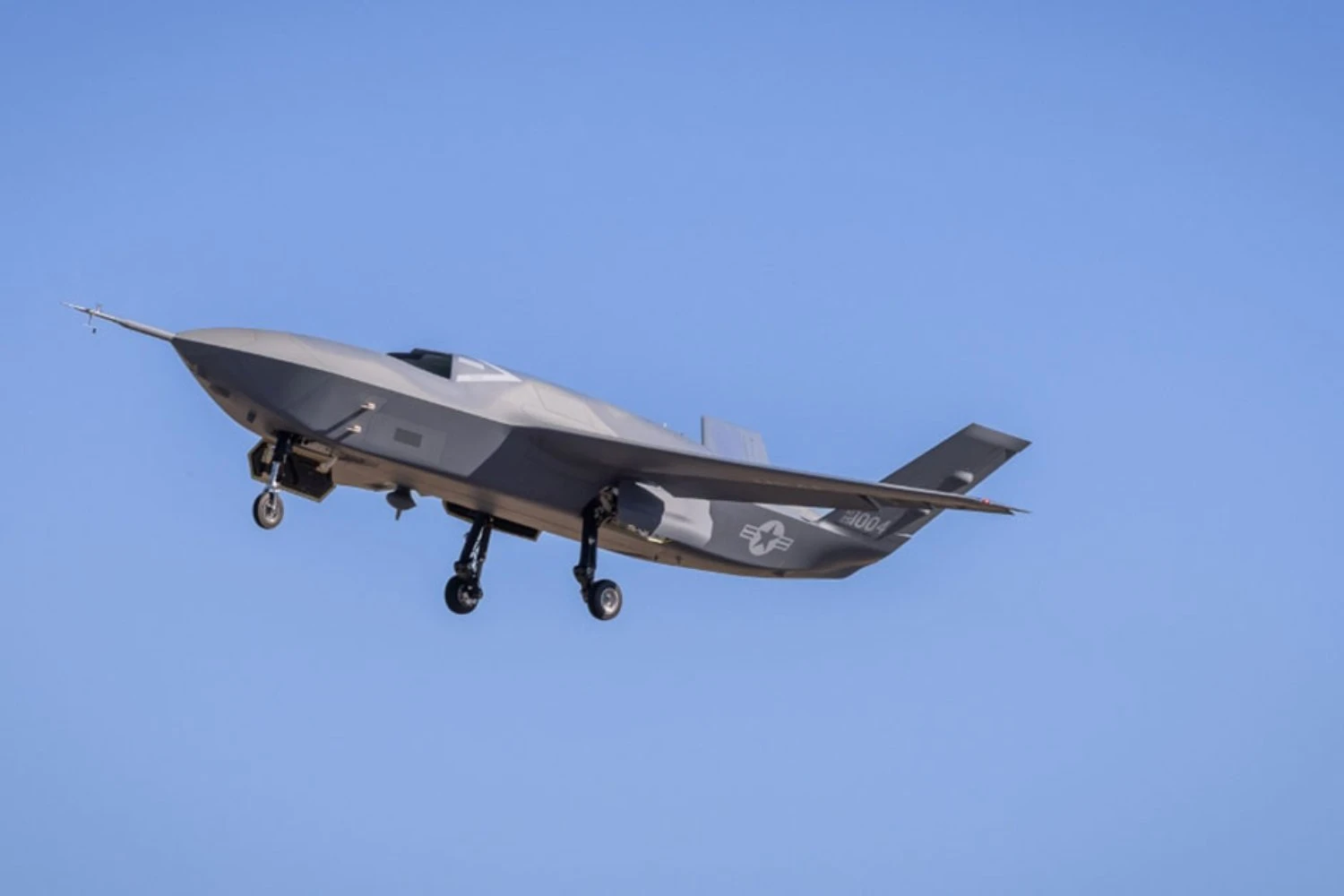
A prototype YFQ-42A Collaborative Combat Aircraft has crashed shortly after takeoff in California, prompting General Atomics Aeronautical Systems (GA-ASI) to suspend flight operations of the type while the cause is investigated.
The incident occurred on April 6 at a company-owned airfield in the California desert. No injuries were reported. GA-ASI said the aircraft went down moments after departure but did not provide further details on the sequence of events.
The manufacturer described the crash as a “mishap” and said it is collecting data to determine the root cause. The company has paused all YFQ-42A test flights and will only resume operations once the investigation reaches sufficient conclusions.
Follow Air Data News: WhatsApp | Google News | Instagram | LinkedIn | Twitter | Facebook
The aircraft involved is one of several production-representative examples currently flying under the US Air Force’s Collaborative Combat Aircraft (CCA) program. These airframes are being used in operational test and evaluation activities as the program advances toward a production decision.
The YFQ-42A, also known internally as “Dark Merlin,” is one of two competing designs in the CCA Increment 1 effort. Its main rival is Anduril’s YFQ-44A Fury. Both are designed as uncrewed “loyal wingman” platforms intended to operate alongside fighters such as the F-22 and F-35, performing air-to-air missions and supporting manned aircraft.
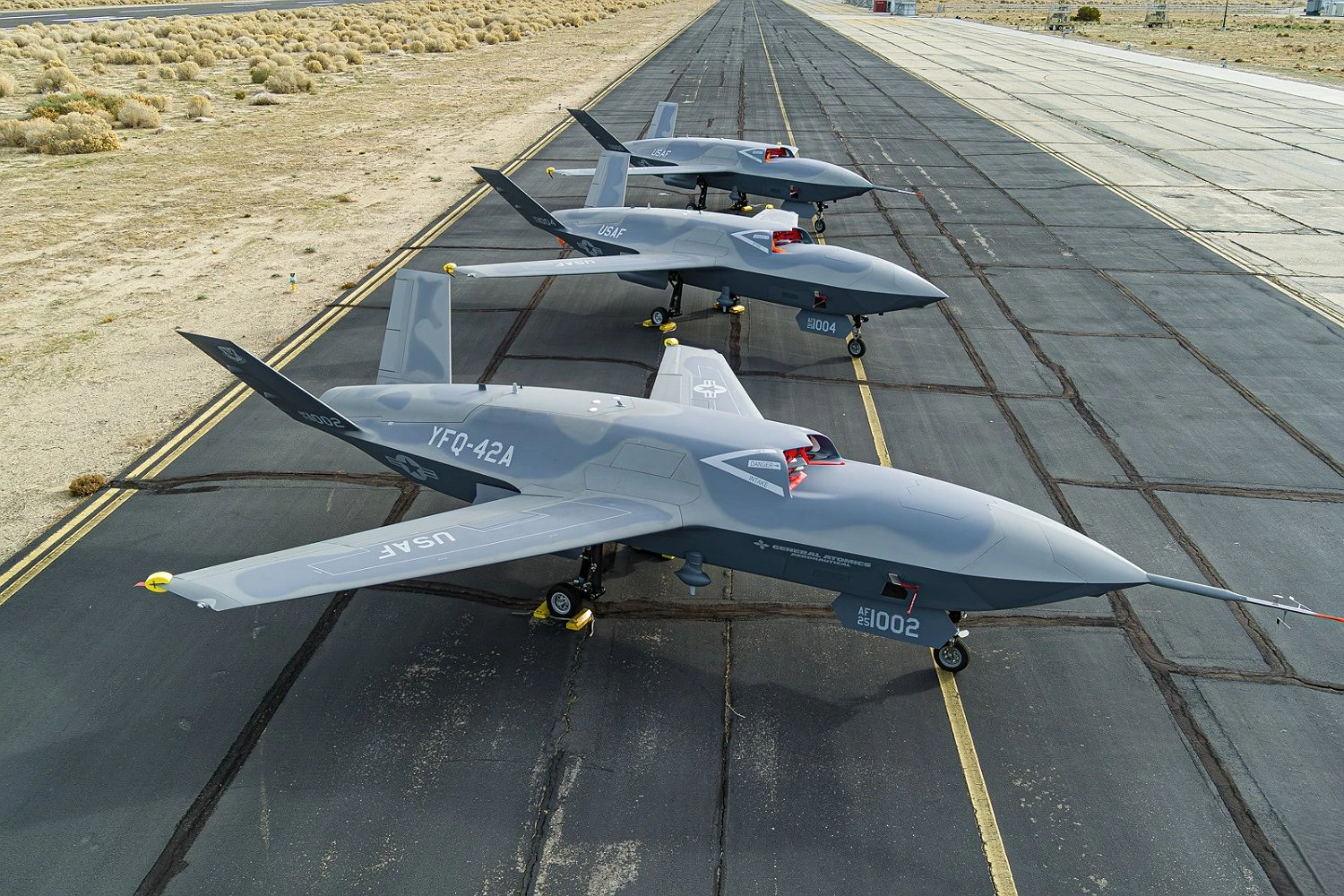
The US Air Force selected GA-ASI and Anduril in April 2024 to build production-representative prototypes. General Atomics flew the YFQ-42A for the first time in August 2025, and has since expanded the test fleet, including additional airframes introduced later that year.
Related news
The program is moving toward a key milestone, with a production decision for Increment 1 expected in fiscal year 2026. The Air Force plans to acquire between 100 and 150 aircraft in the initial phase, with longer-term ambitions for a much larger fleet of autonomous combat drones.
GA-ASI has also been advancing software integration for the aircraft, including the incorporation of autonomy systems through the Air Force’s Government Reference Architecture, which is intended to allow multiple suppliers to contribute mission systems.
The crash comes at a critical stage for the program, as both competitors seek to demonstrate maturity ahead of selection decisions.