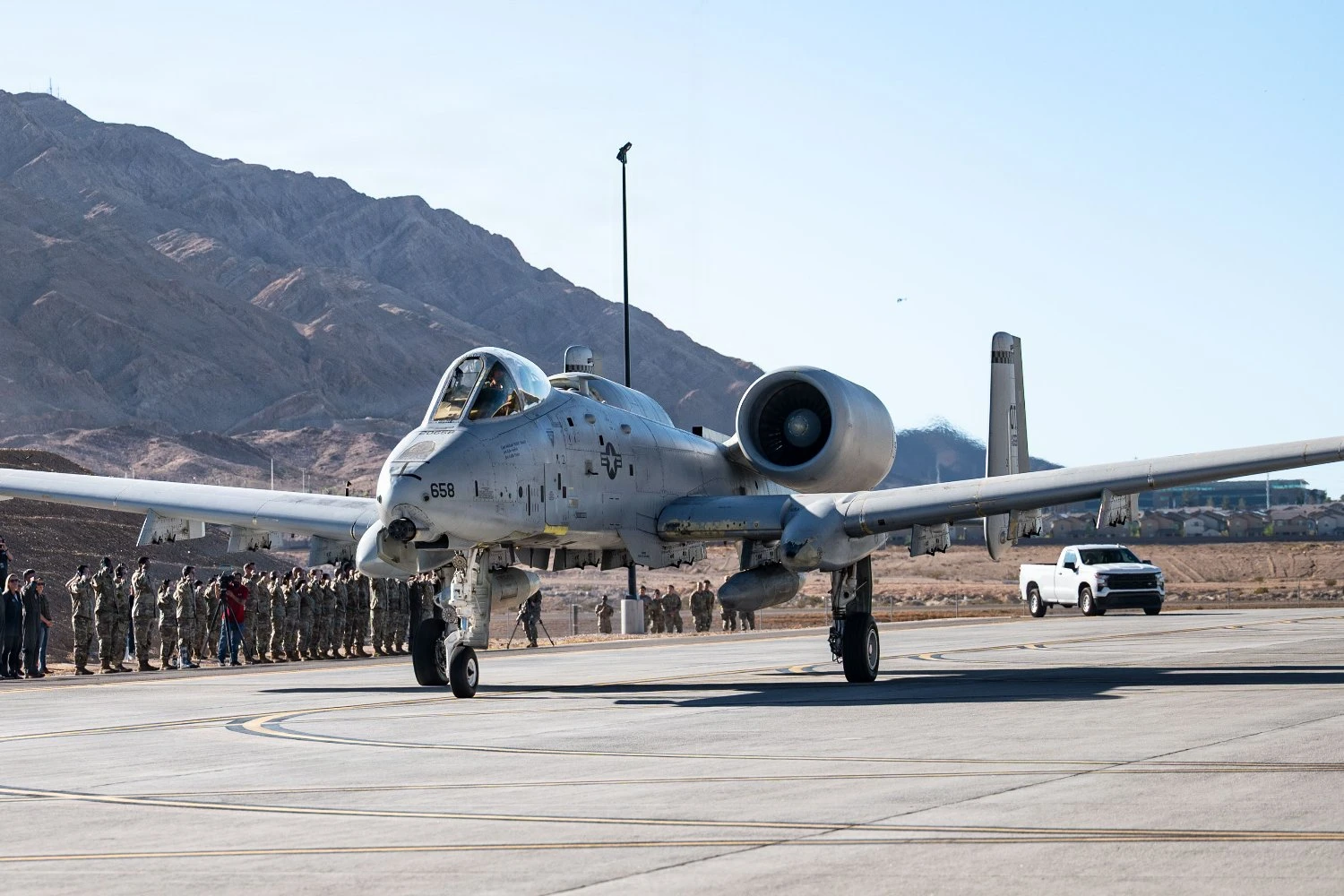
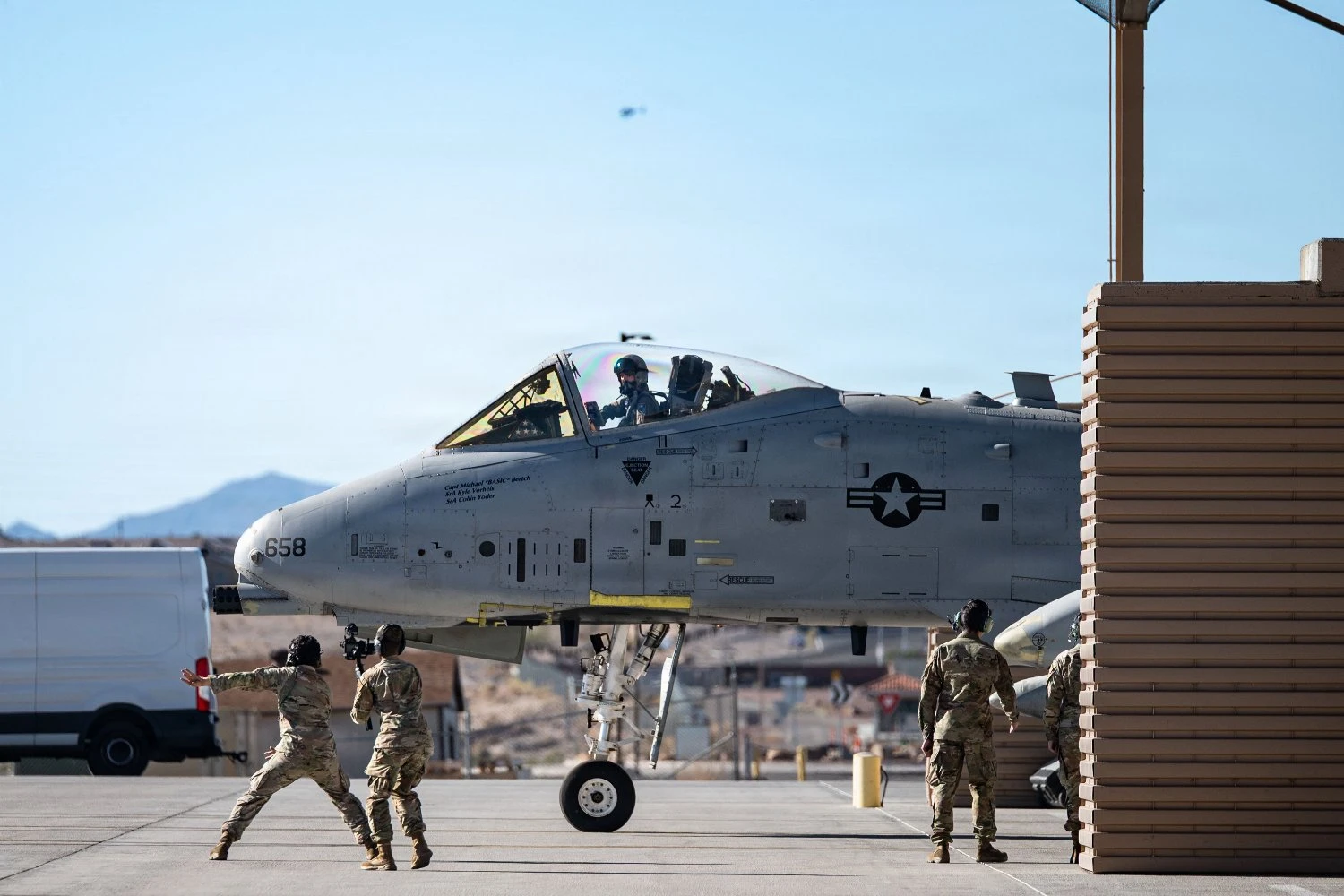
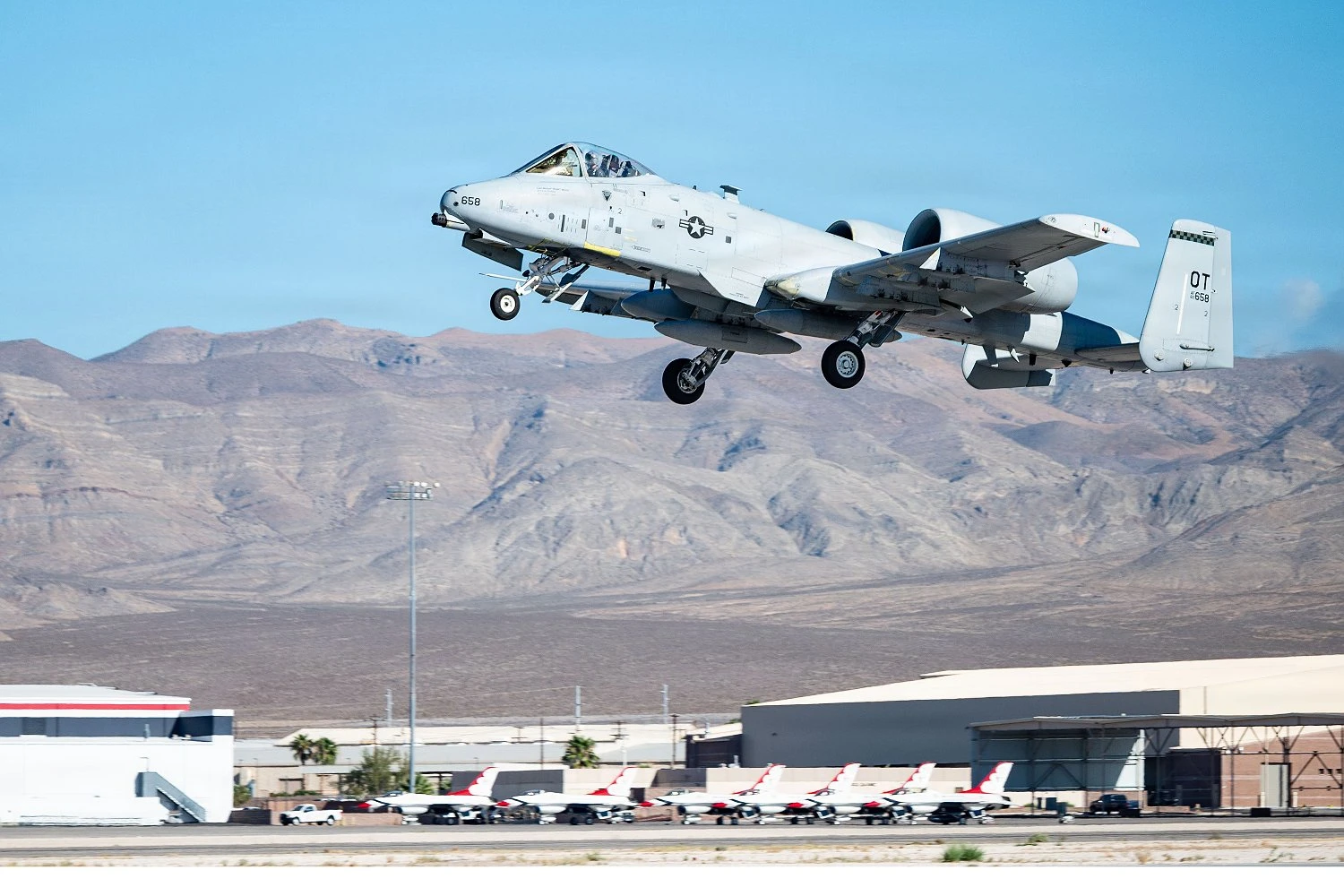
The last A-10 Thunderbolt II assigned to Nellis Air Force Base departed the Nevada installation on September 22, ending nearly five decades of operations at one of the most important bases in the history of the US Air Force attack jet.
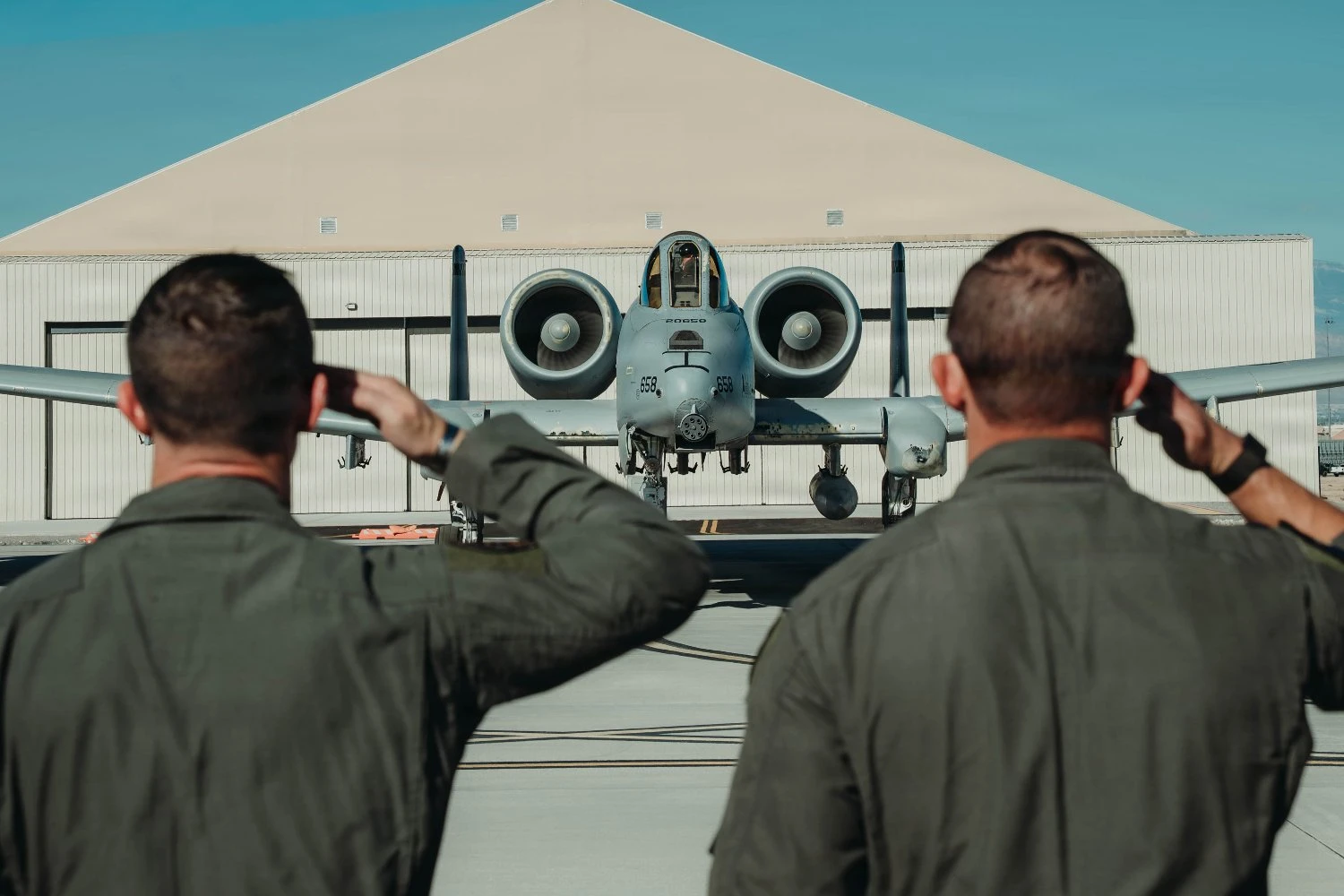
Nearly 70 airmen gathered on the flight line for the departure. The first A-10 arrived at Nellis in 1977, and the base subsequently became a major center for developing tactics, testing equipment and training crews for the aircraft better known as the Warthog.
The departure came about a month after the 66th Weapons Squadron conducted its final A-10 training mission at the US Air Force Weapons School. More than 300 A-10 weapons officers graduated from 100 classes during the program's history.
But the end of A-10 operations at Nellis is not the end of the aircraft.
Follow Air Data News: WhatsApp | Instagram | LinkedIn | Twitter | Facebook
After years of attempts by the Air Force to retire the Warthog, Congress has again slowed the process. The service entered fiscal 2026 with 162 A-10s and wanted to retire all of them, but current legislation prevents the inventory from falling below 103 aircraft through September, except for individual aircraft deemed uneconomical to repair.
Infrastructure disappears before the A-10
Keeping the Warthog flying for several more years, however, comes after the Air Force has already dismantled parts of the infrastructure that supported it.
The last class of new A-10 pilots graduated in April 2026, while the end of the Weapons School program at Nellis removes another part of the aircraft's training structure.
The A-10's dedicated depot maintenance line at Hill Air Force Base has also been shut down. The 571st Aircraft Maintenance Squadron in Utah completed its final A-10 in February before being deactivated, ending a mission that had provided depot-level maintenance for the aircraft since 1998.
The Air Force had already reduced depot spending from $124.5 million in fiscal 2024 to $60.8 million in fiscal 2025 and planned no funding for fiscal 2026.
The situation has attracted attention in Congress. Proposed legislation introduced in 2026 would require the Air Force to maintain sufficient training, testing, depot maintenance, logistics and other support to keep the A-10 operationally viable through fiscal 2030.
Warthog gained a new refueling capability in 2026
The gradual dismantling of the A-10 support structure contrasts with work still being performed on the aircraft.
Previously funded modifications continue to reach surviving A-10Cs, including cockpit displays, communications improvements, directional audio threat warning, Ethernet connectivity and integration of the Small Diameter Bomb I. A fleetwide wing replacement effort was completed in 2024, extending the structural life of the remaining aircraft to as much as 10,000 flight hours.
The Warthog even received a capability in 2026 that it had lacked throughout its previous service life.
In April, the Air National Guard Air Force Reserve Command Test Center fielded a removable refueling probe that allows the A-10 to use the probe-and-drogue system. The aircraft normally receives fuel through a receptacle in its nose using a tanker boom.
The adapter fits into that existing receptacle and can be installed or removed by flight-line personnel within hours. It allows the A-10 to receive fuel from aircraft such as the HC-130, giving deployed units another option after the retirement of the KC-10 and while A-10 certification with the KC-46 remained pending.
The modification was developed in response to an urgent operational requirement rather than as a long-term modernization program. Until then, the remaining A-10 units had become largely dependent on the KC-135 for aerial refueling.