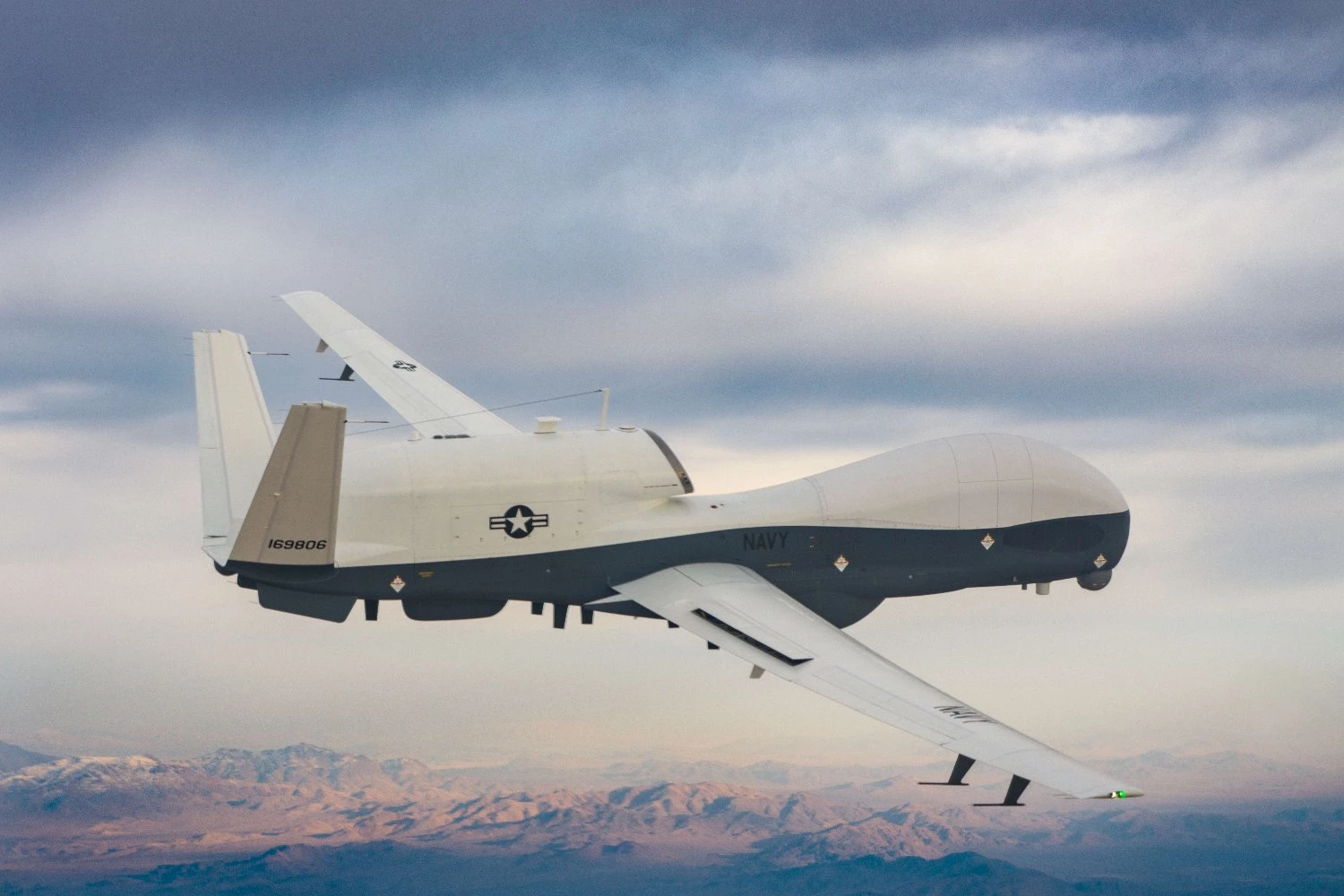
A U.S. Navy MQ-4C Triton surveillance drone disappeared from flight tracking systems on April 9 after declaring an in-flight emergency while operating over the Persian Gulf, raising questions about its fate amid heightened regional tensions.
Tracking data indicates the aircraft had completed a roughly three-hour surveillance mission over the Strait of Hormuz and was returning toward Naval Air Station Sigonella, in Italy, when the incident occurred. While flying north of Bahrain, the drone issued a 7700 squawk, the standard code for a general emergency.
Shortly afterward, the MQ-4C began a rapid descent from around 50,000 feet to below 10,000 feet. Its track then disappeared from ADS-B monitoring, either due to loss of the aircraft or the signal itself. Some reports also suggest the drone may have briefly transmitted code 7400, associated with loss of communication between the aircraft and its operators.
Recent news


April 10, 2026
Data from flight tracking platforms shows the aircraft deviated from its return path, turning northeast in the direction of Iran shortly before the descent. There has been no official confirmation from the U.S. Navy regarding the incident, and Iranian authorities have not commented.
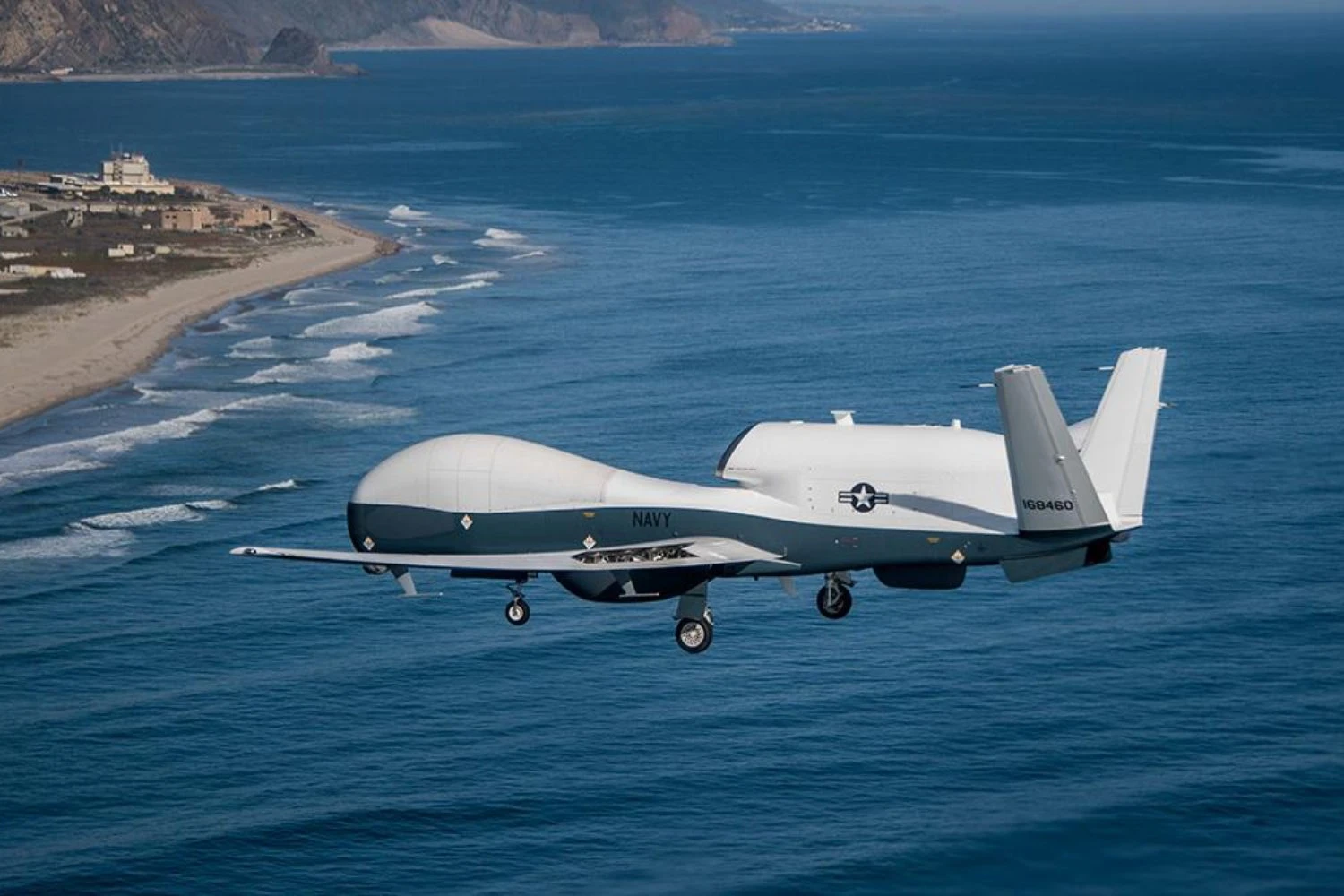
The episode comes just days after a fragile ceasefire agreement between the United States and Iran, with the Strait of Hormuz remaining a critical chokepoint for global energy shipments. MQ-4C drones have been operating in the region on a regular basis, conducting long-endurance surveillance missions over maritime traffic.
Who is the MQ-4C Triton
The MQ-4C Triton is a high-altitude, long-endurance unmanned aircraft developed by Northrop Grumman for the U.S. Navy under the Broad Area Maritime Surveillance (BAMS) program. It is derived from the RQ-4 Global Hawk, but adapted for maritime operations with structural reinforcements, anti-icing systems and lightning protection.
The type first flew in 2013 and entered operational service in 2018. It is designed to provide persistent intelligence, surveillance and reconnaissance (ISR) over large ocean areas, often operating in coordination with Boeing P-8A Poseidon patrol aircraft.
Follow Air Data News: WhatsApp | Google News | Instagram | LinkedIn | Twitter | Facebook
The Navy initially planned a fleet of more than 60 units, but that number has been reduced in recent years. Around 20 aircraft are currently in service, with additional units planned.
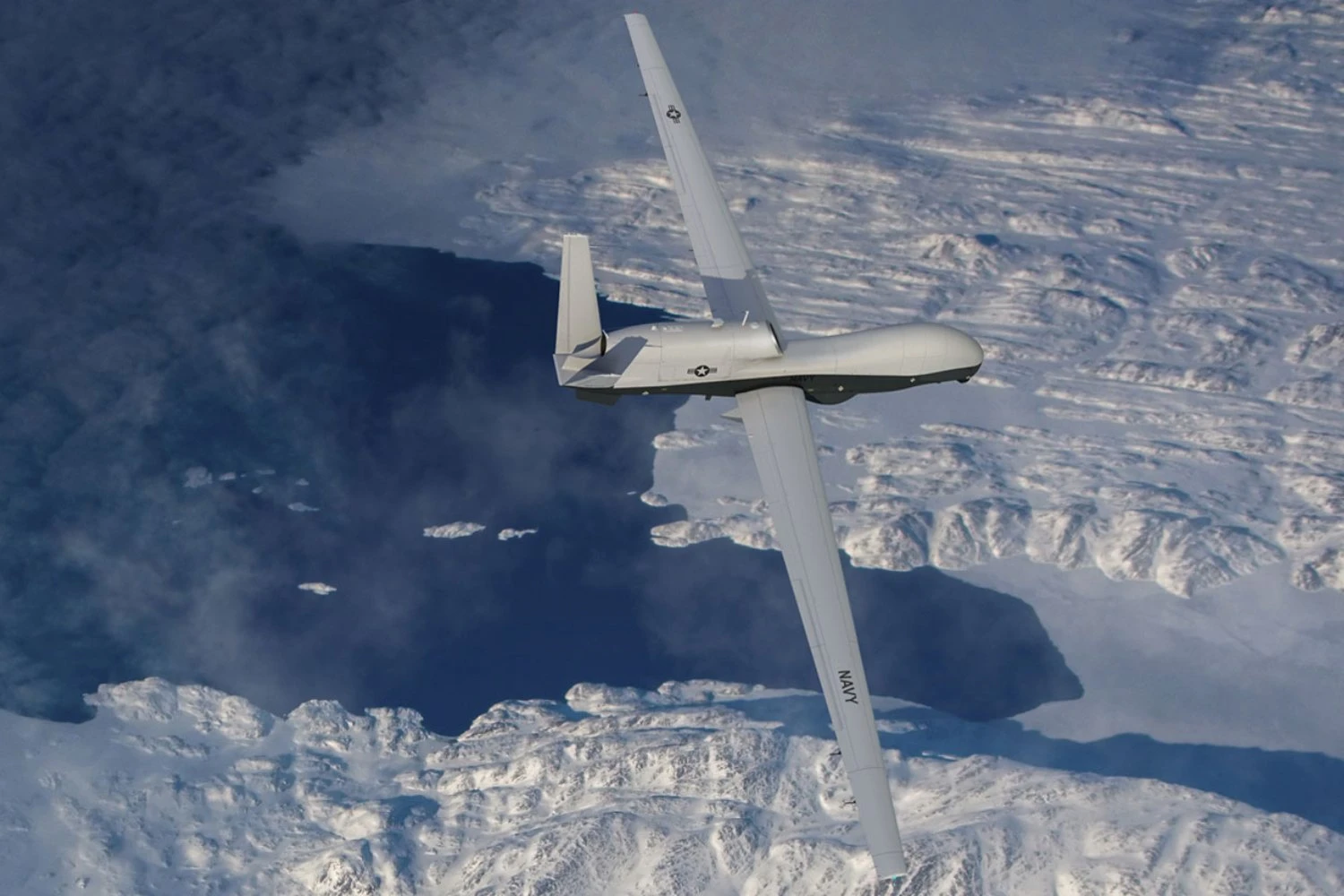
The Triton has also seen operational use in the Middle East for more than a decade through earlier Global Hawk variants. In 2019, Iran shot down a U.S. Navy BAMS-D drone, a predecessor to the MQ-4C.
Technical specifications
Type: High-altitude, long-endurance maritime surveillance UAV
Manufacturer: Northrop Grumman
Length: 14.5 m (47 ft 7 in)
Wingspan: 39.9 m (130 ft 11 in)
Maximum altitude: over 50,000 ft
Endurance: more than 30 hours
Range: about 8,200 nautical miles
Engine: Rolls-Royce AE 3007 turbofan
Maximum speed: around 320 knots
Capabilities and cost
- AESA radar (AN/ZPY-3) with surface search and synthetic aperture modes
- Electro-optical and infrared sensors for imaging and tracking
- Electronic intelligence (SIGINT/ELINT) systems
- Ability to act as a communications relay and data fusion node
- Integration with P-8A Poseidon aircraft and naval forces
- Each MQ-4C carries an estimated unit cost of more than $238 million, reflecting its sensor suite, endurance and role in long-range maritime surveillance.