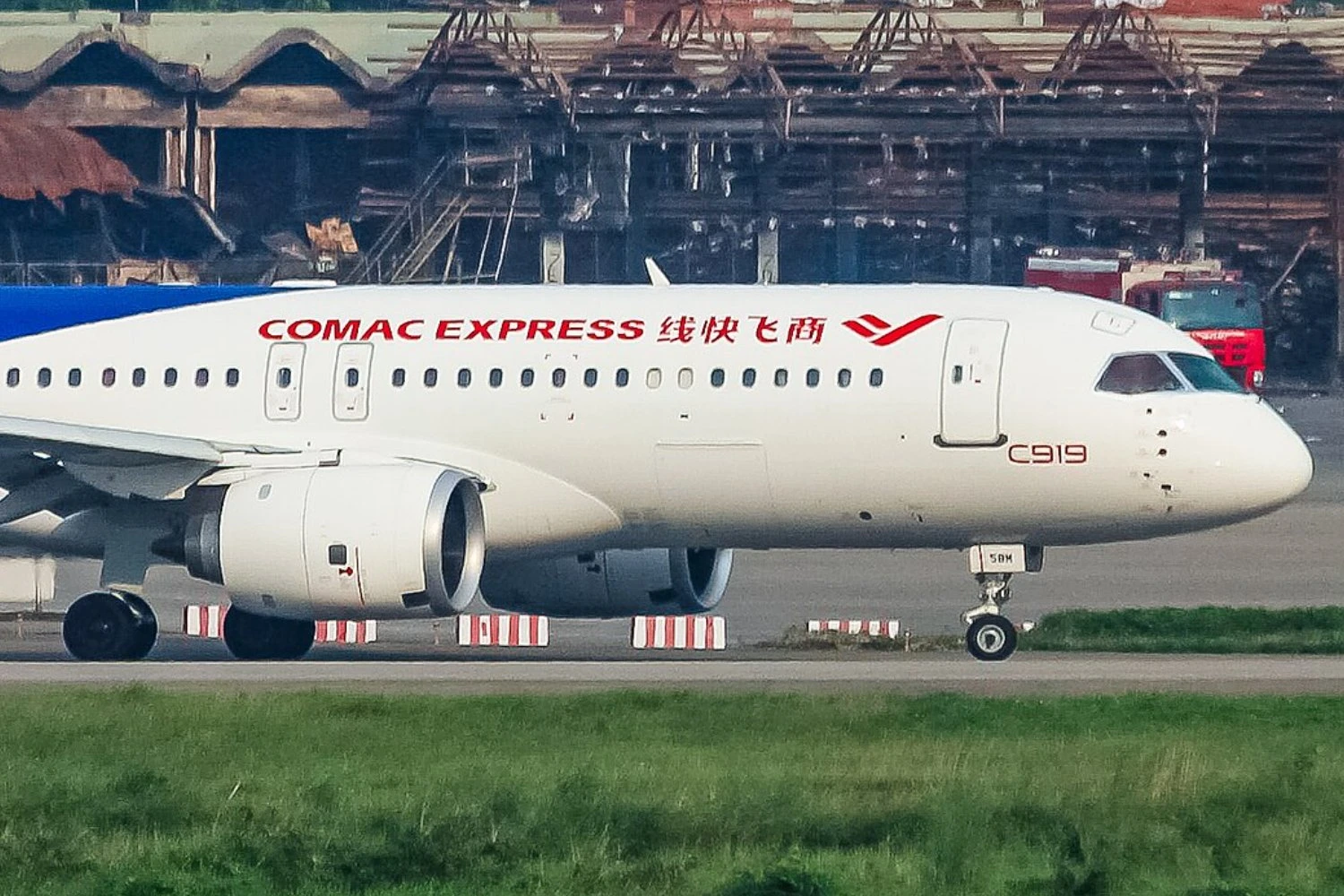
US lawmakers want to prevent Chinese-made aircraft from receiving American certification and restrict investments by Western aerospace companies in China, according to a congressional report obtained by Reuters on November 19.
The House Select Committee on China also recommends withdrawing US government contracts from aerospace and defense companies that maintain investments in China's aviation industry. Airbus, which operates two A320-family final assembly lines in Tianjin, is among the manufacturers that could be affected.
The recommendations follow a year-long investigation into commercial partnerships that lawmakers believe have helped strengthen China's military-industrial capabilities. However, implementing the proposals would be complicated by the extensive industrial relationships between Chinese manufacturers and Western companies, including American suppliers of aircraft engines and other systems.
COMAC is not seeking US certification
The proposal to block certification would primarily affect COMAC, the Chinese manufacturer of the C909 regional jet and C919 narrowbody airliner. Neither aircraft is currently undergoing certification by the Federal Aviation Administration (FAA).
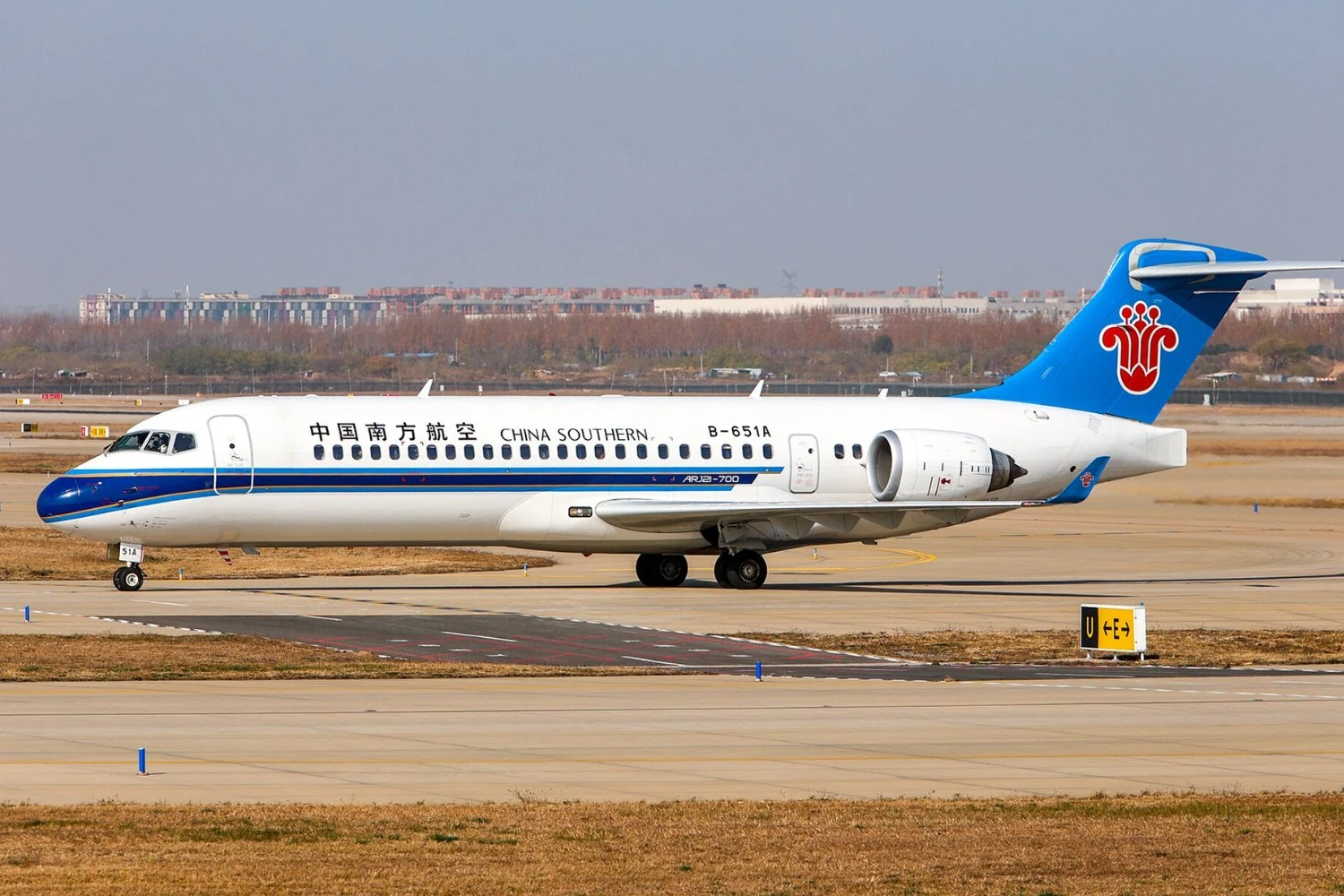
Instead, COMAC has concentrated its international certification efforts on Europe, where the European Union Aviation Safety Agency (EASA) is evaluating the C919. The aircraft entered commercial service in China in 2023, and European certification could eventually expand its access to international markets.
An American prohibition would therefore have little immediate effect on COMAC's existing certification activities. It would primarily prevent the manufacturer from pursuing FAA approval in the future.
Follow Air Data News: WhatsApp | Instagram | LinkedIn | Twitter | Facebook
The congressional report cites Chinese government subsidies and the absence of a final public investigation report into the 2022 crash of a China Eastern Airlines Boeing 737-800. These concerns do not constitute a technical finding that COMAC aircraft fail FAA safety requirements.
Airbus and American suppliers have extensive ties to China
The investment restrictions could have more significant consequences for Western manufacturers, particularly Airbus, which has operated an A320-family final assembly line in Tianjin since 2008 and inaugurated a second facility in October 2025.
The new line delivered its first A320neo in September 2026. Together, the two Chinese facilities form part of Airbus's global production network, which also includes assembly lines in France, Germany and the United States. More than 800 A320-family aircraft have been assembled in Tianjin.

The congressional investigation has questioned Airbus's relationship with Chinese suppliers involved in military programs, including Xi'an Aircraft Industry Group, which produces A320 wing structures. Lawmakers argue that such partnerships risk transferring industrial expertise to China's military sector, although the existence of a commercial relationship does not itself establish an illegal technology transfer.
The dependence also works in the opposite direction. COMAC's C919 uses LEAP-1C engines manufactured by CFM International, the GE Aerospace-Safran joint venture, along with avionics and other systems supplied by Western companies. The smaller C909 uses GE Aerospace CF34 engines.

The United States demonstrated the importance of these relationships in 2025, when it temporarily suspended export licenses for aircraft engines and other equipment destined for COMAC. The restrictions were subsequently lifted following trade negotiations with China.

A renewed tightening of export controls could disrupt COMAC's production, but it would also affect American companies that supply the Chinese manufacturer. Requiring Western companies to abandon established Chinese manufacturing operations would present a different set of industrial and contractual challenges.
Recommendations would require several government decisions
Beyond certification, the committee wants the US Treasury Department to restrict investments in China's aerospace sector and encourage allied countries to adopt similar policies.
It also proposes heightened scrutiny of acquisitions of American aerospace companies by French firms until they sever relationships considered connected to China's military-industrial network. The report argues that joint ventures and commercial partnerships have transferred Western technology, manufacturing expertise and industrial capacity to Chinese companies with military connections.
The proposals would involve several US authorities, including the FAA, Treasury Department and agencies responsible for export controls and federal procurement. They remain congressional recommendations rather than enacted restrictions.
Airbus did not immediately comment on the report, according to Reuters. The committee has not established a timetable for implementing its proposals, which could affect both Chinese aircraft manufacturers and the Western companies that supply or manufacture aircraft in China.

Report an error