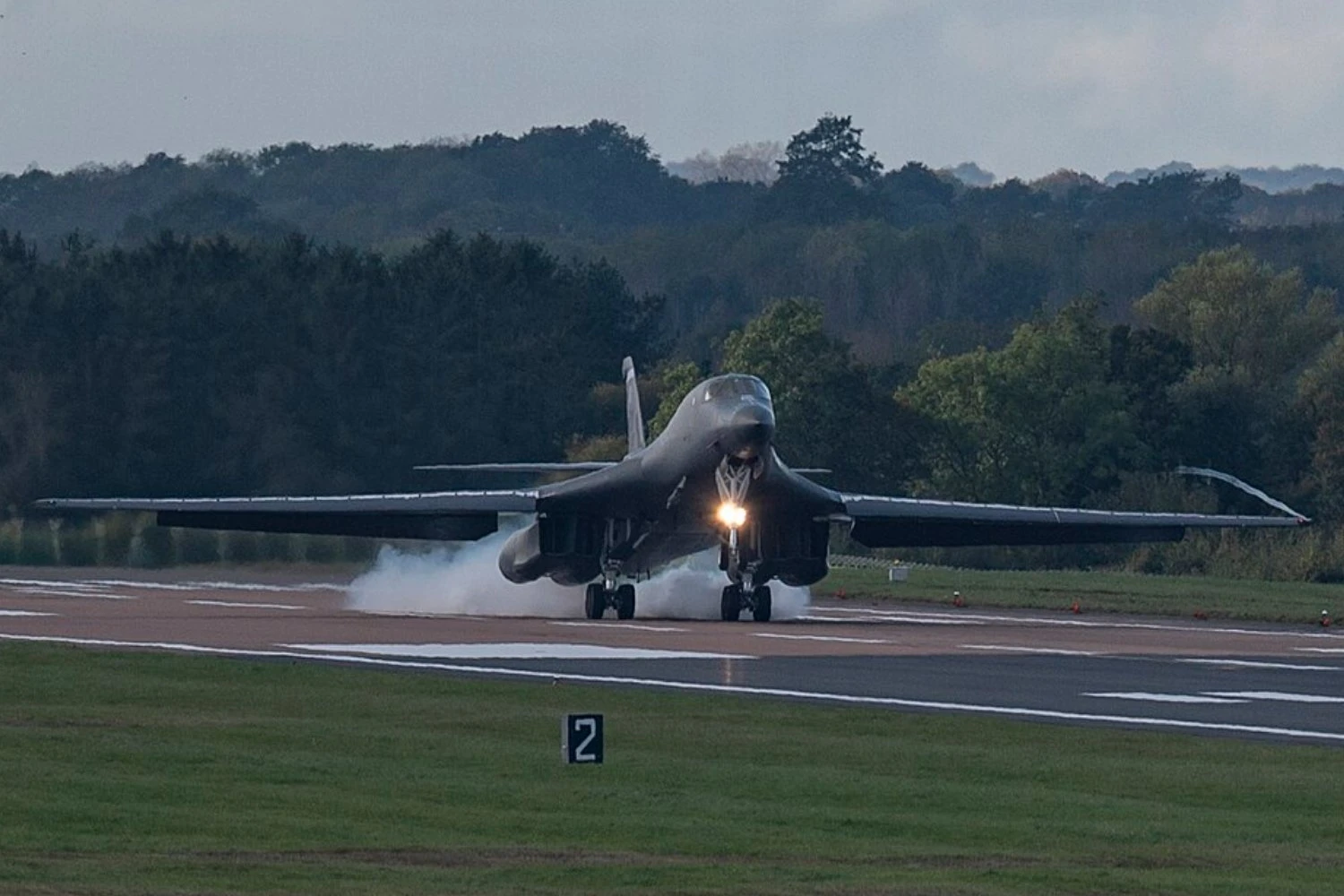
President Donald Trump has confirmed that a security threat prompted the United States to withdraw its remaining B-1B Lancer bombers from RAF Fairford, providing a direct explanation for the abrupt departure on Sunday.
The last 12 B-1Bs left the British base on October 4, all within a single day. At the time, the Pentagon confirmed that no U.S. bombers remained at Fairford but did not publicly link the withdrawal to the security investigation underway around the base.
Asked about the decision, Trump said there had been a threat and that the aircraft were moved because of it. When questioned about whether Iran was connected to the threat, the president answered affirmatively. Reuters reported that U.S. officials had received intelligence about a potential Iranian threat against the base.
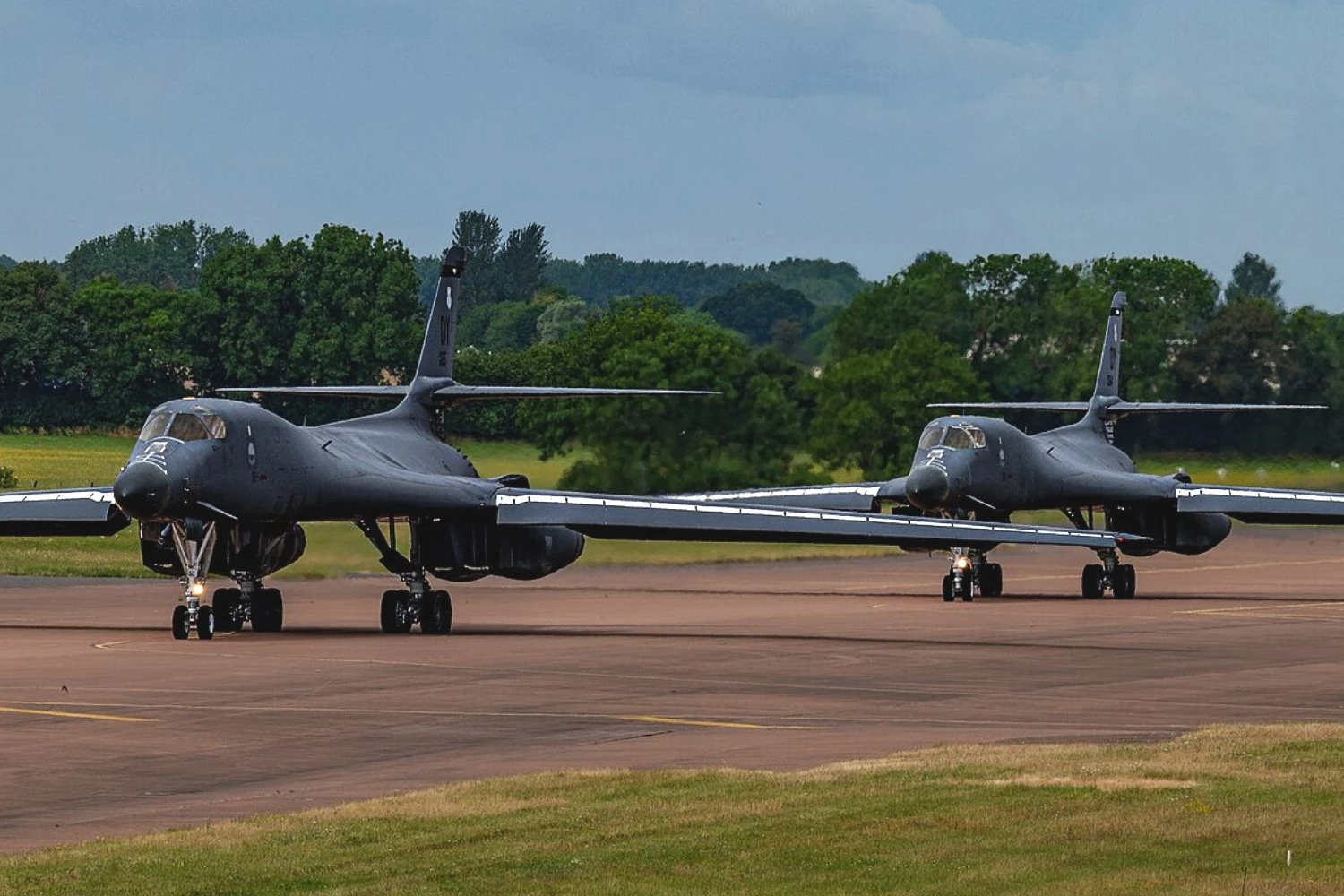
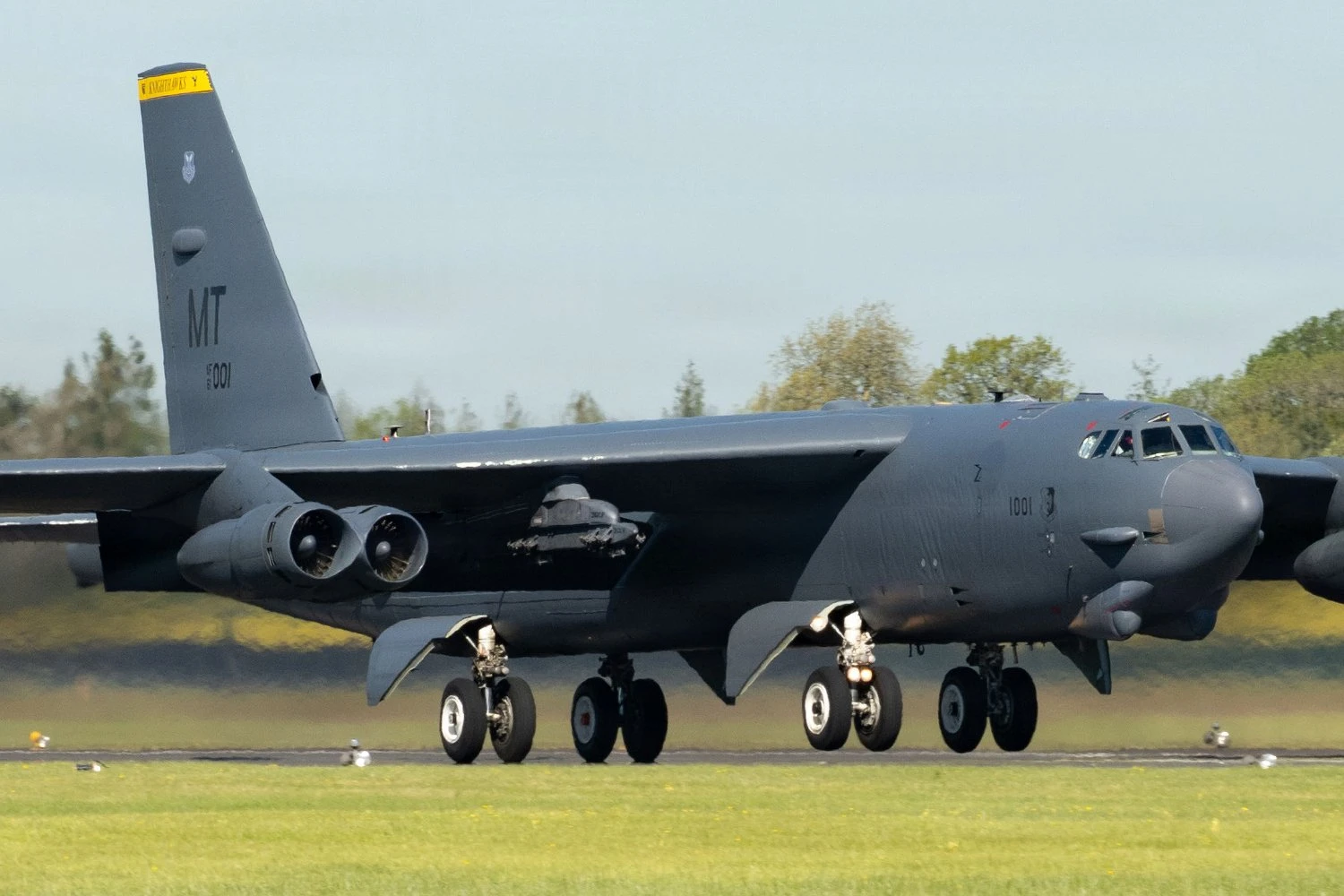
The confirmation adds a new dimension to the end of a deployment that began in March. Fairford became a major forward operating location for U.S. strategic bombers, with B-1Bs and B-52Hs deployed there during the escalation with Iran.
Follow Air Data News: WhatsApp | Instagram | LinkedIn | Twitter | Facebook
At its peak, roughly two dozen bombers were simultaneously at the British base. B-1Bs subsequently flew combat missions against Iranian targets during Operation Epic Fury. B-52s departed earlier, but the Air Force continued to maintain a substantial B-1 presence at Fairford until October.
Drone threat reportedly considered credible
Other U.S. reports have provided more detail about the intelligence behind the decision. Axios reported that U.S. authorities considered a potential Iranian drone attack against Fairford credible, prompting concern for both personnel and the bombers concentrated at the base.
The Washington Post also reported that intelligence pointed to a possible drone threat. The decision therefore removed the aircraft from a fixed location that had played a direct role in U.S. operations against Iran.
Recent news
October 05, 2026
October 05, 2026
October 05, 2026
The administration has offered differing descriptions of the departure. Secretary of State Marco Rubio characterized movements of U.S. military assets as normal rotations and cautioned against connecting them directly to events at Fairford. Vice President JD Vance, however, said the bombers had been moved as a precaution and pointed to Iran, while Trump subsequently made the connection between the threat and the withdrawal explicit.
The departure was particularly abrupt because the deployment still appeared active shortly beforehand. One B-1B had arrived at Fairford only about a week before the withdrawal to replace another aircraft, rather than as part of an obvious drawdown.
British investigation continues
The security concerns emerged after British authorities detained five men near RAF Fairford on September 27 following reports involving masked individuals and suspicious vehicles. A sixth suspect, a dual British-Iranian national, was later arrested in London.
The suspects have since been released on bail while the investigation continues. British authorities are examining possible activity on behalf of a foreign state but have not publicly established that those detained were responsible for the threat cited by U.S. officials or charged them with carrying out a plot against the base.
The B-1 deployment had lasted about seven months. The Air Force sent the aircraft to Fairford in March, alongside B-52Hs, before the base assumed a combat role during operations against Iran.