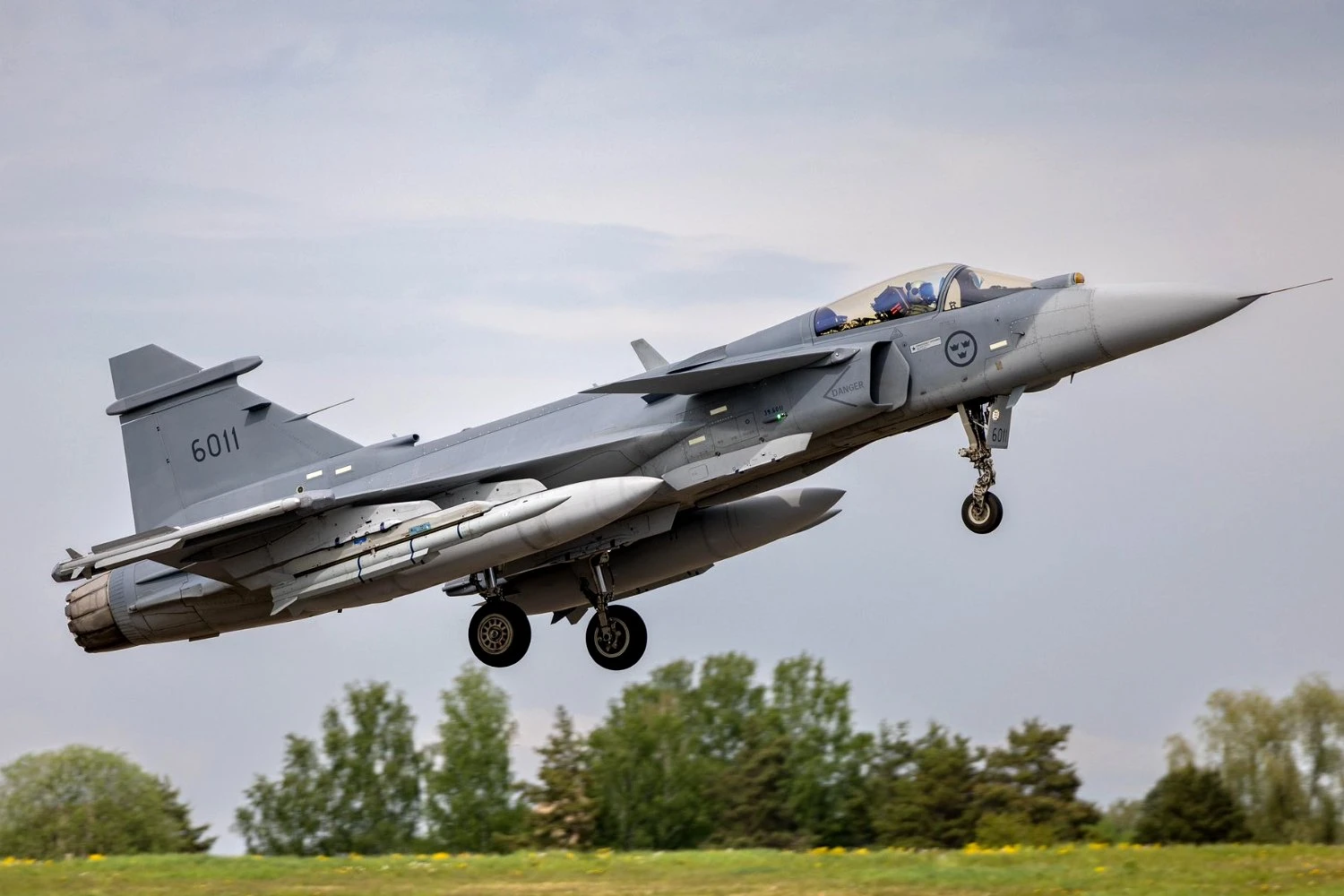
Sweden is preparing its Gripen fighter force to conduct strikes deep inside Russian territory if the country comes under attack, expanding its air warfare doctrine beyond defending Swedish airspace.
The concept was detailed by Colonel Carl Bergqvist, head of the Swedish Air Force's Air Warfare Centre, in an interview with Swedish newspaper Aftonbladet. Rather than concentrating solely on intercepting aircraft and missiles, Sweden wants the ability to attack the military infrastructure supporting an offensive.
Follow Air Data News: WhatsApp | Instagram | LinkedIn | Twitter | Facebook
Potential targets would include air bases, command centers, logistics facilities, radars and air defense systems located behind enemy lines. The objective would be to impose a direct military cost on an aggressor and disrupt its ability to continue operations.
The strategy has become more relevant since Sweden joined NATO in 2024, ending more than two centuries of military non-alignment. Swedish forces are now incorporated into the alliance's regional defense planning, with Russia identified as the principal military threat in Northern Europe.
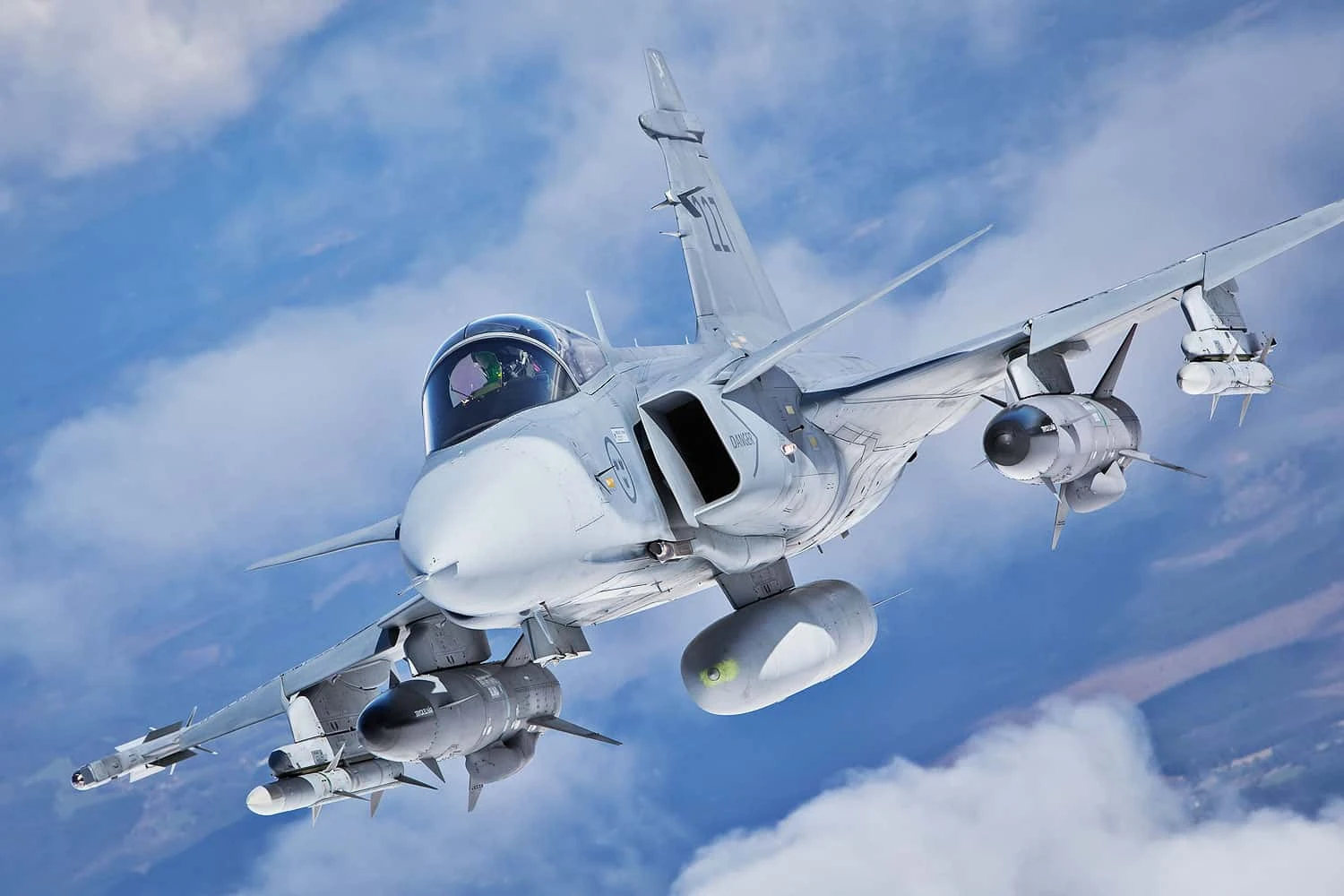
Gripens must survive the first attack
Long-range weapons are only one element of the concept. Sweden is also expanding its ability to disperse combat aircraft so that its fighter force can survive attacks against established air bases.
The Swedish Air Force has decades of experience operating fighters from roads and austere locations, a capability originally developed during the Cold War. The approach has gained renewed importance after Russia's invasion of Ukraine demonstrated the vulnerability of fixed air bases to cruise missiles, ballistic missiles and drones.
Sweden wants Gripen units to move between military airfields, civilian airports and road bases, reducing the possibility that an initial strike could disable a large portion of the fleet.
Recent news

October 07, 2026
October 07, 2026
October 07, 2026
During the Aurora 26 exercise, Gripens from the F 17 wing operated for five days from Hagshult, using runways as short as approximately 800 meters. Sweden plans to further expand its dispersed operating capability through 2030.
This survivability is directly connected to the country's emerging offensive doctrine. Aircraft that escape or survive an initial attack would have to rapidly resume operations and potentially strike the bases, command networks and logistics infrastructure supporting the attacking force.
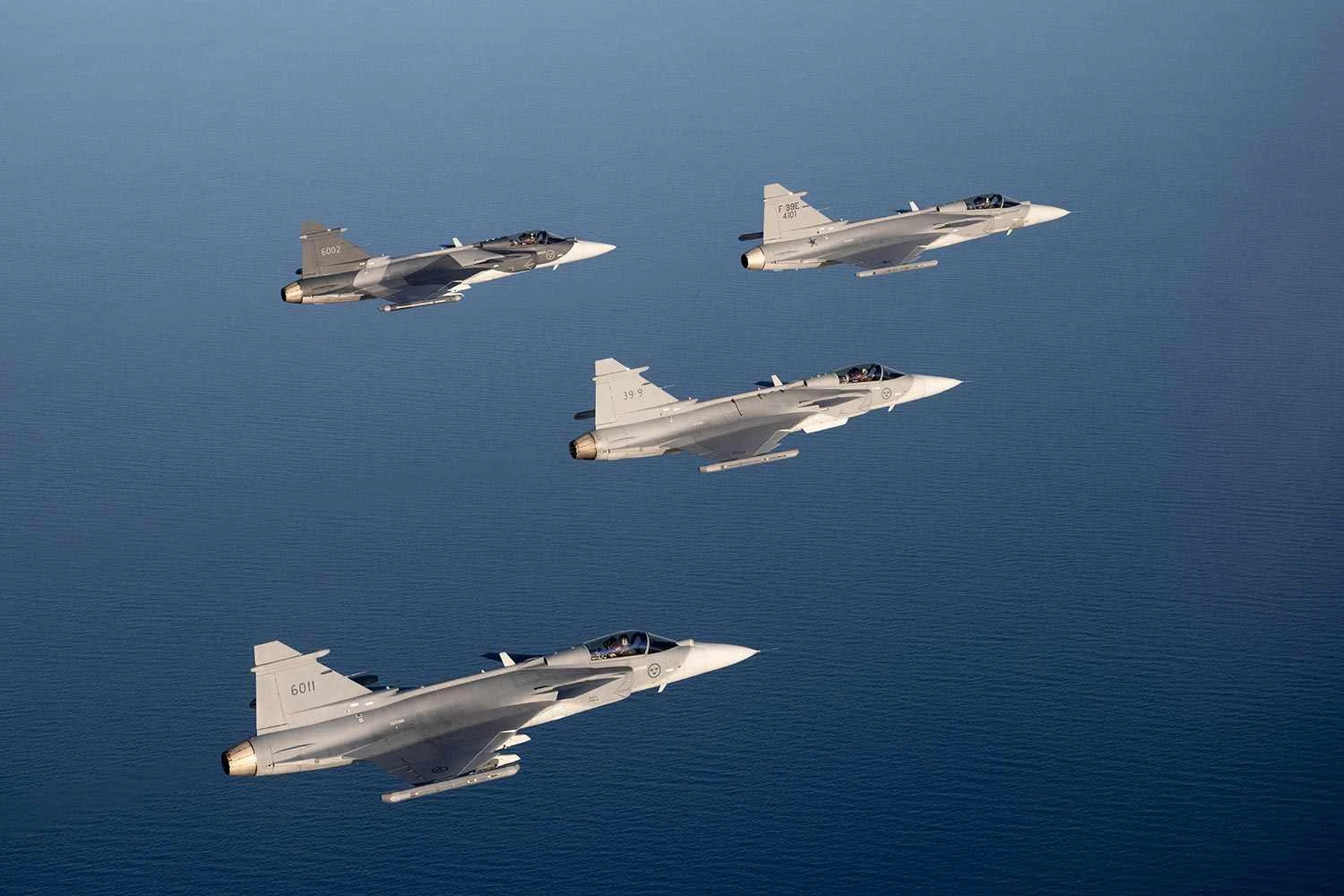
Taurus gives Gripen a long-range weapon
Sweden is already adding a weapon designed for such missions. The country has acquired the Taurus KEPD 350 cruise missile, initially for integration with the Gripen C/D and subsequently with the Gripen E.
The air-launched missile has a range exceeding 500 km (310 miles) and was designed to penetrate heavily defended airspace at low altitude before striking hardened or high-value targets.
A Swedish Gripen conducted the country's first Taurus firing in August, providing the Air Force with practical experience using the weapon that will form an important element of its long-range strike capability.
Swedish defense planning goes considerably further. The Armed Forces have outlined a future requirement to engage targets at strategic depth, potentially reaching approximately 2,000 km (1,240 miles).
That figure does not represent the range of a weapon already selected for the Gripen. Sweden has not identified the system that would provide the 2,000-km capability, and the requirement could ultimately involve weapons launched from platforms other than fighter aircraft.
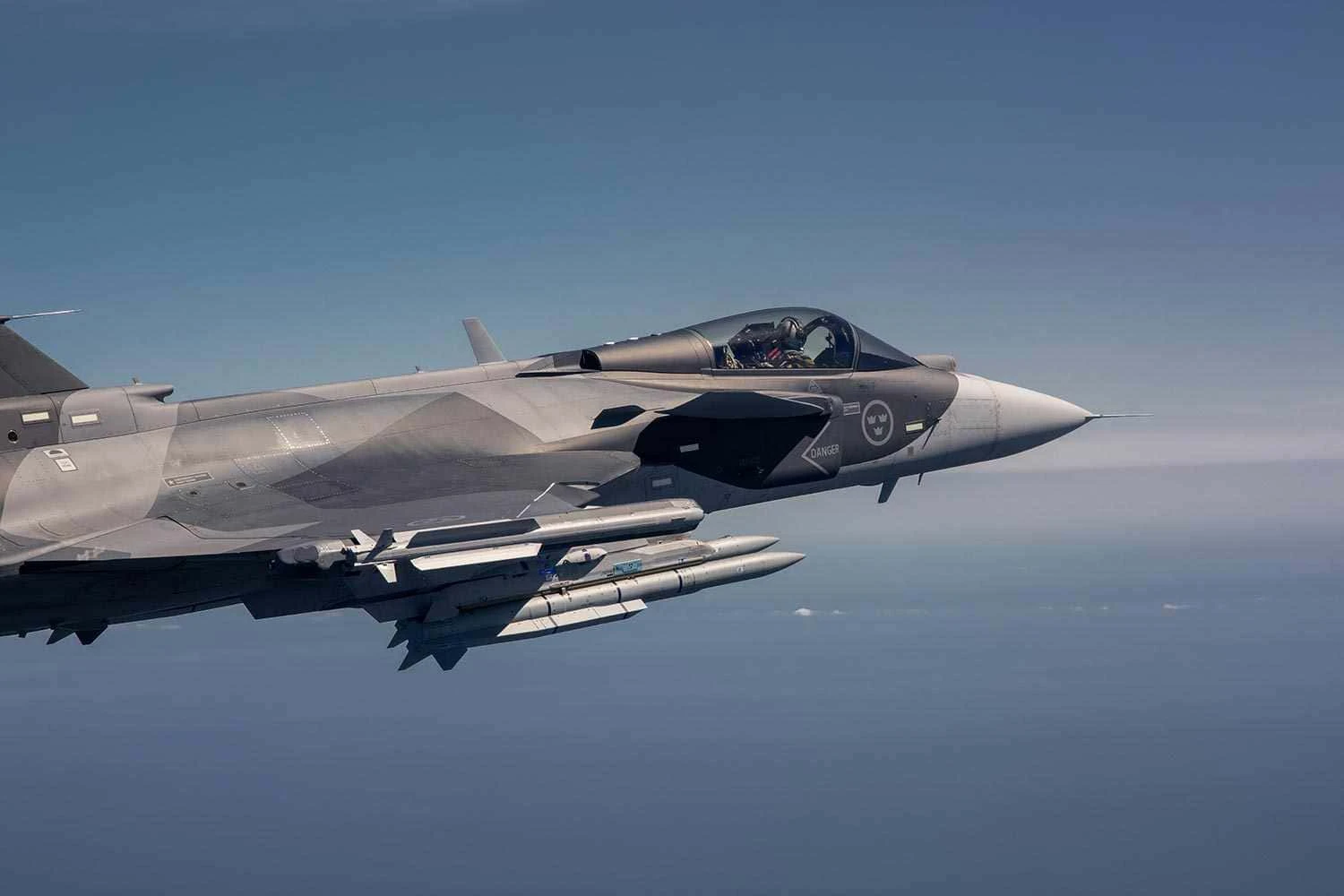
Gripens already protecting NATO's eastern flank
The new doctrine is emerging as Swedish Gripens take a more active role in NATO operations near Russia.
Sweden recently deployed fighters to support the alliance's air defense mission in Poland, protecting a logistics hub used to transfer military equipment to Ukraine. The aircraft operate primarily from Sweden, supported by a smaller forward presence in Poland.
The Swedish government announced this week that Patriot air defense systems and about 100 personnel will also be sent to eastern Poland from December, replacing a Dutch contingent protecting the same logistics operation.
Swedish Gripens were activated during the night of October 6-7 as Poland and other NATO members increased air defense readiness during a large Russian attack against Ukraine. Polish military authorities subsequently thanked the Swedish Air Force for its participation in the operation.
The deployment gives Sweden an operational role on NATO's eastern flank at the same time that its Air Force is preparing for a different scenario: ensuring that, if Swedish territory is attacked, its Gripens can survive the opening strikes and carry the response beyond the country's borders.