
Saab is offering to establish a Gripen final assembly line in Canada as part of its attempt to secure a place in the country's future fighter fleet, just days after the Royal Canadian Air Force formally accepted its first two CF-35As.
The Swedish manufacturer said it plans to work with CAE, IMP Aerospace & Defence and Magellan Aerospace if Canada acquires the Gripen E, with production, final assembly, training and long-term support performed in the country.
The most significant part of the proposal is a new agreement with IMP to establish a Canadian final assembly line. The company would also produce electrical assemblies and provide in-service support for the Canadian fleet.
Magellan would manufacture aerostructures, composite structures and structural assemblies, while CAE would provide pilot and technician training, mission systems engineering and support.
Follow Air Data News: WhatsApp | Instagram | LinkedIn | Twitter | Facebook
If established, the Canadian facility would become the third final assembly line for the current Gripen E/F generation.
Saab builds the fighter at Linköping in Sweden, while Embraer recently began producing the aircraft at Gavião Peixoto in Brazil. The first Brazilian-built Gripen E made its maiden flight on October 6.

Three assembly lines for 117 fighters
The industrial structure proposed by Saab is unusual considering the relatively modest production volume of the Gripen E/F.
There are currently 117 aircraft under firm order: 60 Gripen Es for Sweden, 36 Gripen E/Fs for Brazil, 17 for Colombia and four for Thailand.
Ukraine has also announced plans to acquire an initial batch of up to 20 Gripen E/Fs, but Saab said in May that negotiations were still underway and that it had not received an order.
A Canadian production line would therefore create a third final assembly location for a fighter that currently has little more than 100 firm orders worldwide.
Rather than concentrating production entirely in Sweden, Saab has made local manufacturing, technology transfer and industrial participation an important part of its international Gripen strategy.

Brazil is the most developed example. Embraer's Gavião Peixoto plant became the first Gripen final assembly facility outside Sweden, with Brazilian engineers and technicians participating in production and development under a technology-transfer program.
Saab and Embraer are also preparing the Brazilian operation to play a larger role in international production, with plans for additional aircraft to be manufactured there to serve potential export demand.
The Canadian proposal follows a similar model but goes further than simply assembling aircraft for the Royal Canadian Air Force.
IMP President David Gossen said the company sees an opportunity for the proposed facility to produce and support aircraft for other Gripen customers internationally, potentially making Canada another production center for the global program.
Gripen remains an option for Canada
Canada selected the F-35A to replace its CF-188 Hornets and finalized an arrangement in 2022 for 88 aircraft. The government began reviewing the acquisition in March 2025, examining operational requirements, industrial benefits, strategic considerations and possible alternatives.
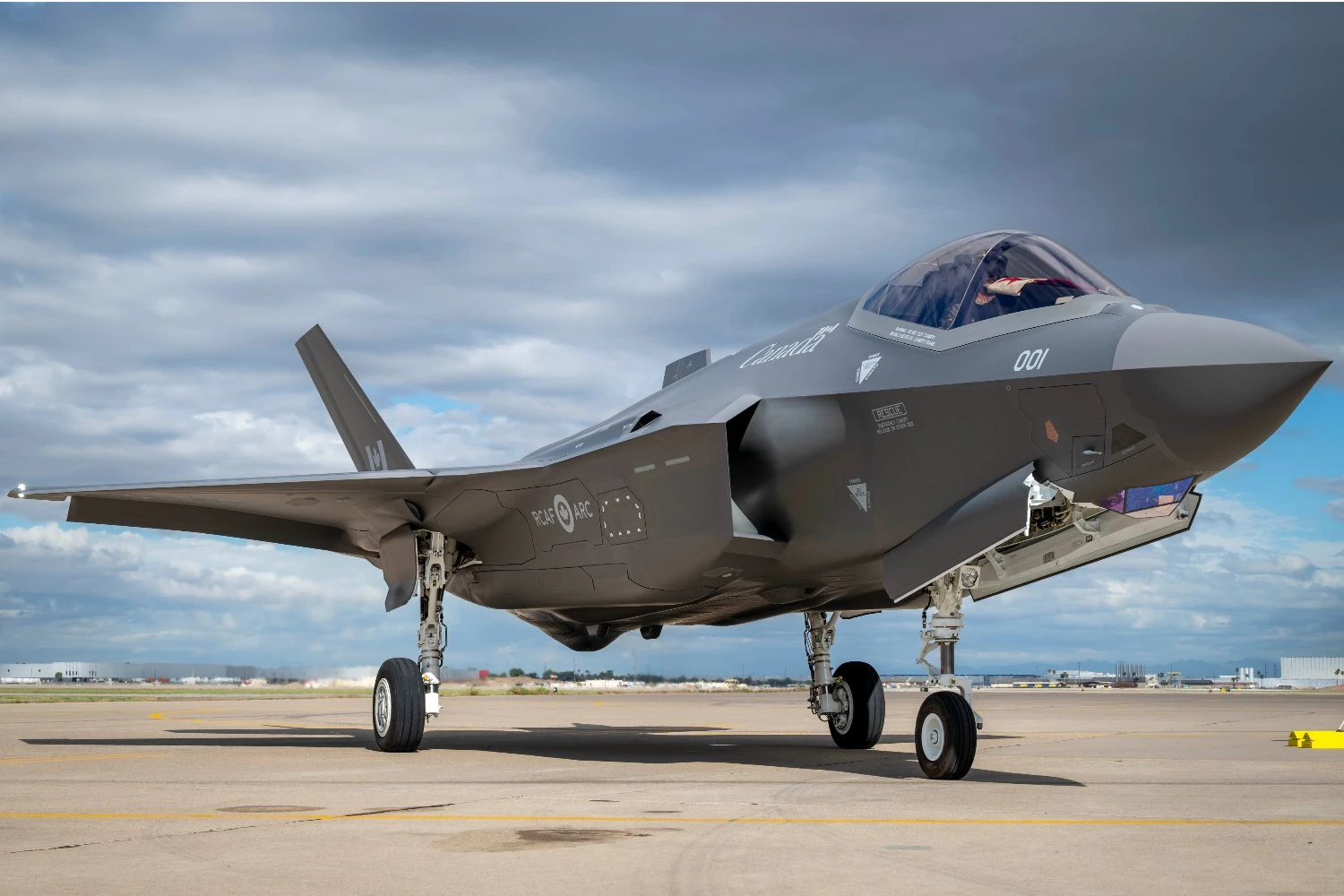
The first two Canadian aircraft were formally accepted this month at Luke Air Force Base in Arizona. They will remain in the United States for pilot and maintenance training, with the first CF-35As expected to arrive in Canada in 2028.
Canada remains committed to the initial 16 aircraft while the government considers how to proceed with the rest of the planned fleet.
That has left an opening for Saab to promote the Gripen as a potential component of a mixed fighter force, with domestic production becoming one of the central elements of its offer.
The industrial argument does not mean Canada currently lacks participation in the F-35 program. Canadian companies have supplied components and services to the multinational program for years, while facilities are also being prepared at Cold Lake and Bagotville to support the CF-35A fleet. Saab's proposal, however, would put final assembly of the fighter itself in Canada.
