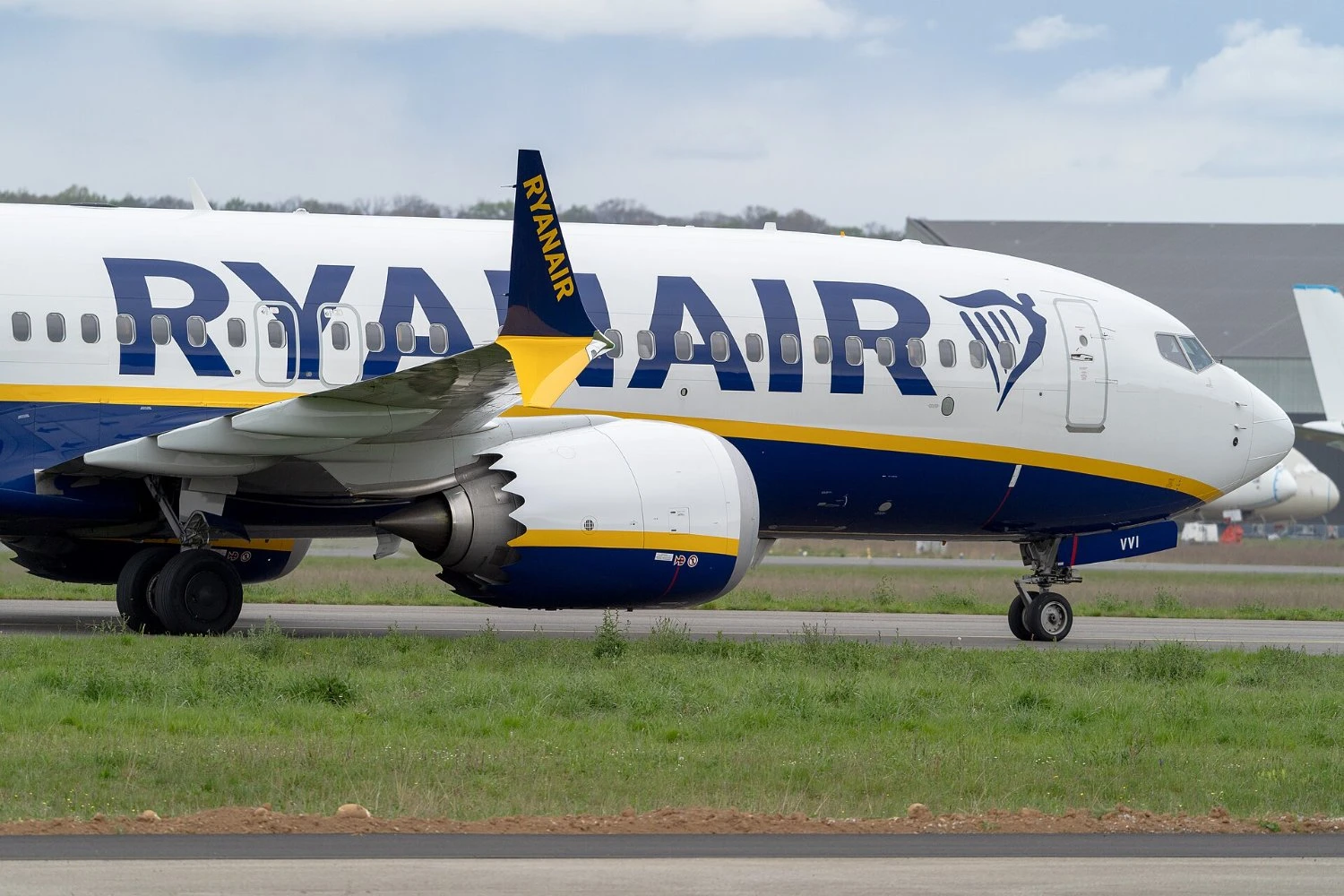
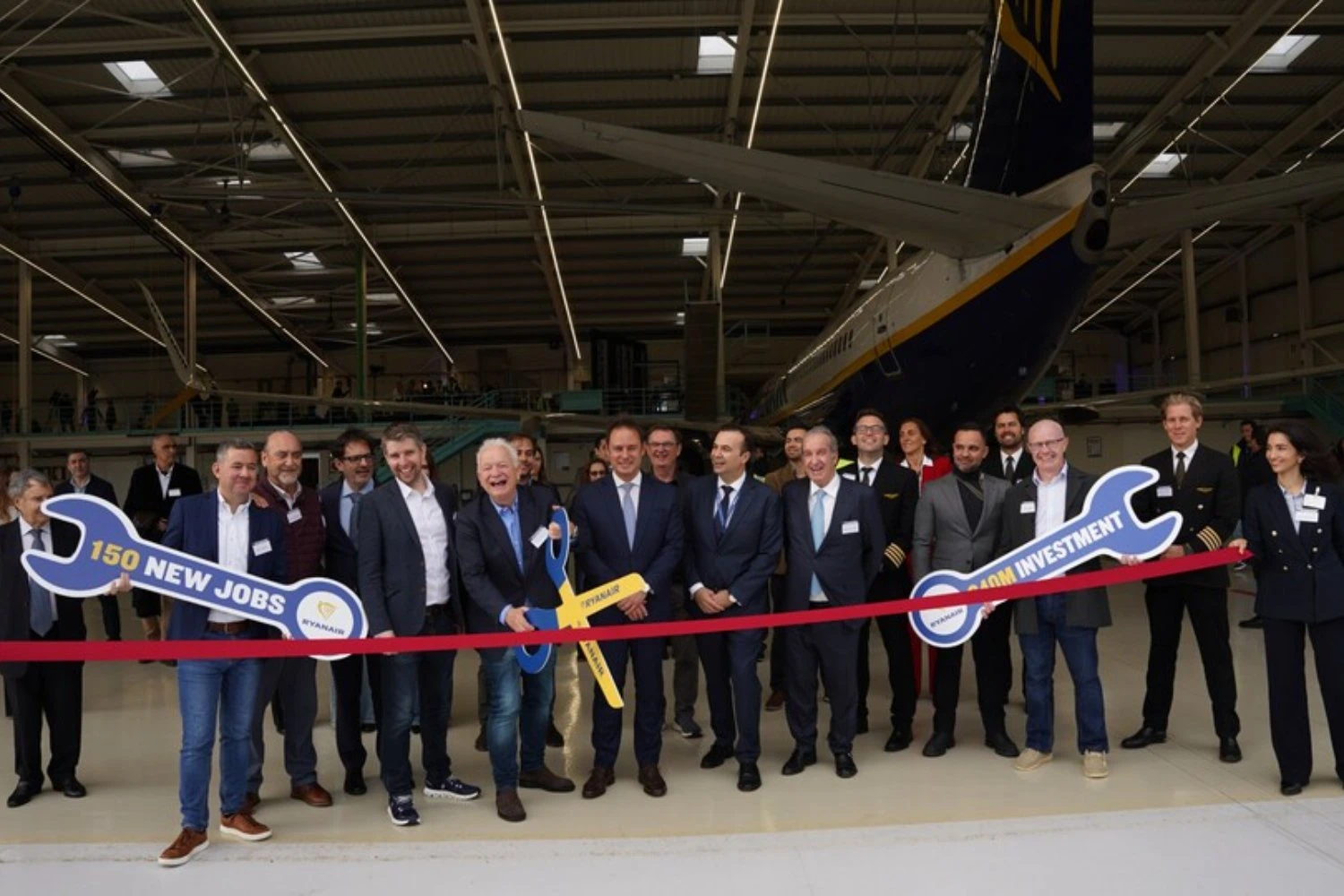
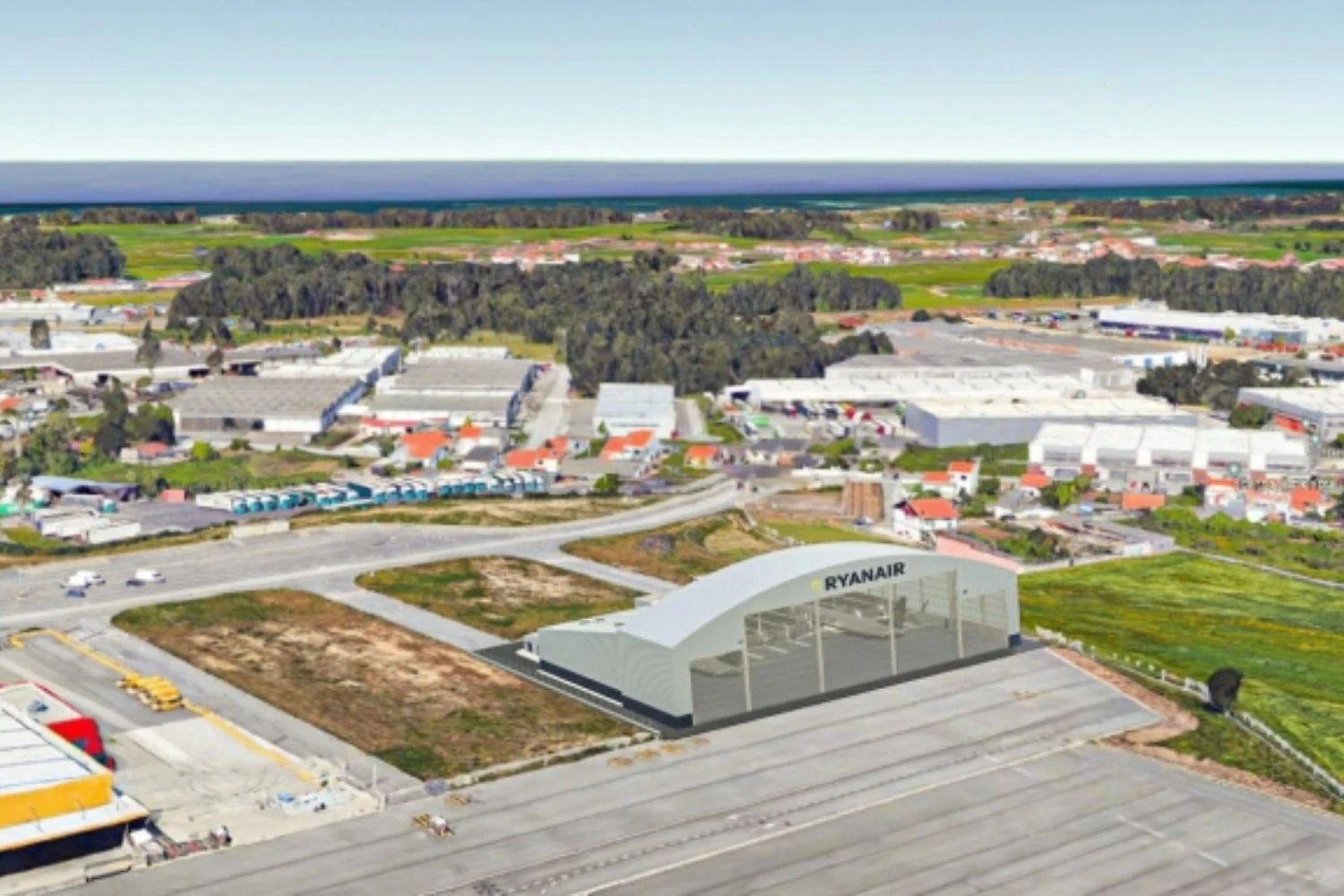
Ryanair opened a €40 million (approximately US$46 million) aircraft maintenance hangar at Porto Airport in Portugal on November 10. The new two-bay facility joins an existing single-bay hangar, giving the Irish airline two hangars with capacity to service three jets simultaneously at the airport.
The new building covers 52,700 sq ft (4,900 m²) and includes component workshops. Ryanair expects to employ more than 150 additional engineers, mechanics and apprentices at the site.
Porto is one of four Ryanair bases in Portugal, alongside Faro, Lisbon and Madeira. The airline recently increased the number of aircraft stationed in Porto to 14, bringing its Portuguese-based fleet to 30 jets.
The Porto facility joins a network of maintenance centers spread across Europe, where Ryanair services its fleet of nearly 650 aircraft. The airline is also preparing to introduce the larger Boeing 737 MAX 10, a variant of the MAX family it already operates.
Ryanair's fleet is approaching 650 aircraft
As of November 3, 2026, Ryanair operated 647 aircraft: 411 Boeing 737-800s, 210 Boeing 737-8200s and 26 Airbus A320s.
Follow Air Data News: WhatsApp | Instagram | LinkedIn | Twitter | Facebook
The 737-800 seats 189 passengers, compared with 197 on the newer 737-8200, which Boeing markets as the MAX 8-200. The Airbus A320s, configured with 180 seats, are operated by the group's Lauda Europe subsidiary.
Ryanair completed deliveries of its 210 Boeing 737-8200s earlier this year. Its next aircraft type will be the larger 737 MAX 10, configured with 228 seats.
The airline has ordered 150 MAX 10s and holds options for another 150. It expects the first 16 aircraft to arrive in spring 2027, subject to certification.
By fiscal 2034, Ryanair expects to operate approximately 800 aircraft, including 300 MAX 10s, 210 737-8200s and around 290 older 737s. The Airbus A320s are expected to leave the fleet before then.
Where Ryanair maintains its aircraft
Ryanair operates maintenance facilities across Europe rather than sending its aircraft to a single engineering center in Ireland.
Routine servicing, known as line maintenance, includes inspections, minor repairs and scheduled checks that can generally be completed between flights or overnight.
The airline's principal line-maintenance facilities are located at Madrid, London Stansted, Bergamo, Dublin, Vienna, Nuremberg, Malta and Porto. At other airports, it also uses approved maintenance contractors.
Related news
Madrid has the largest concentration of aircraft bays. Ryanair opened a €25 million (approximately US$29 million) seven-bay hangar there in March 2026, bringing the airport's total to eight.
Major inspections and structural repairs take place at six heavy-maintenance centers: Prestwick in Scotland, Seville in Spain, Kaunas in Lithuania, Wrocław in Poland, Shannon in Ireland and Frankfurt-Hahn in Germany.
Unlike routine checks, heavy maintenance can keep an aircraft out of service for days or weeks. Ryanair schedules much of this work outside the busy European summer period, when fewer aircraft are needed for passenger flights.
The company is adding capacity at these facilities as well. In October, it received planning approval for a €50 million (approximately US$58 million) hangar at Shannon, with four aircraft bays and an engineering academy. Construction is expected to begin in 2027.
Engine overhauls could move in-house
Ryanair still depends on external specialists for much of its engine maintenance. Its Boeing 737-800s use CFM56-7B engines, whereas the 737-8200 and future MAX 10 are powered by LEAP-1B engines. Both are produced by CFM International, a joint venture between GE Aerospace and Safran.
The airline plans to establish up to two facilities capable of overhauling both engine types, with operations potentially starting in 2029.
Ryanair expects to have approximately 2,000 engines in its fleet by 2034. Its proposed overhaul facilities would allow it to perform work currently assigned to outside providers.