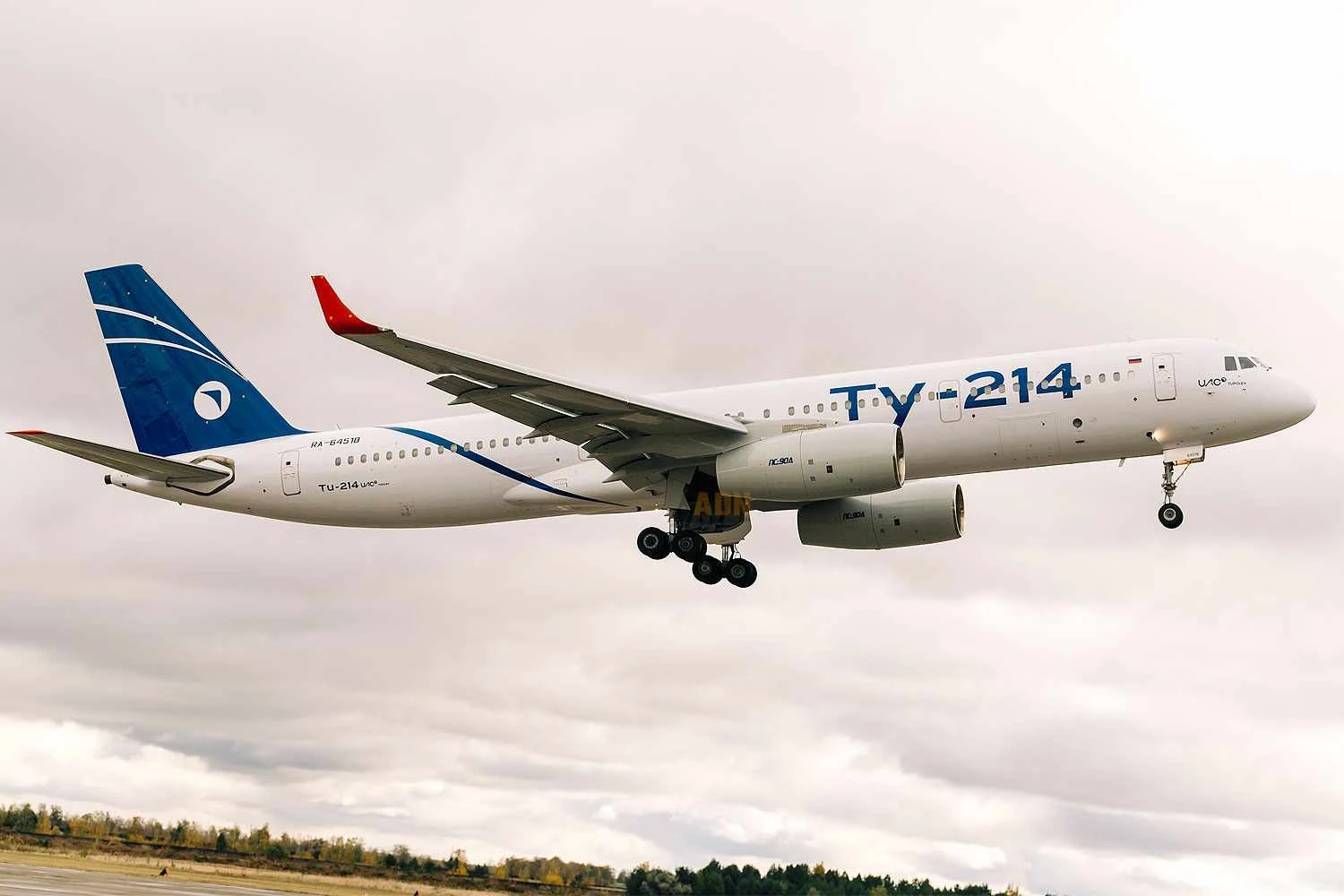
Russia has consolidated the certification of the Tupolev Tu-204 and Tu-214 families under a single type certificate, an essentially regulatory change intended to simplify the operation and maintenance of the Soviet-era airliner as the country attempts to expand production of the Tu-214.
According to Rostec, Russia's Federal Air Transport Agency, Rosaviatsiya, reissued the approval documents by combining four previously separate type certificates covering different Tu-204 and Tu-214 variants.
Follow Air Data News: WhatsApp | Instagram | LinkedIn | Twitter | Facebook
The change does not amount to a new certification of the Tu-214 and does not alter the aircraft's basic capabilities. Instead, it removes some of the regulatory fragmentation accumulated during several decades of development of the Tu-204 family.
Under the consolidated certificate, spare parts, tools and maintenance procedures can be more easily shared among the different variants. Rostec says it should also simplify training for pilots, cabin crew and maintenance personnel.
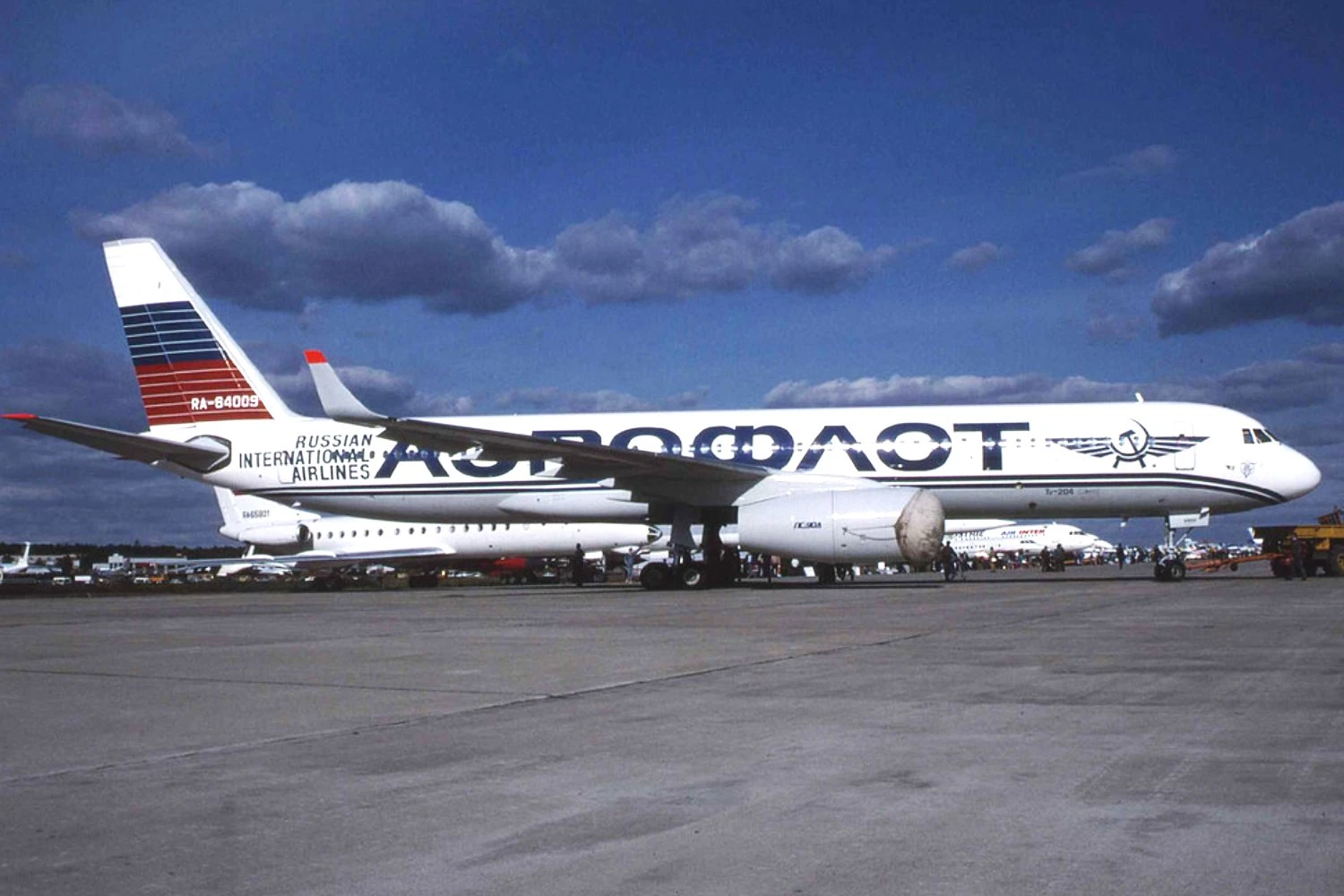
There is another benefit for Tupolev. Materials and design elements already certified on one version can be introduced more easily on other aircraft covered by the same family certificate.
Tu-204 and Tu-214
Although the Tu-214 is now frequently treated as a separate aircraft, it is an evolution of the Tu-204, which Tupolev developed during the final years of the Soviet Union.
The Tu-204 first flew in 1989 and was intended to replace older Soviet airliners, particularly the Tu-154. Unlike its three-engine predecessor, it adopted the configuration that had become standard for modern narrowbody aircraft, with two high-bypass turbofans mounted under the wings.
Production of the original Tu-204 was established at Ulyanovsk. A higher-weight derivative, the Tu-204-200, was subsequently assigned to the Kazan plant and became the Tu-214. The first Tu-214 flew in 1996.
Tu-204 production eventually dwindled to almost nothing, while Kazan continued assembling Tu-214s in very small numbers, largely for Russian government and special-mission customers.
It is the Tu-214, rather than the original Tu-204, that Russia has now decided to return to larger-scale production for commercial operators.
Western equipment added to a Soviet design
The Tu-214 also occupies a different position from the MC-21 and Superjet when it comes to Russia's effort to replace imported aircraft components.
Its fundamental design is Soviet and Russian, including its Aviadvigatel PS-90A engines. It was not originally conceived around an international supply chain comparable to those used for the MC-21 and Superjet.
Western equipment was nevertheless incorporated during the long evolution of the Tu-204/214 family, particularly avionics and specialized systems that became common in commercial aviation.
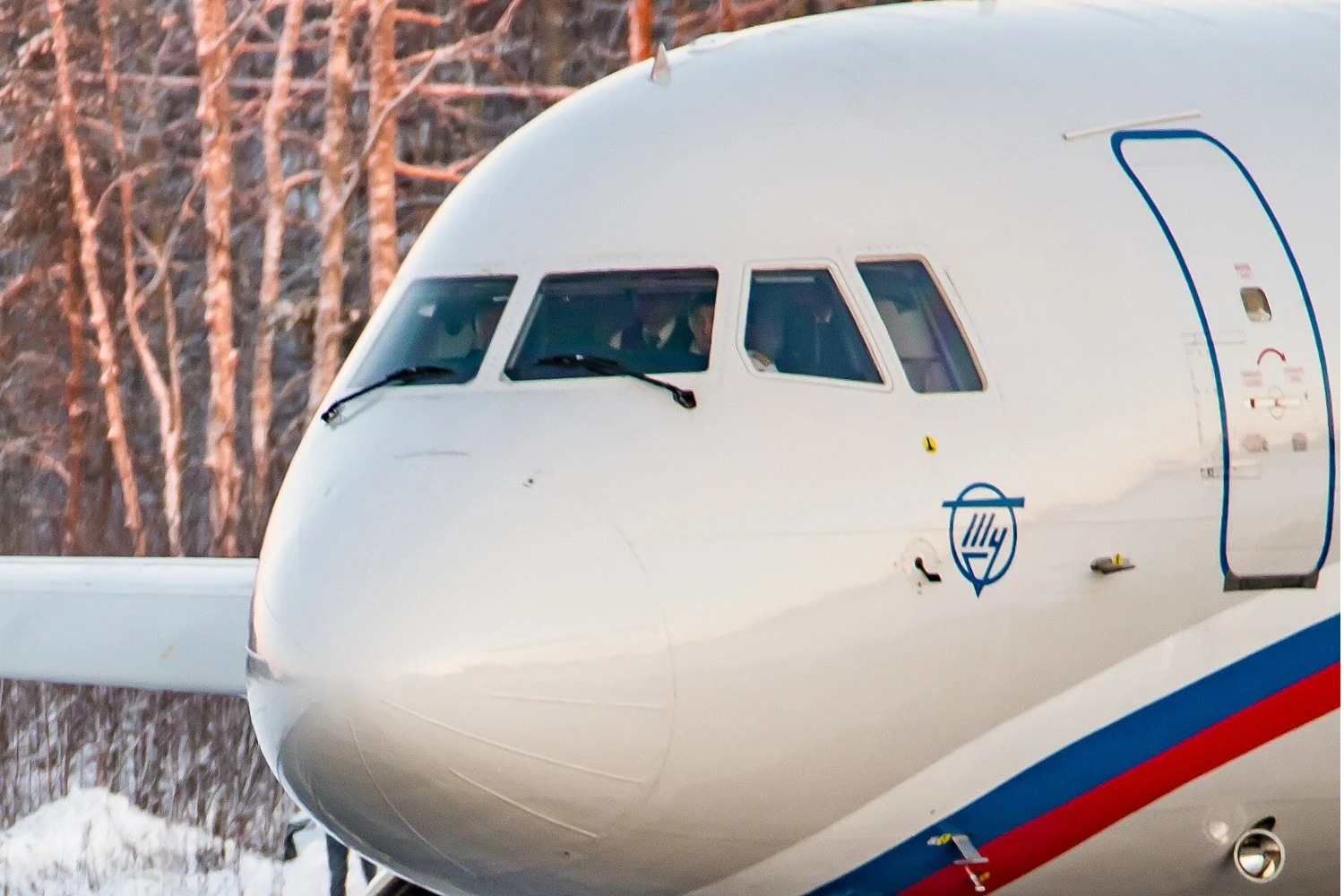
These included Honeywell equipment such as navigation, collision-avoidance and ground-proximity warning systems, as well as other imported components. Western sanctions therefore still forced Tupolev and its suppliers to develop Russian replacements.
A major change to the Tu-214 type design covering 17 domestically produced replacement systems was approved in December 2025.
The scale of that work is substantially different from the redesign required for Russia's newer commercial aircraft. The original MC-21 used Pratt & Whitney PW1400G engines and numerous Western systems, while the Superjet was even more dependent on foreign suppliers. Both have required extensive replacement programs following the sanctions imposed on Russia after 2022.
Old aircraft filling a new gap
The revival of the Tu-214 is largely a consequence of delays affecting those newer aircraft.
The MC-21 has been reworked into the MC-21-310, powered by Russian PD-14 engines, while the heavily revised Superjet has become the SJ-100, including the replacement of its Franco-Russian SaM146 engines with Russian PD-8s.
Recent news
September 21, 2026
September 21, 2026
September 21, 2026
Both programs have taken considerably longer than originally expected to reach serial production. Russian airlines, meanwhile, continue to depend heavily on Airbus and Boeing aircraft acquired before sanctions restricted access to new Western jets, spare parts and manufacturer support.
That has turned the Tu-214 into a stopgap: an aircraft whose technology and industrial base already existed inside Russia and could theoretically be returned to production more quickly.
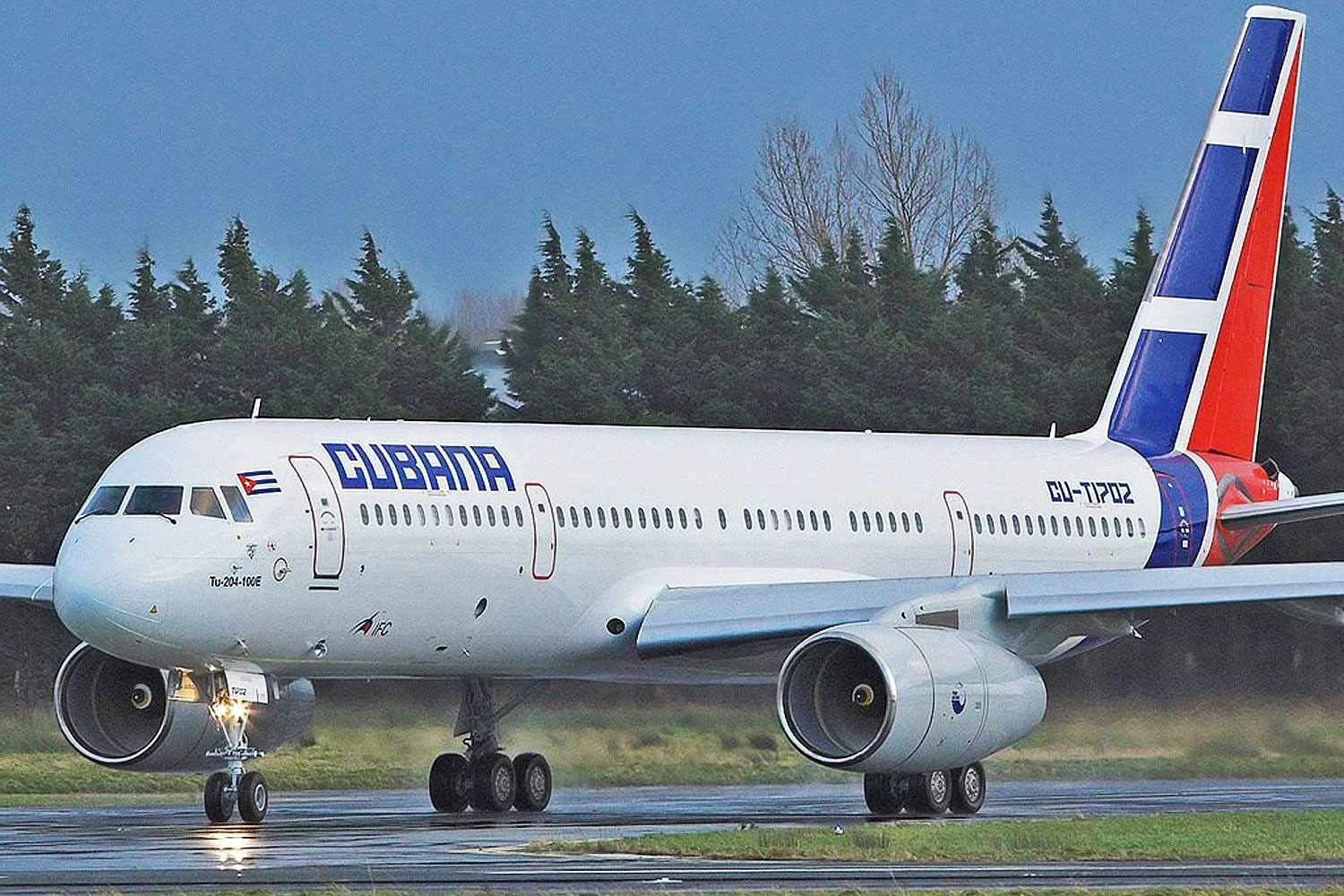
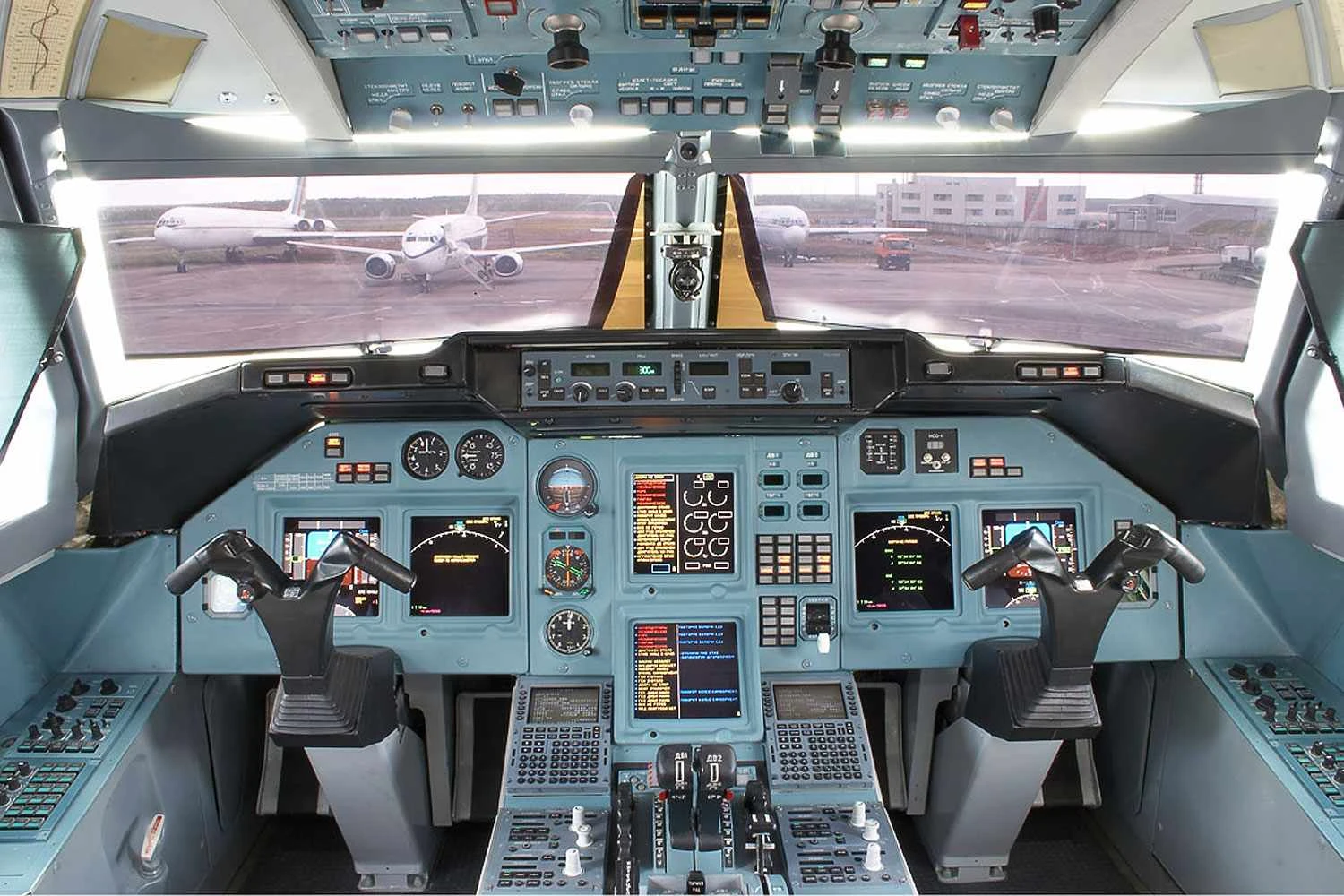
In practical commercial terms, however, the design is obsolete compared with current narrowbody aircraft. One of its most conspicuous limitations is a flight deck designed around three crew members, including a flight engineer, a position eliminated from mainstream commercial jet designs decades ago.
Tupolev is developing a two-pilot configuration, drawing partly on work previously carried out for the Tu-204SM, but that version has yet to enter service.
S7 could provide much-needed scale
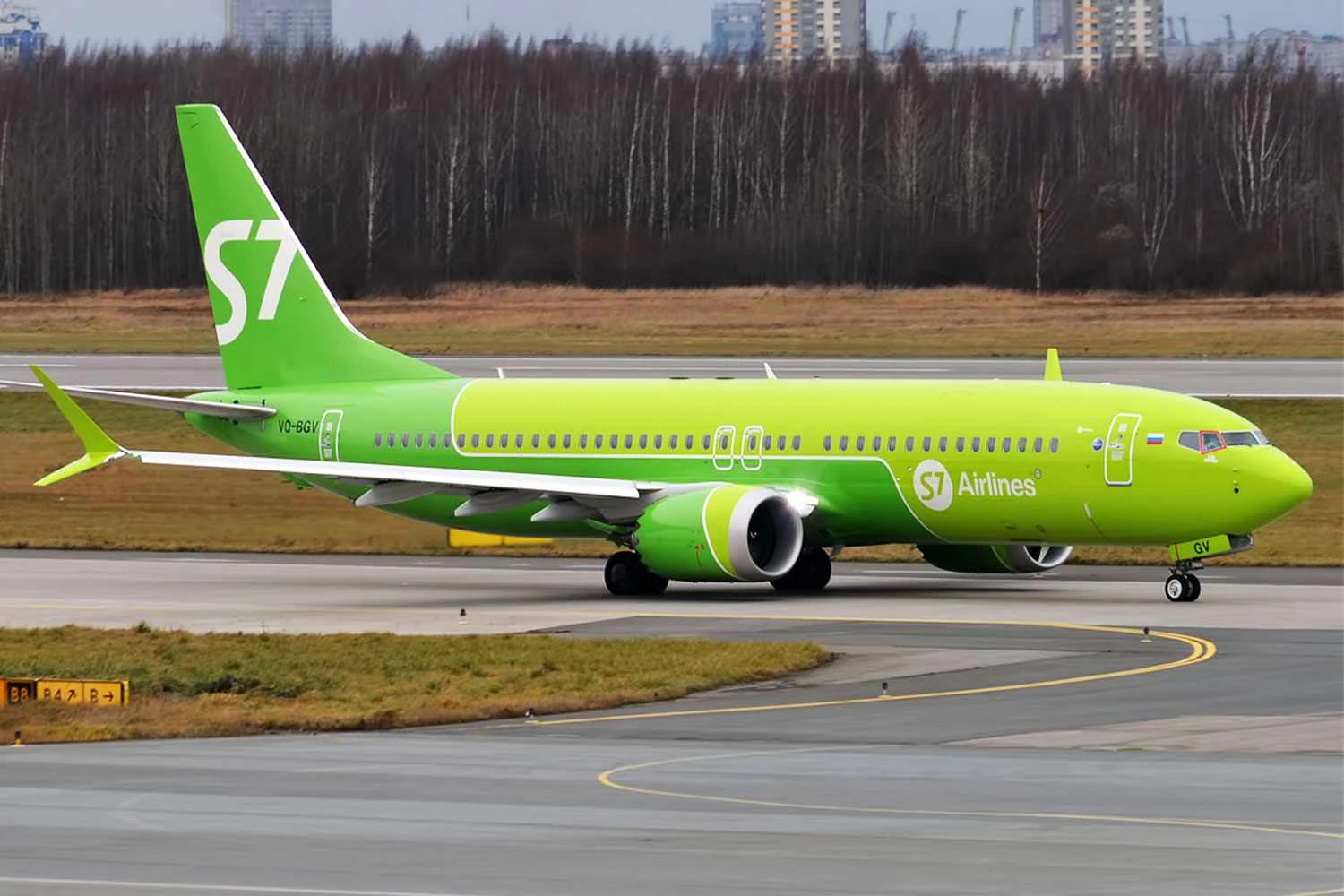
The cockpit issue is particularly important for S7 Airlines, which has emerged as the most significant potential commercial customer for the revived aircraft.
S7, UAC and state leasing company GTLK signed a memorandum in February covering up to 100 Tu-214s, with deliveries targeted from 2029. The airline is seeking an aircraft adapted more closely to modern commercial operations, including a two-pilot cockpit.
Before then, Russia is trying to transform Kazan from a plant that produced Tu-214s sporadically into a genuine serial-production operation.
Government targets have called for production to increase to eight aircraft in 2026, 12 in 2027 and eventually 20 annually from 2028. Achieving those rates requires extensive modernization and expansion of the Kazan facility after years in which only small numbers of Tu-214s were assembled.
The aircraft is unlikely to become the long-term backbone of Russia's narrowbody fleet. That role is intended primarily for the MC-21, while the smaller SJ-100 is aimed at regional and lower-capacity operations.
The consolidated Tu-204/214 certificate does not make the old Tupolev more competitive with modern Western narrowbodies. It instead removes some of the regulatory complexity accumulated over nearly four decades, making it easier to maintain, modify and produce the Tu-214 while Russia waits for its newer commercial aircraft programs to reach meaningful production rates.