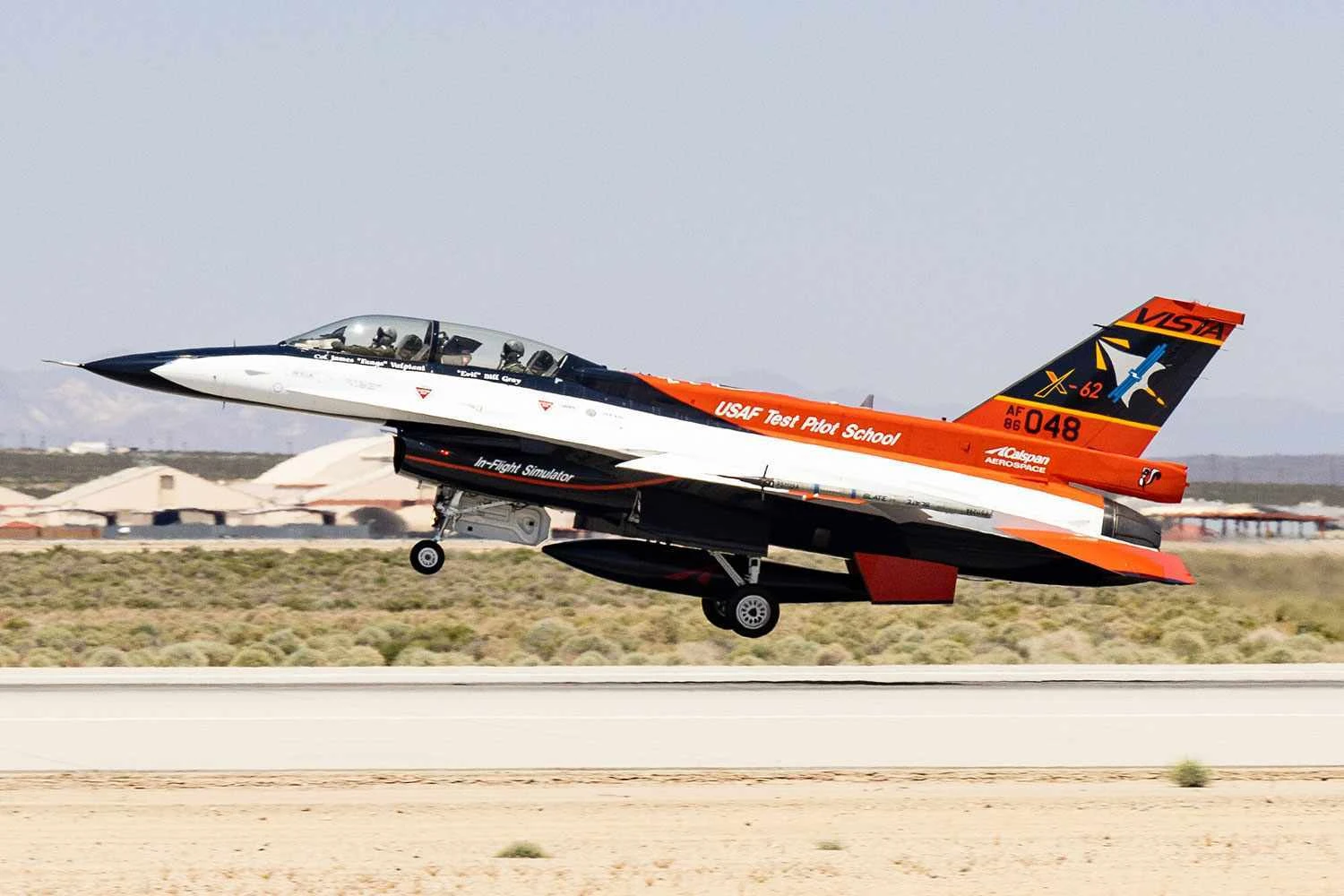
Lockheed Martin said it has demonstrated a new stage in airborne autonomy after an artificial intelligence agent successfully flew the U.S. Air Force's X-62 VISTA test aircraft using targeting data collected by an onboard sensor.
The flight campaign, conducted in partnership with the U.S. Air Force Test Pilot School, included eight sorties during which the X-62 completed 27 AI-controlled intercepts against a T-38 trainer aircraft.
According to Lockheed, the AI agent received target information from the company's Legion Pod infrared search-and-track (IRST) system before autonomously flying the aircraft into a tactical intercept position.
The demonstration differs from previous autonomy tests because the AI relied on real-time sensor data collected during flight rather than simulated target information.
Related news
September 16, 2026
September 14, 2026
September 09, 2026
The X-62 VISTA is a modified F-16 used by the U.S. Air Force as a flying laboratory for autonomous flight and advanced flight-control technologies. The aircraft allows researchers to evaluate new software while retaining a safety pilot on board.
Lockheed said the AI software used during the campaign was integrated and tested on the aircraft within three months. The company added that the experience will support future programs involving autonomous aircraft and crewed-uncrewed teaming.