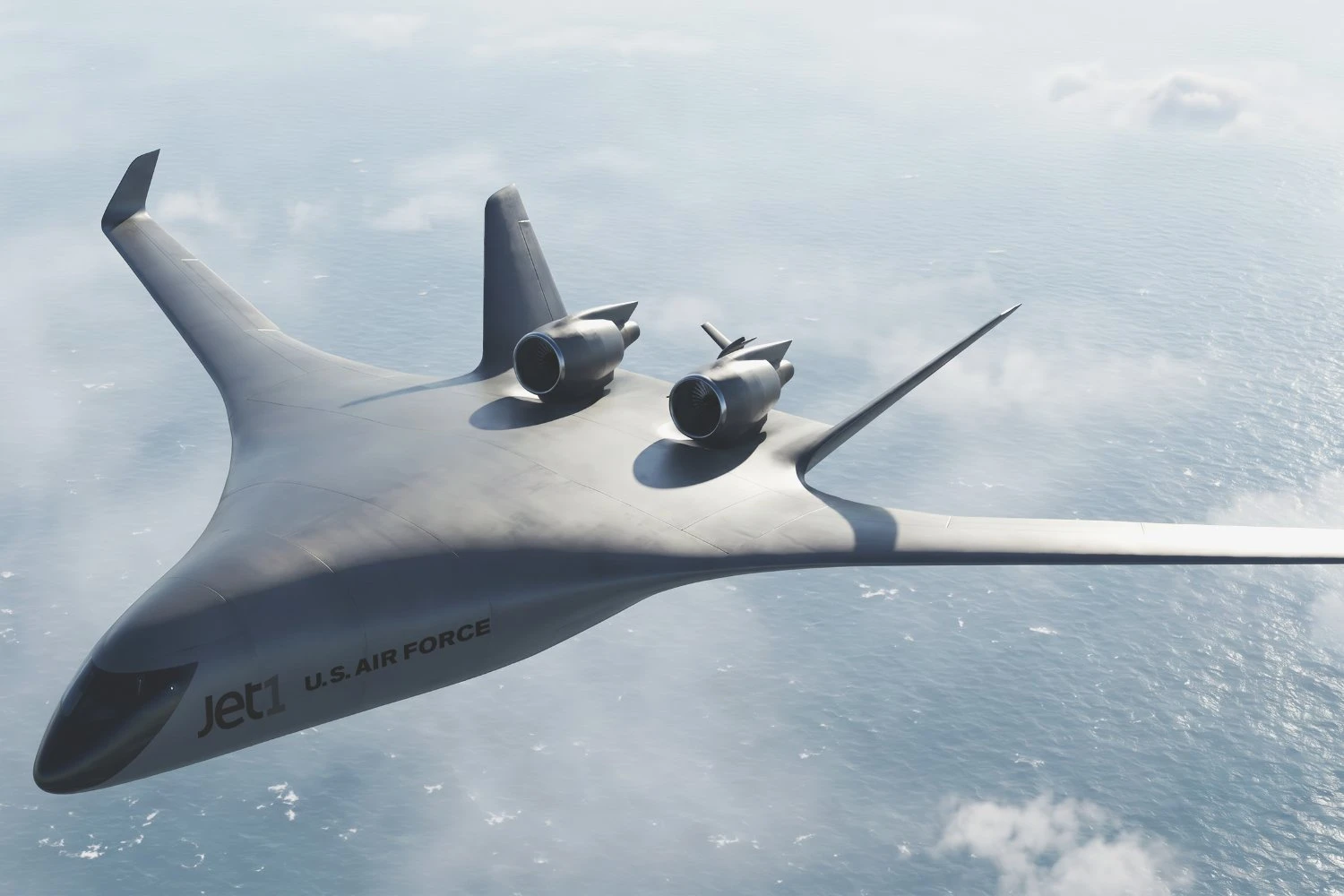
JetZero has secured a credit facility of up to US$100 million to support development of its Z4 blended-wing aircraft, including work on the full-scale Jet1 demonstrator and the manufacturing infrastructure required to eventually produce the unconventional commercial and military platform.
The senior secured term loan is led by Pinegrove Credit Partners, backed by Brookfield and HRTG Partners, alongside Silicon Valley Bank, a division of First Citizens Bank. JetZero said the funding will also support technology development, working capital and its new manufacturing and test facilities in Greensboro, North Carolina.
Follow Air Data News: WhatsApp | Instagram | LinkedIn | Twitter | Facebook
The latest financing follows a US$175 million Series B round announced in January, which included investments from B Capital, United Airlines Ventures, Northrop Grumman, 3M Ventures, Trucks VC and RTX Ventures. JetZero said at the time that it had secured more than US$1 billion through private investment, government funding, incentives and commercial commitments.
Unlike conventional airliners, the Z4 uses a blended-wing-body configuration in which the central fuselage and wings form a lifting surface. A conventional tube-and-wing aircraft relies primarily on its wings for lift while its fuselage contributes substantially to drag.
The BWB configuration distributes lift across a much larger area of the airframe and provides considerable internal volume. JetZero says these characteristics could allow the Z4 to consume up to 50% less fuel than conventional aircraft of comparable capacity.
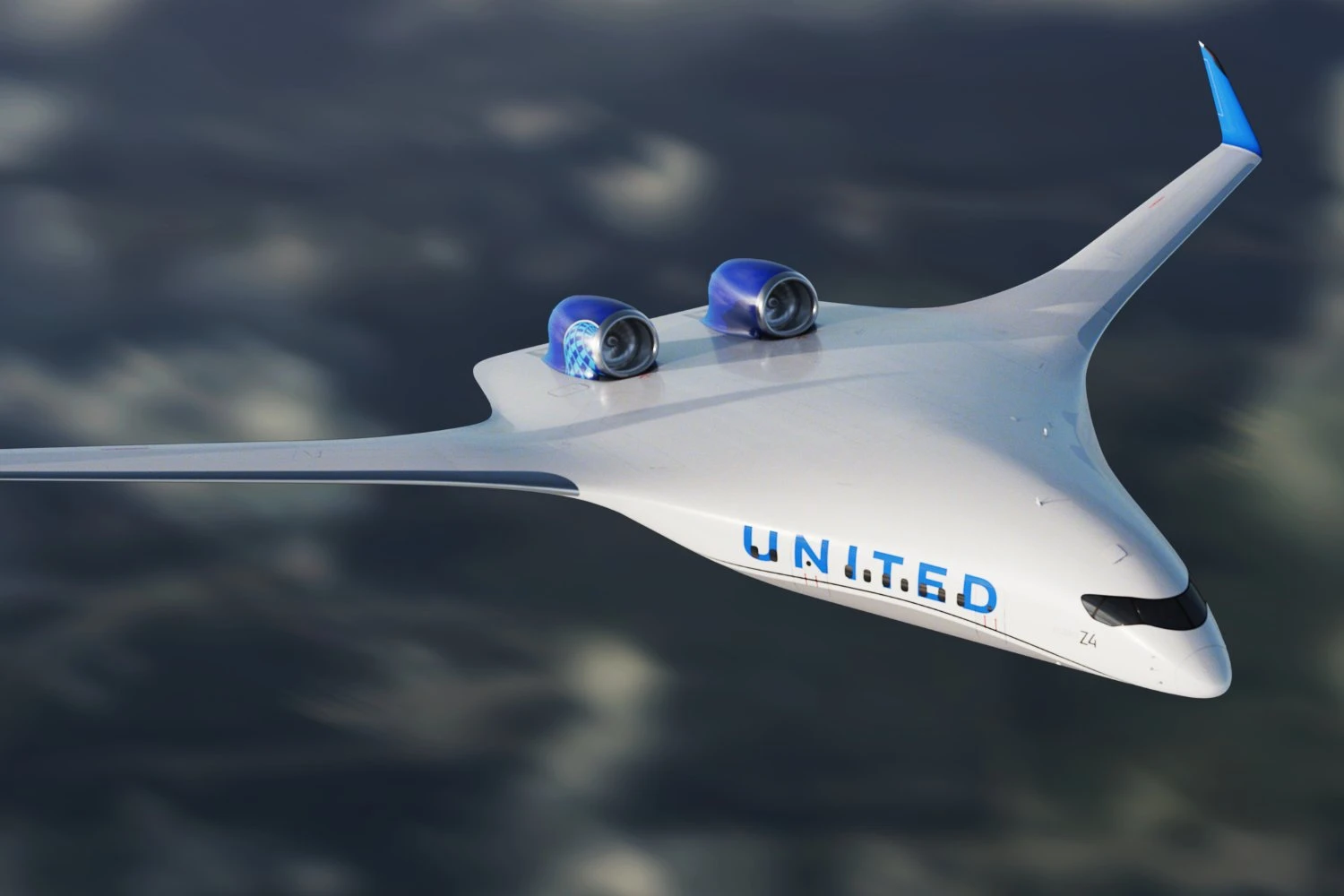
The company is designing the commercial Z4 for approximately 250 passengers and a range of up to 5,000 nautical miles (9,260 km), a segment between traditional single-aisle and large widebody aircraft. JetZero also says the aircraft will fit existing airport gates and infrastructure despite its unusual shape.
The aerodynamic advantages come with significant technical and commercial challenges. No BWB design has yet entered regular airline service, despite decades of research into the configuration by NASA, Boeing and other aerospace organizations.
A wide cabin requires different solutions for passenger seating, evacuation and pressurization, while the unconventional airframe will require a certification process without the extensive service history available for conventional tube-and-wing aircraft. Manufacturing the large integrated structure at commercial production rates is another major hurdle.
Full-scale demonstrator takes shape
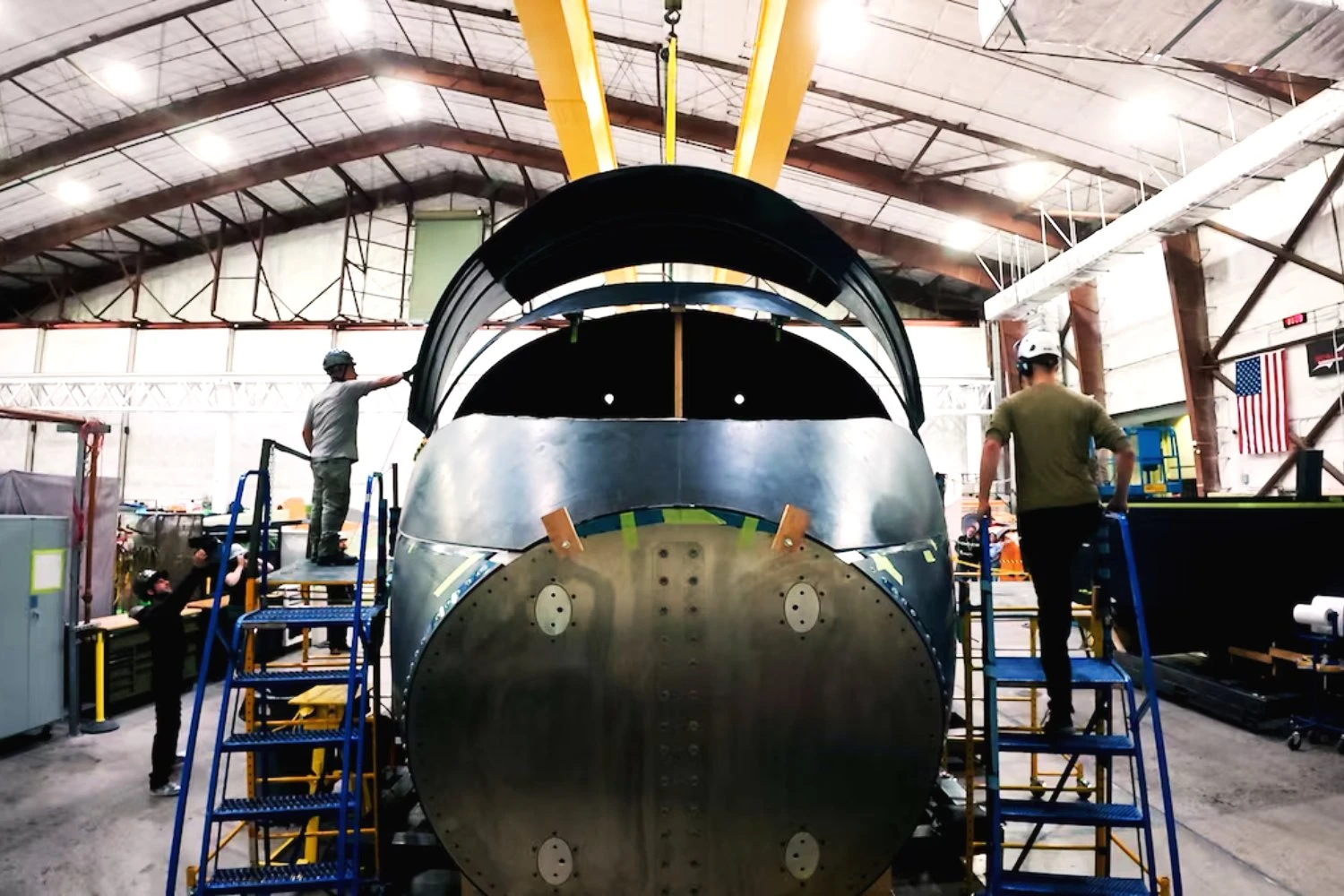
JetZero is already building the aircraft intended to answer some of those questions. Jet1, a full-scale BWB demonstrator backed by the US Air Force, is under construction at Scaled Composites in Mojave, California.
Scaled Composites, a Northrop Grumman company known for experimental aircraft programs, is working with JetZero on the demonstrator. JetZero said Jet1 was 40% complete as of June 2026 and is scheduled to make its first flight in the fourth quarter of 2027.
The US Air Force committed US$235 million to the demonstrator program in 2023. The service has an interest in BWB technology because fuel represents a major cost for its transport fleet, while the configuration's internal volume and aerodynamic efficiency could prove useful for future tanker and airlift missions.
JetZero has proposed military derivatives of the Z4, including the KC-Z4 tanker. The company argues that the combination of large internal fuel capacity and lower drag could allow a BWB tanker to transfer more fuel at greater distances than conventional aircraft.
The concept could eventually have relevance to future US Air Force tanker and transport requirements, although the service has not selected the Z4 as an operational aircraft. The current government-backed program is centered on demonstrating the BWB technology at full scale.
JetZero has already flown several generations of smaller Pathfinder demonstrators. The company says those tests have helped validate the aerodynamic configuration and flight-control laws that will be used for Jet1.
Factory under construction
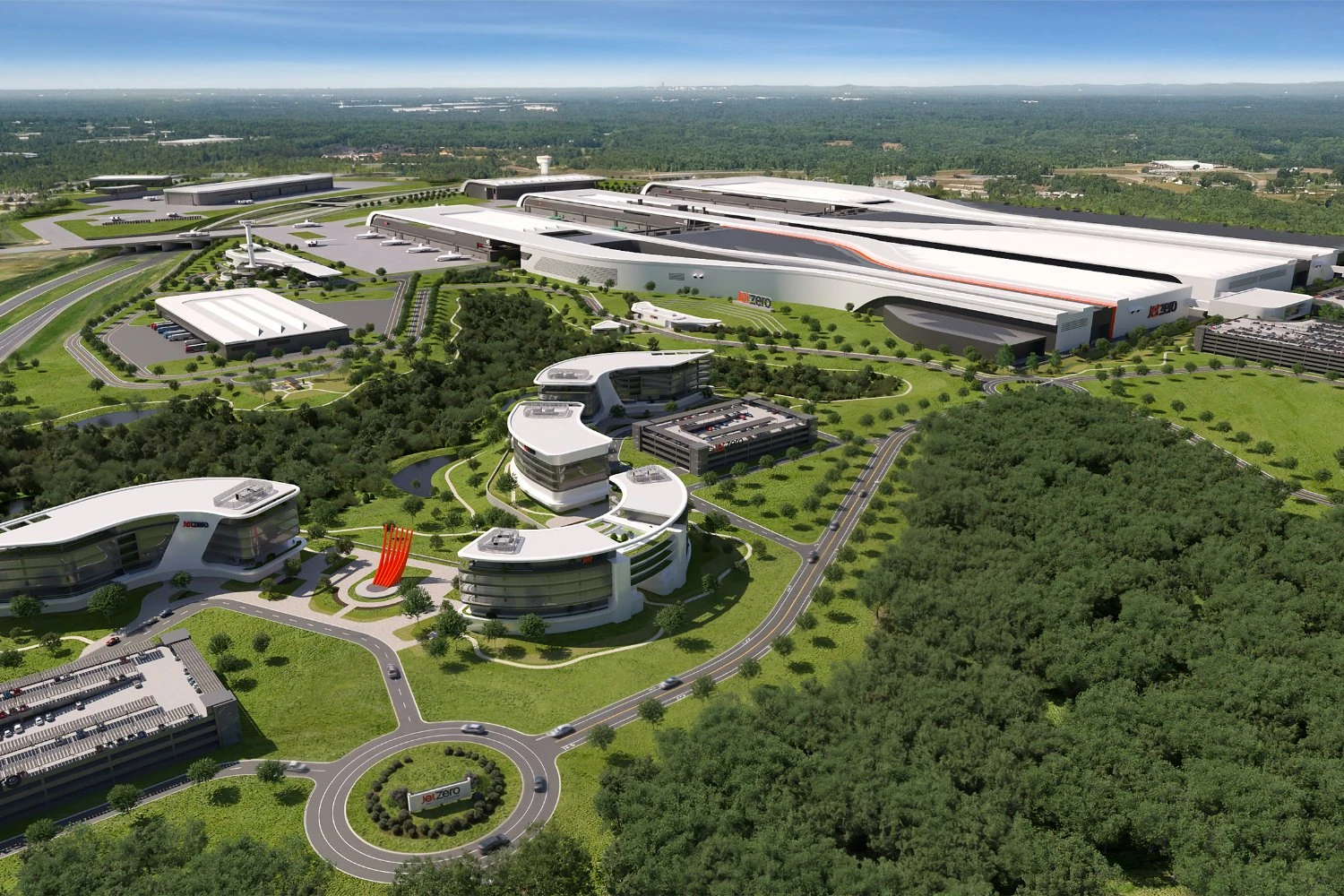
The new US$100 million facility will also provide funding for tooling and manufacturing infrastructure in Greensboro, where JetZero began construction of its first production campus in June.
The planned Factory One complex will cover approximately 8 million sq ft (743,000 sq m) on more than 600 acres and is intended to become the production and final assembly site for the Z4.
JetZero expects to create more than 14,000 jobs in North Carolina over the next decade. The project is supported by state incentives and is expected to attract approximately US$4.7 billion in investment over that period.
The decision to build a production facility before Jet1 has flown illustrates both the scale of JetZero's ambitions and one of the largest risks facing the program. Moving an unconventional aircraft from flight demonstration to certification and high-rate manufacturing will require substantially more capital than the development of experimental prototypes.
JetZero nevertheless already has airline involvement in the program. United Airlines announced an agreement in 2025 covering up to 200 Z4s, including an initial commitment for 100 aircraft subject to development milestones and the aircraft meeting the airline's operational and safety requirements. Delta Air Lines has also worked with the company on the commercial requirements for the BWB configuration.
JetZero expects the production Z4 to enter service in the early 2030s.