
Heart Aerospace's X1 demonstrator completed its first flight on Wednesday, August 12, at Plattsburgh International Airport in New York, a major test of the technologies under development for the company's ES-30 hybrid-electric regional aircraft.
The piloted X1 remained airborne for 27 minutes and reached 1,100 ft (335 m) above ground level. According to Heart, its battery-electric propulsion system produced more than 1 MW of power during the flight.
Related news

October 21, 2025

The test included taxi, takeoff, climb, maneuvers and landing under an FAA Special Airworthiness Certificate in the Experimental Category. Heart says the X1, which has a 106-ft (32.3 m) wingspan, is 76 ft (23.2 m) long and weighed more than 25,000 lb (11,340 kg) at takeoff, is the largest battery-electric aircraft to have flown.
Despite its size, the X1 is not a prototype of the production ES-30 in the conventional sense. Heart built the full-scale demonstrator to test electric propulsion, aerodynamics, flight characteristics and engineering processes before moving to the aircraft that will eventually seek certification.
https://x.com/heartaerospace/status/2087912950128337242
The ES-30 itself will use a different propulsion architecture. The 30-seat regional aircraft combines electric propulsion and batteries with turbogenerators, which provide additional range when required. Heart plans to certify the aircraft under FAA Part 25 rules and currently targets entry into service in 2031.
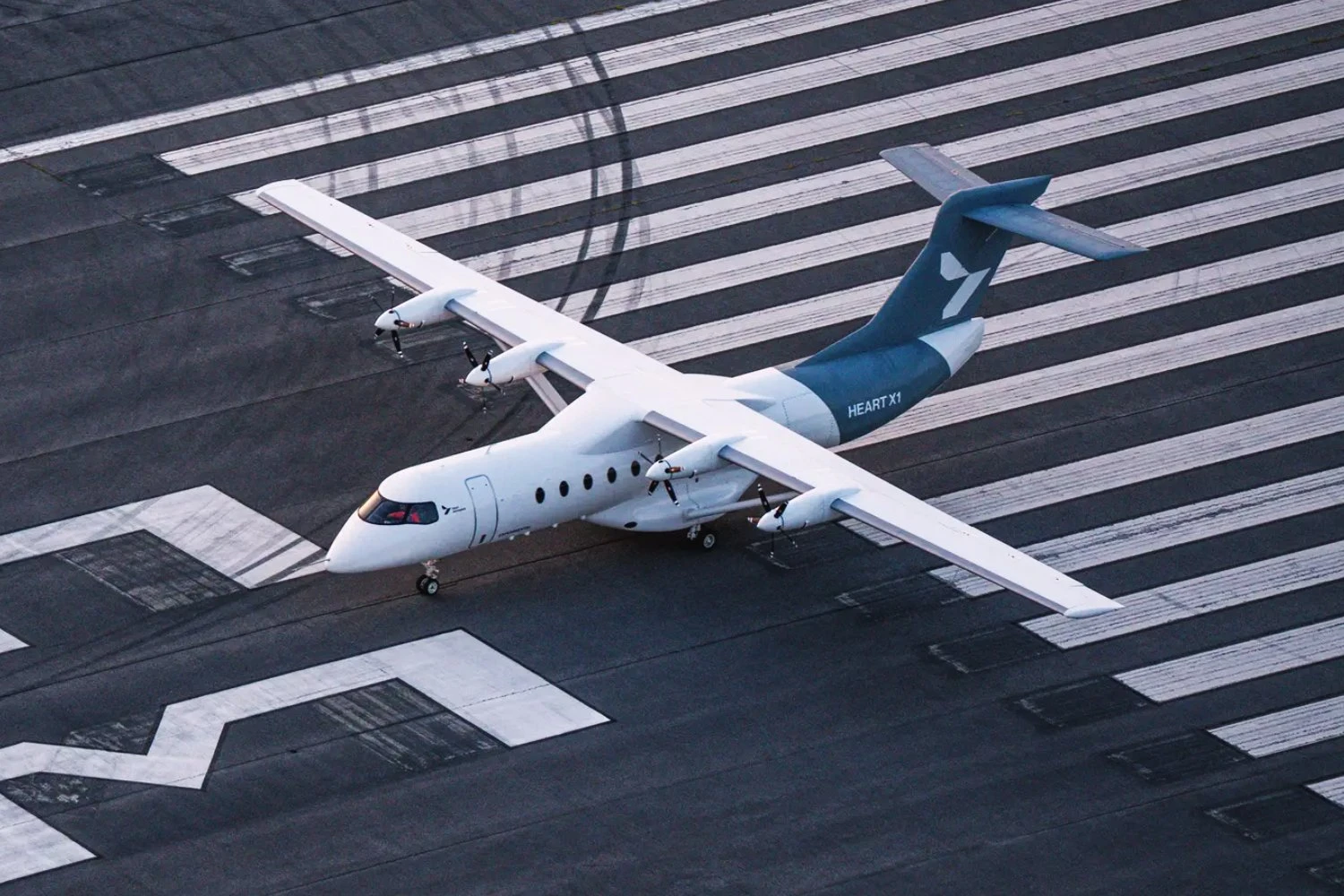
Maiden flight of Heart's X1 demonstrator | Heart Aerospace 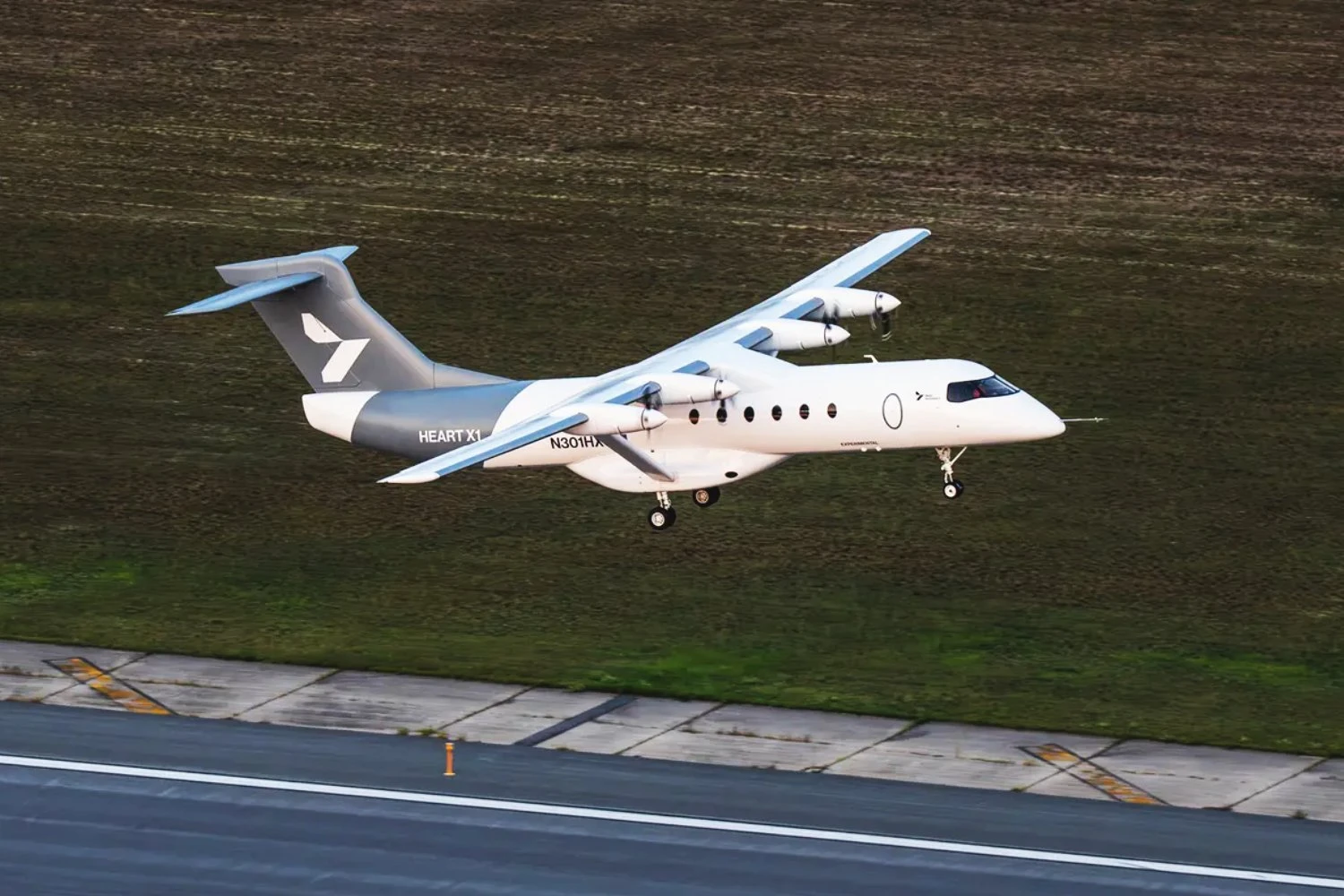
Maiden flight of Heart's X1 demonstrator | Heart Aerospace 
Maiden flight of Heart's X1 demonstrator | Heart Aerospace 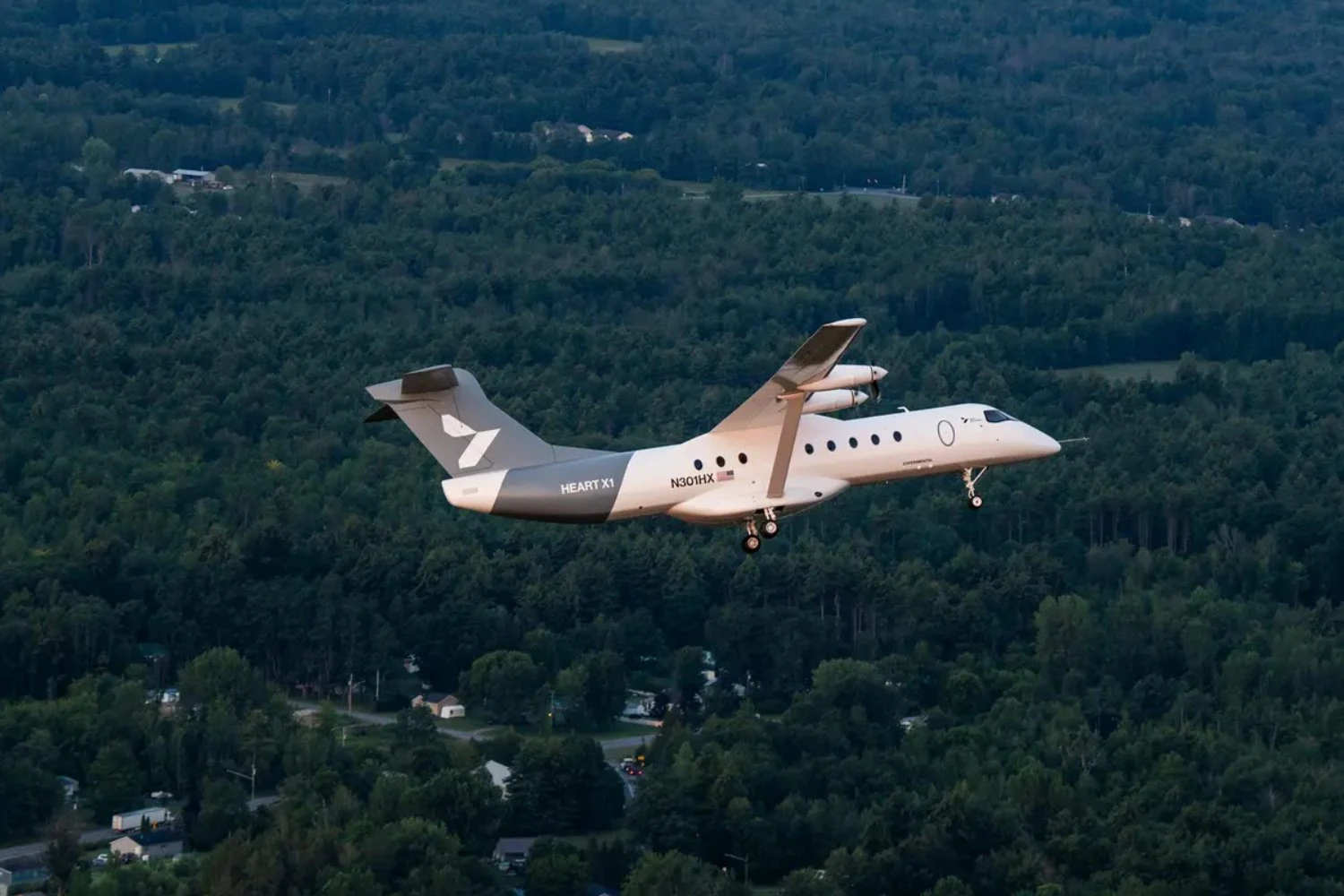
Maiden flight of Heart's X1 demonstrator | Heart Aerospace




United Airlines, Air Canada and JSX are among the companies that have made commitments for the ES-30, although the program still faces several years of development and certification before those agreements can result in commercial deliveries.
Heart is now building its first pre-production ES-30 at a pilot manufacturing facility in Los Angeles. Flight tests with that aircraft are scheduled to start in 2028.
From Sweden to the United States
The X1 flight also comes little more than a year after Heart Aerospace left its native Sweden and concentrated its operations in the United States.
Heart moved its headquarters from Gothenburg to Los Angeles in April 2025 and closed its Swedish operations. The company said at the time that an increasing share of its customers, partners and investors were based in the United States. Its main airline backers include United Airlines and Air Canada, and much of its supply chain is also located in North America.

Access to the U.S. aerospace and investment ecosystem was another factor. Heart CEO Anders Forslund said the Los Angeles area offered the engineering talent required for the company's plans to develop more software, electronics and other technologies internally. The startup had raised $107 million in a Series B round in 2024 and secured another $40 million before announcing the relocation.
The company established its X1 flight-test operation at Plattsburgh before the headquarters move. The airport provides Heart with the infrastructure and airspace needed for the experimental campaign, while development and pre-production work on the ES-30 is now concentrated in California.