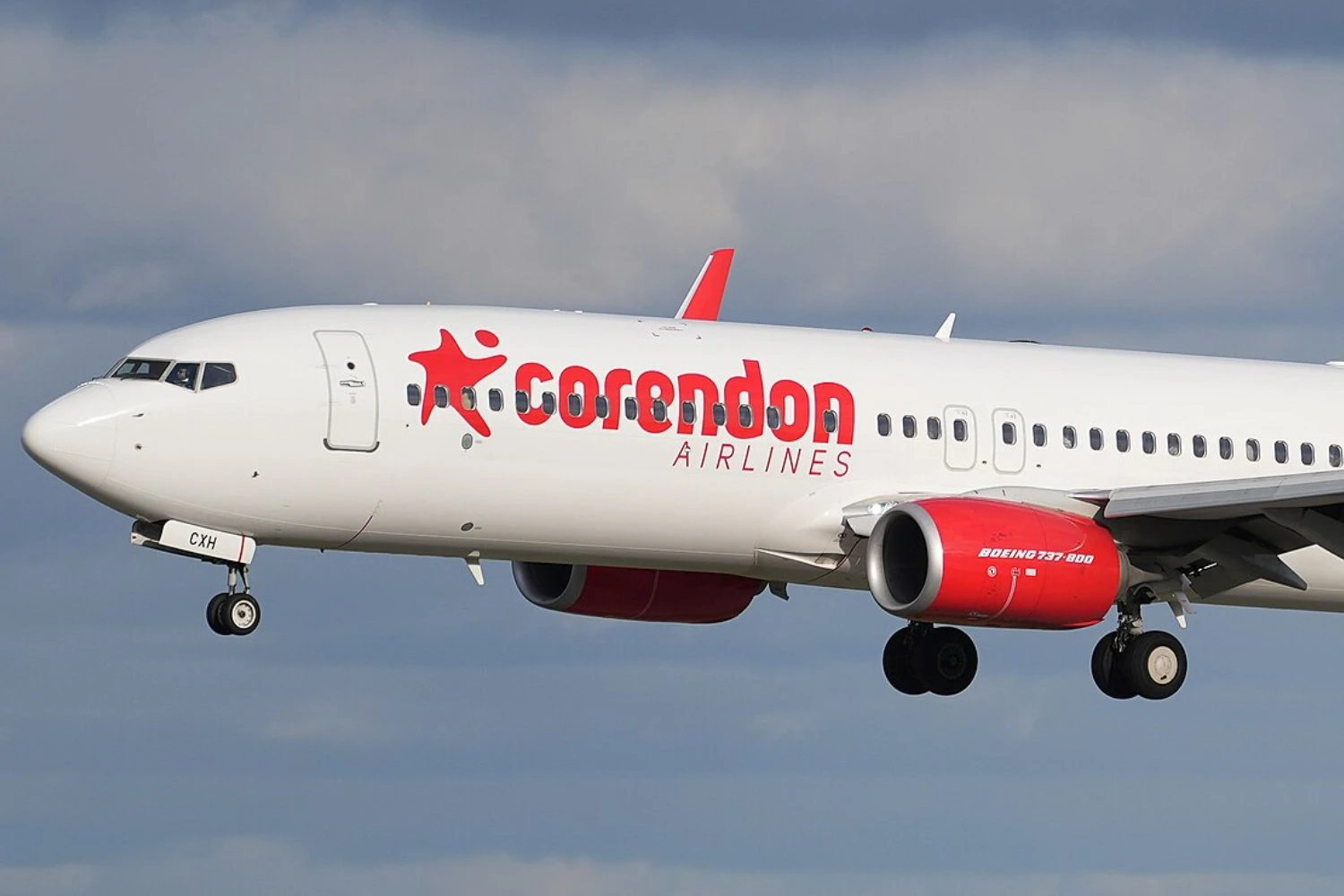
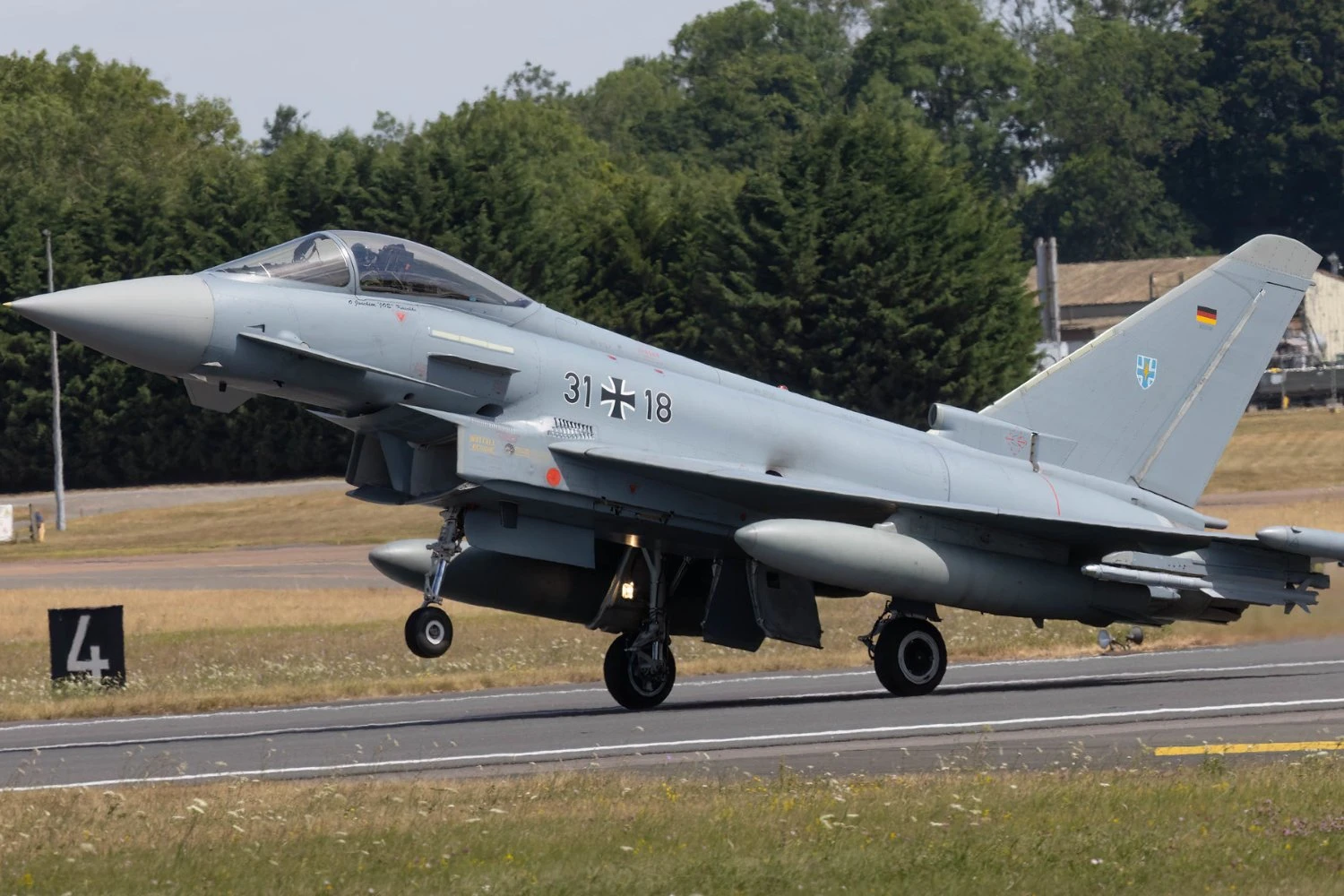
Two German Air Force Eurofighter Typhoon fighter jets were scrambled on October 13 after a Corendon Airlines Europe Boeing 737-800 passenger aircraft transmitted a hijacking alert during a flight from the Greek island of Corfu to Nuremberg, Germany.
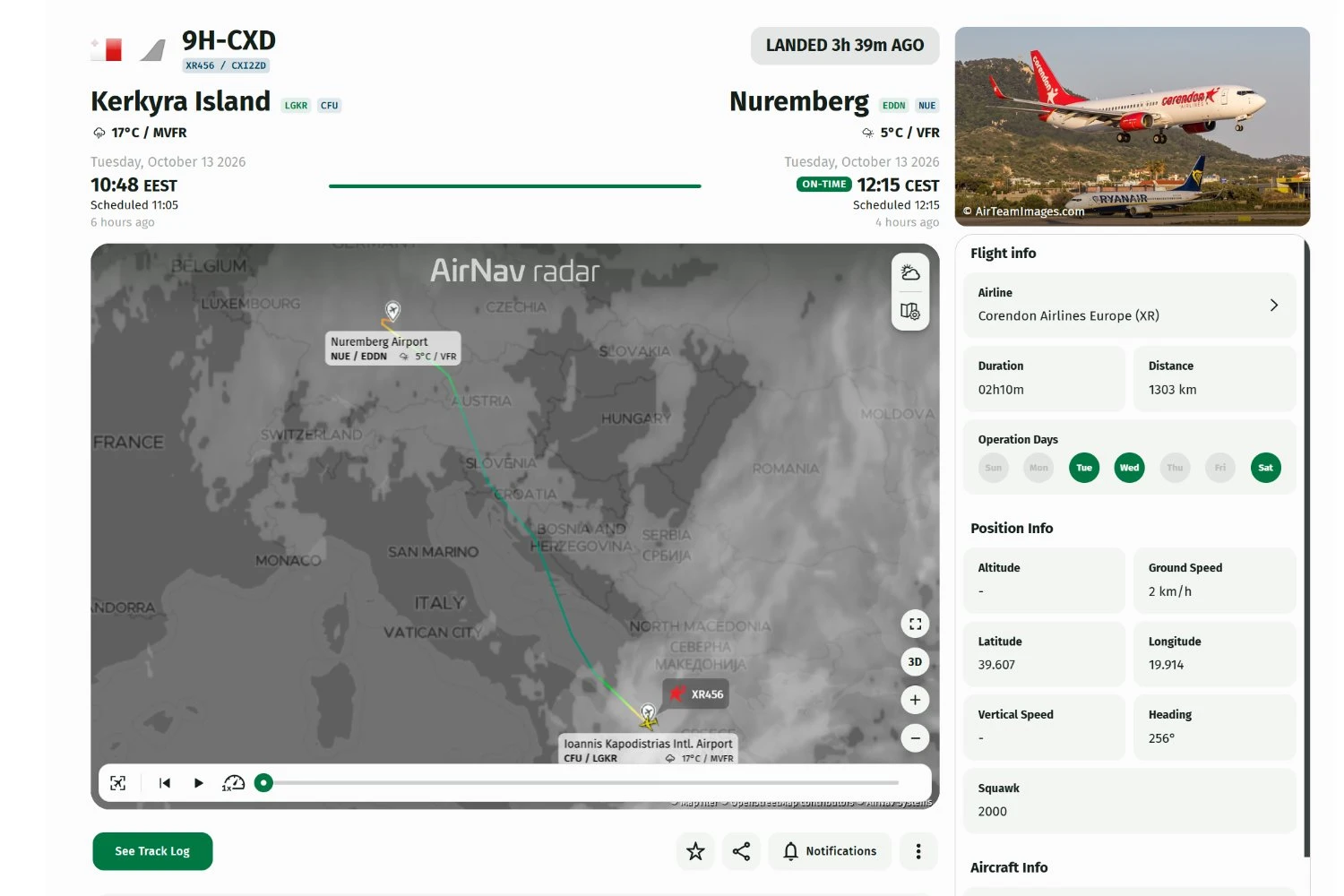
The aircraft, registered 9H-CXD, was operating flight XR456 (CXI456) when its transponder transmitted squawk code 7500, the internationally recognized signal for unlawful interference, including a possible hijacking.
The alert prompted German authorities to activate an air defense response and temporarily suspend operations at Nuremberg Airport. Police and emergency services were deployed before the aircraft arrived.
According to AirNav Radar flight-tracking data, the Boeing 737 departed Corfu at 10:48 a.m. local time and landed in Nuremberg at 12:15 p.m. German time. The flight lasted approximately two hours and ten minutes.
Follow Air Data News: WhatsApp | Instagram | LinkedIn | Twitter | Facebook
The aircraft followed a route across the Balkans and Central Europe before approaching Nuremberg. AirNav identifies the jet as a Boeing 737-8GP, a variant of the 737-800, with Mode-S identification 4D239A.
Hijacking alert triggers military response
The emergency involved the transmission of code 7500, which alerts air traffic controllers to possible unlawful interference aboard an aircraft.
German authorities responded by dispatching two Eurofighter Typhoons to intercept and escort the passenger jet.
The aircraft landed safely at Nuremberg, where police conducted security checks. Authorities subsequently confirmed that no threat had been identified, allowing the emergency response to be discontinued.
Recent news
The airport's temporary closure also affected other flights and public transportation serving the terminal. Police issued the all-clear at approximately 1:20 p.m. local time.
The incident was initially reported as an unspecified aviation emergency. The airport did not immediately disclose the nature of the alert, according to Reuters.
Radio communication problem
Corendon Airlines subsequently attributed the incident to a radio communication problem experienced by the crew during the flight.
The malfunction reportedly occurred while the aircraft was flying over Croatia. However, the circumstances surrounding the transmission of the hijacking code remain unclear.
Code 7500 is distinct from the general emergency code 7700 and the radio communication failure code 7600. Its transmission normally indicates a possible security threat rather than a technical malfunction.
It has not been established whether the crew deliberately selected the code or whether its transmission resulted from an error.
The aircraft involved, 9H-CXD, is a Malta-registered Boeing 737-800 operated by Corendon Airlines Europe. Built in 2014, the jet has a single-class cabin with 189 passenger seats.
The airline operates leisure flights connecting European destinations with holiday markets in the Mediterranean, including Greece.
The October 13 incident ended without injuries or evidence of a hijacking, although the circumstances that triggered the security alert have yet to be fully explained.